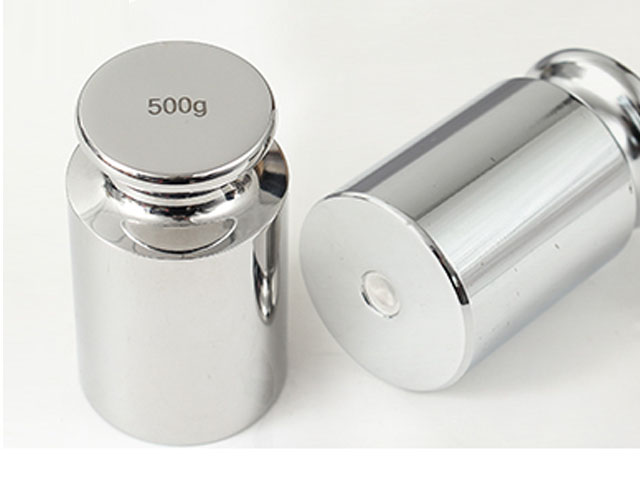
Standard Calibration Weight
In every corner of modern production, scientific research, experimental analysis, and daily industrial operation, the reliability of weighing data stands as an invisible foundation that supports all quantitative work and quality control links. Any weighing instrument, whether a delicate laboratory analytical balance used for micro sample testing or a large industrial platform scale deployed for bulk material weighing, will gradually produce subtle measurement deviations after long-term use, frequent mechanical vibration, environmental humidity and temperature changes, and continuous mechanical wear of internal components. These deviations do not appear suddenly in a drastic form but accumulate slowly over time, gradually making the displayed measurement value inconsistent with the actual true mass of the measured object. Without regular and professional calibration correction, such small deviations will eventually evolve into obvious measurement errors, affecting product production quality, experimental data authenticity, industrial batch processing consistency, and even the smooth progress of scientific research exploration and industrial process iteration. Standard calibration weights exist precisely to solve this core measurement stability problem, serving as a stable and reliable mass reference medium that connects all kinds of weighing instruments with unified and consistent mass measurement benchmarks. Unlike ordinary counterweights or auxiliary weighing accessories used for simple weighing balancing, standard calibration weights are specially designed and processed mass objects with fixed and accurate mass values, stable physical properties, and long-term structural stability. Their core function is not to participate in daily material weighing and counting work directly, but to act as a unified reference standard, helping operators detect the measurement deviation of various weighing equipment, complete accurate parameter adjustment and performance verification, and ensure that all weighing data obtained by different instruments in different time periods and different working scenarios maintain good consistency and credibility.
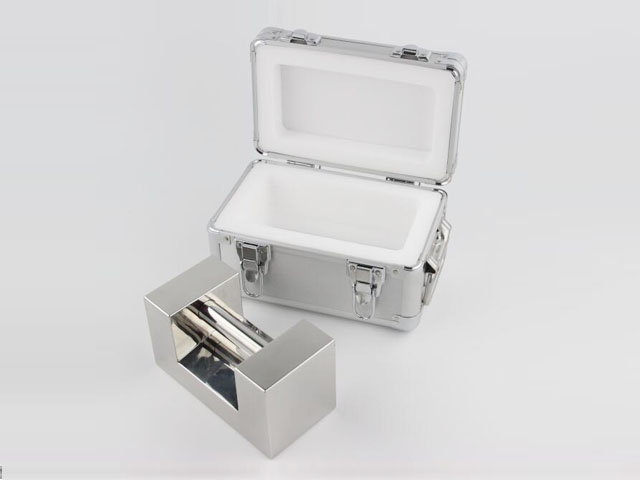
The basic working logic of standard calibration weight follows the most fundamental physical principle of mass and gravity interaction in the natural world. All weighing instruments, regardless of mechanical structural design or electronic signal induction mode, complete mass measurement by sensing the pressure generated by the measured object under the action of local gravity. When a standard calibration weight with a known accurate mass value is stably placed on the weighing pan or bearing platform of a weighing instrument, the weight will generate a fixed and stable downward force on the stress-bearing part of the instrument under the influence of regional gravity. Mechanical weighing equipment will transmit this force through internal lever structures, spring components, and mechanical transmission parts to drive pointer deflection or scale position changes, while electronic weighing equipment will convert the sensed pressure change into a stable electrical signal through internal load cell components, and then calculate and display the corresponding mass value through internal circuit processing and program operation. The core operation of the calibration process is to compare the fixed known mass value of the standard calibration weight with the mass reading displayed by the weighing instrument in real time. Through this intuitive comparison process, operators can clearly and accurately judge whether the weighing instrument has measurement drift, indication deviation, linear error and other common abnormal conditions. Once the difference between the displayed reading and the actual mass of the calibration weight exceeds the reasonable fluctuation range allowed by daily work needs, the instrument can be fine-tuned and adjusted according to the actual deviation value until the displayed reading is completely consistent with the standard mass of the calibration weight, thus restoring the good measurement performance of the weighing instrument and ensuring that the subsequent measured data of all objects can be kept within a reasonable and accurate range.
The comprehensive performance of a standard calibration weight determines its applicability in different calibration scenarios and the stability of long-term repeated use, and material selection is the primary core factor affecting all performance indicators of the weight. In the whole production and manufacturing link of standard calibration weights, the selection of raw materials needs to take multiple key factors into comprehensive consideration, including material density uniformity, surface corrosion resistance, long-term structural oxidation resistance, thermal expansion and contraction stability under different temperature changes, and surface wear resistance in frequent handling and placement processes. Different application scenarios and calibration accuracy requirements correspond to different material matching schemes, and each selected material has its own unique performance advantages and suitable application ranges. Common manufacturing materials for standard calibration weights mainly include high-performance stainless steel alloys, refined brass alloys, and high-density cast iron materials, and each material has been strictly screened and smelted to ensure the internal structure is uniform and dense without internal pores, impurities, or structural defects that may affect mass stability. High-performance stainless steel alloys are widely used in the production of calibration weights for high-precision laboratory and fine calibration work. This kind of material has excellent corrosion resistance, can resist the erosion of humid air, chemical volatile gas, and various subtle corrosive substances in the laboratory environment, and will not produce oxidation rust or surface chemical changes after long-term placement and repeated use. At the same time, the thermal expansion coefficient of stainless steel alloy is relatively low, and the mass and volume change very slightly even if the ambient temperature fluctuates within a conventional range, which can effectively avoid measurement errors caused by thermal expansion and contraction of the weight itself during the calibration process. Refined brass alloy materials are mostly used for conventional medium-precision calibration weights needed for general industrial production and daily instrument verification. Brass materials have moderate density, good surface processing performance, and convenient finishing and polishing treatment in the later stage. The surface of the processed weight is smooth and flat, not easy to produce burrs and structural damage, and the overall cost performance of use is balanced. It can meet the daily calibration needs of most conventional weighing instruments in industrial production workshops, warehousing and logistics weighing links, and small processing enterprises. High-density cast iron materials are mainly used for the production of large-specification standard calibration weights required for heavy-duty industrial weighing equipment calibration. This kind of material has high overall density, strong structural compression resistance and impact resistance, not easy to produce deformation and damage even after long-term heavy-pressure placement and frequent handling, and can maintain long-term mass stability in harsh industrial production environments with more dust and greater mechanical vibration. No matter which kind of material is selected, the raw materials will undergo multiple rounds of purification treatment and structural detection before formal processing to ensure that there are no unstable components inside the material, laying a solid foundation for the long-term mass stability of the finished calibration weight.
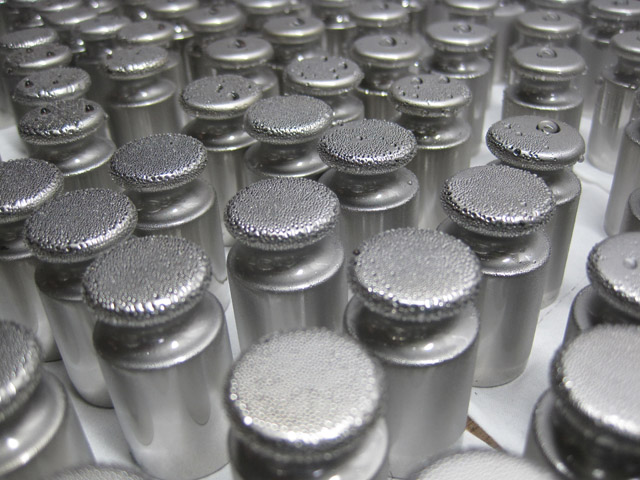
The production and processing process of standard calibration weights follows extremely strict manufacturing procedures and precision processing steps, and every link from initial blank forging to final finished product finishing and mass fine adjustment is carried out in accordance with unified processing specifications and precision control requirements. The whole production process can be roughly divided into raw material cutting and blank forming, preliminary rough machining, surface finishing and polishing, internal structural stability treatment, fine mass adjustment, surface protective treatment and finished product inspection and screening. In the raw material cutting and blank forming stage, the selected high-quality raw materials are cut and forged according to the preset size and specification of the weight, and the initial blank of the calibration weight is produced. The blank only meets the basic outline and size requirements, and there is a certain deviation between the overall mass and the target standard mass, which needs subsequent multi-step processing and adjustment. In the preliminary rough machining stage, professional precision machining equipment is used to perform turning, milling and grinding operations on the weight blank to remove redundant materials on the surface and inside, make the overall outline of the weight regular, the surface basic flat and smooth, and initially approach the target mass value. After rough machining, the weight will enter the surface finishing and polishing stage, and the fine polishing process is used to treat all surfaces of the weight, remove tiny burrs, processing traces and surface uneven parts generated in the machining process, make the surface of the weight smooth and delicate, reduce the contact area with external air and corrosive substances, and further enhance the surface corrosion resistance and wear resistance of the weight. The internal structural stability treatment is a very critical link that cannot be ignored. The processed semi-finished weights need to be placed in a constant temperature and dry environment for a period of static placement and aging treatment. This process can eliminate the internal structural stress generated during the machining and forging process, avoid the slow deformation and mass change of the weight due to internal stress release after long-term use, and ensure that the internal structure of each calibration weight is in a stable and balanced state. The fine mass adjustment is the core step to ensure that the weight reaches the standard accurate mass value. Professional high-precision comparison balances are used to continuously detect the mass of the weight, and tiny materials are removed or supplemented through micro-processing means according to the detection results, so that the mass of each calibration weight is accurately controlled within the required range. After the fine adjustment is completed, the surface protective treatment is carried out. A thin and stable protective layer is formed on the surface of the weight through natural oxidation film formation or harmless physical coating treatment, which does not affect the mass accuracy of the weight, but can effectively isolate the external harsh environment and prolong the service life of the calibration weight. Finally, all finished weights will undergo comprehensive repeated inspection and screening, and unqualified products with excessive mass deviation and unstable surface structure will be eliminated to ensure that all delivered standard calibration weights have stable performance and accurate mass.
Standard calibration weights are widely used in almost all industries and fields that require accurate weighing measurement, covering scientific research laboratories, pharmaceutical production and processing, food manufacturing and quality testing, chemical raw material proportioning processing, mechanical parts manufacturing and testing, agricultural product purchasing and storage, environmental monitoring and sample testing, and industrial manufacturing and processing of various types. In professional scientific research laboratories, all experimental research involving mass ratio calculation, sample quantitative analysis, and experimental data iteration requires the support of high-precision weighing instruments. Experimental data is the core basis for scientific research conclusion summary and experimental result verification. Once the weighing instrument has measurement deviation, all subsequent experimental data will be distorted, leading to wrong experimental conclusions and affecting the progress and effectiveness of scientific research projects. Researchers need to use matching standard calibration weights to calibrate and verify analytical balances and precision weighing instruments before each batch of experiments, ensure that the weighing data of experimental samples, reagents and raw materials is accurate and reliable, maintain the consistency of experimental data in different experimental stages, and provide solid data support for scientific research innovation and experimental result popularization. In the pharmaceutical production industry, the accurate proportioning of various pharmaceutical raw materials and auxiliary materials is directly related to the safety and efficacy of finished pharmaceutical products. The proportion of each raw material needs to strictly follow the preset process standards, and any small weighing error may lead to unqualified pharmaceutical product quality and affect the safety of drug use. Pharmaceutical production enterprises need to regularly use standard calibration weights to calibrate the weighing equipment used in raw material proportioning, finished product weighing and quality testing links, ensure that each link of weighing measurement meets the production process requirements, maintain the stability and consistency of pharmaceutical production quality, and ensure that every batch of pharmaceutical products produced meets the basic quality and safety standards.
In the food manufacturing and processing industry, from the quantitative proportioning of food raw materials and additives to the net content detection of finished food products and the weighing and counting of packaged products, accurate weighing work runs through the whole production and sales chain of food. The accurate weighing of food raw materials ensures the stable taste and quality consistency of food products, avoids product quality differences caused by different raw material proportions in different production batches, and maintains the stable market reputation of food production enterprises. The net content detection of finished food is related to the legitimate rights and interests of consumers and the standardized operation of the food market. Only with accurate weighing and detection can we avoid insufficient net content of packaged food and maintain the standardized and orderly development of the food industry. Food processing enterprises need to regularly use standard calibration weights to calibrate various weighing instruments in production workshops and testing laboratories, timely correct the measurement deviation of weighing equipment caused by long-term use and environmental changes, ensure that all food weighing and detection work is carried out on the basis of accurate measurement data, and realize the dual guarantee of food product quality and market operation standardization. In the chemical production and processing industry, the production and synthesis of various chemical products require precise proportioning of different chemical raw materials. Many chemical reaction processes have strict requirements on the mass ratio of raw materials. Slight changes in the proportion may affect the chemical reaction effect, lead to unqualified product performance, and even cause potential safety hazards in the production process. Chemical enterprises need to rely on standard calibration weights to regularly calibrate the special weighing instruments used for raw material proportioning and finished product testing, ensure the accurate weighing of all chemical raw materials, maintain the stability of chemical reaction process and product quality, and reduce the safety risks and quality losses caused by weighing errors.
In the mechanical manufacturing and parts processing industry, the mass detection of mechanical parts, the weighing of finished mechanical equipment, and the quality screening of processed parts are all important links to ensure the qualified rate of product manufacturing. Many mechanical parts have strict mass and dimensional matching requirements, and unqualified mass will affect the assembly accuracy and service performance of mechanical equipment, and even lead to equipment failure and safety accidents in the later use process. Mechanical processing factories need to use standard calibration weights to calibrate various industrial weighing scales and precision weighing detection equipment, ensure the accuracy of parts quality detection data, screen out unqualified parts with excessive mass deviation, and ensure that all assembled mechanical equipment has stable performance and qualified quality. In the field of environmental monitoring and ecological protection, various environmental sample collection and testing work requires accurate weighing of water quality samples, soil samples, air sediment samples and other detection samples. The accurate mass data of samples is the basic premise for detecting pollutant content and analyzing environmental quality status. Environmental monitoring institutions need to use standard calibration weights to calibrate experimental weighing instruments regularly, ensure the accuracy of sample weighing data, make the environmental monitoring and analysis results true and effective, and provide reliable data support for environmental protection policy formulation and ecological environment improvement work.
In addition to industrial production and scientific research scenarios, standard calibration weights also play an indispensable role in daily measurement management and measurement traceability work of measurement institutions. Measurement traceability is an important guarantee to ensure that all weighing measurement data in the whole society is unified and consistent, realizing the mutual connection and mutual recognition of measurement data in different regions, different industries and different institutions. All weighing instruments in various industries need to be regularly verified and calibrated by professional measurement institutions, and standard calibration weights are the core reference tools for measurement institutions to carry out instrument verification work. Professional measurement technicians use high-grade standard calibration weights to test and calibrate various weighing instruments submitted for inspection, judge whether the measurement performance of the instruments meets the use requirements, and issue corresponding measurement verification results. Through the continuous application and transmission of standard calibration weights, the unified transmission of mass measurement benchmarks from high-level measurement institutions to various grass-roots enterprises, laboratories and individual users is realized, ensuring that all weighing measurement work in all links of social production and operation is based on the same unified mass standard, avoiding measurement confusion and data inconsistency caused by different measurement benchmarks, and maintaining the overall order of social measurement work.
The daily proper use, scientific maintenance and standardized storage of standard calibration weights are crucial to maintaining their long-term mass stability and extending their service life. Although standard calibration weights are made of high-stability materials and processed through strict processes, they are still affected by external environmental factors and human operation behaviors in the process of long-term use and placement. Improper use and storage will still lead to surface damage, structural deformation and mass change of the weights, affecting the accuracy of subsequent calibration work. In the daily use process, operators need to abide by standardized operation specifications and avoid direct contact between hands and the surface of calibration weights as much as possible. The sweat, grease and tiny impurities on human hands will adhere to the surface of the weights, causing subtle corrosion and surface pollution, changing the surface state of the weights, and thus affecting the accurate mass value. When taking and placing calibration weights, special non-metallic tweezers or special weight taking tools should be used to handle them gently, avoiding violent collision, throwing and friction between weights and hard objects, so as to prevent surface wear, edge damage and internal structural deformation of the weights caused by external impact. In the calibration operation process, the calibration weights should be stably placed in the center of the weighing pan or weighing platform of the instrument, avoiding tilting placement, eccentric placement and stacking multiple weights in an unstable state, so as to ensure that the gravity of the weights acts uniformly on the stress-bearing part of the weighing instrument and avoid calibration deviation caused by uneven stress.
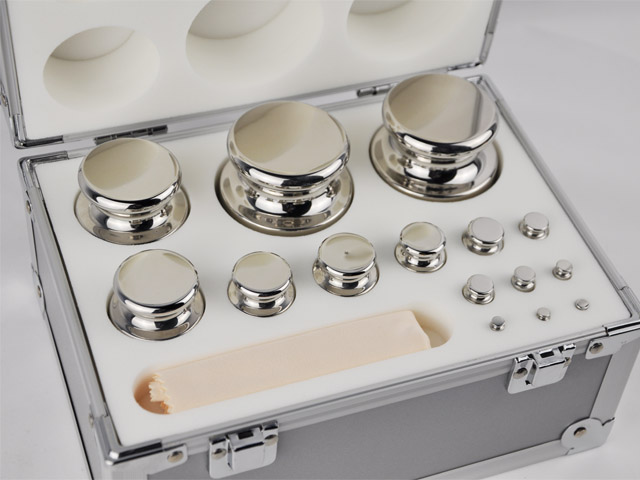
In terms of storage management, standard calibration weights need to be placed in a special dry, constant temperature and dust-proof storage box or storage cabinet for centralized management. The storage environment should avoid high humidity, high temperature, direct sunlight and long-term exposure to corrosive gas and dust pollution. Humid environment will easily cause surface oxidation and corrosion of metal weights, high temperature and light irradiation will accelerate the aging of surface protective layer and cause slight thermal deformation of weights, and excessive dust accumulation will affect the surface flatness and mass accuracy of weights. Different specifications and different types of calibration weights should be placed separately in different areas of the storage box to avoid mutual collision and friction during storage and handling. After each use, the calibration weights should be gently wiped with a clean, soft and dry non-woven cloth to remove surface dust, tiny impurities and residual stains, and then placed back into the fixed storage position in time. It is not allowed to place the calibration weights on the workbench or other random places for a long time, so as to prevent accidental damage and surface pollution. In addition, standard calibration weights also need regular routine inspection and mass recheck maintenance. Regularly observe whether the surface of the weights has wear, corrosion, deformation and other abnormal conditions, and regularly use high-precision comparison equipment to recheck the mass value of the weights. Once slight mass deviation or surface abnormal conditions are found, timely fine adjustment and maintenance treatment should be carried out to ensure that the calibration weights are always in good working condition and maintain stable and accurate mass performance for a long time.
It is also essential to understand the difference between standard calibration weights and other similar weighing auxiliary tools, which can avoid confusion in use and ensure that the right tools are selected for different weighing and calibration work scenarios. In actual production and use, many people easily confuse standard calibration weights with ordinary counterweights and experimental weights, but there are essential differences between them in terms of production accuracy, performance stability and use purpose. ordinary counterweights are mainly used for simple mechanical weighing balancing and daily rough weighing work, with low production processing accuracy, poor material stability, no strict mass fine adjustment and stable aging treatment, and large allowable mass deviation, which can only meet the needs of rough weighing with low accuracy requirements and cannot be used for instrument calibration and precision measurement verification. Experimental auxiliary weights are mostly used for simple weighing and balancing in conventional experiments, with moderate accuracy but no long-term structural stability treatment, suitable for temporary experimental weighing work, and not suitable for long-term repeated calibration of weighing instruments and transmission of measurement benchmarks. Standard calibration weights are specially customized for instrument calibration and measurement benchmark transmission, with strict production processing standards, long-term structural stability treatment, accurate mass fine adjustment and perfect surface protection treatment, focusing on long-term stability and repeated calibration applicability, and are the only reliable reference tools for weighing instrument accuracy correction and measurement performance verification. Clarifying the essential differences between different weighing auxiliary tools can help all types of users correctly select matching standard calibration weights according to their actual work accuracy needs, avoid inaccurate calibration results caused by wrong tool selection, and ensure the smooth progress of all precision weighing and calibration work.
With the continuous progress of modern industrial manufacturing technology, scientific research level and measurement technology, the requirements for weighing measurement accuracy in various industries are constantly improving, and the importance of standard calibration weights as the basic benchmark of mass measurement is becoming more and more prominent. In the future, with the continuous upgrading of industrial intelligent production, the continuous deepening of precision scientific research exploration, and the continuous standardized development of market quality supervision, the application scope of standard calibration weights will be further expanded, and the performance requirements for material stability, processing accuracy and long-term service stability of calibration weights will also be continuously improved. All links from production and processing to use and maintenance of standard calibration weights will be more refined and standardized, providing more solid and reliable basic support for all precision weighing measurement work. Whether it is high-precision scientific research experimental measurement, strict industrial production quality control, standardized market commodity weighing management, or rigorous environmental monitoring and drug safety detection, standard calibration weights will always maintain the core positioning of measurement benchmarks, stabilize the accuracy and consistency of all weighing data, and escort the stable operation and high-quality development of all walks of life relying on accurate mass measurement.
Standard Calibration Weight
https://www.veidtweighing.com/calibration-weights.html
Post Date: Apr 28, 2026
https://www.supplier-manufacturer.com/calibration-weight/standard-calibration-weight.html

![Astm Class 1 Calibration Weight]()
Astm Class 1 Calibration Weight
In the intricate and interconnected world of modern precision metrology, the consistency and dependability of mass measurement form the foundational backbone of countless …![10kg Calibration Weight]()
10kg Calibration Weight
In the entire system of mass measurement and weighing verification, the 10kg calibration weight stands as a fundamental and indispensable physical reference medium that br…![Small Gram Size Laboratory Standard Test Weight]()
Small Gram Size Laboratory Standard Test Weight
Small gram size laboratory standard test weights are essential precision tools designed to deliver accurate mass reference values for microscopic and fine-scale weighing o…![Laboratory Traceable Calibration Weight For Analytical Lab]()
Laboratory Traceable Calibration Weight For Analytical Lab
In modern analytical laboratories, the accuracy and reliability of quantitative experimental data serve as the fundamental foundation for all scientific research, material…![Standard Weight For Precision Scales]()
Standard Weight For Precision Scales
In the realm of precision measurement, standard weights stand as the foundational benchmark that upholds the accuracy, reliability, and traceability of all precision scale…