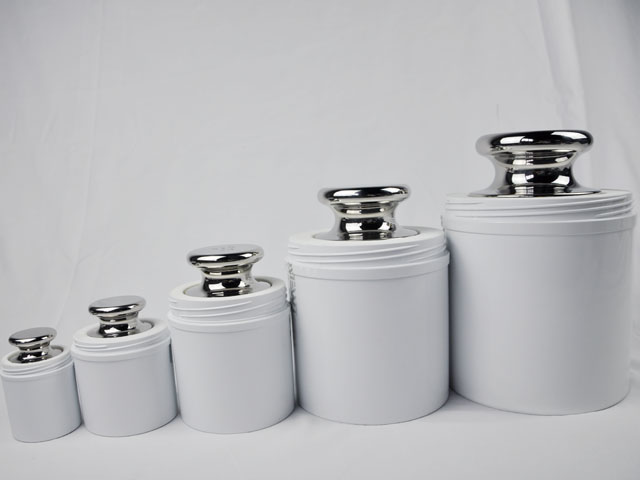
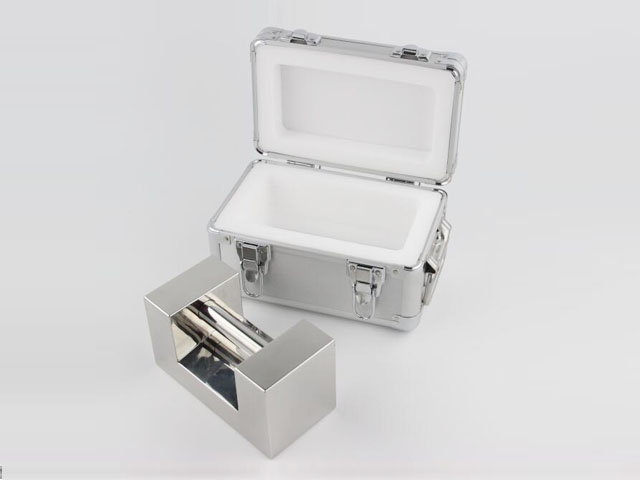
Laboratory Test Weight
Within every professional laboratory environment, regardless of whether the core work focuses on scientific research, material analysis, experimental formulation, or routine measurement verification, the consistency and credibility of all experimental data and detection results rely entirely on the stability and accuracy of basic measurement conditions. Among all the auxiliary tools and standard supplies deployed in laboratory daily operations, the laboratory test weight stands as one of the most unassuming yet irreplaceable foundational components, quietly supporting the normal operation of all weighing-related experimental links and ensuring that every numerical data obtained from weighing instruments can reflect real and reliable physical attributes of measured substances. Unlike experimental reagents that directly participate in chemical reactions or analytical instruments that complete data collection and display through complex mechanical and electronic structures, laboratory test weights do not undertake any experimental reaction work or data analysis tasks; their core and only essential role is to serve as a stable and uniform mass reference standard, providing a fixed and reliable comparison basis for various weighing and balancing equipment used in laboratories, and building an unshakable basic foundation for all subsequent experimental research, data recording, result comparison and experimental conclusion derivation. In the entire system of laboratory measurement work, the accuracy of test weights is not just a simple technical requirement for tool use, but a core prerequisite to ensure the repeatability of experimental processes, the comparability of experimental data across different time periods and different experimental groups, and the authenticity and validity of all final experimental research outcomes. Without standardized, well-maintained and properly used laboratory test weights, even the most sophisticated and high-precision weighing analytical instruments will gradually produce measurement deviations during long-term use, and these subtle deviations will continue to accumulate and amplify in continuous experimental operations, eventually leading to distorted experimental data, confusing experimental phenomena, and even completely wrong research judgments and experimental conclusions, which will seriously hinder the progress of scientific research work and affect the effectiveness of experimental exploration and practical application transformation of related research results.
To fully understand the important value and practical application significance of laboratory test weight in daily laboratory work, it is first necessary to clearly distinguish the essential difference between mass and weight, two basic physical concepts that are often easily confused in daily cognition, as this distinction constitutes the most basic theoretical premise for the design, production and use of all laboratory test weights. Mass refers to the inherent amount of matter contained in an object, a basic physical property that will not change with the difference of external geographical location, gravitational environment, temperature and humidity conditions and other external environmental factors, maintaining a stable and fixed state permanently under any conventional laboratory and natural environment conditions. Weight, by contrast, is a derived force formed by the gravitational action of the earth on an object, which will fluctuate slightly with the change of regional gravitational acceleration, altitude difference and local geographical environment characteristics. All laboratory test weights are designed and produced with fixed mass as the core standard parameter, and their internal material composition and external structural design are all formulated to maintain the long-term stability of their own mass value. When laboratory staff use test weights to calibrate weighing balances or verify the working state of weighing instruments, the core work principle is to compare the gravitational force generated by the known fixed mass of the test weight under the current laboratory environment with the induction data fed back by the weighing instrument, so as to judge whether the response state and measurement data of the weighing instrument are within the normal and reasonable range, and then complete the calibration and verification of the weighing equipment. This basic working principle seems simple in physical logic, but it involves extremely high requirements for the production process, material selection, structural processing and later maintenance management of test weights, because any tiny change in the mass of the test weight itself will be directly converted into measurement errors of the weighing instrument, and then affect all experimental work relying on this instrument for data measurement.
The selection of manufacturing materials for laboratory test weights is a key link that directly determines the long-term stability of their mass and the adaptability to complex laboratory experimental environments, and different laboratory application scenarios and different precision measurement requirements correspond to different material selection schemes and processing and forming methods. In conventional general laboratory environments, where the precision requirements for weighing calibration and instrument verification are conventional and the experimental environment is relatively stable with no special corrosive gases, frequent liquid splashing or extreme temperature and humidity changes, most test weights are made of dense and structurally stable metal materials with uniform internal texture and good anti-oxidation basic properties. Such materials have strong overall structural stability, are not easy to produce internal structural changes due to conventional external temperature changes and slight environmental vibration, and their surface processing technology is mature, which can meet the daily repeated use needs of conventional laboratories for a long time. For laboratory scenarios with higher precision measurement requirements, such as analytical chemistry laboratories, biological genetic research laboratories and precision material testing laboratories, the material selection of test weights will be more stringent, focusing on materials with lower surface adsorption, stronger corrosion resistance, better oxidation resistance and smaller thermal expansion and contraction coefficient. This is because in high-precision measurement work, even the tiny mass change caused by surface adsorption of dust, moisture in the air or slight oxidation and corrosion on the surface of test weights will produce obvious measurement deviations, affecting the accuracy of calibration work and subsequent experimental measurement results. Test weights made of high-quality precision materials can effectively resist the influence of various subtle environmental factors in the laboratory, maintain the long-term stability of the surface state and internal mass, and ensure that the mass reference value provided by each use is consistent and reliable without obvious fluctuation and change. In addition, the density uniformity of the selected material is also very important; uniform material density can ensure that the center of gravity of the test weight is stable and the stress distribution is uniform, avoiding the slight mass deviation caused by uneven internal material distribution during long-term placement and repeated handling, and further optimizing the overall use stability of the test weight.
The structural design and surface treatment process of laboratory test weights are also carefully optimized around the core goal of maintaining mass stability and convenient and safe laboratory operation and use. The overall structure of most laboratory test weights adopts a regular geometric shape, with smooth and flat surface and no complex concave and convex structures and dead corners. This structural design is not only conducive to stable placement on the weighing platform of various balances and weighing instruments, ensuring that the test weight will not tilt or shift during the calibration process to affect the force balance state, but also can effectively reduce the adsorption area of dust, moisture and other impurities in the laboratory air, facilitating daily cleaning and maintenance work by laboratory staff. The surface of the test weight will be treated with special smoothing and anti-corrosion processes to make the surface texture compact and smooth, prevent chemical reactions between the metal material and oxygen, moisture and trace corrosive substances in the laboratory air, avoid surface rust, corrosion and peeling, and prevent the mass change of the test weight caused by surface material loss or additional attachment of foreign substances. Some test weights used in high-precision experimental environments also adopt integrated overall forming processing technology, with no internal assembly gaps and no detachable parts, which avoids the tiny mass changes caused by loose assembly parts or loss of small accessories during long-term use and repeated handling. At the same time, the size and weight design of each test weight conform to the basic operating habits of laboratory staff, realizing convenient manual handling and placement without excessive force or complicated auxiliary tools, reducing the risk of accidental dropping and collision during use, and effectively protecting the structural integrity and mass stability of the test weight itself.
The core application scenarios of laboratory test weights in daily laboratory work mainly include two major core links: routine calibration of weighing instruments and regular working state verification of measuring equipment, and these two links complement each other and together ensure the long-term stable and accurate operation of all laboratory weighing related equipment. Calibration work refers to the process in which laboratory staff place test weights with known stable mass on the weighing platform of various balances and weighing instruments, compare the numerical readings displayed by the weighing instruments with the standard mass value of the test weights, and judge the current measurement deviation degree of the instruments. In this process, the laboratory test weight acts as a fixed mass reference standard, helping staff accurately find the subtle measurement errors produced by weighing instruments after long-term use, frequent vibration, environmental temperature and humidity changes and other factors. After identifying the deviation range of the instrument, the staff can carry out targeted fine adjustment and correction of the weighing instrument according to the comparison data, so that the measurement data of the instrument returns to the normal and accurate range, ensuring that the subsequent weighing work of experimental samples can obtain true and reliable data results. Verification work, different from calibration adjustment, is a regular inspection and confirmation link, which focuses on checking whether the measurement error of the weighing instrument is always maintained within the reasonable range required by laboratory experimental work after daily use and periodic calibration. In the verification process, staff do not need to adjust the instrument structure and internal parameters, but only need to use standard test weights for repeated weighing tests to confirm whether the working performance of the instrument is stable and meets the basic use standards, so as to judge whether the instrument can continue to be put into subsequent experimental measurement work or needs to be re-calibrated and maintained.
In different professional laboratory subdivisions, the specific use needs and application emphasis of laboratory test weights also show obvious differentiated characteristics, adapting to the unique experimental work attributes and measurement precision requirements of different fields. In chemical analysis laboratories, a large number of precise weighing operations of chemical reagents, powder samples and solution raw materials are required every day, and the accurate proportioning of various experimental formulations and the accurate measurement of reactant consumption are all based on reliable weighing data. The test weights used in such laboratories need to maintain long-term stable performance, adapt to the chemical environment with trace volatile gas and slight humidity change in the laboratory, and ensure that the calibration and verification work of analytical balances and precision electronic scales can be completed efficiently and accurately, avoiding the influence of weighing deviation on the reaction progress and experimental results of chemical experiments. In biological and medical research laboratories, the weighing of biological samples, culture medium raw materials, biological reagents and experimental preparation materials has extremely high precision requirements, and tiny weighing errors may affect the growth state of biological samples, the activity of biological reagents and the accuracy of biological experiment observation results. The laboratory test weights used in this kind of environment need to have excellent anti-pollution and anti-adsorption performance, avoid carrying external impurities to affect the purity of experimental environment and samples, and provide accurate mass reference for the calibration of high-precision biological analytical balances, ensuring the repeatability and stability of biological experimental data. In physical property testing and material science laboratories, various solid material samples, new material test pieces and mechanical performance test auxiliary materials need to be weighed and measured, and the test weights used need to adapt to the frequent use intensity and different weighing range requirements, ensuring the stable operation of various mechanical and electronic weighing equipment, and providing reliable data support for material performance testing and new material research and development.
The correct use operation specifications and daily scientific maintenance management are crucial to prolong the service life of laboratory test weights and maintain the long-term stability of their mass performance, and any irregular operation and neglect of maintenance will lead to the change of test weight mass and the decline of use performance, affecting the accuracy of laboratory calibration work. In the daily use process, laboratory staff need to follow standardized operating procedures to handle and place test weights, avoiding direct contact between hands and the surface of test weights as much as possible. The sweat, grease and fine impurities on the surface of human hands will adhere to the surface of test weights, forming additional attachments to increase the mass of test weights on the one hand, and causing slow corrosion and oxidation on the surface of test weights to damage the surface structure on the other hand. In the process of placing and taking test weights, it is necessary to handle them gently, avoiding violent collision, friction and accidental dropping, because impact and friction will not only cause surface scratch and structural damage of test weights, but also lead to the loss of surface materials and tiny changes in internal stress, resulting in unstable mass value. After each use of the test weights, they need to be cleaned in a standardized way to remove the dust, moisture and residual fine impurities attached to the surface, and then placed in a dry, dust-proof and stable special storage position, avoiding long-term exposure to the laboratory environment with large temperature and humidity changes and corrosive gas erosion.
The storage environment management of laboratory test weights is also an important part of daily maintenance work, and a good storage environment can effectively slow down the aging and performance attenuation speed of test weights and maintain the long-term consistency of their mass standard value. The storage area of test weights needs to maintain a dry and ventilated state, avoid excessive humidity to cause surface moisture and rust of metal test weights, and also avoid excessive dryness to generate static electricity to adsorb a large amount of dust particles in the air. The ambient temperature of the storage area should be kept relatively stable, avoiding frequent and sharp temperature rise and fall, because frequent temperature changes will cause thermal expansion and contraction of the test weight material, and long-term repeated expansion and contraction will lead to subtle changes in the internal structure of the material, affecting the stability of the test weight mass. In addition, the storage position of test weights needs to be kept away from laboratory vibration sources, chemical reagent storage areas and experimental operation areas with large dust volume, so as to prevent the mass stability of test weights from being affected by long-term vibration interference, chemical gas corrosion and excessive dust accumulation. For test weights used for high-precision calibration work, separate independent storage containers are also needed to avoid mutual collision and friction between different test weights during placement and storage, and further protect their surface integrity and mass stability.
The influence of external environmental factors in the laboratory on the use effect of laboratory test weights and weighing calibration work cannot be ignored, and all environmental subtle changes will indirectly affect the calibration accuracy through the use link of test weights. Air buoyancy is one of the common environmental influencing factors that are easy to be ignored in daily laboratory work. The air in the laboratory has a certain density, and all test weights and measured samples will be affected by air buoyancy when placed on the weighing platform. Under normal conventional laboratory conditions, the influence of air buoyancy is small and will not have an obvious impact on conventional precision calibration work, but in high-precision measurement and calibration scenarios, the subtle difference of air buoyancy caused by air temperature, humidity and air pressure changes needs to be considered in the calibration process to ensure the accuracy of calibration results. Laboratory vibration is also an important environmental factor affecting the use of test weights. Slight vibration generated by experimental equipment operation, personnel walking and mechanical operation in the laboratory will affect the stable placement of test weights on the weighing platform, resulting in unstable reading of weighing instruments and deviation of calibration comparison results. Therefore, in the process of using test weights for calibration and verification work, it is necessary to keep the laboratory environment quiet and stable, reduce unnecessary personnel activities and equipment operation interference, and ensure that the test weights and weighing instruments are in a stable vibration-free working state.
Wind and air flow interference in the laboratory will also have a certain impact on the weighing calibration work using test weights, especially for high-precision electronic balances and micro-weighing instruments. The air flow generated by laboratory air conditioning ventilation, door opening and closing and personnel movement will blow the surface of test weights and weighing platforms, resulting in slight fluctuation of weighing data and inability to obtain stable and accurate calibration comparison values. Therefore, when carrying out high-precision calibration work with laboratory test weights, it is necessary to close the doors and windows of the laboratory, adjust the air supply mode of air conditioning, avoid obvious air flow passing through the weighing operation area, and create a closed and stable working environment for calibration work. In addition, the temperature and humidity matching degree between the test weight itself and the laboratory environment is also very important. Before formal calibration and use, the test weights need to be placed in the laboratory working environment for a period of time to adapt to the ambient temperature and humidity, so that the temperature of the test weight is consistent with the ambient temperature, avoiding the temporary mass change and surface condensation caused by temperature difference, and ensuring that the test weights can maintain the most stable mass state during use.
With the continuous progress of laboratory scientific research technology and the continuous improvement of experimental measurement precision requirements in various industries, the performance requirements for laboratory test weights are also constantly improving, and the optimization and upgrading of test weight design, material research and development and processing technology are also advancing with the development of laboratory measurement technology. In modern laboratory work, the diversification of experimental types and the refinement of measurement links make test weights no longer just simple mass reference tools, but an important part of the laboratory overall measurement quality control system. Every link from material selection, production and processing, factory performance detection, daily use and operation to regular maintenance and storage management will affect the overall measurement quality level of the laboratory. A complete set of standardized test weight management and use system can not only ensure the long-term stable performance of the test weights themselves, but also effectively reduce the measurement error of all weighing instruments in the laboratory, ensure the accuracy, repeatability and traceability of experimental data, and lay a solid foundation for the smooth development of scientific research experiments, the accurate completion of detection work and the effective transformation of experimental results.
In the long-term operation and development of the laboratory, the importance of laboratory test weights is often overlooked because of their simple structure and uncomplicated use process, but all laboratory practitioners who have been engaged in experimental research and measurement work for a long time can clearly realize that all reliable experimental data and accurate measurement results are inseparable from the silent support of these basic standard tools. Every precise calibration, every data verification and every accurate weighing operation in the laboratory are all based on the stable mass reference provided by laboratory test weights. Without reliable test weight support, no matter how advanced the experimental instrument and sophisticated the experimental method are, it is impossible to ensure the authenticity and credibility of experimental research results. Therefore, attaching importance to the standardized use, scientific maintenance and standardized management of laboratory test weights, strictly implementing daily operation specifications and regular maintenance plans, and creating a good use and storage environment for test weights are essential basic work for every laboratory to maintain normal experimental operation and ensure the quality of experimental research. Only by doing a good job in the basic guarantee work of laboratory test weights can we ensure that all laboratory measurement work is carried out in an accurate and standardized state, promote the steady progress of various scientific research and experimental work, and continuously output reliable and valuable research results and experimental data for various professional research fields and practical application scenarios.
Laboratory Test Weight
https://www.veidtweighing.com/test-weight.html
Post Date: Apr 28, 2026
https://www.supplier-manufacturer.com/test-weight/laboratory-test-weight.html

![25kg Test Weight]()
25kg Test Weight
In the complex and interconnected system of modern social production, commercial circulation, public infrastructure operation and daily life management, the accuracy and s…![M3 Class Test Weight]()
M3 Class Test Weight
In the entire system of industrial measurement, commercial weighing and daily metering verification work, test weights stand as one of the most fundamental and indispensab…![Stainless Steel Standard Weight]()
Stainless Steel Standard Weight
Stainless steel standard weight represents one of the most fundamental and essential physical attribute benchmarks that define the practical usability and structural perfo…![Test Weight Sets]()
Test Weight Sets
Test weight sets stand as foundational reference tools in every field that relies on reliable mass measurement, forming the essential bridge between theoretical mass stand…![Standard Calibration Weight]()
Standard Calibration Weight
In every corner of modern production, scientific research, experimental analysis, and daily industrial operation, the reliability of weighing data stands as an invisible f…