Heavy-duty Counting Scale
In modern industrial production, warehouse management, manufacturing processing, and large-scale commercial material handling, the accurate quantification and quantity statistics of bulk parts, packaged goods, and raw material components have always been core links that determine operational efficiency and management standardization. Many production and storage scenarios involve large-volume, single-item heavy-weight materials or finished products, where traditional manual counting methods face obvious limitations such as low working speed, high error probability, and heavy labor consumption, while ordinary lightweight weighing and counting equipment cannot bear long-term heavy load pressure and stable operation requirements. A heavy-duty counting scale stands out as a practical and essential measuring and counting device tailored to these rigorous practical demands, perfectly balancing strong load-bearing capacity, consistent counting accuracy, and durable structural performance to adapt to complex working environments and high-frequency continuous operation tasks in various professional scenarios. Unlike ordinary counting tools that only suit small and light items, this type of counting equipment is specially optimized for heavy-load use conditions, taking into account both the basic needs of weight detection and quantity conversion statistics, as well as the long-term stability and anti-interference ability required for industrial and bulk commercial work, becoming an indispensable basic equipment for optimizing inventory management, controlling production quality, and standardizing material inbound and outbound scheduling in many enterprises and institutions.
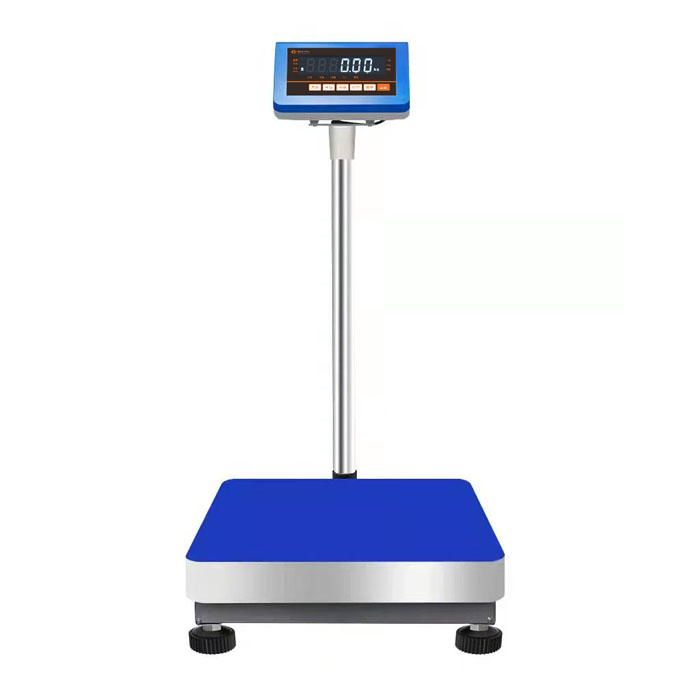
The core working logic of a heavy-duty counting scale is based on the scientific combination of accurate weight measurement and average weight conversion calculation, a mature and reliable working principle that has been continuously optimized and upgraded according to actual heavy-load working conditions. The basic operation process starts with sampling calibration, where users place a certain number of standard sample items on the scale’s weighing platform first; the equipment’s high-sensitivity internal sensing components quickly capture the total weight of these samples, and the built-in intelligent calculation module automatically divides the total sampling weight by the preset sampling quantity to obtain the accurate average single weight of the measured items. After completing the simple sampling and calibration process, the equipment enters the formal counting working state. When bulk quantities of the same type of items are placed on the weighing platform in batches or as a whole, the scale first accurately measures the total weight of all placed items in real time, and then automatically calculates the total quantity of the items through the internal program based on the pre-calibrated single average weight, directly displaying clear and intuitive quantity data on the display interface. This working mode completely avoids the tedious and error-prone manual one-by-one counting process, especially suitable for scenarios where the number of items is large and single items have heavy weight and solid texture, making manual counting time-consuming and labor-intensive. What makes heavy-duty counting scales more suitable for industrial heavy-load scenarios than ordinary counting equipment is that their internal sensing and data processing modules are specially adjusted for heavy weight ranges. They can maintain stable sensing sensitivity even under long-term heavy pressure, avoid data fluctuation and counting deviation caused by instantaneous load impact or long-term pressure bearing, and ensure that both weight measurement and quantity conversion results remain stable and consistent in repeated and continuous working processes.
The structural design of a heavy-duty counting scale fully focuses on durability, load-bearing stability, and adaptability to complex working environments, with every key component optimized to meet the demands of high-frequency heavy-load work. The weighing platform, as the core bearing part in direct contact with materials and goods, adopts thickened and reinforced structural materials with strong compression resistance, impact resistance, and deformation resistance. This design effectively prevents platform bending, surface depression, and structural deformation that may occur after long-term placement of heavy goods or frequent loading and unloading operations, maintaining the flatness and stability of the weighing surface for a long time, which is the basic prerequisite for ensuring long-term counting and weighing accuracy. The bottom and internal supporting structures of the equipment are equipped with stable anti-shake and anti-slip auxiliary designs, which can effectively offset slight vibration interference generated by on-site mechanical operation, personnel walking, and material handling in the working environment. Such anti-interference structural design ensures that the weighing and counting data will not produce obvious jumps or deviations due to external environmental vibration, keeping the equipment running stably in busy and complex factory workshops and warehouse storage areas. The internal sensing and data processing core components adopt modular integrated design, which not only improves the overall operational stability of the equipment but also brings great convenience to daily maintenance and later routine inspection. The modular structure allows for quick disassembly and replacement of individual parts without complex professional operation steps, reducing the time and labor cost required for equipment daily maintenance and failure troubleshooting, and ensuring that the equipment can quickly return to normal working state after routine maintenance or minor component replacement, avoiding long-term shutdown affecting overall production and warehousing work progress.
In terms of operational use design, heavy-duty counting scales adhere to the design concept of simplicity and practicality, fully considering the actual operation needs of on-site front-line staff, and do not set up complicated and redundant functional operation steps, effectively reducing the threshold for user operation and the probability of operational errors. The equipment is equipped with a clear and high-definition display interface, with large-size digital display and intuitive data classification presentation, allowing operators to quickly and clearly read real-time total weight, single item average weight, and total counting quantity data even in working environments with dim light or busy and noisy on-site conditions. The external operation buttons are designed with anti-slip, wear-resistant, and easy-to-press features, suitable for frequent repeated pressing operations in daily work, and can still maintain sensitive and effective response after long-term use. The internal control program has a variety of practical built-in auxiliary functions suitable for bulk counting work, including data zeroing after material placement, automatic tare subtraction for packaging containers and pallets, cumulative counting statistics for multiple batches of goods, and automatic data locking for fixed counting results. The tare subtraction function can automatically deduct the weight of external carriers such as pallets, packaging boxes, and storage baskets commonly used in industrial and warehousing handling, ensuring that the final counted weight and quantity data only target the goods themselves and avoiding counting inaccuracies caused by the weight of auxiliary carriers. The cumulative counting function meets the statistical needs of batch goods counting in multiple times and batches, automatically summarizing the counting data of each batch to facilitate overall inventory quantity statistics and production output recording. All operation processes do not require professional technical training for operators; simple on-site demonstration can let staff quickly master the basic use methods, realizing efficient operation and immediate use after power-on.
Heavy-duty counting scales have a wide range of application coverage, penetrating multiple links and fields of industrial production, warehousing and logistics, finished product processing, raw material distribution, and commercial bulk material management, bringing obvious efficiency and management optimization effects to different application scenarios. In the mechanical parts processing and manufacturing industry, a large number of heavy metal parts, hardware accessories, standard fasteners, and mechanical assembly components need to be counted and inspected after production and processing, as well as quantity verification before warehouse storage and outbound distribution. These parts are heavy in single piece, large in total quantity, and high in quantity accuracy requirements for assembly and supporting production. Manual counting is not only slow in speed but also prone to missing counting and repeated counting, which may lead to insufficient quantity of parts in production assembly and affect the normal progress of production and processing work. The application of heavy-duty counting scales can quickly complete the counting statistics of bulk mechanical parts, ensure that the quantity of parts stored in and out of the warehouse is accurate, provide reliable quantity data support for production scheduling and parts assembly management, and effectively avoid production delays and material waste caused by quantity errors.
In the food processing and bulk packaged food production industry, many bulk raw materials, semi-finished products, and finished packaged products require fixed-quantity packaging, batch quantity inspection, and warehouse inventory counting work. Some food raw materials are stored and transported in large packaging bags or metal containers, with heavy single-bag weight and large batch quantity, requiring both accurate weight control and precise quantity statistics for each batch of packaged products. Heavy-duty counting scales can complete sampling calibration and batch counting efficiently, ensuring that the quantity of each batch of packaged products meets the set production standards, avoiding uneven quantity of finished products in single packaging, helping enterprises maintain consistent product specifications, and improving standardized production levels. At the same time, in the link of finished food products entering the warehouse for storage and outgoing for sales and distribution, the equipment can quickly complete the quantity counting of whole pallet and whole batch goods, simplify the inventory management process of food enterprises, improve the efficiency of regular inventory checking, and ensure that the actual quantity of goods in the warehouse is consistent with the account records, facilitating standardized warehouse material scheduling and sales distribution arrangement.
In the chemical raw material and new material production industry, various granular, block, and granular chemical raw materials and finished chemical products are usually traded, stored, and used in bulk and heavy packaging. The quantity statistics of raw material incoming inspection, production material batching and feeding, and finished product outbound delivery all require high-precision and high-reliability counting and weighing work. The working environment of chemical production and storage areas has certain particularities, and the equipment used needs to adapt to long-term stable operation in relatively complex environmental conditions. Heavy-duty counting scales have good environmental adaptability, can maintain stable working performance in conventional chemical production and storage environments, accurately complete the counting and weighing of bulk chemical materials, ensure accurate quantity proportioning in production batching links, avoid production quality problems caused by inaccurate material quantity proportioning, and at the same time provide accurate quantity data for raw material incoming and finished product outbound settlement, ensuring the standardized and orderly development of enterprise production and operation work.
In warehousing and logistics management and large-scale commercial bulk material sales and distribution links, the efficient counting and accurate quantity management of goods are important guarantees for improving logistics turnover efficiency and optimizing customer service experience. Large warehouses and logistics distribution centers often need to count and check whole batches of heavy goods, palletized goods, and bulk packaged materials. Traditional manual counting requires a lot of manpower and time, and the counting efficiency is low, which easily affects the goods warehousing speed and logistics distribution timeliness. The use of heavy-duty counting scales can quickly complete the batch counting of various heavy bulk goods, greatly shorten the time required for goods inventory and quantity inspection, improve the overall operation efficiency of warehouse logistics, accelerate goods warehousing, storage, and distribution turnover speed, and help logistics and warehousing enterprises realize refined management of goods quantity. In the bulk material sales link of commercial terminals, for heavy bulk goods sold by fixed quantity batches, the equipment can quickly complete quantitative counting and packaging, improve sales and packaging efficiency, ensure consistent quantity of goods sold each time, maintain good market operation order, and bring stable and reliable operation benefits for commercial operation subjects.
In addition to efficient counting and stable weighing performance, heavy-duty counting scales also have good data management and subsequent expansion application capabilities, which can meet the refined management needs of modern enterprises for production and warehousing data. The equipment can automatically record daily weighing and counting operation data, including each counting time, corresponding goods quantity, and weighing data, forming complete operation records that can be queried and reviewed at any time. This data recording function facilitates enterprise managers to conduct regular production data statistics, warehouse inventory reconciliation, and operation work analysis, helping enterprises grasp the actual situation of material use, product output, and goods inventory in a timely manner, providing effective data support for enterprise production plan adjustment and management decision-making. At the same time, the equipment reserves functional expansion interfaces, which can be connected with enterprise warehouse management systems and production resource management systems according to actual use needs, realizing real-time upload and synchronous sharing of counting and weighing data, realizing digital and intelligent management of material counting and weighing links, further improving the overall intelligent operation level of enterprise production and warehousing work.
In terms of long-term use and daily maintenance cost control, heavy-duty counting scales have outstanding advantages of stable performance, low failure rate, and long service life, bringing long-term stable use value for enterprises. Due to the adoption of reinforced structural design and high-quality core components, the equipment can withstand long-term high-frequency heavy-load operation without easy aging and damage of key parts, maintaining stable working performance for a long time and reducing the frequency of equipment failure and shutdown maintenance. The modular component design makes daily maintenance and minor fault handling simple and convenient, without the need for complex professional maintenance technology and high maintenance costs. Enterprises only need to complete conventional daily cleaning and regular simple inspection work to ensure the long-term stable operation of the equipment. Compared with the problems of easy damage, frequent calibration, and high maintenance cost of ordinary lightweight counting equipment under heavy-load working conditions, heavy-duty counting scales can effectively reduce the comprehensive use cost of enterprises in the long-term use process, avoid production and operation losses caused by equipment failure and counting errors, and create stable and reliable economic and management benefits for enterprises.
With the continuous improvement of the degree of industrial production automation and the continuous upgrading of warehouse logistics management refinement requirements, the importance of efficient and accurate heavy-load counting and weighing equipment in various industries is becoming more and more prominent. Heavy-duty counting scales, with their excellent heavy-load bearing performance, stable counting accuracy, simple and convenient operation mode, wide environmental adaptability, and perfect data management functions, have become important basic equipment for solving the counting pain points of bulk heavy goods in many enterprises. It not only replaces inefficient and error-prone manual counting work, greatly improving the efficiency of production, warehousing, and logistics counting links, but also ensures the accuracy and consistency of counting data, helping enterprises realize standardized production management and refined warehouse inventory control. In the future, with the continuous development of production and operation management towards digitalization and intelligence, heavy-duty counting scales will continue to rely on their practical performance advantages, continuously adapt to the changing use needs of various industries, play a more important role in more production and warehousing links, and provide solid basic guarantee for the stable operation and efficient development of enterprise production and operation activities.
Heavy-duty Counting Scale
https://www.pruiste.com/counting-scale.html
Post Date: May 6, 2026
https://www.supplier-manufacturer.com/counting-scale/heavy-duty-counting-scale.html

![Types of Digital Viscometer]()
Types of Digital Viscometer
Viscosity serves as a fundamental physical property that reflects a fluid’s internal resistance to flow and shear deformation, playing a vital role in quality control, pr…![Digital Viscometer Wholesale]()
Digital Viscometer Wholesale
Viscosity measurement stands as a fundamental part of industrial quality control, material research, and production process optimization across diverse global sectors. As …![Precision Digital Viscometer]()
Precision Digital Viscometer
Viscosity stands as one of the most fundamental physical properties of fluid substances, reflecting the internal friction and flow resistance generated during the movement…![Purposes of Moisture Analyzer]()
Purposes of Moisture Analyzer
Moisture content stands as one of the most fundamental and influential physical properties of nearly all raw materials, semi-finished goods, and finished products across i…![Types of Moisture Analyzer]()
Types of Moisture Analyzer
Moisture analysis stands as a fundamental testing procedure across industrial manufacturing, laboratory research, agricultural processing, and material quality inspection.…