Precision Digital Viscometer
Viscosity stands as one of the most fundamental physical properties of fluid substances, reflecting the internal friction and flow resistance generated during the movement of liquid molecules. It serves as a critical indicator for evaluating fluid formulation stability, processing performance, and product consistency, covering a wide range of substances from low-viscosity solvent solutions and aqueous preparations to high-viscosity greases, resin pastes, and colloidal mixtures. In modern laboratory analysis and industrial production testing, traditional manual viscometers gradually fail to meet the growing demands for stable detection data, standardized operation processes, and efficient batch testing. Precision digital viscometers have become mainstream testing equipment in fluid property analysis by virtue of optimized mechanical structures, intelligent data processing systems, and stable testing performance, providing reliable technical support for quality control, formula optimization, and process parameter calibration in multiple industries.
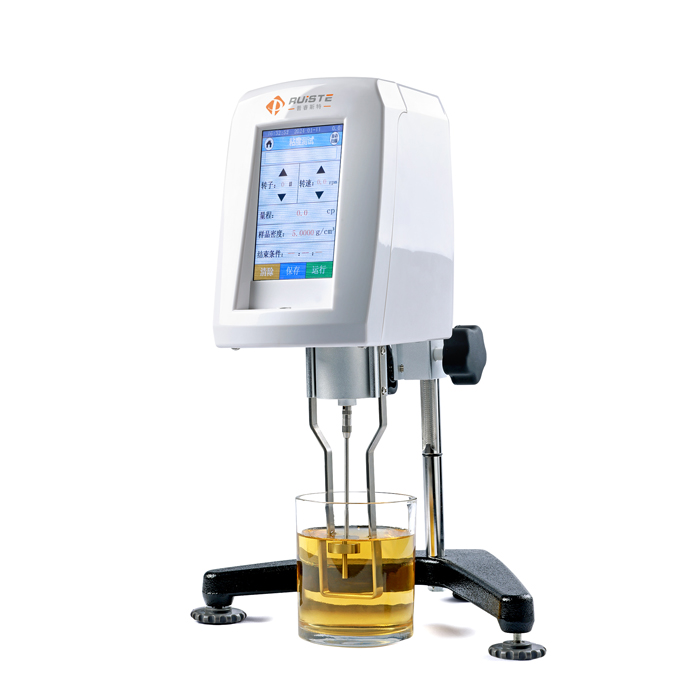
The working mechanism of precision digital viscometers is based on the basic laws of fluid rheology, following the correlation between shear stress, shear rate, and fluid viscosity. Most mainstream devices adopt rotational testing structures, which rely on a stable drive system to drive a customized spindle to rotate at a constant and controllable speed in the tested fluid. When the spindle rotates, it is subjected to viscous resistance from the fluid medium, and the magnitude of this resistance torque is positively correlated with the viscosity of the fluid sample. Internal high-sensitivity sensing modules capture real-time torque changes, and the built-in microprocessor converts the collected mechanical signal into accurate viscosity data through algorithm calculation, finally presenting standardized digital readings on the display interface. This testing mode effectively avoids human observation errors and subjective judgment deviations that are common in traditional visual inspection viscometers, realizing objective and quantifiable viscosity detection.
Different from conventional testing instruments, precision digital viscometers adopt a modular structural design, with each core component cooperating efficiently to ensure the accuracy and stability of the testing process. The drive system is equipped with a high-stability stepping motor, which can output uniform and precise rotational power, achieving continuous and adjustable rotation speeds within a wide range. This design enables the equipment to adapt to the testing requirements of different fluid characteristics, especially suitable for non-Newtonian fluids whose viscosity values change with shear rate. The matching spindle components are made of high-precision materials with smooth surfaces and standardized geometric dimensions, ensuring consistent shear effects on fluid samples during each test. Multiple sets of spindles with different specifications are usually configured to match low, medium, and high viscosity samples, expanding the effective testing range of the equipment. In addition, the built-in temperature sensing module can monitor the ambient temperature and sample temperature in real time during the testing process. Since fluid viscosity is highly sensitive to temperature changes, real-time temperature monitoring and compensation functions can effectively reduce data deviation caused by temperature fluctuation and improve the authenticity of test results.
In terms of functional design, precision digital viscometers focus on practicality and standardization, adapting to diversified testing scenarios in laboratories and industrial sites. The equipment supports multi-speed switching testing, and users can select appropriate rotation speeds according to the estimated viscosity range of the sample and industry testing standards. For non-Newtonian fluids with shear thinning or shear thickening characteristics, multi-speed testing can obtain viscosity data under different shear conditions, helping researchers comprehensively analyze the rheological properties of materials rather than relying on single-point data for evaluation. The intelligent data processing system can automatically record test data, generate continuous detection curves during long-term testing, and store historical test records, which is convenient for subsequent data sorting, comparative analysis, and quality traceability. The intuitive digital display interface presents viscosity values, test time, real-time temperature, and running status synchronously, making the operation process more intuitive and reducing the threshold for equipment use.
The application advantages of precision digital viscometers are prominently reflected in test repeatability and data stability. In batch sample testing, the equipment can maintain consistent operating parameters and sensing accuracy, ensuring that the test deviation between multiple groups of parallel samples is controlled within a low range. This stable performance is crucial for industrial production quality control, as it helps enterprises accurately capture subtle changes in raw material batches and finished product formulas. For formula research and development in scientific research scenarios, the high-resolution data collection capability of the equipment can capture tiny viscosity changes caused by raw material ratio adjustment, additive dosage change, or process parameter modification, providing accurate data support for formula optimization and process improvement. Compared with traditional testing methods that require manual timing and visual reading, the automated testing process of digital viscometers simplifies operation steps, shortens single-group testing time, and improves the overall efficiency of sample detection.
Precision digital viscometers cover a wide range of industry application scenarios, penetrating the quality detection and research links of most fluid material industries. In the coating and paint industry, viscosity is a key indicator affecting coating construction performance and film forming quality. Excessively high viscosity will lead to poor fluidity of the coating, easy occurrence of brush marks and uneven coating during construction, while excessively low viscosity will cause sagging and insufficient film thickness. The equipment can accurately detect the viscosity of paint, ink, and coating slurry, guide enterprises to adjust solvent dosage and stirring process parameters, and ensure the consistency of coating batch quality. In the chemical industry, it is applied to the detection of resin solutions, adhesive slurries, lubricating oils, and colloidal materials, monitoring the viscosity changes of chemical materials during synthesis, stirring, and curing, and judging the reaction progress and material stability.
In the food and daily chemical industry, precision digital viscometers provide important guarantees for product taste and texture stability. Dairy products, fruit pulp, sauce condiments, and beverage suspensions all have strict viscosity standards, and stable viscosity parameters can ensure consistent taste and texture of products in different production batches. Cosmetic raw materials such as facial cream, lotion, essence slurry, and hair care products also rely on viscosity testing to optimize formula ratio, ensuring good ductility and use experience of products. In the pharmaceutical industry, the viscosity detection of medicinal solutions, ointment substrates, and biological preparations helps standardize product production processes, avoid product quality fluctuations caused by raw material differences or process changes, and maintain the stability of pharmaceutical efficacy and product properties.
In new material and polymer research fields, the rheological characteristics of materials are closely related to their processing and application performance. Polymer solutions, hot-melt materials, and composite colloids will have viscosity changes under different temperature and shear conditions. Precision digital viscometers can simulate actual processing conditions through adjustable speed and temperature monitoring functions, test the viscosity characteristics of materials in different environments, and provide effective data basis for material processing technology formulation and product performance improvement. In papermaking and textile industries, the equipment is used to detect the viscosity of pulp slurry and textile sizing agents, ensuring the uniformity of pulp mixing and sizing effect, and improving the production quality of paper products and textiles.
Standardized operation and daily maintenance are key factors to maintain the long-term stable performance of precision digital viscometers. Before each test, it is necessary to place the equipment on a horizontal stable platform to avoid data deviation caused by equipment tilt. The spindle needs to be cleaned thoroughly to prevent residual impurities from previous samples from affecting the test results of new samples. For samples with high viscosity or easy precipitation, pre-stirring and temperature stabilization treatment are required to ensure the uniformity of sample properties and the accuracy of test data. During the test, it is necessary to select a matching spindle and rotation speed according to the sample viscosity range, avoiding the problem of inaccurate data caused by excessive or insufficient spindle load. After the test is completed, the spindle should be cleaned and dried in time, and the equipment should be kept in a dry and dust-proof storage environment to prevent moisture and dust from affecting the sensitivity of the sensing system and the stability of the drive system.
With the continuous upgrading of industrial production standards and scientific research precision requirements, the performance optimization of precision digital viscometers is also advancing continuously. Modern equipment is gradually developing towards intelligent automation, with more precise temperature compensation systems, richer shear rate adjustment ranges, and more perfect data storage and export functions. These optimizations further improve the adaptability of the equipment in complex testing scenarios, realize efficient and accurate detection of various Newtonian and non-Newtonian fluids, and meet the diversified testing needs of basic scientific research, formula development, batch production detection, and product quality inspection.
In summary, precision digital viscometers, as professional fluid viscosity testing equipment, rely on mature rheological testing principles, precise mechanical structures, and intelligent data processing technologies to solve the pain points of low accuracy, poor repeatability, and low efficiency of traditional viscosity testing methods. They provide standardized and reliable testing solutions for multiple industries involving fluid materials. In the future, with the continuous development of material science and industrial intelligent manufacturing, the application scope of precision digital viscometers will be further expanded, and their technical value in material performance research, production process optimization, and product quality control will become more prominent, becoming an indispensable basic testing equipment in modern industrial production and scientific research laboratories.
Precision Digital Viscometer
https://www.pruiste.com/digital-viscometer.html
Post Date: May 23, 2026
https://www.supplier-manufacturer.com/digital-viscometer/precision-digital-viscometer.html

![Moisture Analyzer Vender In China]()
Moisture Analyzer Vender In China
Moisture analysis stands as a fundamental quality control and process monitoring procedure across modern industrial and laboratory operations, as moisture content directly…![Moisture Analyzer Manufacturer]()
Moisture Analyzer Manufacturer
Moisture content stands as one of the most critical physical indicators that determine the quality, stability, and usability of raw materials and finished products across …![Online Moisture Analyzer]()
Online Moisture Analyzer
Moisture content stands as one of the most critical physical indicators that determine the quality, stability, and processing performance of raw materials, semi-finished g…![Laboratory Balance Vender In China]()
Laboratory Balance Vender In China
The laboratory balance industry in China has undergone steady and transformative development over the past decade, evolving from a reliant market on imported equipment to …![Laboratory Balance Exporter]()
Laboratory Balance Exporter
Laboratory balances stand as foundational measuring instruments in modern scientific research, industrial production, and quality inspection sectors, serving as core equip…