Types of Moisture Analyzer
Moisture analysis stands as a fundamental testing procedure across industrial manufacturing, laboratory research, agricultural processing, and material quality inspection. The presence of moisture in solid, liquid, and even gaseous materials directly influences material stability, chemical composition, physical performance, and product shelf life. Excess moisture can trigger material degradation, chemical reactions, structural changes, and quality inconsistencies, while insufficient moisture may compromise the texture, flexibility, and usability of specific products. To accommodate diverse testing scenarios, material characteristics, and accuracy requirements, multiple types of moisture analyzers have been developed based on distinct physical and chemical principles. Each category features unique structural designs, working mechanisms, and applicable ranges, enabling targeted moisture detection for various sample types and testing environments. Understanding the core differences and functional attributes of different moisture analyzers is essential for selecting appropriate testing equipment to ensure reliable and consistent moisture measurement results in routine operations and research activities.
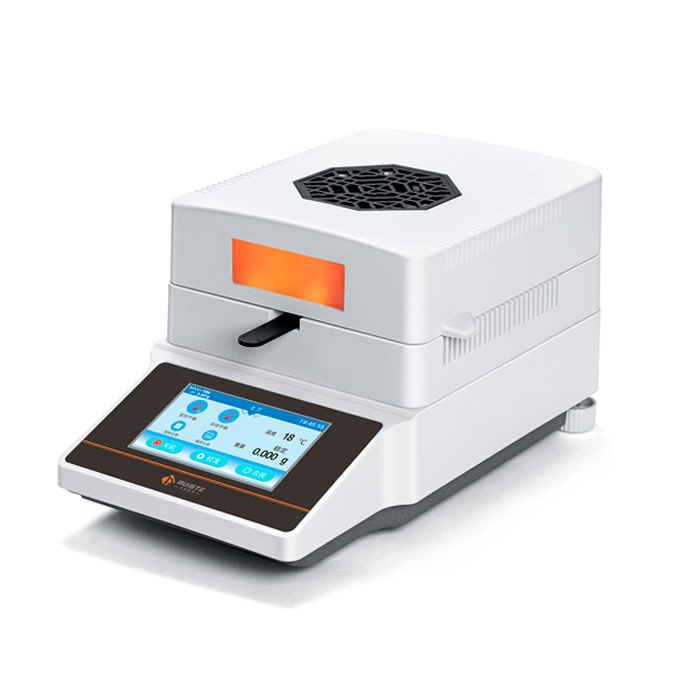
Loss-on-drying moisture analyzers represent one of the most widely adopted testing devices in conventional and modern moisture detection, operating on the classic thermogravimetric principle that relies on weight loss measurement after sample dehydration. This category of equipment calculates moisture content by comparing the initial weight of a sample with its stable dry weight after complete evaporation of internal moisture. Within this classification, infrared moisture analyzers serve as a foundational type, utilizing infrared radiation to generate uniform thermal energy for sample heating. Infrared heating penetrates the sample surface gently and evenly, avoiding localized overheating that may damage sample structures or cause abnormal weight loss from material decomposition. This heating mode is highly adaptable to heat-sensitive materials, including food powders, pharmaceutical intermediates, and fine chemical raw materials, which require mild dehydration conditions to preserve inherent material properties. The testing process involves placing a prepared sample on a high-precision weighing platform, initiating constant-temperature infrared heating, and continuously recording real-time weight changes until the sample weight stabilizes, indicating the full evaporation of free moisture. The internal calculation system automatically converts the recorded weight difference into a standardized moisture content value, delivering intuitive and repeatable testing data suitable for routine quality control and batch sampling inspection.
Halogen moisture analyzers are an optimized iteration of infrared drying-based moisture detection equipment, retaining the core thermogravimetric principle while upgrading the heating component with halogen gas-filled radiation tubes. Compared with traditional infrared heating structures, halogen heating elements feature lower thermal inertia and faster temperature response, achieving rapid and stable temperature rise within a short period. This structural improvement shortens the overall testing cycle significantly while maintaining uniform heat distribution across the sample surface. The balanced heating environment prevents incomplete moisture evaporation caused by uneven temperature distribution and reduces the risk of sample scorching or thermal decomposition. This type of analyzer works well for a broad spectrum of solid and semi-solid samples, including granular materials, pastes, fibrous substances, and agricultural products such as grains, seeds, and feed materials. It balances testing efficiency and operational simplicity, making it suitable for both laboratory precision testing and on-site production line rapid detection. The adaptive temperature control system allows users to set targeted drying temperatures based on sample thermal stability, expanding its applicability across food processing, plastic manufacturing, biomass energy, and daily chemical production industries.
Microwave moisture analyzers constitute another vital branch of loss-on-drying testing equipment, adopting microwave energy as the heating source to realize internal and synchronous heating of samples. Different from surface heating modes of infrared and halogen devices, microwaves penetrate the entire sample volume and excite water molecules inside the material to generate frictional heat from within. This internal heating mechanism eliminates the temperature gradient between the sample surface and interior, ensuring thorough evaporation of both surface and internal moisture without leaving residual moisture trapped in deep material layers. This unique advantage makes microwave moisture analyzers particularly suitable for thick, bulky, and porous samples, including wood panels, textile fabrics, biomass pellets, and soil samples. The rapid volumetric heating characteristic greatly shortens dehydration time, supporting high-frequency batch testing in industrial production. In addition, microwave heating causes minimal damage to non-aqueous material components, maintaining the integrity of sample physical structures during testing. This type of equipment is extensively applied in agricultural product processing, building material production, environmental monitoring, and textile manufacturing, where large-volume sample testing and efficient data output are routine requirements.
Beyond thermogravimetric drying equipment, chemical reaction-based moisture analyzers provide high-precision solutions for trace moisture detection, with Karl Fischer moisture analyzers being the most representative type. This equipment operates on the quantitative chemical reaction between water and Karl Fischer reagents, achieving accurate measurement of trace moisture that is difficult to detect through conventional drying methods. It is divided into two mainstream operational modes: volumetric and coulometric measurement, each tailored for different moisture concentration ranges. Volumetric Karl Fischer analyzers rely on manual or automatic titration of standard reagents to react with sample moisture, calculating moisture content based on reagent consumption volume, and are ideal for samples with medium to high moisture concentrations. Coulometric Karl Fischer analyzers generate reactive electrolytes through electrolysis, enabling ultra-trace moisture detection with extremely low measurement limits. This chemical-based testing method specifically targets water molecules without interference from volatile organic substances or other volatile components in samples, delivering superior testing specificity compared with physical drying methods.
Karl Fischer moisture analyzers are widely used in precision industrial and laboratory scenarios that demand high accuracy, including pharmaceutical raw material testing, solvent purity detection, petrochemical product analysis, and electronic component material inspection. They can detect moisture in liquid, solid, and even gaseous samples, filling the technical gap of traditional drying analyzers in trace moisture measurement. It is important to control testing environments and reagent status during operation, as external humidity and reagent validity can affect final data stability. Standardized operational procedures ensure consistent and reliable testing results, making this equipment indispensable in high-precision quality inspection and scientific research fields.
Electrical property-based moisture analyzers are designed for rapid non-destructive or semi-non-destructive testing, calculating moisture content by measuring changes in electrical parameters of materials caused by moisture presence. Water molecules possess distinct dielectric and conductive properties compared with dry material components, and variations in moisture content directly alter the capacitance, conductivity, and impedance of tested samples. Capacitive moisture analyzers are a typical type of this category, equipped with high-sensitivity sensing probes that detect dielectric constant changes of materials. As material moisture content rises, the overall dielectric constant of the sample increases correspondingly, and the equipment converts detected dielectric data into intuitive moisture values through built-in calibration algorithms. This testing mode requires no sample heating or chemical reaction, enabling fast, non-destructive detection without damaging sample structures or consuming test materials.
Capacitive moisture analyzers are highly portable and easy to operate, suitable for on-site rapid detection of bulk materials such as grains, powders, granular plastics, and soil. They support real-time and continuous monitoring, making them applicable for dynamic moisture detection on production lines and field sampling inspection. Conductive moisture analyzers work on a similar logical basis, utilizing the positive correlation between material conductivity and moisture content. Higher moisture levels create more conductive channels inside materials, increasing overall conductivity values. By calibrating the conductivity-moisture relationship for different materials, the equipment achieves rapid quantitative analysis. This type of analyzer is commonly used for testing homogeneous conductive and semi-conductive materials, including industrial slurries, chemical powders, and agricultural bulk materials. Despite slightly lower accuracy than thermogravimetric and chemical analysis equipment, its advantages of high efficiency, portability, and non-destructive testing make it irreplaceable in on-site rapid screening scenarios.
Infrared online moisture analyzers represent a specialized category of continuous testing equipment, optimized for real-time monitoring of flowing production materials. Different from laboratory intermittent testing devices, this type of analyzer adopts non-contact infrared scanning technology, continuously emitting specific-band infrared light to irradiate moving materials on production lines. Water molecules absorb infrared light of fixed wavelengths, and the equipment calculates real-time moisture content by detecting the intensity difference between emitted and reflected infrared light. The entire testing process requires no contact with samples, causing no interference with continuous production processes and adapting to high-speed operation of automated production lines. It can achieve uninterrupted moisture monitoring of strip-shaped, granular, and powdery materials, including paper webs, textile fabrics, plastic films, food raw materials, and mineral powders.
Equipped with intelligent data transmission and alarm systems, online infrared moisture analyzers can feed real-time moisture data back to the production control system, supporting automatic adjustment of production parameters. This closed-loop control effectively stabilizes product quality and reduces defective product rates caused by moisture fluctuations. The equipment features strong environmental adaptability and can operate stably in continuous production environments with temperature and dust fluctuations, providing reliable technical support for intelligent and automated production management.
Each type of moisture analyzer has unique functional positioning and application boundaries, determined by their working principles, structural characteristics, and testing mechanisms. Thermogravimetric analyzers including halogen, infrared, and microwave types focus on conventional moisture detection, balancing accuracy and efficiency for most common solid and semi-solid samples, and are widely used in daily quality control and conventional laboratory testing. Karl Fischer chemical analyzers excel in trace and ultra-trace moisture detection with high specificity, meeting high-precision testing demands in fine chemicals, pharmaceuticals, and advanced manufacturing. Electrical parameter-based analyzers prioritize rapid non-destructive on-site testing, suitable for batch screening and field detection scenarios. Online infrared analyzers target continuous industrial production, realizing real-time dynamic moisture monitoring and production parameter linkage control.
In practical application, the selection of moisture analysis equipment needs to comprehensively consider sample properties, moisture concentration range, testing accuracy requirements, testing efficiency demands, and production scenario characteristics. Reasonable equipment selection not only improves testing efficiency and data accuracy but also standardizes testing procedures and reduces operational errors. With the continuous advancement of testing technology, modern moisture analyzers are evolving toward intelligent integration, automated operation, and multi-scenario adaptation, further optimizing the stability and convenience of moisture detection work. As a core testing device in material quality analysis, different types of moisture analyzers will continue to support quality control, technological research, and production optimization across various industries, laying a solid foundation for standardized and refined material production and inspection systems.
Types of Moisture Analyzer
https://www.pruiste.com/moisture-analyzer.html
Post Date: May 23, 2026
https://www.supplier-manufacturer.com/moisture-analyzer/types-of-moisture-analyzer.html

![Hydrostatic Balance JY SERIES]()
Hydrostatic Balance JY SERIES
The entire series of JY balances uses branded sensors to ensure high accuracy and stability of weighing results. This series of precision casting ABS Environmental protect…![Digital Viscometer Exporter]()
Digital Viscometer Exporter
Viscosity stands as one of the most fundamental physical properties of fluid materials, reflecting the internal friction and flow resistance of substances during movement.…![Digital Viscometer For Sale]()
Digital Viscometer For Sale
Viscosity serves as one of the most fundamental physical properties of fluid substances, reflecting the internal friction and flow resistance of liquids during movement. I…![Industrial Digital Viscometer]()
Industrial Digital Viscometer
Viscosity stands as one of the most critical physical properties of fluid materials, reflecting the internal frictional resistance that occurs when a fluid undergoes flow …![Gravimetric Moisture Analyzer]()
Gravimetric Moisture Analyzer
Moisture content stands as one of the most critical physical parameters that define the quality, stability, and processing performance of diverse materials across industri…