Purposes of Moisture Analyzer
Moisture content stands as one of the most fundamental and influential physical properties of nearly all raw materials, semi-finished goods, and finished products across industrial production, agricultural processing, and scientific research fields. Even minor variations in water content can trigger noticeable changes in material physical properties, chemical stability, storage performance, and application effects, making accurate moisture detection an indispensable link in modern production and laboratory work. A moisture analyzer serves as a professional testing instrument designed to quantify the water content present in solid, liquid, and even granular materials, delivering reliable and repeatable measurement results through standardized testing principles and stable operational mechanisms. Beyond the basic function of reading moisture percentage data, this device undertakes multiple core tasks including stabilizing production quality, standardizing processing procedures, reducing resource waste, supporting technological research, and ensuring product safety, forming a crucial technical foundation for standardized and refined production in various industries.
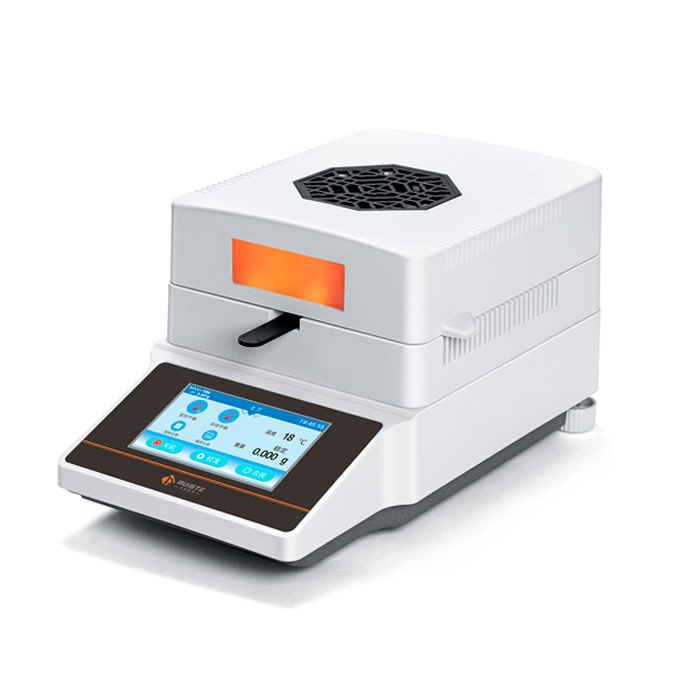
The primary and most intuitive purpose of a moisture analyzer is to achieve precise and rapid quantification of moisture content in diverse materials. Traditional moisture detection methods often rely on manual drying, weighing calculation, and empirical judgment, which consume long testing cycles and are susceptible to environmental interference and human operational errors. In contrast, moisture analyzers adopt standardized thermogravimetric testing logic, continuously monitoring sample weight changes during the heating and drying process and automatically calculating the proportion of evaporated water relative to the original sample weight. This working mode eliminates subjective errors in manual operation and shortens the testing cycle significantly, enabling staff to obtain accurate moisture data within a short period. It can detect trace moisture in fine chemical materials and high water content in fresh agricultural products, covering a wide range of sample types and moisture intervals, thus meeting the basic testing demands of different production and research scenarios. Through real-time data recording and stable testing performance, the instrument provides objective and credible numerical basis for subsequent production adjustment and quality judgment, avoiding quality fluctuations caused by inaccurate moisture assessment.
In industrial production scenarios, moisture analyzers play a vital role in maintaining consistent product quality and stabilizing product use performance. For most industrial and consumer products, moisture content is closely bound to core product attributes. In food and beverage processing, moderate moisture content determines the texture, taste, and storage durability of products. Excess moisture in baked snacks can lead to softening, mildew growth, and shortened shelf life, while insufficient moisture may cause dryness, cracking, and poor mouthfeel. In grain and oil processing, stable moisture control helps maintain the nutritional composition and processing adaptability of grains, avoiding quality degradation during storage and transportation. In the pharmaceutical industry, moisture content in raw medicinal materials, tablet preparations, and powder reagents directly affects the chemical stability and efficacy stability of drugs. Uncontrolled moisture levels may trigger subtle chemical reactions inside pharmaceutical products, leading to component failure and reduced service cycle. In plastic, resin, and polymer material production, excessive residual moisture can cause bubbles, cracks, and uneven texture in molded products, reducing the structural stability and service life of finished materials. By conducting batch sampling and continuous monitoring through moisture analyzers, production teams can timely grasp moisture changes in raw materials and finished products, adjust production parameters such as drying temperature, processing time, and material ratio in real time, and maintain unified quality standards for each batch of products.
Another key purpose of moisture analyzers is to optimize production processes and control operational costs for manufacturing enterprises. In traditional production modes, many enterprises adopt excessive drying or prolonged processing to avoid unqualified moisture indicators, which leads to unnecessary energy consumption and material loss. Long-term over-drying not only increases electricity and fuel costs but also may damage the inherent physical and chemical properties of materials, resulting in a waste of raw material resources. With the accurate data support of moisture analyzers, enterprises can formulate targeted and scientific drying processes and production parameters, realizing precise control of the moisture standard range required by products. This refined processing mode effectively reduces redundant energy consumption, improves the utilization rate of raw materials, and avoids product scrapping caused by unqualified moisture content. In continuous industrial production lines, regular moisture detection also helps identify abnormal fluctuations in the production process in advance. Sudden changes in material moisture often indicate problems such as unstable raw material quality, abnormal equipment operation, or unreasonable process parameters. Timely detection and adjustment through moisture data can prevent large-scale unqualified product output, reduce production loss rates, and improve the overall operational efficiency of the production line.
In agricultural and sideline product processing and storage fields, moisture analyzers provide core technical support for safe storage and scientific circulation of materials. Agricultural products such as grains, tea, tobacco, and dried fruits have strong hygroscopicity, and their moisture content is extremely susceptible to changes in ambient temperature and humidity. Excess moisture in stored agricultural products can easily induce microbial reproduction, leading to mildew, rot, and pest infestation, causing huge economic losses. Too low moisture content may lead to material shrinkage, weight loss, and quality deterioration, affecting market circulation value. Before warehousing, transportation, and sales of agricultural products, staff can use moisture analyzers to conduct comprehensive sampling detection, classify products according to moisture indicators, and formulate targeted storage and transportation schemes. For products with slightly excessive moisture, targeted drying and dehumidification treatment can be carried out in advance; for products reaching the standard moisture range, constant temperature and humidity storage environments can be matched to extend the storage cycle. In agricultural planting and primary processing links, moisture detection data can also guide farmers to optimize picking time, drying methods, and processing techniques, improving the overall quality and market competitiveness of agricultural products.
Moisture analyzers also undertake important functional values in scientific research, product development, and experimental verification work. In material science, chemical engineering, agricultural research, and environmental monitoring fields, moisture content is a key experimental variable and research indicator. When developing new materials and new product formulas, research personnel need to clarify the correlation between moisture content and material performance, product stability, and processing adaptability. Accurate moisture data obtained from analyzers helps researchers verify experimental assumptions, optimize formula ratios, and improve product preparation processes. In laboratory experimental research, standardized moisture testing can ensure the repeatability and comparability of experimental data. Different experimental batches and research projects need unified moisture detection standards to avoid experimental result deviation caused by inconsistent moisture levels of test samples. In environmental monitoring experiments, detecting moisture content in soil, sludge, and atmospheric sediment samples helps researchers analyze environmental component changes and ecological environment evolution rules, providing data support for environmental protection research and governance scheme formulation. The stable and accurate testing performance of moisture analyzers ensures the rigor and scientificity of various research work, promoting the continuous upgrading of industrial technology and academic research achievements.
From the perspective of production standardization and quality supervision, moisture analyzers help enterprises and institutions meet standardized production requirements and achieve traceable quality management. Most industries have clear standard ranges for product moisture content, and standardized moisture detection is an important part of production quality management system construction. Regular moisture testing through professional instruments enables enterprises to form complete product quality detection records, realizing full-process traceability from raw material incoming inspection, semi-finished product processing to finished product delivery. When product quality problems occur in subsequent circulation and use links, enterprises can quickly locate abnormal links through historical moisture detection data, optimize production processes, and avoid repeated quality problems. For quality inspection and supervision institutions, moisture analyzers provide standardized and unified detection means for market product sampling inspection, helping screen unqualified products with substandard moisture content, standardizing market product quality, and maintaining orderly market operation. This standardized detection mode eliminates the randomness and uncertainty of traditional manual detection, making product quality management more standardized, systematic, and scientific.
In addition to industrial and laboratory scenarios, moisture analyzers also play a positive role in daily material processing and quality inspection of light industry products. Textile, paper, wood, and leather products all have strict moisture control requirements. In textile production, appropriate fabric moisture content can improve textile flexibility and processing performance, avoiding static electricity and yarn breakage during weaving; in paper processing, stable moisture content ensures paper flatness, toughness, and printing adaptability, preventing paper warping and brittle fracture; in wood processing, moisture detection helps avoid product deformation, cracking, and mildew during wood use and storage, improving the durability of wood products. By applying moisture analyzers, light industry enterprises can effectively control product quality details, improve the overall grade of products, and meet the refined quality demands of the consumer market.
In summary, the purposes of moisture analyzers run through the entire chain of raw material inspection, production processing, finished product quality inspection, product storage and circulation, and scientific research and innovation. It is not merely a simple data testing instrument, but a core tool for enterprises to achieve refined production, quality stabilization, and cost optimization, as well as an important guarantee for scientific research rigor and market product standardization. With the continuous development of modern industrial refinement and scientific research precision, the demand for accurate, efficient, and stable moisture detection is increasing day by day. The application value of moisture analyzers in various industries will continue to expand, providing stable technical support for improving product quality level, optimizing production modes, and promoting technological innovation in various fields. Every link of moisture detection and control relies on the reliable performance of this instrument, which promotes the standardized development of all walks of life and brings long-term practical benefits to production, research, and market operation.
Purposes of Moisture Analyzer
https://www.pruiste.com/moisture-analyzer.html
Post Date: May 23, 2026
https://www.supplier-manufacturer.com/moisture-analyzer/purposes-of-moisture-analyzer.html

![Custom Laboratory Balance]()
Custom Laboratory Balance
In modern scientific research, industrial testing, pharmaceutical development, and environmental analysis, accurate mass measurement stands as one of the most fundamental …![Laboratory Balance Supplier]()
Laboratory Balance Supplier
In all scientific research, industrial testing, and analytical laboratory scenarios, accurate mass measurement serves as the foundational step for reliable experimental da…![Automatic Analytical Balance]()
Automatic Analytical Balance
In modern scientific research, industrial production, and analytical testing industries, precise mass measurement serves as one of the most fundamental and indispensable e…![Analytical Balance Vender In China]()
Analytical Balance Vender In China
The analytical balance stands as an indispensable precision measuring instrument in modern experimental research, industrial production, and quality inspection sectors. Wi…![Analytical Balance Supplier]()
Analytical Balance Supplier
The global laboratory instrumentation sector maintains steady expansion driven by growing demands from scientific research, industrial manufacturing, and quality inspectio…