Tabletop Counting Scale
In modern industrial production, small commodity processing, inventory management and daily commercial sorting work, the demand for accurate and efficient part counting has become increasingly prominent. Manual counting methods are easily affected by human fatigue, visual deviation and repetitive operational errors, which often lead to inconsistent statistical results and low work efficiency. Under such practical demands, tabletop counting scales have gradually become essential auxiliary equipment for quantitative counting and batch counting of small items. Designed for desktop placement, this type of weighing and counting equipment integrates weight sensing technology and digital calculation logic, achieving rapid quantity judgment through the conversion between single item weight and total weight. It is widely applied in numerous scenarios where small bulk goods need quantitative statistics, bringing stable and convenient counting solutions for various production and management links.
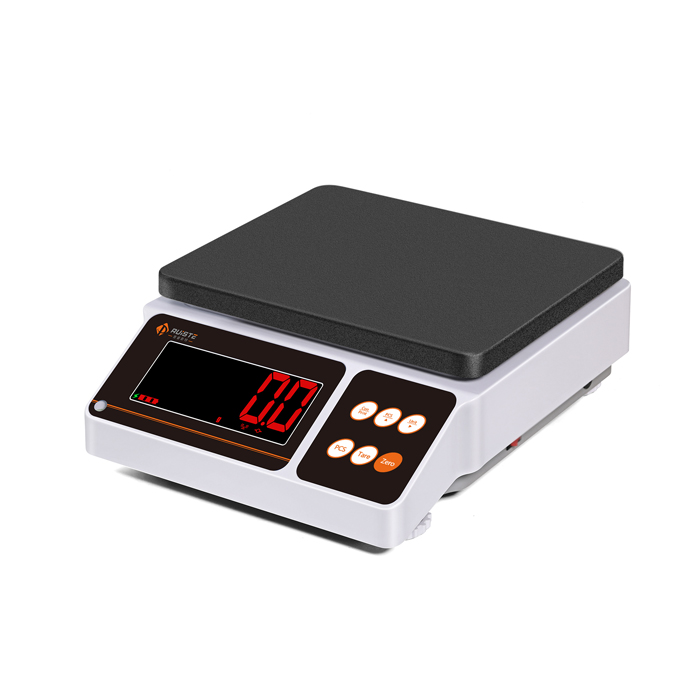
The core operating logic of a tabletop counting scale follows a simple and rigorous physical conversion principle. Every solid item with fixed specifications has a relatively stable individual weight under the same environmental conditions. When a certain number of identical items are placed on the weighing platform, the internal sensing components of the scale can capture the overall weight data of the placed items. After inputting the reference single weight into the system in advance, the built-in computing module can automatically divide the total weight by the single item weight and output the specific quantity of the items. Unlike traditional weighing scales that only display weight values, counting scales focus more on quantity conversion, realizing the functional upgrade from single weight measurement to intelligent quantity statistics. This working mode eliminates the tedious steps of manual one-by-one counting, especially suitable for tiny parts that are difficult to distinguish by naked eyes and items with uniform specifications.
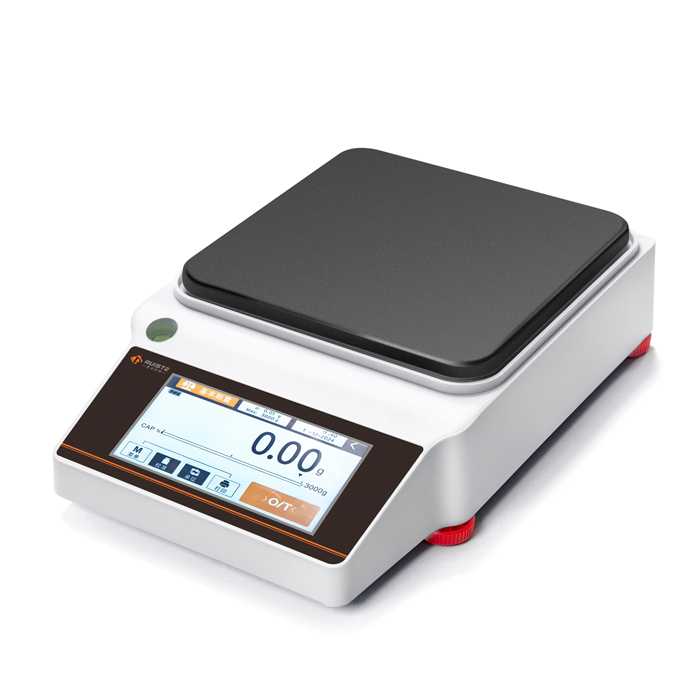
The internal structural composition of tabletop counting scale is compact and reasonable, which is tailored to the characteristics of desktop use and daily portable operation. The weighing platform is usually made of smooth and corrosion-resistant metal materials, with a flat and load-bearing surface to ensure that items can be placed stably without sliding or tilting during weighing. Below the platform, high-sensitivity sensing components are installed. These components can capture subtle weight changes in real time and convert mechanical pressure signals into identifiable electronic signals, providing accurate original data for subsequent quantity calculation. The middle part of the equipment is equipped with a data processing circuit board and a storage module, which are responsible for storing single item weight data, calculating quantity values and optimizing data algorithms to reduce the interference of external environmental factors on measurement results. On the exterior of the scale, there is a clear display screen and simple physical operation keys. The display screen can intuitively present real-time weight, calculated quantity and preset parameter information, while the operation keys complete basic functions such as zero clearing, sampling, data calibration and parameter setting. In addition, the bottom of the equipment is fitted with non-slip buffer pads, which can enhance the stability of the scale on smooth desktops and reduce the vibration impact caused by placing items.
Before formal use, standardized sampling and calibration operations are required to ensure the counting accuracy of the tabletop counting scale. The sampling process is the key link to determine the reference single weight. Operators need to select a certain number of representative sample items randomly from the batch of goods. The number of samples can be adjusted according to the item size and weight uniformity. For items with high specification consistency, a small number of samples can complete the sampling work, while for products with slight individual weight differences, appropriately increasing the sampling quantity can optimize the average single weight data and reduce statistical errors. After placing the samples on the weighing platform, the system will automatically calculate the average weight of a single item and record the data in the built-in storage space. The calibration work needs to be carried out regularly. During calibration, the equipment is kept in a horizontal placement state, and the surface of the weighing platform is kept clean and free of sundries to avoid extra weight interference. The zero-clearing function is used to eliminate the influence of the weight of auxiliary containers such as packaging boxes and trays, so that the measured data can truly reflect the net weight of the items.
Tabletop counting scales have diverse application scenarios, covering multiple industries and daily business links. In the electronic parts processing industry, a large number of tiny accessories such as resistors, capacitors and hardware screws need to be counted in batches. These parts are small in size and large in quantity, and manual counting is prone to omission and repetition. The counting scale can quickly complete batch statistics by virtue of high-precision sensing performance, which facilitates enterprises to carry out raw material inventory and finished product packaging. In the hardware and metal processing industry, small metal stamping parts, bolts and fasteners are often sorted and stocked in fixed quantities. The stable weighing performance of the scale can adapt to metal items with higher density, maintaining accurate counting results under long-term continuous use. In the warehousing and logistics industry, daily inventory sorting of bulk packaged goods requires efficient quantity verification. The portable desktop design makes the scale easy to place in different working areas, helping staff complete inventory counting and quantity inspection quickly. In addition, the equipment is also applicable to daily commercial links such as jewelry accessories sorting and small commodity packaging, providing convenient counting services for businesses that pursue quantity standardization.
In terms of use performance, tabletop counting scales have obvious practical advantages that adapt to daily office and industrial auxiliary work. The equipment occupies a small space, and the streamlined appearance is suitable for placement on various types of workbenches and storage desks without occupying excessive working area. The operation logic is simple and easy to understand. Workers can master basic use methods after simple training, and no complicated professional operation skills are required. The data response speed is fast. After the items are stably placed, the system can complete weight collection and quantity calculation in a short time, improving the overall work efficiency of batch counting. Most of the equipment has a stable data storage function, which can retain the recently measured sampling data and counting records, facilitating operators to view and verify historical data. Meanwhile, the equipment has good anti-interference ability. The internal optimized circuit design can reduce the influence of ambient temperature, slight air flow and desktop vibration on weighing results, ensuring stable use in conventional indoor working environments.
To maintain the long-term stable operation and measurement accuracy of tabletop counting scales, daily maintenance and standardized usage habits are indispensable. In the daily placement environment, the equipment should be kept away from direct strong sunlight and humid corrosive gas, so as to prevent the internal circuit components from aging and the metal weighing platform from rusting. During the placement process, the horizontal state must be maintained all the time. Tilt placement will cause uneven stress on the internal sensing components and affect the accuracy of data induction. It is necessary to clean the weighing platform regularly. Dust, debris and residual stains on the surface will cause subtle weight interference. Soft cleaning tools can be used to wipe the surface gently to keep it smooth and clean. In terms of bearing use, it is necessary to avoid placing items beyond the weighing range for a long time. Overload pressure will cause irreversible damage to the sensing components and shorten the service life of the equipment. In addition, frequent collision and violent stacking of items on the weighing platform should be avoided during use, and gentle placement can reduce mechanical vibration loss of internal parts.
In the actual operation process, there are some common usage details that need to be paid attention to to optimize the counting effect. When counting items with light weight and small volume, it is necessary to close the doors and windows of the working space to reduce the interference of air flow on the weighing data. For items with static adsorption such as plastic accessories, proper static elimination treatment can be carried out before weighing to avoid item adhesion affecting the placement uniformity. When replacing different types of items for counting, the historical sampling data should be cleared in time, and re-sampling calibration should be carried out according to the new item specifications to prevent data confusion from causing counting deviations. In addition, the equipment should be preheated for a short time after being started. The internal circuit system can run stably after preheating, which is conducive to improving the consistency of repeated measurement data.
With the continuous upgrading of processing and manufacturing technology, the comprehensive performance of tabletop counting scales is also constantly optimized. The sensing components are developing towards higher sensitivity and stronger stability, which can capture smaller weight changes and meet the counting needs of finer tiny items. The data processing algorithm is continuously optimized, which can automatically identify abnormal data generated by individual item weight differences and reduce the error rate of batch counting. The human-computer interaction interface is more concise and intuitive, and the display content is clearer, which is convenient for staff to read data in different working light environments. At the same time, some improved structures adopt detachable weighing platforms, which are convenient for users to clean and replace accessories, further improving the convenience of daily maintenance. In the future, with the continuous expansion of refined production and small-batch customized processing industries, the market demand for tabletop counting scales with stable performance and simple operation will continue to increase, and the equipment will also be upgraded in combination with intelligent data transmission to adapt to more diversified industrial management modes.
From the perspective of practical application value, tabletop counting scales fill the efficiency gap of manual counting in medium and small batch item statistics. It not only reduces the labor cost caused by repetitive counting work, but also improves the uniformity and accuracy of quantity statistics, providing reliable data support for enterprise production scheduling, inventory management and product packaging. Its compact structure, simple operation and stable performance make it adaptable to various low-intensity and high-precision counting scenarios. Whether it is auxiliary sorting in industrial production or quantity inspection in commercial circulation, this kind of desktop counting equipment can exert stable practical effects. While meeting the basic counting demands, it optimizes the overall work flow, reduces the error loss caused by human factors, and brings convenient and efficient weighing and counting solutions for modern daily production and office work.
Tabletop Counting Scale
https://www.pruiste.com/counting-scale.html
Post Date: May 7, 2026
https://www.supplier-manufacturer.com/counting-scale/tabletop-counting-scale.html

![What is Electronic Balance]()
What is Electronic Balance
In the fields of modern metrology detection, industrial production, scientific research experiments and daily precision processing, electronic balances have become indispe…![Hydrostatic Balance JY SERIES]()
Hydrostatic Balance JY SERIES
The entire series of JY balances uses branded sensors to ensure high accuracy and stability of weighing results. This series of precision casting ABS Environmental protect…![Digital Viscometer Exporter]()
Digital Viscometer Exporter
Viscosity stands as one of the most fundamental physical properties of fluid materials, reflecting the internal friction and flow resistance of substances during movement.…![Digital Viscometer For Sale]()
Digital Viscometer For Sale
Viscosity serves as one of the most fundamental physical properties of fluid substances, reflecting the internal friction and flow resistance of liquids during movement. I…![Industrial Digital Viscometer]()
Industrial Digital Viscometer
Viscosity stands as one of the most critical physical properties of fluid materials, reflecting the internal frictional resistance that occurs when a fluid undergoes flow …