Industrial Digital Viscometer
Viscosity stands as one of the most critical physical properties of fluid materials, reflecting the internal frictional resistance that occurs when a fluid undergoes flow and deformation. In modern industrial production and material research, stable and accurate viscosity data serve as a core basis for formula adjustment, process optimization, product quality control, and production condition monitoring. Traditional viscosity testing tools, which rely on manual observation and mechanical reading, are prone to human error, low testing efficiency, and poor data consistency, making them difficult to adapt to the refined and automated development needs of industrial production. The industrial digital viscometer, as a modern testing instrument optimized for industrial scenarios, integrates precision mechanical sensing units, electronic signal processing systems, and digital data analysis modules, effectively compensating for the shortcomings of traditional testing methods and becoming a key piece of equipment in fluid property detection across multiple industries.
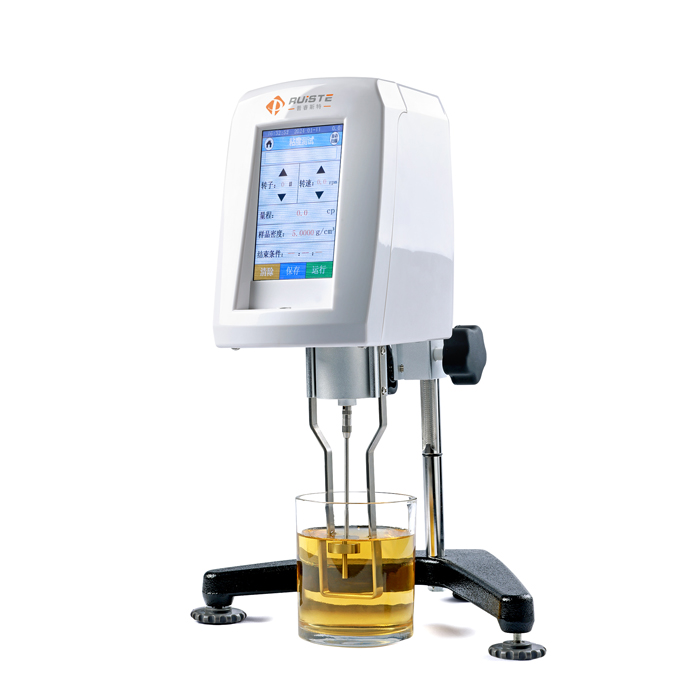
The working logic of industrial digital viscometers is built on the basic law of fluid viscosity measurement, which correlates shear stress and shear rate to calculate the dynamic viscosity of fluids. Most mainstream industrial digital viscometers adopt two mature working mechanisms: rotational sensing and vibration sensing, both of which realize standardized and quantitative viscosity detection through controllable mechanical movement and high-sensitivity signal capture. Rotational digital viscometers are equipped with precision drive systems and detachable spindle components. During operation, the drive system outputs stable and adjustable rotational power to drive the spindle to rotate at a constant speed in the fluid sample. When the spindle cuts through the fluid, it is subject to viscous resistance from the sample, and the magnitude of this resistance is positively correlated with the viscosity of the fluid. The internal electronic system captures the torque change generated by the resistance, converts the mechanical signal into a standardized electrical signal, and calculates the accurate viscosity value through built-in algorithm calibration, finally presenting the data in digital form.
Vibration-type industrial digital viscometers operate on a different physical principle, utilizing the damping effect of fluid viscosity on oscillating components. The core sensing unit is a precision vibrating probe driven by piezoelectric components, which maintains a fixed resonant frequency in a stable environment. When the probe is immersed in a fluid medium, the viscous force of the fluid will dampen the vibration amplitude and frequency of the probe. Fluids with higher viscosity produce a more obvious damping effect, while low-viscosity fluids have a weaker impact on vibration parameters. The instrument’s signal acquisition system continuously monitors real-time changes in vibration parameters, processes and corrects the data through internal microprocessors, and converts the damping variation data into intuitive viscosity numerical values. This structural design avoids mechanical rotation friction, reduces component wear during long-term operation, and is more suitable for continuous online monitoring in industrial production lines.
Compared with traditional mechanical viscometers, industrial digital viscometers have obvious structural and functional advantages that adapt to complex industrial application environments. In terms of testing accuracy, digital instruments eliminate the visual reading errors and manual recording deviations inherent in traditional equipment. The built-in high-precision signal processing modules can capture subtle changes in fluid viscous resistance, realizing stable detection of tiny viscosity differences. In terms of applicability, industrial digital viscometers support multi-gear speed adjustment and multi-specification sensing components, which can match the testing needs of different types of fluids, including Newtonian fluids with stable viscosity characteristics and non-Newtonian fluids whose viscosity changes with shear rate. This wide adaptability enables the instrument to handle fluid samples ranging from low-viscosity solvents and lubricating oils to high-viscosity adhesives, coatings, and colloidal slurries.
Temperature stability is a key factor affecting the accuracy of viscosity testing results, and industrial digital viscometers are usually equipped with supporting constant temperature control modules to solve this problem. Fluid viscosity is highly sensitive to temperature changes; most liquids show a gradual decrease in viscosity as temperature rises, while some special colloidal fluids have irregular viscosity fluctuations with temperature variation. The integrated temperature control system of the digital viscometer can maintain a constant temperature environment for the testing cavity within a controllable range, effectively avoiding data deviation caused by ambient temperature fluctuations and ensuring the repeatability and stability of test results. In batch industrial testing scenarios, this temperature control function ensures consistent testing conditions for each sample, providing reliable data support for horizontal comparison of product quality.
Data processing and output capabilities are core strengths of industrial digital viscometers in intelligent industrial scenarios. Traditional testing equipment can only provide single instantaneous data, which is difficult to track the dynamic changes of fluid viscosity over time. Industrial digital viscometers can automatically record real-time test data, form continuous data curves, and store historical test records. This function enables technicians to observe the viscosity stability of fluids during production, monitor the viscosity change trend of materials in reaction, stirring, and standing processes, and capture subtle quality fluctuations that are easily ignored by manual testing. Meanwhile, the instrument supports diversified data output methods, which can directly display data on local screens or transmit data to upper computer systems and production management platforms, realizing data docking with industrial automation systems and facilitating centralized production monitoring and remote data management.
The application scenarios of industrial digital viscometers cover nearly all industrial fields that involve fluid material processing and production. In the coating and paint industry, viscosity directly affects the spraying effect, film-forming quality, and storage stability of products. Too high viscosity will lead to uneven spraying and thick paint films, while too low viscosity will cause sagging and poor coverage. Industrial digital viscometers help production personnel accurately adjust the proportion of solvents and additives, stabilize the viscosity of coating materials in each production batch, and ensure consistent surface quality of coated products such as furniture, equipment, and building materials.
In the chemical adhesive industry, the viscosity of adhesives, glues, and sealants determines their bonding performance, construction efficiency, and curing effect. Different application scenarios require matching viscosity parameters: low-viscosity adhesives are suitable for rapid penetration and bonding of fine gaps, while high-viscosity colloids can avoid flow and sagging in vertical construction. By using digital viscometers to detect viscosity in real time during the batching and reaction process, enterprises can optimize formula ratios, control the reaction progress of polymer materials, and avoid product performance differences caused by inconsistent viscosity, thus improving the bonding stability and service life of adhesive products.
The petrochemical and lubricant industries also rely heavily on industrial digital viscosity testing equipment. Lubricating oils, hydraulic oils, and gear oils need to maintain appropriate viscosity within the operating temperature range to form stable lubricating films and reduce mechanical friction and wear. Excessively low viscosity will lead to insufficient lubrication and increased equipment loss, while excessively high viscosity will increase operating resistance and energy consumption. Digital viscometers can detect the viscosity of petroleum products under different temperature conditions, verify the applicability of lubricating materials for different equipment operating environments, and provide a basis for product grading and formula improvement. In crude oil processing and transportation, viscosity monitoring also helps judge fluid fluidity, optimize pipeline transportation parameters, and reduce transportation energy consumption.
In the food and daily chemical industries, viscosity testing is closely related to product texture, taste, and user experience. Daily chemical products such as toothpaste, shampoo, and body wash require stable viscosity to ensure uniform filling, comfortable use, and stable storage without stratification. Food materials such as syrup, jam, and dairy products have viscosity indicators that directly affect taste and production filling accuracy. Industrial digital viscometers realize efficient and non-destructive viscosity detection of food and daily chemical fluids, help enterprises standardize production processes, maintain consistent product texture in each batch of production, and avoid product quality problems such as excessive fluidity or poor uniformity.
In industrial production management, the application of digital viscometers also helps realize lean production and quality traceability. Traditional viscosity testing relies on manual operation and paper record keeping, which has problems such as easy data loss, difficult traceability, and low efficiency. Industrial digital viscometers can automatically archive test data, record test time, temperature parameters, and equipment operating status, forming complete production data files. When product quality fluctuations occur, technicians can trace the viscosity test data of each production link, quickly locate problems in formula batching, process parameters, or raw material quality, and formulate targeted adjustment plans. This data-based quality management mode effectively reduces product defective rates and improves the overall level of production process control.
To maintain the long-term stable operation of industrial digital viscometers and ensure the accuracy of test data, standardized daily operation and maintenance management is essential. In terms of daily operation, operators need to select appropriate sensing components and operating speeds according to the viscosity range of the test fluid to avoid detection errors caused by mismatched parameters. Before testing, the testing cavity and sensing components need to be cleaned to prevent residual samples from interfering with new test results, especially for high-viscosity and easily cured colloidal samples, which require thorough cleaning to avoid component adhesion and affecting subsequent use.
In terms of equipment maintenance, regular calibration of digital viscometers is required to eliminate data deviation caused by long-term component operation and environmental changes. The internal sensing and electronic components of the instrument need to be kept dry and clean to avoid dust, moisture, and corrosive gases affecting signal transmission and component performance. For instruments used in online continuous production monitoring, regular inspection of data transmission lines and operating status is needed to ensure real-time and accurate data transmission and avoid production monitoring blind spots caused by equipment failure. Scientific maintenance can effectively extend the service life of the instrument and maintain long-term stable testing performance.
With the continuous upgrading of industrial intelligent manufacturing technology, industrial digital viscometers are also developing toward higher integration, stronger anti-interference ability, and more intelligent data analysis. Modern production environments have higher requirements for real-time and accuracy of process monitoring, and traditional offline sampling testing can no longer meet the needs of full-process production control. The upgraded industrial digital viscometers can realize fully online uninterrupted monitoring, directly collect fluid viscosity data in production pipelines and reaction kettles, feed back process changes in real time, and link with automatic batching and adjusting equipment to realize closed-loop control of production processes. This intelligent monitoring mode greatly reduces manual intervention, improves production automation levels, and provides strong technical support for industrial production efficiency and quality improvement.
In conclusion, industrial digital viscometers have become indispensable basic testing and monitoring equipment in modern industrial systems by virtue of their accurate testing performance, wide application adaptability, and intelligent data processing capabilities. They not only solve the pain points of low efficiency and poor accuracy in traditional viscosity detection but also provide quantitative data support for industrial formula optimization, process adjustment, and quality control. As industrial production continues to develop in a refined, intelligent, and standardized direction, the application value of industrial digital viscometers will be further highlighted, and they will continue to play an important role in promoting the stable operation and quality upgrading of various industrial production fields.
Industrial Digital Viscometer
https://www.pruiste.com/digital-viscometer.html
Post Date: May 23, 2026
https://www.supplier-manufacturer.com/digital-viscometer/industrial-digital-viscometer.html

![Electronic Balance YP SERIES]()
Electronic Balance YP SERIES
The YP series adopts high-definition keys, which is economical. The entire series of balances adopt Nuosheng sensors, brand sensors, and aluminum alloy structure to ensure…![Digital Viscometer Factory]()
Digital Viscometer Factory
Viscosity stands as one of the most fundamental physical properties of fluid materials, reflecting the internal friction and flow resistance that occur when fluids undergo…![Compact Digital Viscometer]()
Compact Digital Viscometer
Viscosity stands as one of the most fundamental physical properties of fluid materials, reflecting the internal friction and flow resistance that occur when a substance un…![Benchtop Digital Viscometer]()
Benchtop Digital Viscometer
Viscosity stands as one of the most fundamental physical properties of fluid substances, reflecting the internal friction and flow resistance generated during the movement…![Moisture Analyzer Exporter]()
Moisture Analyzer Exporter
Moisture content stands as one of the most critical physical indicators that determine the quality, stability, and usability of raw materials and finished products across …