What is Electronic Balance
In the fields of modern metrology detection, industrial production, scientific research experiments and daily precision processing, electronic balances have become indispensable basic measuring equipment. Compared with traditional mechanical weighing instruments, electronic balances adopt electronic sensing and digital measurement and control technology, eliminating the cumbersome manual weight balancing operation. They realize rapid response, accurate display and convenient data adaptation of weighing values. With stable metering performance, simple operation mode and diverse adaptability, they cover various needs from micro-precision detection to conventional industrial weighing. An in-depth understanding of the detailed classification, functional characteristics, core materials, structural composition and applicable scenarios of electronic balances helps users in different industries select models accurately, give full play to the core metering value of equipment, and ensure the accuracy and efficiency of weighing operations.
Diverse Classification of Electronic Balances
Electronic balances have a wide variety of types. The industry has formed a standardized classification system based on four core dimensions: accuracy grade, weighing range, structural design and application function. Different types of equipment are targeted to meet differentiated operational needs and adapt to various fine and conventional weighing scenarios. According to accuracy grade, they are divided into three core categories: ultra-micro, precision and conventional industrial, which are graded to meet different metering accuracy requirements. Ultra-micro electronic balances have the highest accuracy grade with extremely small division values, only suitable for weighing micro samples at milligram or even microgram levels, and require extremely high stability of the operating environment. Precision electronic balances balance accuracy and practicality with minimal metering error, making them commonly used equipment for fine laboratory detection and sample proportioning. Conventional industrial electronic balances have moderate accuracy, focusing on anti-interference and durability to meet the basic weighing needs of large quantities of conventional materials.
According to the weighing range, they include three major types: micro small-range, conventional medium-range and industrial large-range, with a span of ranges adapting to different specifications of weighed materials. Micro small-range models have a small maximum weighing capacity, only suitable for weighing fine particles, micro reagents and small precision accessories. Conventional medium-range models have the widest adaptability, covering most conventional weighing scenarios such as laboratory samples, small commercial goods and processing auxiliary materials. Industrial large-range models have stronger structural bearing capacity, meeting the overall weighing operations of industrial raw materials, large finished products and bulk materials. In terms of structural design, they can be divided into top-loading type and built-in closed type. The top-loading type has an exposed weighing pan for convenient material taking and placing with higher versatility. The built-in closed type is equipped with a protective cavity, which can effectively avoid the interference of air flow and dust on weighing values. According to special application functions, they can also be divided into conventional general models, anti-static models, dust-proof and moisture-proof models, etc., adapting to the operational needs of special working conditions.
Core Functional Characteristics of Electronic Balances
Compared with traditional mechanical weighing equipment, electronic balances have core advantages in four aspects: accuracy, convenience, intelligence and stability, adapting to the efficient and refined weighing operation rhythm of modern times. Firstly, accurate metering and stable numerical values. Relying on high-precision core sensing components, the weighing response speed is fast and the numerical collection is real-time and accurate. It can quickly lock stable readings, effectively avoiding human reading errors and weight wear deviations of mechanical balances. The consistency of repeated weighing is excellent, ensuring no obvious deviation in multiple weighing data. Secondly,simple operation and low learning threshold. It abandons complex mechanical adjustment structures, requiring no manual repeated weight addition and subtraction or balance calibration. It can complete self-inspection and calibration quickly after startup. Basic operations such as tare clearing, unit switching and value locking are completed with one click, allowing new operators to be proficient in a short time and greatly improving weighing operation efficiency.
Meanwhile, it has the characteristics of intelligent adaptation and diverse functional expansion. Most models are equipped with a high-definition digital display module with intuitive and clear readings. Some can be adapted to expanded functions such as data recording, value transmission and cumulative weighing, which can be connected to subsequent data statistics and account sorting, eliminating repeated manual recording and reducing human errors. In addition, the equipment hasstrong anti-interference and wide adaptability. After professional calibration and optimization, it can effectively resist external environmental interference such as slight vibration and small temperature fluctuations, maintaining stable metering under conventional working conditions. There is no numerical drift during long-term continuous operation, with a longer service life, meeting both short-term high-frequency weighing and long-term regular use. The overall maintenance is simple, only requiring routine cleaning and maintenance without complex regular calibration and adjustment, resulting in low operation and maintenance costs.
Main Production and Application Materials of Electronic Balances
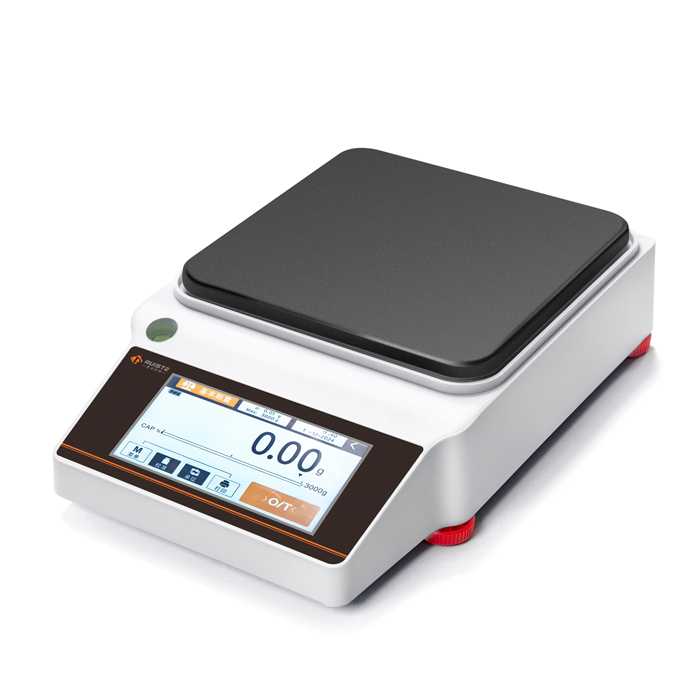
The material selection of electronic balances is based on four core principles: durability, corrosion resistance, stable bearing and accurate metering. Different functional areas are equipped with appropriate materials to ensure structural strength and long-term use stability, avoiding weighing accuracy affected by material deformation and corrosion. As the core bearing part in direct contact with weighed materials, the weighing pan is mainly made of stainless steel, which has the advantages of corrosion resistance, oxidation resistance, easy cleaning and no deformation under load. It can keep the surface intact and flat in the face of slightly corrosive materials, humid and dusty environments and high-frequency taking and placing wear, without depression and corrosion affecting the uniformity of weighing stress during long-term use, suitable for direct contact weighing operations of various materials.
The equipment base is mostly made of thickened metal with anti-slip reinforcement treatment, which is heavy and firm with a stable center of gravity. It can effectively prevent equipment shaking and shifting during weighing, ensuring basic metering stability and avoiding fuselage deformation caused by long-term placement and slight collision. The fuselage shell is mostly made of high-strength engineering plastic or light alloy, which is light, drop and pressure resistant with good dust-proof, moisture-proof and anti-collision performance. It not only reduces the overall weight of the equipment for easy moving and placement, but also effectively protects the internal precision sensing and circuit components from dust and moisture erosion. The internal core sensing components are made of special materials such as precision alloy and magnetic steel, with good thermal stability and little affected by temperature changes. The sensing accuracy is constant during long-term operation, ensuring accurate weighing and metering from the core source.
Core Overall Structural Composition of Electronic Balances
The overall structural design of electronic balances is concise and scientific, with each component having clear division of labor and coordinated cooperation to complete the whole process weighing operation of material bearing, numerical induction, signal conversion and data display. It is core composed of four modules: bearing structure, sensing core, control display and leveling protection, all of which are indispensable. The bearing structure is mainly composed of an external weighing pan and built-in bearing bracket, serving as the weight bearing carrier of materials. It is responsible for completely transmitting the material weight to the internal sensing components. The flatness and stability of the structure directly determine the uniformity of weighing stress and ensure the lossless and accurate transmission of weight signals.
The sensing core module is the core part of the electronic balance, mainly composed of a weighing sensor and signal conversion components. It converts the physical weight of materials into electrical signals, and then carries out precise amplification and filtering processing to eliminate interference signals and transmit accurate basic data, which directly determines the weighing accuracy and response speed of the equipment. The control display module includes an operation key panel, high-definition digital display screen and built-in circuit main board. Operators complete tare, calibration, unit switching and other operations through keys. The circuit main board is responsible for data calculation and processing, and the display screen directly presents the final weighing value, integrating operation and visual display. The leveling protection module consists of leveling feet, horizontal indicator, protective outer frame or wind shield. The leveling feet can fine-tune the fuselage level according to the flatness of the placement ground to avoid metering deviation caused by inclination. The wind shield and protective outer frame can isolate the interference of air flow, dust and collision, ensuring the stable operation and metering accuracy of the equipment in all aspects.
Diverse Application Scenarios of Electronic Balances
With the comprehensive advantages of diverse classification, optional accuracy, durable materials and stable structure, electronic balances have been deeply applied in many core fields such as scientific research experiments, industrial production, food processing, pharmaceutical preparation and commercial retail, meeting the differentiated weighing needs of different scenarios. In the field of scientific research experiments, ultra-micro and precision electronic balances are mainly used for chemical reagent proportioning, biological sample weighing, new material micro-detection and other fine experimental operations, ensuring accurate experimental sample proportioning and providing reliable metering support for the collection of various scientific research data, making them essential basic equipment in laboratories.
In the field of industrial production, conventional and industrial large-range electronic balances are mostly used for incoming inspection of raw materials, precise proportioning of production auxiliary materials, weighing inspection of finished products and sorting and weighing of precision hardware accessories, assisting the standardized management of industrial production and ensuring compliant production proportioning and unified finished product specifications. The food processing and catering industry adopts dust-proof and moisture-proof electronic balances for precise ingredient proportioning, quantitative deployment of food materials and quality inspection of semi-finished and finished products, strictly controlling food production proportioning standards to ensure consistent food taste and quality. The pharmaceutical preparation industry relies on high-precision electronic balances for the weighing of raw pharmaceutical materials, pharmaceutical auxiliary materials and micro pharmaceutical proportioning, meeting the refined and standardized metering requirements of pharmaceutical production. In addition, scenarios such as commercial retail, jewelry measurement and teaching training also adopt corresponding electronic balances according to weighing accuracy and range needs, balancing metering accuracy and operational efficiency and consolidating the foundation of refined weighing operations in various industries.
What is Electronic Balance
https://www.pruiste.com/electronic-balance.html
Post Date: May 5, 2026
https://www.supplier-manufacturer.com/electronic-balance/what-is-electronic-balance.html

![Specifications of Digital Viscometer]()
Specifications of Digital Viscometer
Digital viscometers are essential analytical instruments designed to quantify the viscosity characteristics of various liquid substances, serving as core testing equipment…![Automatic Digital Viscometer]()
Automatic Digital Viscometer
Viscosity stands as one of the most fundamental physical properties of fluid substances, reflecting the internal friction and flow resistance generated between molecular l…![Coaxial Cylinder Digital Viscometer]()
Coaxial Cylinder Digital Viscometer
The coaxial cylinder digital viscometer is a sophisticated laboratory and industrial testing instrument designed to quantify the viscous properties of various fluid materi…![Halogen Moisture Analyzer]()
Halogen Moisture Analyzer
Moisture content stands as one of the most critical physical indicators for a wide range of raw materials, semi-finished goods, and finished products across modern industr…![High-precision Moisture Analyzer]()
High-precision Moisture Analyzer
Moisture content stands as one of the most critical physical indicators for evaluating the quality, stability, and usability of various materials across industrial product…