Benchtop Digital Viscometer
Viscosity stands as one of the most fundamental physical properties of fluid substances, reflecting the internal friction and flow resistance generated during the movement of liquid molecules. It serves as a critical indicator for evaluating the consistency, stability, and processing performance of various fluids, covering Newtonian fluids with stable flow characteristics and non-Newtonian fluids whose viscosity changes with shear conditions. In modern laboratory analysis, industrial production quality control, and material research and development, accurate and consistent viscosity measurement is indispensable for standardizing product formulas, stabilizing production processes, and optimizing material performance. The benchtop digital viscometer has gradually become a mainstream testing device in related fields by virtue of its stable testing performance, intuitive data output, and adaptable structural design, replacing traditional manual viscometers that rely on visual observation and manual recording. This type of instrument integrates mechanical transmission, sensor detection, and digital signal processing technologies, realizing automated, standardized, and repeatable viscosity testing for diverse fluid samples, and provides reliable data support for scientific research experiments and industrial production supervision.
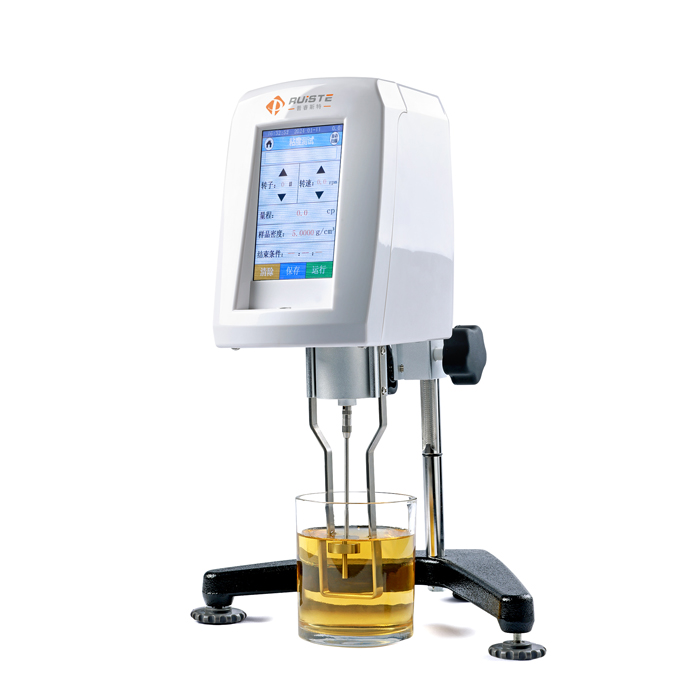
The core operation principle of the benchtop digital viscometer is based on classical fluid mechanics and Newton’s law of viscosity, which defines the proportional relationship between shear stress and shear rate during fluid flow. Most mainstream benchtop digital viscometers adopt the rotational testing structure, a mature and widely applicable technical solution for fluid viscosity detection. The internal drive system of the instrument drives a precision spindle to rotate at a constant and controllable speed after being immersed in a homogeneous fluid sample. When the spindle rotates steadily in the fluid, the viscous force of the sample will generate a certain resistance torque on the surface of the spindle. The magnitude of this resistance torque is positively correlated with the viscosity of the tested fluid under fixed rotational speed, spindle specification, and ambient conditions. High-sensitivity torque sensors built into the instrument can capture subtle torque changes in real time, convert collected mechanical signals into standard electrical signals, and transmit the data to the internal processing module for algorithm calculation and compensation correction. After eliminating interference factors such as mechanical friction and minor environmental vibration, the system converts the effective signal into accurate viscosity values and presents real-time data through a high-definition digital display screen. For non-Newtonian fluids with variable viscosity characteristics, the instrument can also adjust rotational speed and shear parameters to simulate actual working conditions, obtaining apparent viscosity data that conforms to practical application scenarios.
The overall structural design of the benchtop digital viscometer focuses on testing accuracy, operational stability, and scene adaptability, with each functional module optimized for laboratory and industrial conventional testing environments. The mechanical transmission module adopts precision stepper motor drive, which can output stable and uniform rotational power, effectively avoiding speed jitter and rotation deviation that may affect testing results. Multiple sets of standard spindles with different sizes and structural parameters are configured to match fluid samples with different viscosity ranges. Fine spindles are suitable for low-viscosity samples such as dilute solutions and light oils, while thick or special-shaped spindles adapt to high-viscosity samples such as pastes, greases, and colloids. The detachable spindle design facilitates daily cleaning, replacement, and maintenance, preventing sample residue from affecting subsequent testing accuracy. The sensing and data processing module is the core component that ensures testing precision. High-resolution sensors can capture tiny torque fluctuations, and the built-in temperature compensation program can dynamically correct data errors caused by slight temperature changes of samples or the environment, as fluid viscosity is highly sensitive to temperature fluctuations. The human-computer interaction part adopts a clear digital display interface, which can synchronously display multiple key parameters including real-time viscosity value, testing duration, rotational speed, and spindle model, enabling operators to intuitively grasp the entire testing state. The stable benchtop base is equipped with horizontal adjustment structures to ensure the instrument remains in a horizontal state during operation, eliminating testing deviations caused by tilting placement.
Compared with traditional capillary viscometers and pointer-type mechanical viscometers, the benchtop digital viscometer has obvious comprehensive advantages in testing efficiency, data stability, and operational convenience. Traditional testing instruments usually require manual timing, visual scale reading, and manual data recording, which are easily affected by human operation habits and visual errors, resulting in inconsistent testing results for the same sample. In contrast, digital viscometers realize full-process automated testing after parameter setting, with data collection, calculation, and output completed by the system independently, greatly reducing human-induced errors and improving the repeatability and consistency of test data. In terms of testing efficiency, the instrument supports rapid parameter switching and continuous sample testing. Operators can preset commonly used rotational speed and spindle parameters for different types of samples, avoiding repeated debugging operations and shortening the single-sample testing cycle. In terms of applicability, it can cover low, medium, and high viscosity ranges, and can adapt to both transparent and opaque fluid samples, breaking the limitation that traditional capillary viscometers are only suitable for transparent homogeneous liquids. In addition, most benchtop digital viscometers support real-time data storage and query functions, which can record historical testing data of different samples, facilitate subsequent data sorting, comparison, and traceability, and provide complete data support for experimental research and production quality archives.
Standardized operation is the key to ensuring the long-term stable performance of the benchtop digital viscometer and obtaining accurate test data. Before formal testing, operators need to complete pre-test preparation work in strict accordance with standardized processes. First, place the instrument on a stable horizontal workbench, adjust the horizontal calibration device to ensure the instrument is level, and turn on the power for preheating and self-checking. The self-check program will automatically detect the operating status of the motor, sensor, and data processing system to ensure no abnormal faults in each module. Meanwhile, the testing environment needs to be kept clean and stable, avoiding strong airflow, violent vibration, and drastic temperature changes, as unstable environmental conditions will interfere with torque sensing and fluid stability. For sample preparation, the tested fluid needs to be placed in a standard testing container to ensure the sample volume meets the instrument’s testing requirements, so that the spindle can be completely immersed in the fluid and maintain a fixed distance from the container bottom and wall, preventing container wall effects from affecting test results. For samples prone to precipitation and stratification, gentle and uniform stirring is required before testing to ensure sample uniformity, and excessive stirring that causes bubble generation should be avoided, as bubbles in the fluid will change the internal friction state and lead to data deviation.
In the formal testing process, operators need to select matching spindles and rotational speeds according to the approximate viscosity range of the sample. For unknown samples, a gradual debugging method can be adopted, starting with medium rotational speed and conventional spindle for preliminary testing, and adjusting parameters according to the real-time torque feedback value of the instrument to ensure the testing data is within the effective and accurate range of the system. After parameter setting is completed, start the testing program, and the spindle will rotate steadily in the sample. After the data stabilizes, record the real-time viscosity value and synchronous temperature parameter. For non-Newtonian fluids that require shear resistance testing, multi-stage speed testing can be carried out to obtain viscosity change data under different shear rates, so as to comprehensively evaluate the fluid’s rheological properties. After the test is completed, the spindle should be taken out gently and cleaned thoroughly with a corresponding cleaning solvent according to sample properties. Residual samples on the spindle must be completely removed to prevent dry and solidified residues from affecting the sensitivity of subsequent testing. It is also necessary to clean the testing container and keep the instrument workbench tidy to create a stable working environment for subsequent use.
The benchtop digital viscometer has a wide range of application scenarios, covering multiple industries such as chemical industry, food processing, daily chemicals, pharmaceutical manufacturing, new material research, and petroleum processing, and runs through the links of raw material incoming inspection, formula research and development, production process monitoring, and finished product quality inspection. In the coating and ink industry, fluid viscosity directly affects the spraying effect, film-forming performance, and storage stability of products. Excessively high viscosity will lead to uneven spraying and poor fluidity, while excessively low viscosity will cause sagging and thin film layer. The instrument can accurately detect the viscosity of coating and ink samples, help technicians adjust solvent ratio and formula parameters, and ensure consistent product coating performance and batch stability. In the daily chemical industry, products such as skin care lotions, shampoos, detergents, and toothpaste have strict viscosity standards. Moderate viscosity ensures comfortable use experience and stable product texture, and viscosity testing can effectively avoid product quality problems such as excessive dilution or excessive thickening.
In the food industry, viscosity testing is crucial for stabilizing product taste and production consistency. Products such as beverage syrups, sauces, edible oils, and dairy products have fixed viscosity ranges under standard temperature conditions. Changes in viscosity can directly reflect problems such as raw material quality fluctuations, incomplete fermentation, or improper formula ratio. By using benchtop digital viscometers for regular testing, food production enterprises can effectively control product batch differences and ensure stable taste and quality of finished products. In the pharmaceutical industry, liquid medicines, ointments, and gel preparations have strict rheological property requirements. Viscosity parameters affect the dispersion uniformity of active ingredients, drug absorption efficiency, and product storage stability. Accurate viscosity testing provides reliable basis for pharmaceutical formula optimization and production process standardization. In the petroleum and lubricant industry, the viscosity of lubricating oil, hydraulic oil, and crude oil is a core indicator of product performance. Appropriate viscosity ensures the lubrication, wear resistance, and pressure resistance of mechanical equipment, and long-term viscosity monitoring can also evaluate oil aging and deterioration degree, providing guidance for equipment maintenance and oil replacement.
In scientific research and new material development fields, benchtop digital viscometers provide accurate basic data for the research of polymer solutions, colloidal materials, new adhesives, and composite fluids. Researchers can analyze the viscosity change rules of materials under different temperatures, shear rates, and formula ratios, explore the internal structural characteristics of materials, and optimize material synthesis processes and application performance. The repeatable and traceable test data of digital viscometers also makes experimental research results more credible, facilitating academic research and technical achievement transformation.
Daily maintenance and regular calibration are essential to maintain the long-term accuracy and service life of the benchtop digital viscometer. In daily use, the instrument should be placed in a dry, dust-free, and well-ventilated environment to avoid long-term exposure to humid, corrosive gas and high-dust environments, which may cause aging of internal circuits and corrosion of mechanical components. The spindle is a precision testing component and needs to be handled with care to avoid collision and scratching, as surface damage will change the spindle’s friction characteristics and affect testing accuracy. After each use, thorough cleaning and drying must be done, and the spindle should be stored in a special dust-proof box. Regular calibration is required according to the frequency of use. Standard viscosity calibration fluids with known parameters can be used for testing and correction to ensure the instrument’s test results are always within the allowable error range. If the instrument is not used for a long time, the power supply should be cut off, the spindle should be removed and stored separately, and the instrument surface should be covered with a dust cover to prevent dust accumulation and component aging.
With the continuous upgrading of industrial production standards and scientific research precision requirements, the performance optimization of benchtop digital viscometers is also advancing steadily. Modern instruments are gradually developing towards higher testing precision, richer functional parameters, smarter data processing, and stronger environmental adaptability. The continuous optimization of sensor technology and algorithm programs further reduces system testing errors and improves the resolution of subtle viscosity changes of samples. The expansion of functional modes enables the instrument to complete constant-temperature viscosity testing, dynamic shear viscosity testing, and timing continuous testing, meeting more diversified testing demands of complex fluid samples. Meanwhile, the intelligent data management function is gradually improved, supporting data export, remote viewing, and batch data analysis, which greatly facilitates the digital management of enterprise production quality and laboratory experimental data.
In industrial production and scientific research practice, the application value of benchtop digital viscometers is reflected in quality control and technical optimization. Stable and accurate viscosity testing data can help enterprises lock in optimal production process parameters, reduce product batch fluctuations, improve overall product quality stability, and reduce material waste and defective product rate caused by formula and process deviations. For scientific research institutions, reliable viscosity detection means are important support for exploring fluid rheological properties and developing new materials and new processes. As a conventional and core testing instrument in the field of fluid performance detection, the benchtop digital viscometer will continue to play an irreplaceable role in promoting standardized production of various industries and innovative development of material technology with its stable performance and wide applicability.
Benchtop Digital Viscometer
https://www.pruiste.com/digital-viscometer.html
Post Date: May 23, 2026
https://www.supplier-manufacturer.com/digital-viscometer/benchtop-digital-viscometer.html

![Benchtop Laboratory Balance]()
Benchtop Laboratory Balance
In every modern laboratory setting that relies on precise quantitative measurement and accurate experimental data recording, the benchtop laboratory balance stands as an i…![Industrial Analytical Balance]()
Industrial Analytical Balance
In modern industrial production and material processing sectors, accurate mass measurement serves as the foundational cornerstone for maintaining production consistency, c…![Industrial Electronic Balance]()
Industrial Electronic Balance
In modern industrial production and quality control systems, accurate mass measurement serves as one of the most fundamental and indispensable foundational links that run …![What is Moisture Analyzer]()
What is Moisture Analyzer
Moisture is a core quality control indicator for solid, liquid, powder and paste materials. The moisture content inside materials directly determines product quality stabi…![Platform Scale TCS SERIES]()
Platform Scale TCS SERIES
TCS platform scale series adopts steel strong tube double-layer carbon steel base, and the bearing base is stable and solid. The whole series platform scale adopts foot-st…