Electronic Precision Balance
In modern experimental research, industrial production processing, material performance testing, and fine chemical preparation work, accurate and reliable mass measurement serves as the fundamental foundation for all subsequent data analysis and result verification. The electronic precision balance has gradually replaced traditional mechanical weighing equipment and become an indispensable core measuring tool in various professional fields by virtue of its stable operating performance, sensitive response perception, and intuitive data display characteristics. Different from ordinary household weighing tools and industrial rough weighing equipment, this type of weighing instrument focuses on capturing tiny mass changes and maintaining long-term measurement stability, meeting the rigorous measurement demands of scenarios that require high dimensional accuracy and data repeatability. Its overall design integrates advanced sensing technology, precise electronic signal processing systems, and humanized structural optimization concepts, realizing the organic combination of mechanical structural stability and electronic intelligent regulation, and providing consistent and dependable mass measurement support for all links from laboratory basic research to industrial fine processing and high-precision material inspection.
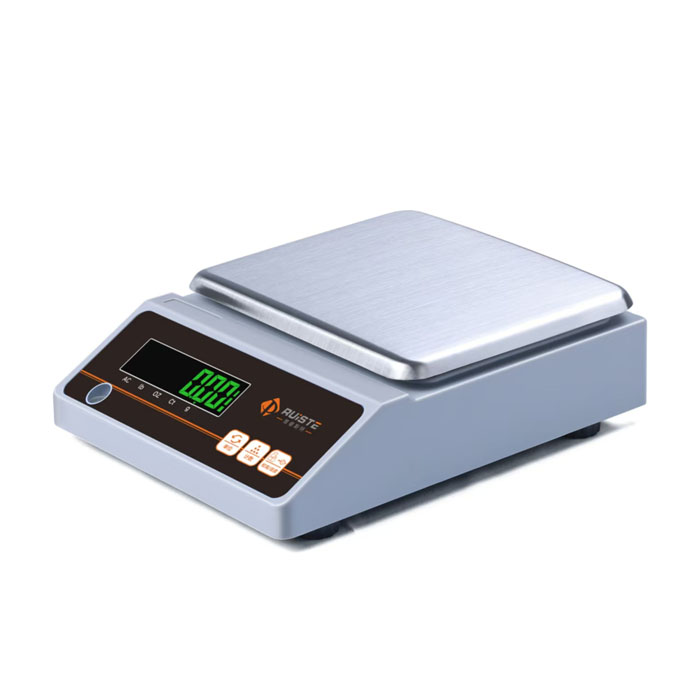
The core working operation of the electronic precision balance relies on the mature electromagnetic force balance compensation principle, which is the key technical support for it to achieve high-precision weighing and stable data output. When a sample to be weighed is steadily placed on the weighing pan of the equipment, the gravity generated by the sample mass will drive the weighing pan and the rigidly connected load-bearing bracket and internal coil structure to produce an extremely tiny downward displacement. This subtle displacement change, which is difficult for the human eye to perceive, will be instantly and accurately captured by a high-sensitivity displacement detection component, which converts the mechanical displacement signal into a recognizable electrical signal and transmits it to the built-in intelligent control circuit of the balance. After the control circuit receives the electrical signal, it will quickly adjust the current intensity passing through the internal coil according to the preset operation program, so that the coil generates a reverse electromagnetic force in the internal magnetic field environment. This electromagnetic force will continuously counteract the gravity of the sample and the downward displacement trend of the load-bearing structure, and gradually push the entire load-bearing system back to the initial balanced position before weighing. When the entire mechanical and electronic system reaches a dynamic stable equilibrium state, the current intensity flowing through the coil maintains a stable fixed value, and this current value presents a strict positive proportional relationship with the mass of the weighed sample. The internal microprocessor of the balance will convert the collected stable current data into intuitive mass numerical information through professional digital-to-analog conversion and data algorithm processing, and finally present it on the display interface for staff to record and use conveniently.
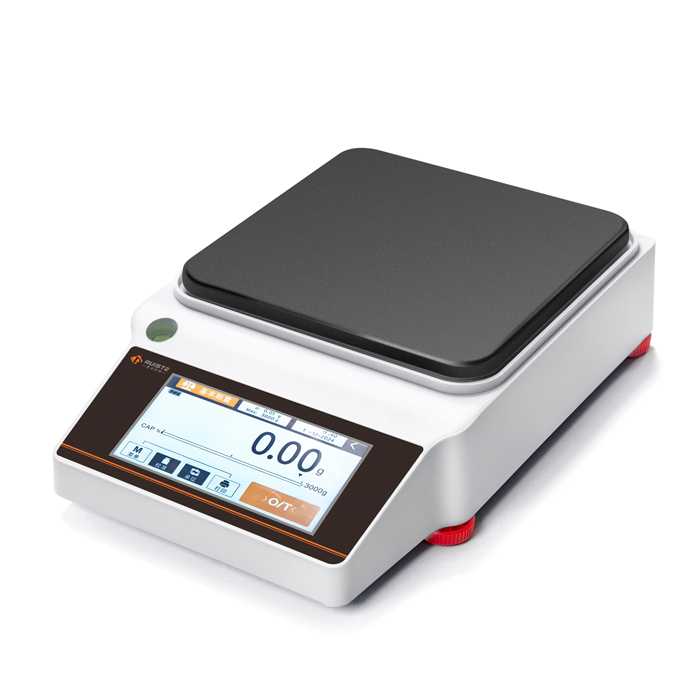
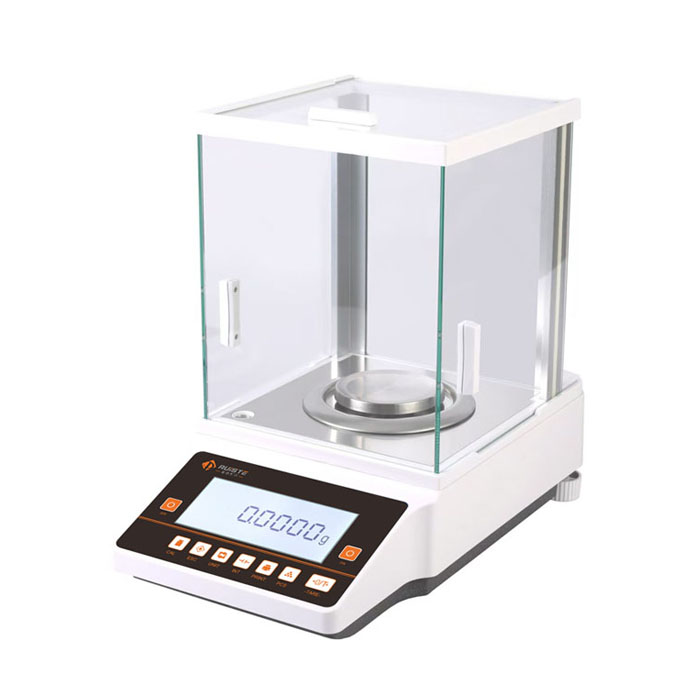
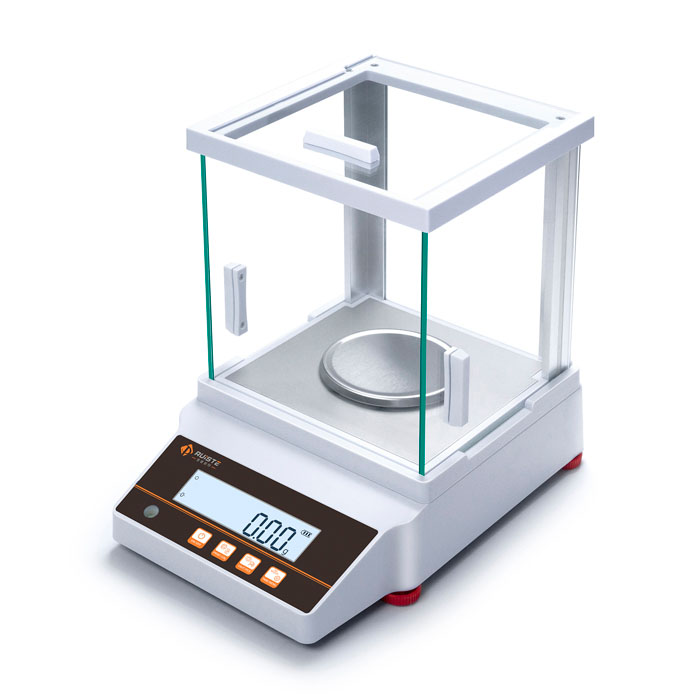
The internal and external structural design of the electronic precision balance is carefully optimized around the core goal of ensuring weighing accuracy and resisting external interference, and each component bears an irreplaceable functional role in the weighing process. The external weighing chamber is usually equipped with a closed protective windproof structure, which is mainly used to isolate the interference of external air convection, surface wind flow and tiny air fluctuations in the working environment on the weighing pan and tiny samples. Even slight air flow impact will cause subtle shaking of tiny mass samples, leading to unstable floating of weighing data and affecting the accuracy of final measurement results, so the closed windproof structure becomes a basic essential configuration for high-precision weighing work. The weighing pan, which is in direct contact with the sample, is made of stable and corrosion-resistant special materials, with a smooth and flat surface and standardized geometric structure, ensuring uniform stress on the sample during placement and avoiding weighing deviation caused by uneven stress or material surface deformation. The core sensing component installed at the bottom of the weighing pan, composed of magnetic steel, pole shoes and precision coils, is the key core part that determines the sensitivity and measurement stability of the entire balance, and it needs to maintain a long-term stable working state without being affected by slight external vibration and temperature changes. The internal position detection device adopts high-precision induction components, which can perceive the slightest displacement change of the load-bearing structure in real time and ensure the timeliness and accuracy of signal transmission and feedback regulation. The peripheral electronic control and data processing modules are responsible for signal reception, current regulation, data conversion and numerical display, ensuring that the entire weighing process is completed efficiently and the output data is clear and intuitive.
The application scope of electronic precision balances covers numerous professional fields that have high requirements for mass measurement accuracy, and different scenarios have formed standardized and targeted weighing usage habits according to actual work needs. In scientific research and chemical laboratory environments, this equipment is widely used for the accurate weighing of chemical reagents, experimental raw materials, standard samples and trace experimental preparations. Many chemical reaction experiments and component content detection work require precise matching of reagent dosages, and tiny mass deviations will directly affect the progress of chemical reactions, the accuracy of experimental data and the repeatability of experimental results. Researchers need to use electronic precision balances to prepare standard experimental samples with accurate mass ratios, record the mass changes of samples before and after chemical reactions, and provide reliable basic data for subsequent experimental data analysis, reaction mechanism research and experimental conclusion verification. In the pharmaceutical production and drug testing industry, the weighing of pharmaceutical raw materials, auxiliary materials and finished drug samples also relies heavily on electronic precision balances. The proportioning accuracy of various raw materials in pharmaceutical formulations directly determines the efficacy and safety of drugs, and the content detection of active ingredients in finished drugs also needs accurate mass measurement data as the evaluation basis, so the stable operation and accurate measurement performance of the balance are crucial to ensuring drug quality compliance.
In the field of new material research and industrial precision manufacturing, electronic precision balances also play an important supporting role. The research and development of new functional materials, composite materials and nano-materials involves the proportioning of various trace raw materials and the detection of material mass changes before and after performance testing. Researchers need to accurately weigh raw material components according to experimental formulas to ensure that the material ratio meets the design standards, and measure the mass changes of materials after durability tests, corrosion tests and strength tests to evaluate the stability and service performance of new materials. In the precision parts processing and electronic component manufacturing industry, many tiny parts and micro-components have extremely small mass, and their processing quality and qualification inspection need to be judged by accurate mass measurement. Staff use electronic precision balances to sample and test processed parts, screen out products with unqualified mass deviations, and ensure the overall assembly accuracy and service stability of mechanical and electronic equipment. In the food testing and agricultural product quality inspection industry, the detection of nutritional component content, pesticide residue detection sample preparation, and quality grading of high-value agricultural products all require precise mass measurement, and electronic precision balances provide accurate data support for food safety supervision and agricultural product quality evaluation.
The stable measurement performance and long-term service life of electronic precision balances are closely related to the placement environment of the equipment, and good environmental conditions are the basic prerequisite to ensure accurate weighing results. The equipment needs to be placed on a special stable and shockproof work platform, avoiding placement on uneven countertops or working surfaces prone to vibration and shaking. Slight vibration generated by surrounding mechanical equipment operation, personnel walking and other activities will be transmitted to the balance, causing tiny shaking of the internal load-bearing structure and weighing pan, resulting in unstable fluctuation of weighing data and reduced measurement accuracy. The placement position should stay away from doors, windows, ventilation equipment and air conditioning air outlets, effectively avoiding weighing interference caused by direct air convection and temperature sudden changes. Temperature stability is also very important for the normal operation of electronic precision balances; long-term high temperature, low temperature or frequent temperature fluctuations will affect the working performance of internal sensing components and electronic circuits, causing subtle changes in component parameters and leading to systematic deviations in weighing data. In addition, the working environment needs to maintain proper dryness and cleanliness, avoiding excessive humidity, dust accumulation and corrosive gas erosion. Humid environment may cause dampness and short circuit of internal electronic components, excessive dust will adhere to the weighing pan and internal sensing structure to affect sensing sensitivity, and corrosive gas will damage internal metal components and circuit structures, shortening the service life of the equipment and affecting measurement stability.
Standardized daily operation methods are key to ensuring the accurate measurement of electronic precision balances and avoiding human operation errors. Before each official weighing work, staff need to carry out pre-use preparation and simple inspection work to ensure that the equipment is in a normal standby state. First, check whether the placement of the balance is stable and horizontal, adjust the horizontal adjusting foot of the equipment according to the horizontal bubble indication, so that the balance is always kept in a horizontal working state, and avoid weighing deviation caused by unbalanced stress of the internal structure. Before weighing the sample, it is necessary to perform zero clearing and tare reset operations to eliminate the influence of the mass of the weighing container, weighing paper and other auxiliary tools on the measurement results, ensuring that the displayed numerical value only corresponds to the actual mass of the sample itself. When placing the sample to be weighed, it should be handled gently and placed steadily in the center of the weighing pan, avoiding placing the sample on the edge of the weighing pan or throwing the sample violently. Eccentric placement will cause uneven stress on the load-bearing structure, and violent placement will produce instantaneous impact force, both of which will affect the balance balance state and lead to inaccurate weighing data. For samples with too high or too low temperature, they should be placed in the working environment for a period of time in advance to balance the temperature with the balance equipment, and then weighed after the temperature is stable, preventing temperature difference from causing air flow around the weighing pan and affecting the stability of weighing data.
In the daily use process, reasonable maintenance and scientific maintenance work can effectively maintain the working performance of the electronic precision balance, prolong the service life of the equipment, and reduce the frequency of equipment failure and measurement deviation. Daily cleaning work needs to be carried out regularly and carefully. After each use, use a soft professional cleaning brush to clean up the residual sample powder, particles and sundries on the weighing pan and inside the weighing chamber, avoiding long-term accumulation of sundries from affecting the sensing sensitivity of the weighing structure and polluting the internal components of the equipment. For stubborn stains on the surface of the weighing pan and the inner wall of the windproof cover, wipe them gently with a soft cloth dipped in a small amount of professional cleaning solution, and wipe them dry in time to avoid liquid residue from corroding the equipment surface and internal circuits. It is necessary to avoid spilling liquid samples, corrosive reagents and volatile substances on the weighing pan and inside the balance during use; once spilling occurs, stop weighing immediately and clean up thoroughly to prevent corrosive substances from damaging the internal sensing components and circuit systems. In addition, the equipment should be kept in a standby power-on state for a long time in daily work according to the usage frequency, which is conducive to maintaining the stable working state of internal electronic components and reducing the measurement deviation caused by frequent startup and shutdown and repeated temperature changes of components.
In the long-term weighing work, various subtle interference factors may cause slight deviations in the measurement data of electronic precision balances, and regular error inspection and performance calibration work are essential to maintain measurement accuracy. Even if the equipment operates normally on the surface, long-term use, environmental changes and slight mechanical wear will cause subtle changes in internal component parameters, leading to small deviations in weighing results. Therefore, it is necessary to carry out regular performance inspection and calibration according to the frequency of use and working environment conditions, adjust the internal operating parameters of the balance, and ensure that the weighing data is always kept within the accurate range. During the weighing process, staff need to avoid frequent and repeated weighing operations in a short time, and leave a proper interval after each weighing to allow the internal load-bearing structure and electronic regulation system to fully return to the initial balanced state, so as to ensure the accuracy and consistency of the next weighing data. At the same time, it is necessary to avoid placing excessive samples beyond the weighing range on the weighing pan, overload weighing will not only cause inaccurate measurement data, but also cause permanent damage to the internal sensing components and load-bearing structure of the balance, affecting the subsequent normal use of the equipment.
With the continuous progress of modern science and technology and the continuous upgrading of industrial production and experimental research standards, the performance requirements for electronic precision balances in various application fields are constantly improving, and related supporting technology and structural design are also constantly optimized and upgraded. The continuous innovation of sensing technology and electronic signal processing algorithms makes the balance more sensitive in tiny mass capture, faster in dynamic balance adjustment, and more stable in long-term data output. The optimized structural design makes the equipment more resistant to external interference, more adaptable to complex working environments, and simpler and more convenient in daily operation and maintenance. As an important basic precision measuring instrument, the electronic precision balance will always maintain an irreplaceable core position in experimental scientific research, industrial precision manufacturing, food and drug testing, new material development and other fields. Only by mastering its working principle, standardized operation methods, scientific maintenance measures and effective error control methods, can the equipment always maintain good working performance, provide accurate, stable and reliable mass measurement data for various professional work, and lay a solid foundation for the smooth development of subsequent experimental research, production processing and quality inspection work.
Electronic Precision Balance
https://www.pruiste.com/precision-balance.html
Post Date: May 5, 2026
https://www.supplier-manufacturer.com/precision-balance/electronic-precision-balance.html

![Weighing Scale Vender In China]()
Weighing Scale Vender In China
China has established a solid and influential position in the global weighing scale manufacturing sector, with numerous dedicated vendors covering diverse production scale…![Weighing Scale Manufacturer]()
Weighing Scale Manufacturer
The weighing scale manufacturing sector stands as an indispensable segment within the global industrial and consumer manufacturing landscape, quietly supporting the operat…![Moisture Analyzer DHS Series]()
Moisture Analyzer DHS Series
DHS series adopts the Internet of Things 5 inch color TFT control system integrated touch HD screen, and the whole series moisture meter adopts German HBM sensor and brand…![Counting Scale Manufacturer]()
Counting Scale Manufacturer
Counting scales have become indispensable measuring equipment in modern industrial production, commercial circulation, and material management, serving as a reliable tool …![Dual-range Counting Scale]()
Dual-range Counting Scale
In modern industrial production, inventory management, and material sorting processes, the demand for accurate and efficient quantitative measurement continues to grow ste…