High-temperature Digital Viscometer
Viscosity stands as one of the most fundamental physical properties of fluid substances, reflecting the internal friction and flow resistance generated during the movement of material molecules. In numerous industrial production, material research and laboratory analysis scenarios, many materials exist as solid or semi-solid states at room temperature and only transform into stable fluid states under continuous high-temperature heating. Traditional viscosity testing equipment struggles to adapt to high-temperature operating environments, prone to unstable temperature control, low data stability and limited testing range, which cannot meet the refined testing demands of modern material processing and scientific research. The high-temperature digital viscometer has emerged as a specialized testing instrument tailored to this industry pain point, integrating precise temperature control technology, digital signal processing technology and rotational viscosity testing principles to achieve accurate, repeatable and efficient viscosity detection of various high-temperature molten fluids. It has become a core testing device indispensable in material development, production quality control and process parameter optimization across multiple industries.
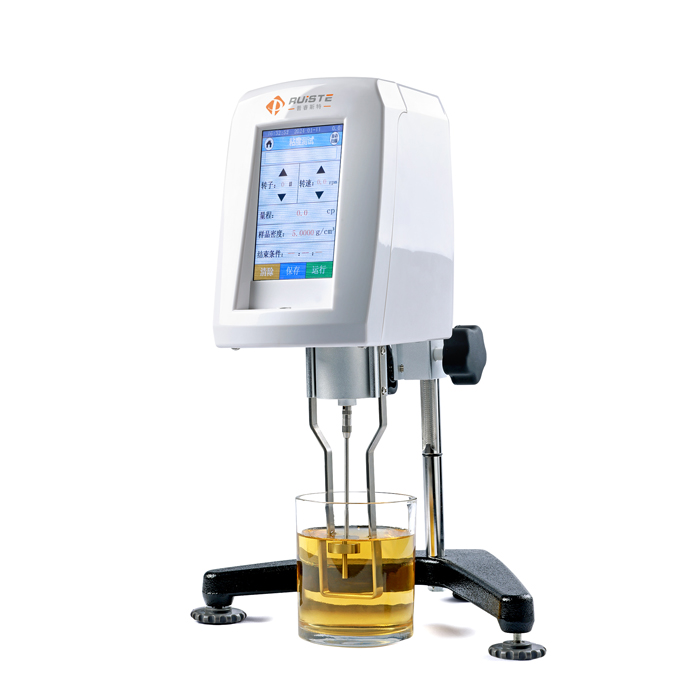
The core working logic of the high-temperature digital viscometer follows the basic law of fluid rotational viscosity measurement, which calculates the dynamic viscosity of a sample by detecting the torque resistance generated when a rotor rotates stably in a fluid medium. Different from conventional room-temperature viscometers, this equipment is equipped with an independent closed temperature control system and high-temperature resistant testing structure, enabling it to maintain a constant and uniform high-temperature environment for samples during the entire testing process. When the instrument is in operation, the built-in driving system drives the precision rotor to rotate at a set constant speed after the sample reaches the preset temperature and maintains a stable molten state. The fluid molecules around the rotor generate continuous viscous resistance on the rotor surface, and the internal sensing module captures real-time torque changes converted from this resistance. Through the built-in microcomputer algorithm system, the instrument converts torque signals into standardized viscosity data, and synchronously calculates and displays core parameters such as shear rate and shear stress, realizing digital, visualized and automated testing processes.
Temperature stability is the core factor determining the accuracy of high-temperature viscosity testing, as the viscosity of most thermal fluid materials is extremely sensitive to temperature fluctuations. Slight temperature deviations will cause obvious changes in molecular flow resistance, thereby leading to data deviation. The high-temperature digital viscometer adopts a high-precision constant-temperature heating structure, which uses uniform heating components and heat preservation structures to eliminate local temperature differences in the sample testing area. The supporting temperature sensing unit can monitor the sample temperature in real time and feed back data to the temperature control system, which dynamically adjusts heating power to keep the sample temperature within a narrow stable fluctuation range throughout the testing cycle. This design effectively solves the problem of inaccurate test data caused by uneven heating or temperature drift in traditional high-temperature testing tools, and provides a stable and reliable environmental foundation for viscosity detection of high-temperature molten materials such as hot melt adhesives, asphalt, paraffin wax, polymer resins and inorganic molten salts.
In terms of structural design, the high-temperature digital viscometer adopts a modular integrated layout, which is divided into a temperature control heating module, a rotational driving module, a signal sensing and processing module, and a digital display and operation module. The testing rotor and sample container are made of high-temperature resistant and corrosion-resistant special materials, which can maintain stable physical properties and testing accuracy under long-term high-temperature working conditions, avoiding structural deformation or surface oxidation that affects test results. The rotational driving unit supports stepless speed regulation and multi-gear fixed-speed switching, matching different testing requirements of low-viscosity thin fluids and high-viscosity thick molten materials. The high-sensitivity sensing module can capture tiny torque changes, ensuring high resolution and good data reproducibility in both low shear rate and high shear rate testing scenarios. Meanwhile, the equipment is equipped with a closed testing cavity structure, which can isolate external air interference according to testing needs, and support testing under inert atmosphere conditions, effectively protecting oxygen-sensitive high-temperature molten samples and expanding the scope of applicable test materials.
Compared with traditional mechanical viscometers and ordinary digital viscometers, the high-temperature digital viscometer has prominent functional advantages in high-temperature adaptability, testing accuracy and operational convenience. First of all, it breaks through the temperature limitation of conventional testing equipment, realizing stable testing of materials that are solid at room temperature and fluid after high-temperature melting, making up for the technical gap in high-temperature viscosity detection. Secondly, the digital intelligent control system replaces manual observation and manual calculation links, automatically completes temperature stabilization, constant-speed rotation, data collection and result calculation, reducing human operation errors and improving the consistency of test data. In addition, the equipment has a wide dynamic testing range, which can cover the viscosity parameters of most industrial high-temperature molten fluids, and can adapt to the testing and analysis needs of different material formulas and process temperatures. The built-in data storage function can record multiple groups of test data, which is convenient for subsequent data sorting, comparison and analysis, providing effective data support for material formula improvement and production process adjustment.
The application scenarios of high-temperature digital viscometers cover multiple key industrial fields and scientific research disciplines, providing important technical support for the upgrading of material processing technology and quality standardization. In the road engineering and building material industry, it is mainly used to test the viscosity of high-temperature molten asphalt and modified asphalt materials. Asphalt viscosity directly affects the construction fluidity, paving uniformity and final road durability. Accurate high-temperature viscosity data can guide construction temperature control and material ratio optimization, ensuring the stability of road engineering quality. In the new material and chemical industry, the equipment is applied to the performance testing of hot melt adhesives, polymer waxes, resin materials and thermoplastic polymers. By detecting the viscosity changes of materials at different high temperatures, researchers can analyze the fluidity and processing performance of materials, optimize material synthesis formulas and molding processes, and improve the applicability and stability of new materials.
In the field of energy and metallurgical materials, high-temperature digital viscometers can complete viscosity testing of high-temperature molten substances such as coal ash, molten salts and metal melts. The viscosity parameters of these high-temperature fluids are key basic data for analyzing material smelting processes, energy conversion efficiency and equipment operation stability, which help enterprises optimize smelting temperature parameters and improve production efficiency and product quality. In the daily chemical and adhesive industry, the equipment is used to detect the viscosity of various high-temperature molten adhesives and grease materials. Viscosity stability determines the bonding effect, coating performance and service life of products. High-precision testing data can effectively control product batch consistency and reduce product quality fluctuations caused by process differences.
Standardized operation and daily maintenance are crucial to maintaining the long-term stable performance and testing accuracy of high-temperature digital viscometers. In the daily testing process, operators need to preheat the equipment in advance according to the test temperature requirements, wait for the temperature system to reach a stable state before placing the sample, and avoid putting the sample into the equipment with unstable temperature to prevent data deviation. Before testing, it is necessary to select a matching rotor and rotational speed according to the estimated viscosity range of the sample, to ensure that the test data is within the effective detection range of the instrument. After the test is completed, the high-temperature sample residue on the rotor and sample container should be cleaned in time after the equipment is naturally cooled, to avoid material condensation and adhesion affecting the precision of subsequent testing. In terms of daily maintenance, it is necessary to regularly check the operating state of the temperature control system and rotating parts, keep the equipment operating environment dry and clean, avoid dust and corrosive gas erosion, and regularly calibrate the instrument according to standard testing procedures to ensure the long-term stability and accuracy of test results.
With the continuous progress of industrial manufacturing technology and material science research, the industry's requirements for material performance testing are becoming increasingly refined and standardized. As a professional high-temperature viscosity testing device, the high-temperature digital viscometer is also constantly optimized and upgraded in structural design and functional performance. Modern optimized models tend to adopt more intelligent temperature control algorithms, realizing faster temperature response and more stable temperature control accuracy, and further improving the anti-interference ability of the equipment in complex testing environments. At the same time, the equipment is gradually developing towards intelligent data management and remote monitoring, which can realize automatic recording, sorting and exporting of test data, and facilitate enterprises and research institutions to build standardized material performance databases. The improvement of automated operation functions also reduces the threshold of manual operation, making high-precision high-temperature viscosity testing more efficient and convenient.
In practical industrial production and scientific research applications, the high-temperature digital viscometer undertakes the important task of screening material formulas, verifying process parameters and controlling product quality. Many material processing processes need to rely on accurate high-temperature viscosity data to determine the optimal processing temperature, shear rate and production parameters. Stable and reliable viscosity testing data can effectively avoid product performance defects caused by unreasonable process parameters, reduce production material waste and defective product rate, and create practical economic value for enterprises. In scientific research work, the equipment provides accurate basic data for the study of material thermal fluid characteristics, helps researchers explore the internal structure and performance change rules of materials under high-temperature conditions, and lays a foundation for the research and development of new high-temperature resistant materials and optimized processing technologies.
In conclusion, the high-temperature digital viscometer, with its unique high-temperature adaptive performance, precise digital testing ability and wide application compatibility, has become an important testing instrument connecting material basic research and industrial production applications. It solves many technical problems in traditional high-temperature viscosity testing, makes the detection of thermal fluid material performance more standardized, accurate and efficient, and provides strong technical support for the technological progress and quality upgrading of chemical industry, new materials, road engineering, energy metallurgy and other industries. With the continuous development of intelligent manufacturing and precision testing technology, the performance of high-temperature digital viscometers will be further improved, and their application scope will be more extensive, playing a more important role in promoting the high-quality development of various industrial fields and material science research.
High-temperature Digital Viscometer
https://www.pruiste.com/digital-viscometer.html
Post Date: May 23, 2026
https://www.supplier-manufacturer.com/digital-viscometer/high-temperature-digital-viscometer.html

![Custom Laboratory Balance]()
Custom Laboratory Balance
In modern scientific research, industrial testing, pharmaceutical development, and environmental analysis, accurate mass measurement stands as one of the most fundamental …![Laboratory Balance Supplier]()
Laboratory Balance Supplier
In all scientific research, industrial testing, and analytical laboratory scenarios, accurate mass measurement serves as the foundational step for reliable experimental da…![Automatic Analytical Balance]()
Automatic Analytical Balance
In modern scientific research, industrial production, and analytical testing industries, precise mass measurement serves as one of the most fundamental and indispensable e…![Analytical Balance Vender In China]()
Analytical Balance Vender In China
The analytical balance stands as an indispensable precision measuring instrument in modern experimental research, industrial production, and quality inspection sectors. Wi…![Analytical Balance Supplier]()
Analytical Balance Supplier
The global laboratory instrumentation sector maintains steady expansion driven by growing demands from scientific research, industrial manufacturing, and quality inspectio…