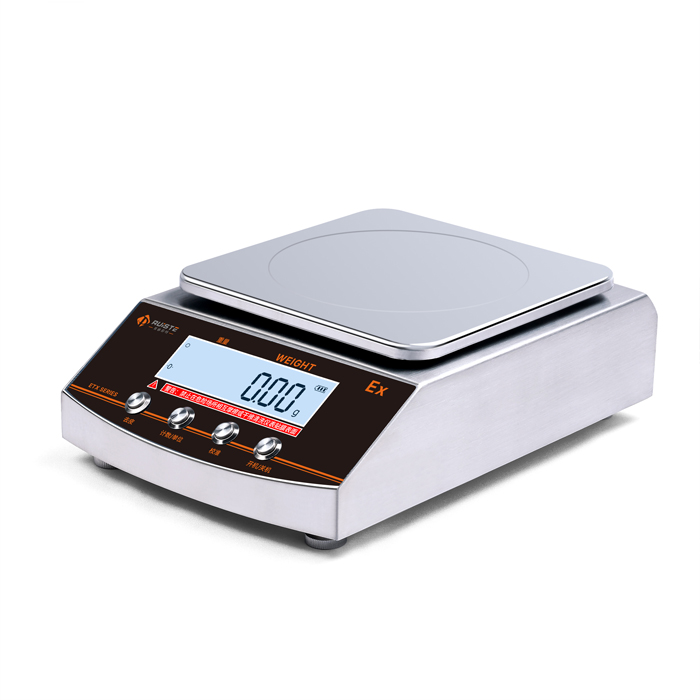
Laboratory Balance For Sale
In every scientific laboratory, industrial testing facility, and research institution, precise mass measurement stands as one of the most fundamental and indispensable operational steps. A reliable laboratory balance serves as the core equipment for obtaining accurate experimental data, supporting consistent quality testing, and ensuring the repeatability of scientific research. Unlike ordinary household weighing tools, laboratory balances are engineered to meet the rigorous demands of professional environments, delivering stable, consistent, and high-precision mass readings that form the foundation of countless experimental analyses, formulation preparations, and quality verification processes. For laboratories of all scales, from small academic research rooms to large industrial quality control centers, selecting a suitable laboratory balance is a key step in standardizing experimental operations and improving overall work efficiency.
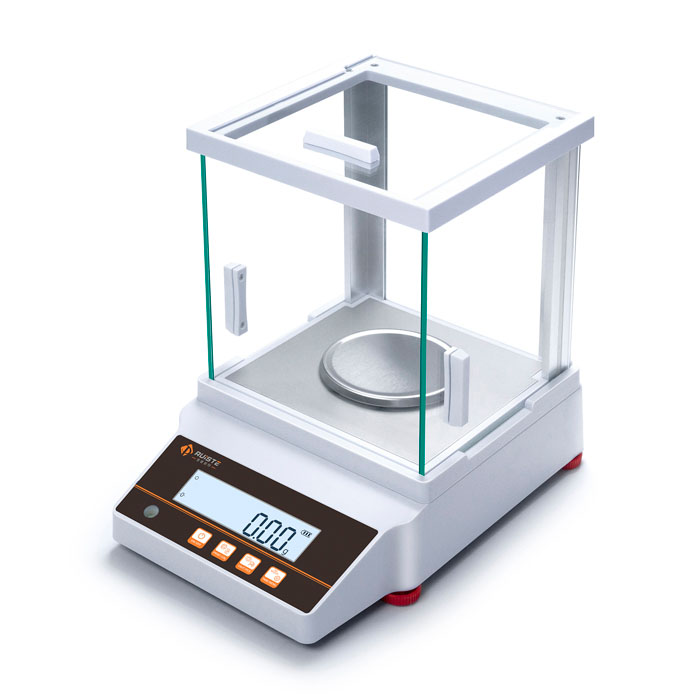
Modern laboratory balances primarily rely on mature electromagnetic force compensation technology to achieve precise mass measurement, a principle that distinguishes them from traditional mechanical weighing devices. When a sample is placed on the weighing pan, the object’s gravitational force triggers a slight displacement of the internal sensing component. The built-in electromagnetic coil then generates a restoring force to counteract the downward pressure of the sample, maintaining the balance system in a stable equilibrium state. The electric current required to produce this balancing force is directly proportional to the mass of the placed sample. The internal signal processing system converts this current signal into intuitive digital data, which is then displayed on the screen as the final weighing result. This working mechanism effectively eliminates the measurement deviations common in traditional mechanical balance structures, ensuring high sensitivity and stable output during long-term continuous use.
Laboratory balances cover a wide range of precision levels and weighing capacities, catering to diverse experimental and industrial needs across different scenarios. Entry-level precision laboratory balances are designed for routine weighing tasks that require moderate accuracy, suitable for measuring bulk solid samples, auxiliary experimental materials, and conventional industrial raw materials. These devices feature relatively large weighing ranges and stable anti-interference performance, adapting well to daily high-frequency operational demands. Mid-to-high precision analytical laboratory balances focus on ultra-fine measurement scenarios, capable of capturing tiny mass changes for trace powder samples, liquid solutes, and micro experimental reagents. Such balances are widely applied in chemical component analysis, pharmaceutical ingredient proportioning, and environmental sample detection, where even minor measurement errors can affect the authenticity and credibility of final experimental conclusions.
Beyond basic mass measurement functions, contemporary laboratory balances integrate multiple practical design optimizations to adapt to complex laboratory environments. Most models are equipped with high-definition digital display screens that present clear real-time weighing data, with intuitive interface designs that reduce operational difficulty for users. Standard configuration functions include zero-tracking, tare weighing, and automatic calibration assistance. The tare function allows users to exclude the mass of containers such as weighing papers, beakers, and test tubes, enabling direct and accurate measurement of pure sample mass and effectively simplifying batch sample weighing operations. The zero-tracking function automatically corrects minor zero drift caused by environmental subtle changes or device placement deviations, ensuring the initial measurement state remains accurate before each use.
Environmental adaptability is a critical consideration in the design of laboratory balances, as laboratory conditions often involve subtle fluctuations in temperature, humidity, and air flow that can impact weighing accuracy. High-quality laboratory balance structures adopt rigid and stable housing materials, which can reduce structural deformation caused by temperature changes. Meanwhile, professional windproof structures are equipped on high-precision models to block interference from indoor air convection, a necessary design for micro and trace sample weighing. In addition, the bottom of the device features adjustable horizontal foot pads, allowing users to fine-tune the balance level according to the placement platform conditions. Maintaining a horizontal working state is essential for avoiding eccentric load errors and ensuring uniform force on the weighing pan during measurement.
The application scope of laboratory balances spans multiple industry sectors and scientific research fields, demonstrating strong practical value. In chemical laboratories, these balances are used for precise batching of chemical reagents, quantitative preparation of standard solutions, and mass detection of reaction precipitates, providing accurate data support for chemical reaction studies and formula optimization. In the pharmaceutical industry, they assist in the proportioning of raw medicinal materials and the testing of finished product component content, supporting standardized production and drug quality stability control. In food testing and agricultural research, laboratory balances measure the mass of food samples, crop grains, and soil components, helping researchers analyze nutritional components and soil fertility indicators.
In environmental monitoring, laboratory balances are used for weighing air particulate samples, water sediment samples, and pollution residues, providing basic data for environmental quality assessment and pollution source analysis. In material science research, they support the testing of new material density, component ratio, and mass change before and after material experiments, promoting the research and iteration of new functional materials. Educational laboratories in colleges and universities also rely heavily on these balances to help students master basic experimental operation skills, cultivate rigorous scientific thinking, and ensure the accuracy of teaching experimental data.
Reasonable operation and daily maintenance are vital to extending the service life of laboratory balances and maintaining long-term measurement stability. Before each use, users need to check the horizontal state of the device and clean the weighing pan and surrounding areas to remove residual sample dust and debris that may affect measurement results. It is necessary to preheat the device for an appropriate duration according to operational requirements, as sufficient preheating ensures the internal electromagnetic system and signal processing module reach a stable working state, reducing initial measurement errors. During the weighing process, samples should be placed gently in the center of the weighing pan to avoid impact force that may damage internal precision sensors, and excessive overload weighing should be strictly prohibited to prevent permanent structural loss of accuracy.
Daily maintenance work includes regular cleaning of the device surface and windproof structure, avoiding the use of corrosive cleaning agents that may damage the shell and internal components. The balance should be placed in a dry, ventilated, and constant-temperature environment for long-term storage and use, avoiding direct sunlight, high humidity, and severe vibration environments. Regular manual calibration and precision inspection are also required to correct subtle accuracy deviations caused by long-term use, ensuring the measurement results remain consistent and reliable. When not in use for a long time, the weighing pan should be cleaned and dried, and the device should be covered with a dust cover to prevent dust accumulation from affecting sensor sensitivity.
When selecting a suitable laboratory balance, users need to comprehensively match equipment parameters with actual usage scenarios rather than blindly pursuing high-precision configurations. The core selection indicators include weighing range, readability, repeatability, and environmental adaptability. For conventional bulk sample weighing in industrial laboratories, a moderately ranged and stable precision balance can meet daily operational needs and improve work efficiency. For trace analysis and fine experimental research in scientific research laboratories, high-readability analytical balances are required to capture tiny mass changes. In addition, users can select models with extended functions according to operational needs, such as data storage and data transmission interfaces, which can connect with external data recording systems to realize automatic recording and statistical analysis of weighing data, reducing manual recording errors and improving experimental data traceability.
Modern laboratory balances also feature intelligent and humanized design upgrades to adapt to the evolving demands of modern laboratory automation. Many models support unit switching between different mass measurement units, meeting the unified data standards of different experimental systems and industry specifications. The built-in fault self-detection function can identify abnormal states such as unstable placement, environmental interference, and internal system anomalies, and prompt users through intuitive signals to avoid invalid measurement operations caused by abnormal equipment status. The lightweight and compact structural design optimizes laboratory space utilization, facilitating flexible placement and movement of the equipment in different experimental areas while maintaining overall structural stability.
The reliability of laboratory balances directly affects the quality of experimental research and industrial production testing data. Stable and accurate weighing equipment can reduce experimental repeat times, save raw material costs and experimental time, and provide solid data support for scientific research innovation and production standardization. Whether for daily routine experimental operations, professional scientific research projects, or industrial quality control testing, high-quality laboratory balances can maintain consistent working performance in long-term high-frequency use, effectively avoiding data fluctuations caused by equipment instability.
For users seeking laboratory balancing equipment, it is essential to focus on the practical performance, structural stability, and after-sales service support of the equipment. Excellent laboratory balance products undergo rigorous structural debugging and performance testing during the production process, with stable sensor performance and precise signal processing systems, ensuring long-term stable output of measurement results. Complete after-sales support including operational guidance, maintenance consultation, and fault troubleshooting can help users quickly master equipment usage skills, solve daily operational problems, and ensure the continuous and stable operation of laboratory weighing work. With the continuous advancement of laboratory technology, laboratory balances are constantly evolving towards higher stability, stronger intelligence, and better environmental adaptability, continuously empowering the standardized and efficient development of various professional laboratory fields.
Laboratory Balance For Sale
https://www.pruiste.com/laboratory-balance.html
Post Date: May 22, 2026
https://www.supplier-manufacturer.com/laboratory-balance/laboratory-balance-for-sale.html

![Explosion-proof Balance EX Series]()
Explosion-proof Balance EX Series
EX explosion-proof balance whole is 304 stainless steel, rust and corrosion resistance. The whole series of balance adopts intrinsically safe explosion-proof battery. Expl…![Types of Digital Viscometer]()
Types of Digital Viscometer
Viscosity serves as a fundamental physical property that reflects a fluid’s internal resistance to flow and shear deformation, playing a vital role in quality control, pr…![Digital Viscometer Wholesale]()
Digital Viscometer Wholesale
Viscosity measurement stands as a fundamental part of industrial quality control, material research, and production process optimization across diverse global sectors. As …![Precision Digital Viscometer]()
Precision Digital Viscometer
Viscosity stands as one of the most fundamental physical properties of fluid substances, reflecting the internal friction and flow resistance generated during the movement…![Purposes of Moisture Analyzer]()
Purposes of Moisture Analyzer
Moisture content stands as one of the most fundamental and influential physical properties of nearly all raw materials, semi-finished goods, and finished products across i…