Moisture Balance Analyzer
Moisture content stands as one of the most critical physical indicators for a wide range of raw materials, semi-finished products, and finished goods across industrial production, scientific research, and quality inspection fields. The presence of moisture directly affects the physical properties, chemical stability, storage life, and overall usability of materials. Excess moisture in granular materials may lead to caking and deterioration during storage, while insufficient moisture in fibrous materials can cause structural brittleness and performance degradation. In chemical and pharmaceutical production, uncontrolled moisture levels may interfere with reaction efficiency and product purity, bringing hidden risks to batch consistency. For this reason, rapid and reliable moisture detection has become an indispensable link in modern quality control systems, and the moisture balance analyzer has emerged as a mainstream testing device relying on mature thermogravimetric detection principles and efficient operational characteristics. Unlike traditional manual drying methods that require long-duration constant-temperature drying and repeated weighing calculations, this integrated testing equipment combines precision weighing and intelligent heating drying functions, realizing automated, real-time, and efficient moisture content detection, which greatly optimizes the efficiency and stability of routine material testing work.
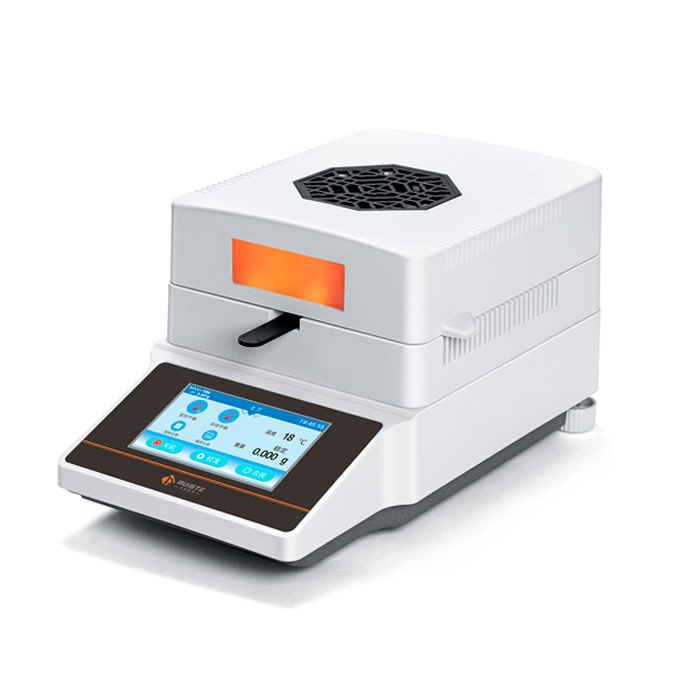
The core operational logic of the moisture balance analyzer is based on the loss-on-drying thermogravimetric principle, a classic and universally recognized detection method for moisture analysis. The fundamental logic of this principle is straightforward and scientific: the moisture contained in a material exists mainly in the form of free water and bound water, and these water components will vaporize and escape when the material is heated to a specific constant temperature within a reasonable range. By accurately measuring the weight difference of the sample before and after the drying process, the device can calculate the proportion of volatile substances dominated by moisture in the total sample mass. In practical testing scenarios, the detected weight loss primarily corresponds to the moisture content of the sample, with negligible interference from other volatile components under standardized temperature control conditions, ensuring the rationality and practicability of test results. The entire testing process abandons manual intervention in data recording and calculation, and the built-in sensing and computing modules of the equipment can complete real-time monitoring, data analysis, and result output throughout the drying cycle.
The internal structural design of the moisture balance analyzer follows the integration of precision measurement and uniform heating, with two core functional modules supporting the entire testing process. The first is the high-precision weighing module, which serves as the core data acquisition unit of the equipment. This module is equipped with high-sensitivity weight sensing components that can capture tiny mass changes of the sample during heating and drying with high resolution. Before the start of each test, the weighing system automatically performs zero calibration to eliminate the interference of the weight of the sample pan and residual dust in the testing cavity, ensuring the accuracy of the initial sample weight data. During the continuous drying process, the system continuously tracks and records the dynamic weight loss of the sample, forming a complete data change curve for the drying process, which provides sufficient data support for the final result calculation and process judgment. The second core module is the uniform heating and temperature control system, which determines the efficiency and accuracy of sample moisture volatilization. Most mainstream equipment adopts efficient heating components that can quickly generate stable and uniform heat radiation, avoiding local overheating or uneven heating of the sample.
Uniform heating is a key factor to ensure reliable test results. Local overheating will cause partial decomposition or carbonization of the sample surface, generating additional weight loss that interferes with real moisture data, while uneven heating will lead to incomplete moisture volatilization in some areas of the sample, resulting in low test values. The optimized heating structure of the moisture balance analyzer can form a stable temperature field inside the closed testing cavity, enabling each part of the sample to receive consistent thermal energy. Meanwhile, the intelligent temperature control system can precisely adjust and maintain the set drying temperature, effectively avoiding temperature fluctuations during equipment operation. Users can flexibly set the drying temperature according to the thermal stability characteristics of different samples, adapting to the testing requirements of organic materials, inorganic materials, granular powders, fibrous substances, and other diverse sample types. For heat-sensitive materials that are prone to decomposition at high temperatures, low and medium temperature drying parameters can be selected to ensure that only moisture and volatile water-based substances are removed while maintaining the structural stability of the sample itself.
The complete testing workflow of the moisture balance analyzer follows standardized and procedural steps, with simple and operable overall operations, suitable for long-term repetitive testing in laboratory and industrial on-site environments. Before formal testing, routine equipment preparation is required, including cleaning the internal cavity of the device and the sample pan to remove residual samples and dust from previous tests, which can prevent cross-contamination and weight interference. After the equipment is powered on and preheated for a certain period, the internal temperature and weighing system reach a stable working state, and automatic zero calibration is performed to complete the pre-test preparation. Subsequently, a certain amount of sample is taken and evenly laid flat on the clean sample pan. The sample laying state has an important impact on the test effect; excessive stacking will hinder internal moisture volatilization, while excessively thin laying may cause sample loss during heating. Reasonable tiling ensures that the sample fully contacts the hot air and heat radiation in the cavity, realizing complete and rapid precipitation of internal moisture.
After placing the sample and closing the protective cavity door, the user starts the test program, and the equipment enters automatic operation mode. The system first accurately records the initial mass of the sample, then activates the heating system to raise the temperature to the preset drying standard and maintain a constant temperature state. Throughout the drying process, the weighing module continuously collects sample weight data and transmits it to the built-in data processing unit in real time. As the internal moisture of the sample gradually vaporizes and escapes, the sample mass continues to decrease, and the system tracks the weight change trend in real time. When the weight change of the sample within a set time interval is lower than the preset threshold, the system judges that the moisture volatilization is complete, automatically terminates the drying process, and records the final stable weight of the sample. Based on the initial weight, final weight, and preset algorithm program, the equipment automatically calculates and displays the moisture content data of the sample, usually presented in the form of mass percentage, which is intuitive and convenient for users to record and analyze.
Compared with traditional oven drying methods, the moisture balance analyzer shows prominent advantages in testing efficiency, operational convenience, and result stability. The traditional constant-temperature oven drying method often requires several hours of continuous drying, coupled with multiple rounds of taking out, cooling, and weighing operations, which is not only time-consuming and labor-intensive but also easily introduces human errors in manual operation and data recording. In contrast, the integrated design of the moisture balance analyzer shortens the entire testing cycle to a few minutes to tens of minutes, greatly improving the efficiency of batch sample testing. All data collection, monitoring, and calculation links are completed automatically by the equipment, reducing manual participation and effectively avoiding human operational errors and reading deviations. In addition, the closed testing cavity design can reduce the interference of external ambient temperature, humidity, and air flow on the drying process and weighing results, enabling the equipment to maintain stable testing performance in different working environments.
The equipment also has strong adaptability to diverse testing scenarios and sample types, covering almost all conventional solid and semi-solid materials that rely on thermal weight loss for moisture detection. In the food industry, it is commonly used for moisture testing of grain, flour, nuts, dried fruits, snack products, and various food additives. The moisture content of food materials is closely related to food taste, shelf life, and microbial growth. Real-time detection and strict control of moisture indicators help enterprises stabilize product quality and extend product storage cycle. In the chemical industry, the equipment is applied to the detection of chemical powders, granular raw materials, resin materials, and inorganic fillers, providing accurate data support for controlling material purity and chemical reaction effects. In the pharmaceutical field, it is used for moisture analysis of medicinal powders, auxiliary materials, and granular preparations, helping standardize pharmaceutical production processes and ensure the stability of pharmaceutical efficacy.
In addition, the equipment also plays an important role in new material research, textile production, building materials processing, and agricultural product testing. In textile production, detecting the moisture content of fiber raw materials and finished textiles helps control the softness, toughness, and processing performance of textiles. In the building materials industry, moisture detection of cement mortar, wall materials, and wood products can effectively avoid structural deformation, cracking, and performance attenuation caused by excessive moisture. In agricultural research and production, it is used for moisture monitoring of fresh crops, dried agricultural products, and soil samples, providing basic data for agricultural product storage, processing classification, and soil environment analysis. The wide application range benefits from the flexible parameter adjustment function of the equipment, which can match the optimal testing conditions according to the thermal stability and structural characteristics of different samples.
To ensure the long-term stable operation of the moisture balance analyzer and the accuracy of test results, standardized daily operation and maintenance management are essential. In terms of operation, users need to select appropriate sample dosage and drying temperature based on sample characteristics. For heat-sensitive samples with low decomposition temperature, low-temperature drying mode must be adopted to prevent sample thermal decomposition from causing false weight loss and affecting result accuracy. For porous and thick samples, appropriate sample spreading thickness and extended constant temperature holding time can ensure complete precipitation of internal bound moisture. At the same time, it is necessary to avoid excessive sample dosage, which may lead to incomplete internal drying due to thick sample layers. In terms of daily maintenance, the testing cavity and sample pan should be cleaned regularly to prevent residual sample accumulation from affecting subsequent tests. The equipment should be placed in a dry, flat, and dust-free working environment, avoiding direct sunlight and strong air convection, to prevent external environmental factors from interfering with temperature control and weighing accuracy.
Regular performance verification is also an important part of equipment maintenance. Users can conduct repeated testing experiments with standard samples to check the repeatability and stability of equipment test data. If continuous deviation or unstable data fluctuation is found, parameter calibration and equipment inspection should be carried out in a timely manner to eliminate potential faults. In addition, the equipment needs to avoid frequent startup and shutdown during continuous work, and a certain preheating time should be reserved after each startup to ensure that the internal temperature field and weighing system reach a stable working state before testing, which is conducive to maintaining the consistency of batch test results.
In terms of data management, modern moisture balance analyzers are equipped with complete data storage and output functions, which can record the test time, sample parameters, drying conditions, and final test results of each experiment in detail. The stored data can be queried and exported at any time, facilitating users to establish production quality records, conduct data trend analysis, and track the quality changes of raw materials and finished products in different batches. By accumulating long-term test data, enterprises can summarize the moisture change rules of materials in different production links, optimize production process parameters, and realize refined quality control. This data-based management mode makes material quality control more standardized and systematic, providing reliable technical support for production optimization and quality improvement.
In the context of increasingly stringent industrial quality control and scientific research testing requirements, the moisture balance analyzer has become a basic and indispensable testing device with its reliable detection principle, efficient testing speed, simple operation process, and wide application adaptability. It effectively makes up for the shortcomings of traditional detection methods such as low efficiency, cumbersome operation, and poor anti-interference ability, and provides stable and accurate moisture data for various industries. With the continuous progress of testing technology, the performance of moisture balance analyzers is also continuously optimized, with more intelligent temperature control logic, more sensitive weighing sensing performance, and more perfect data management functions, further improving the efficiency and accuracy of moisture detection. In future industrial production and laboratory research, this type of equipment will continue to play an important role, supporting the standardized production, quality supervision, and technological research and development of various industries, and providing basic guarantee for the stable improvement of material quality and production efficiency.
Moisture Balance Analyzer
https://www.pruiste.com/moisture-analyzer.html
Post Date: May 22, 2026
https://www.supplier-manufacturer.com/moisture-analyzer/moisture-balance-analyzer.html

![Digital Viscometer NDJ SERIES]()
Digital Viscometer NDJ SERIES
NDJ series viscometer has 2 optional keys and touch screen. The whole series balance adopts high precision sensor, microcomputer control and one key fast measurement. The …![Electronic Balance JA SERIES]()
Electronic Balance JA SERIES
The JA series uses high-definition buttons, and the entire series of balances uses Nuosheng sensors and brand sensors to ensure high accuracy and stability of weighing res…![Online Digital Viscometer]()
Online Digital Viscometer
Viscosity stands as one of the most fundamental physical properties of fluid substances, reflecting the internal frictional resistance that occurs when a fluid flows and d…![Digital Viscometer Supplier]()
Digital Viscometer Supplier
Viscosity stands as one of the most fundamental physical properties of fluid materials, reflecting the internal frictional resistance that occurs when a fluid flows or und…![Portable Digital Viscometer]()
Portable Digital Viscometer
Viscosity stands as one of the most fundamental physical properties of fluid substances, reflecting the internal friction and flow resistance that occurs when liquids move…