Online Moisture Analyzer
Moisture content stands as one of the most critical physical indicators that determine the quality, stability, and processing performance of raw materials, semi-finished goods, and final products across nearly all industrial sectors. Even minor fluctuations in moisture levels can trigger noticeable changes in product texture, chemical stability, storage durability, and processing efficiency, making accurate and continuous moisture monitoring an indispensable part of modern industrial production. Traditional moisture detection methods rely heavily on offline sampling and laboratory testing, which involve manual sample collection, pretreatment, and delayed data analysis. These conventional approaches inevitably introduce time lags between data acquisition and actual production status, along with potential human interference and sampling errors that compromise the consistency of process control. The online moisture analyzer has emerged as a practical solution to these limitations, enabling real-time, continuous, and non-interruptive moisture measurement during ongoing production processes and laying a solid foundation for refined, automated, and stable industrial production management.
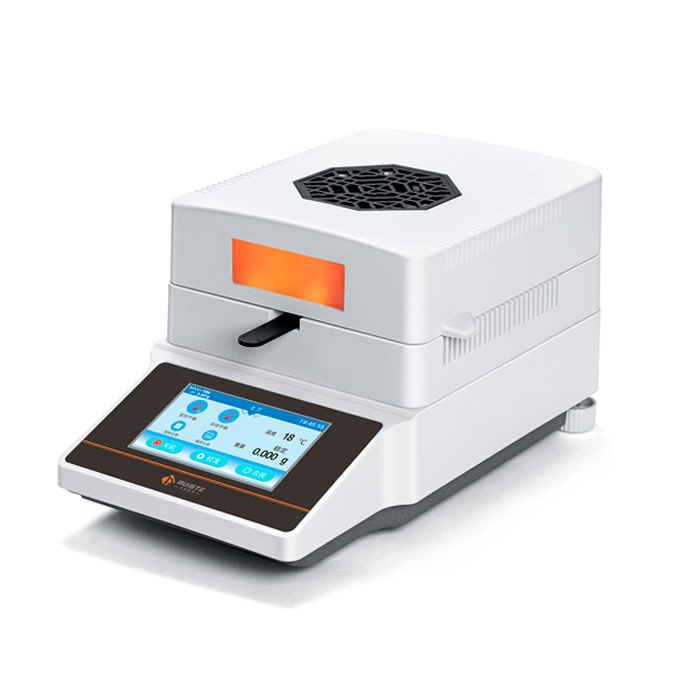
The operational logic of online moisture analyzers is rooted in the unique physical and chemical properties of water molecules, which interact with different energy waves and medium environments in measurable and predictable ways. Common technical principles adopted by mainstream online moisture analysis systems include near-infrared spectral absorption, microwave dielectric sensing, and impedance-based detection, each adapted to distinct production scenarios and material characteristics. Near-infrared technology leverages the feature that O-H chemical bonds in water molecules absorb specific wavelengths of near-infrared light. When calibrated light emitted by the analyzer penetrates or reflects off the surface of a moving material, water molecules absorb part of the light energy, and the remaining energy received by the internal sensor changes correspondingly. The system converts the detected energy attenuation data into accurate moisture content values through built-in algorithm calibration, achieving instantaneous measurement without contact or damage to the tested materials. This working mode suits most solid and powdery materials with stable surface properties and uniform texture.
Microwave-based online moisture analysis operates on the difference in dielectric constants between water and common industrial materials. Water molecules possess a notably high dielectric constant, while most dry raw materials such as plastic particles, grains, and mineral aggregates show low dielectric values. When microwave signals pass through materials, the presence of moisture alters the signal’s propagation speed, phase, and energy attenuation degree. The analyzer captures these subtle signal changes and establishes a correlation model between signal variation and moisture concentration, realizing real-time quantitative detection. Unlike near-infrared technology, microwave measurement is less affected by material surface color, particle size, and surface roughness, delivering stable detection results for opaque, uneven, or granular materials that pose challenges to optical detection methods. For low-concentration trace moisture detection in gases and low-viscosity fluids, impedance and electrolytic sensing technologies are widely applied, where the system calculates moisture content by monitoring changes in electrical signals generated by water molecule adsorption and diffusion in specific sensing media.
A complete online moisture analysis system consists of multiple coordinated functional modules that ensure stable and reliable long-term operation in complex industrial environments. The sensing probe serves as the core detection unit, responsible for real-time signal collection from materials on production lines, conveyor belts, or processing equipment. The signal processing module filters out industrial interference signals such as mechanical vibration, ambient temperature fluctuation, and dust disturbance, amplifies effective detection signals, and eliminates invalid data caused by accidental material accumulation or equipment jitter. The data calculation and analysis unit processes optimized signals through preset calibration models and temperature compensation algorithms, outputting accurate and stable moisture data. Meanwhile, the data transmission and interactive module realizes real-time data uploading, local display, and linkage communication with production control systems, allowing production operators to grasp moisture changes instantly and adjust process parameters in a timely manner. All structural components are designed to adapt to continuous industrial operation, with dustproof, moisture-proof, and high-temperature resistant structural designs to cope with harsh on-site production conditions.
The application scope of online moisture analyzers covers food processing, agricultural product processing, chemical manufacturing, building materials production, pharmaceutical industry, and new material processing, bringing tangible optimization effects to diverse production links. In the food and agricultural industry, moisture content directly affects product shelf life, taste, and storage safety. For grains, dried fruits, spices, and puffed snack foods, excessive moisture can lead to microbial growth, mildew, and product deterioration during storage, while insufficient moisture may cause poor taste and product fragmentation. Online moisture analyzers monitor material moisture in real time during drying, baking, and packaging processes, helping production lines maintain stable moisture levels within the optimal range, effectively reducing product deterioration rates and improving the uniformity of finished product quality. In grain purchasing and deep processing, continuous moisture detection also avoids batch quality differences caused by uneven raw material moisture, supporting standardized batch production.
In the chemical and new material industries, moisture control is closely linked to material chemical stability and product performance. Polymer particles, resin raw materials, coating substrates, and chemical additives all have strict moisture control standards. Excess moisture in polymer raw materials will affect polymerization reaction efficiency, trigger internal bubble generation during product molding, and reduce the mechanical strength and durability of finished plastic products. In coating and ink production, unstable moisture content leads to uneven viscosity, poor film-forming performance, and inconsistent color rendering, affecting the use effect and product stability. Online moisture analysis equipment is installed in extrusion, mixing, and batching links to track moisture changes of raw materials and semi-finished products in real time, providing accurate data support for process parameter adjustment, ensuring the stability of chemical reaction processes and consistent product performance across batches.
The building materials industry also relies heavily on online moisture monitoring to optimize production quality and resource utilization. Raw materials such as cement raw meal, gypsum, mineral powder, and construction aggregates have strict moisture requirements before processing. Uncontrolled moisture in building materials raw materials will affect the accuracy of ingredient proportioning, reduce the compactness and strength of finished building materials, and even cause cracking and quality defects in later use. By deploying online moisture analyzers on conveyor belts and feeding systems, production enterprises can realize uninterrupted detection of raw material moisture, adjust drying parameters and ingredient ratios dynamically, improve the qualification rate of finished building materials, and reduce resource waste caused by unqualified raw material processing.
The pharmaceutical industry imposes stringent requirements on production environment stability and raw material purity, where trace moisture control is critical for drug efficacy and storage stability. Raw medicinal materials, tablet auxiliary materials, and capsule fillers all require precise moisture monitoring. Excessive moisture may cause drug component degradation, bacterial proliferation, and shortened shelf life, while abnormal moisture will affect the forming effect and dissolution performance of pharmaceutical preparations. Online moisture analysis technology realizes closed-loop monitoring in pharmaceutical production processes, avoiding quality risks caused by offline sampling delays and ensuring that each production link meets stable quality control standards.
Compared with traditional offline laboratory detection methods, online moisture analysis technology possesses prominent advantages in timeliness, continuity, and production adaptability. Traditional detection requires manual sampling of production materials, followed by drying, weighing, and titration experiments in the laboratory, which usually takes several minutes or even tens of minutes to obtain a single detection result. During this interval, the production line continues to operate, leading to the production of a large number of unqualified products once moisture fluctuations occur, resulting in material waste and cost loss. Online moisture analyzers complete data collection and calculation in seconds, realizing real-time feedback of production status. Once moisture data deviates from the preset range, the system can trigger early reminders or cooperate with automatic control systems to adjust process parameters such as drying temperature, processing speed, and material feeding volume, forming a closed-loop control mechanism and minimizing unqualified product output.
In terms of detection stability and consistency, online analysis systems avoid human errors inherent in manual sampling and experimental operation, such as inconsistent sampling positions, inaccurate weighing, and operational differences among inspectors. The unified algorithm model and standardized detection logic ensure consistent detection standards for each batch of materials, effectively improving the repeatability and comparability of production data. In addition, online detection does not require destructive sampling or complex sample pretreatment, realizing non-contact and non-destructive detection for most materials, which is especially suitable for high-value materials and continuous batch production scenarios where sample waste is not allowed.
Long-term stable operation of online moisture analyzers depends on standardized daily maintenance and regular calibration management. In industrial production environments with dust, high temperature, and vibration, the sensing probe surface is prone to dust accumulation and material adhesion, which may affect light signal transmission and microwave signal penetration and lead to slight data deviation. Regular surface cleaning of the probe and inspection of the tightness of installation components can effectively maintain detection accuracy. With the extension of operation time, subtle changes in sensor performance and ambient parameter changes may cause system deviation. Regular calibration using standard materials can correct algorithm parameters, ensure the long-term stability of detection data, and maintain the matching degree between the system model and actual production materials.
Temperature and humidity changes in the production environment are key factors affecting detection accuracy, and modern online moisture analyzers are equipped with intelligent temperature and humidity compensation functions. The system monitors ambient temperature and material surface temperature in real time, automatically corrects detection data through internal compensation algorithms, and reduces data errors caused by environmental fluctuations. For production lines with large material particle size differences and complex material states, multi-dimensional signal acquisition and composite algorithm modeling can further optimize detection accuracy, adapting to diverse and variable industrial production conditions.
With the continuous upgrading of industrial intelligent manufacturing systems, online moisture analyzers are evolving toward higher integration, stronger data analysis capabilities, and better equipment linkage performance. Modern analysis equipment can store massive historical detection data, automatically generate production quality reports, and track long-term moisture change trends of production materials. By analyzing historical data, enterprises can identify potential process fluctuation rules, optimize production formulas and process parameters, and realize predictive adjustment of production processes rather than passive error correction. Meanwhile, the equipment can be seamlessly connected with factory production management systems and industrial Internet platforms, realizing remote data viewing, equipment operation status monitoring, and centralized management of multiple production line detection points, greatly improving the overall automation and intelligent level of factory quality management.
The application value of online moisture analyzers extends beyond improving product qualification rates and reducing material waste; it also promotes standardized and refined industrial production management. In traditional production modes, moisture control mostly relies on workers’ operational experience and periodic sampling inspection, leading to unstable production quality and difficulty in forming unified and quantifiable production standards. Real-time and continuous moisture data provided by online analysis equipment quantifies the core control indicators of the production process, enabling production management to shift from empirical judgment to data-driven precise control. Stable moisture control further optimizes the consistency of product quality between different production batches, enhances product market competitiveness, and reduces quality complaint risks caused by batch quality differences.
In addition, efficient moisture monitoring helps enterprises achieve energy conservation and emission reduction in production processes. Excessively high drying temperature and prolonged drying time are common energy-wasting problems in industrial drying links. Online moisture data accurately reflects the real moisture status of materials, allowing the drying system to operate within the most appropriate parameter range, avoiding excessive drying that causes energy waste and material loss, and realizing the balance between production quality control and energy consumption optimization. For enterprises pursuing sustainable production and standardized management, online moisture analysis technology has become an essential basic technical support for production upgrading.
In conclusion, online moisture analyzers have become core quality control equipment in modern industrial production by virtue of real-time detection performance, stable operational reliability, and wide scenario adaptability. They solve the inherent defects of traditional offline detection methods such as time lag, low efficiency, and easy interference, provide accurate and continuous data support for process optimization, quality control, and intelligent production management in various industries. As industrial production continues to develop toward refinement, intelligence, and high standardization, the role of online moisture monitoring technology will become more prominent. Continuous technological optimization and functional upgrading will further expand its application boundaries, help more enterprises realize precise control of production processes, stabilize product quality, reduce production costs, and inject lasting power into the high-quality development of various industrial fields.
Online Moisture Analyzer
https://www.pruiste.com/moisture-analyzer.html
Post Date: May 22, 2026
https://www.supplier-manufacturer.com/moisture-analyzer/online-moisture-analyzer.html

![Types of Digital Viscometer]()
Types of Digital Viscometer
Viscosity serves as a fundamental physical property that reflects a fluid’s internal resistance to flow and shear deformation, playing a vital role in quality control, pr…![Digital Viscometer Wholesale]()
Digital Viscometer Wholesale
Viscosity measurement stands as a fundamental part of industrial quality control, material research, and production process optimization across diverse global sectors. As …![Precision Digital Viscometer]()
Precision Digital Viscometer
Viscosity stands as one of the most fundamental physical properties of fluid substances, reflecting the internal friction and flow resistance generated during the movement…![Purposes of Moisture Analyzer]()
Purposes of Moisture Analyzer
Moisture content stands as one of the most fundamental and influential physical properties of nearly all raw materials, semi-finished goods, and finished products across i…![Types of Moisture Analyzer]()
Types of Moisture Analyzer
Moisture analysis stands as a fundamental testing procedure across industrial manufacturing, laboratory research, agricultural processing, and material quality inspection.…