Moisture Analyzer Manufacturer
Moisture content stands as one of the most critical physical indicators that determine the quality, stability, and usability of raw materials and finished products across nearly all industrial and scientific sectors. Even subtle variations in moisture levels can alter material properties, compromise production consistency, shorten product shelf life, and lead to unnecessary resource waste during manufacturing processes. As the core provider of specialized detection equipment, professional moisture analyzer manufacturers play an indispensable role in modern industrial quality control, laboratory research, and process optimization. Their work focuses on designing, developing, and refining testing instruments that deliver stable, repeatable moisture measurement results, laying a solid foundation for standardized production and reliable material evaluation in diverse fields.
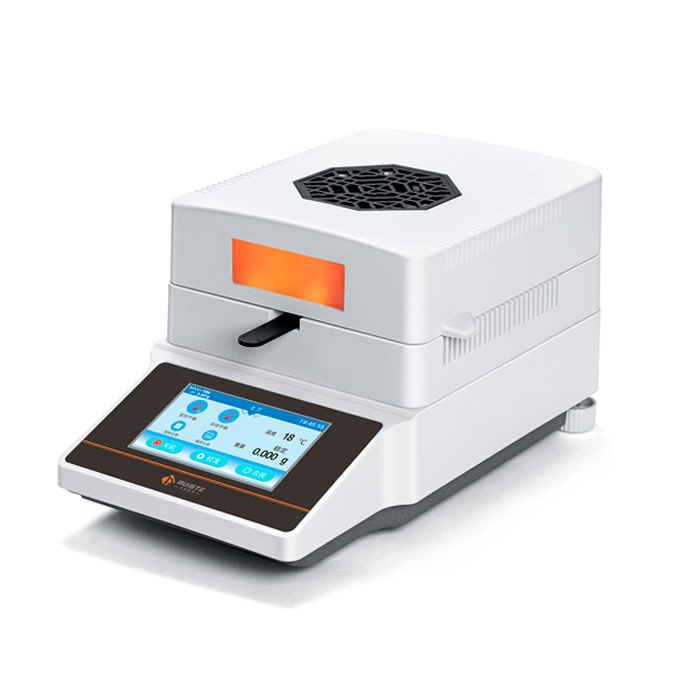
The core value of moisture analyzer manufacturing lies in translating basic physical detection principles into practical, user-friendly industrial equipment that adapts to complex real-world testing scenarios. Most mainstream moisture detection devices developed by manufacturers rely on thermogravimetric analysis, a mature and universally applicable testing principle that calculates material moisture content through monitoring weight changes during controlled drying processes. The complete working workflow of such equipment follows a standardized and logical sequence. Before testing, the high-precision weighing module inside the instrument records the initial weight of the prepared sample, establishing an accurate data baseline for subsequent calculation. Then, the built-in heating unit generates uniform and stable thermal energy to heat the sample, gradually evaporating free and surface-bound moisture contained in the material. Throughout the entire drying cycle, the precision weighing system continuously captures real-time weight changes of the sample, tracking the rate and magnitude of moisture volatilization. When the sample weight remains stable for a set period with no further measurable loss, the system confirms the completion of drying, automatically calculates the moisture content ratio based on the total weight loss data, and generates intuitive test results for users to reference and record.
In the process of equipment research and development and production, moisture analyzer manufacturers continuously optimize core structural designs and functional configurations to address the diverse testing demands of different materials and working environments. Traditional drying and moisture detection methods often suffer from uneven heating, prolonged testing cycles, and inconsistent manual operation standards, which may introduce unstable deviations in test data. To resolve these pain points, manufacturers upgrade heating technologies and structural layouts iteratively. Halogen heating structures have become a widely adopted optimized design, featuring low thermal inertia and uniform heat radiation performance. This design enables rapid and consistent temperature distribution in the testing chamber, effectively avoiding local overheating or insufficient heating that may cause sample decomposition, incomplete moisture evaporation, or distorted test data. Meanwhile, the embedded high-stability weighing components are calibrated repeatedly during production to ensure long-term weighing stability, resisting minor interference from ambient temperature and subtle vibration changes in conventional laboratory and production environments.
Beyond thermogravimetric-based drying analyzers, professional manufacturers also develop diversified moisture detection equipment for special testing scenarios and material characteristics, enriching the industry’s detection system. For gaseous and low-liquid-content samples that require trace moisture testing, equipment based on electrolytic detection principles is developed and produced. This type of instrument uses special coating materials on internal sensing components to absorb water vapor in the test environment, and converts moisture content into measurable electrical signal changes through electrolytic reactions, realizing high-sensitivity detection of trace moisture. Such differentiated product layouts enable manufacturers to cover testing needs from conventional solid materials to special gaseous and liquid samples, meeting the refined detection requirements of segmented industries.
The product application scenarios of moisture analyzers cover agriculture, food processing, pharmaceutical production, chemical materials, new energy, building materials, and polymer processing industries, with each field putting forward unique and targeted requirements for equipment performance. In agricultural and grain processing sectors, moisture detection is closely linked to grain storage safety and raw material processing quality. Grain, flour, starch, and feed materials with excessive moisture are prone to mildew, fermentation, and insect infestation during long-term storage, leading to large-scale material loss. Stable moisture detection equipment helps production and storage enterprises screen qualified raw materials, adjust drying and storage conditions in a timely manner, and maintain the safety of grain and feed reserves. For dried fruits, preserved foods, and sauce products in food processing, precise moisture control directly affects product taste, texture, and storage cycle. Reasonable moisture content can inhibit the reproduction of microorganisms, reduce product deterioration risks, and maintain consistent product flavor and quality in batch production.
In the pharmaceutical industry, material moisture control is a key link to ensure drug stability and efficacy consistency. Raw medicinal materials, tablet intermediates, capsule fillers, and finished pharmaceutical preparations all require strict moisture detection. Excess moisture in pharmaceutical materials may trigger chemical reactions between active ingredients and water molecules, leading to ingredient decomposition, reduced drug activity, or accelerated product deterioration. Moisture analyzers produced by professional manufacturers provide accurate data support for pharmaceutical production process control, helping enterprises standardize raw material incoming inspection, intermediate process monitoring, and finished product testing, ensuring the stability and reliability of pharmaceutical products throughout their usable cycle.
The chemical and polymer material industries have extremely stringent requirements for moisture detection, as moisture impurities directly affect material structural performance and processing effects. Many polymer materials such as nylon, PC, and PET are hygroscopic, easily absorbing moisture from the ambient air during storage and processing. During high-temperature molding and processing, trapped moisture will vaporize to form tiny bubbles, causing surface streaks, cracks, and other appearance defects on finished products. In more serious cases, high-temperature moisture will trigger hydrolysis reactions, breaking polymer molecular chains, reducing material mechanical strength, and leading to structural performance degradation of finished products. By using high-stability moisture analysis equipment, processing enterprises can strictly control the moisture content of plastic particles, coatings, and chemical raw materials before production, eliminating product quality risks caused by excessive moisture and improving the yield rate of finished products.
Building material and environmental testing fields also rely heavily on professional moisture detection equipment. Moisture content in cement, mortar, gypsum, and wall insulation materials affects the bonding strength, curing effect, and structural stability of building materials. Uncontrolled moisture levels may lead to material cracking, hollowing, or reduced durability after construction. In soil testing and environmental monitoring, moisture analyzers assist researchers in analyzing soil moisture status, providing basic data for agricultural planting layout, ecological environment assessment, and land resource utilization analysis. The wide application of these scenarios drives moisture analyzer manufacturers to continuously adjust product parameters and functional designs to adapt to the physical characteristics of different samples, such as particle size, thermal stability, and water absorption characteristics.
A professional moisture analyzer manufacturer’s core competitiveness is reflected in its systematic production control capability and continuous technical iteration ability, rather than single product parameter optimization. In the production and manufacturing process, every link from component selection, assembly debugging to finished product testing follows standardized process specifications. Key components such as heating modules, sensing units, and data processing chips are screened and tested layer by layer to ensure the matching degree and operational stability of each part. During finished product debugging, manufacturers simulate various conventional and special testing environments, verifying equipment accuracy, testing speed, data repeatability, and environmental adaptability through repeated sample testing. This rigorous production and testing process ensures that each device can maintain stable and reliable working performance in long-term continuous operation, reducing data deviation caused by equipment aging or component wear.
In terms of technological research and development, excellent manufacturers always focus on solving practical pain points in user testing. Traditional moisture testing equipment often has problems such as single testing mode, long testing cycle, complex manual operation, and inconvenient data management. To optimize user experience and improve testing efficiency, manufacturers carry out targeted technical upgrades. Intelligent temperature control systems are introduced to realize staged temperature rise and constant-temperature drying according to different material characteristics, avoiding sample damage and data inaccuracy caused by one-time high-temperature heating. Automatic data recording and curve generation functions are added to the equipment, which can record the entire process data of moisture volatilization, generate complete drying curve charts, and facilitate users to trace testing processes and analyze material moisture volatilization rules. Meanwhile, optimized human-computer interaction interfaces simplify operation steps, reducing the operational threshold for front-line operators and laboratory researchers.
In addition to product research and development and production, professional manufacturers also provide comprehensive technical support and after-sales service systems to ensure the sustainable and stable operation of user equipment. Different materials and production environments require targeted testing methods and parameter settings, and professional technical teams can provide users with personalized testing scheme guidance according to their industry characteristics and sample types. In daily equipment use, regular maintenance guidance, equipment calibration guidance, and fault troubleshooting support help users reduce equipment failure rates, extend service life, and maintain long-term testing accuracy. This full-cycle service model builds a stable cooperative relationship between manufacturers and users, and also promotes the standardized application of moisture detection technology in various industries.
With the continuous upgrading of industrial manufacturing towards refinement and intelligence, the market demand for high-performance moisture analysis equipment is showing a steady growth trend. All industries have gradually raised higher requirements for the accuracy, efficiency, intelligence, and environmental adaptability of moisture detection. In the future, moisture analyzer manufacturers will continue to focus on technological innovation, further optimizing equipment detection algorithms, improving intelligent linkage functions, and adapting to automated production line testing scenarios. The integration of moisture detection equipment with industrial intelligent management systems will become an important development direction, realizing real-time transmission, remote viewing, and batch management of testing data, helping enterprises achieve more refined and efficient quality control. At the same time, manufacturers will continue to expand product coverage for special materials and extreme working environments, providing more diversified and professional moisture detection solutions for industrial production and scientific research.
In summary, moisture analyzer manufacturers are important promoters of industrial quality standardization and material performance optimization. Through continuous technological innovation, standardized production management, and comprehensive industry service capabilities, they provide reliable basic detection tools for multiple industries. The continuous upgrading of manufacturing technology not only improves the accuracy and efficiency of material moisture detection, but also helps various industries reduce quality risks, optimize production processes, and improve overall product quality levels. As industrial refinement progresses, the value of professional moisture analyzer manufacturing will continue to be highlighted, becoming an indispensable supporting link in high-quality industrial development and scientific research innovation.
Moisture Analyzer Manufacturer
https://www.pruiste.com/moisture-analyzer.html
Post Date: May 23, 2026
https://www.supplier-manufacturer.com/moisture-analyzer/moisture-analyzer-manufacturer.html

![Hydrostatic Balance JY SERIES]()
Hydrostatic Balance JY SERIES
The entire series of JY balances uses branded sensors to ensure high accuracy and stability of weighing results. This series of precision casting ABS Environmental protect…![Digital Viscometer Exporter]()
Digital Viscometer Exporter
Viscosity stands as one of the most fundamental physical properties of fluid materials, reflecting the internal friction and flow resistance of substances during movement.…![Digital Viscometer For Sale]()
Digital Viscometer For Sale
Viscosity serves as one of the most fundamental physical properties of fluid substances, reflecting the internal friction and flow resistance of liquids during movement. I…![Industrial Digital Viscometer]()
Industrial Digital Viscometer
Viscosity stands as one of the most critical physical properties of fluid materials, reflecting the internal frictional resistance that occurs when a fluid undergoes flow …![Gravimetric Moisture Analyzer]()
Gravimetric Moisture Analyzer
Moisture content stands as one of the most critical physical parameters that define the quality, stability, and processing performance of diverse materials across industri…