Specifications of Digital Viscometer
Digital viscometers are essential analytical instruments designed to quantify the viscosity characteristics of various liquid substances, serving as core testing equipment in industrial production, material research, and quality inspection fields. Unlike traditional mechanical viscometers that rely on manual observation and mechanical pointer reading, digital viscometers integrate microprocessor control, sensor detection, and digital signal processing technologies to achieve automated, intuitive, and repeatable viscosity measurement. Their systematic and standardized structural and performance specifications ensure stable and reliable detection results for Newtonian and non-Newtonian liquids, covering low-viscosity solvents and high-viscosity pastes widely used in multiple industries. A comprehensive understanding of the complete specifications of digital viscometers helps users select matching equipment according to testing scenarios and optimize liquid viscosity detection processes effectively.
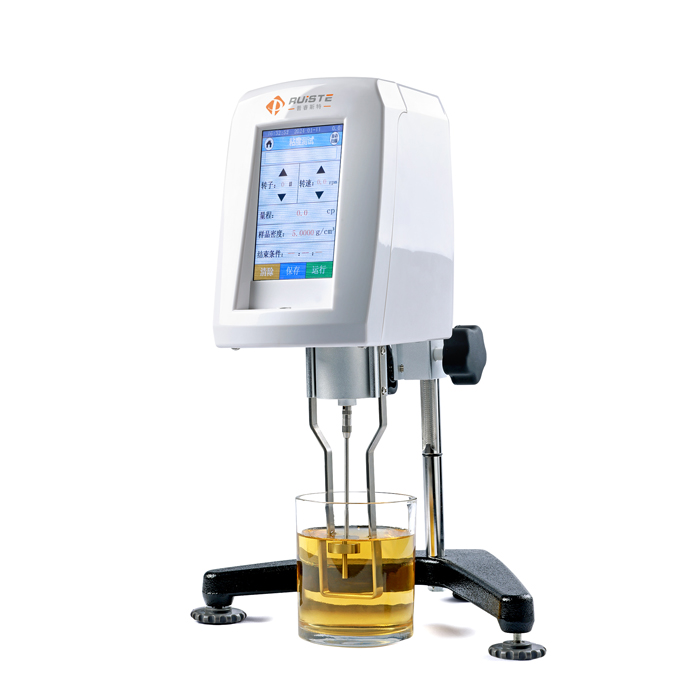
The working principle specification constitutes the core technical foundation of digital viscometers, defining the basic operational logic of the entire measurement process. Most mainstream digital viscometers adopt the rotational viscosity measurement principle, which relies on the viscous resistance effect of liquids on rotating components. The internal high-performance stepping motor drives the detection rotor to maintain a constant and stable rotational speed in the measured liquid. When the rotor rotates uniformly, it is subjected to viscous resistance torque generated by the liquid medium. The magnitude of this torque is positively correlated with the viscosity of the liquid; liquids with higher viscosity produce greater resistance torque, while low-viscosity liquids form relatively weak resistance feedback. A high-sensitivity torque sensor built into the instrument captures real-time torque changes, converts mechanical signal changes into electrical signals, and transmits the signals to the internal microprocessor. After signal amplification, filtering, algorithm calculation, and data calibration, the system converts the original resistance data into standard viscosity values, which are directly output and displayed through the digital display module. This closed-loop signal processing mode ensures that the measurement process follows consistent physical rules and maintains stable data output under standardized operating conditions.
Measurement range specifications are key indicators that determine the application coverage of digital viscometers, including viscosity detection range, matching rotor specifications, and adjustable rotational speed parameters. The viscosity measurement range of conventional digital viscometers can cover low to high viscosity intervals, with basic measurable values extending from 0.1 mPa·s to millions of mPa·s, adapting to diverse liquid detection needs. To match different viscosity intervals, the instrument is equipped with a complete set of interchangeable rotors of different specifications, including standard rotors and optional extended rotors for ultra-low viscosity detection. Each rotor corresponds to an independent measurement interval, and the combination of different rotors and rotational speeds can expand the overall measurable range of the equipment. In terms of rotational speed configuration, digital viscometers support multiple fixed speed gears and continuously variable speed adjustment modes. Common fixed rotational speed parameters include 0.3 rpm, 0.6 rpm, 1.5 rpm, 3 rpm, 6 rpm, 12 rpm, 30 rpm, and 60 rpm, while advanced models provide more speed options to meet the rheological property testing needs of non-Newtonian liquids. Low-speed operation is suitable for detecting high-viscosity liquids with strong fluid resistance, and high-speed operation matches low-viscosity liquids with weak resistance characteristics, forming a scientific and reasonable measurement range matching system.
Measurement accuracy and repeatability specifications reflect the data stability and credibility of digital viscometers, which are critical for industrial quality control and laboratory research. The instrument adopts high-precision sensor components and optimized digital algorithms to control measurement errors within a reasonable interval, ensuring that the deviation between measured values and actual physical values remains small under standard test conditions. Repeatability, another important specification, refers to the consistency of multiple measurement results for the same sample under the same environment and operating parameters. Digital viscometers eliminate manual operation errors inherent in traditional mechanical equipment through program-controlled automatic measurement, enabling multiple consecutive tests to obtain highly consistent data. In addition, the instrument is equipped with a data stability judgment function; when the rotor operation and liquid flow state reach a stable balance, the system automatically locks the measurement data and prompts stable reading, effectively avoiding data fluctuations caused by transient flow changes of the liquid during the initial stage of rotation. These accuracy-related specifications ensure that the instrument can provide reliable data support for batch production inspection and experimental data recording.
Temperature detection and compensation specifications are indispensable functional configurations of digital viscometers, as liquid viscosity is highly sensitive to temperature changes. Most liquids exhibit regular viscosity variation with temperature fluctuations, and tiny temperature deviations can cause obvious changes in measurement results. To solve this problem, digital viscometers are built with high-precision temperature sensing probes, which can monitor the real-time temperature of the measured liquid synchronously during the viscosity test. The temperature detection range covers the conventional temperature interval of daily industrial and laboratory testing, with accurate temperature sensing capability to capture subtle temperature changes of the sample. The internal control system is programmed with a temperature compensation algorithm, which can correct viscosity data according to real-time temperature parameters, reduce measurement errors caused by temperature drift, and improve the accuracy of test results under non-constant temperature conditions. Some models support real-time display of temperature and viscosity dual data, allowing users to record the corresponding relationship between liquid viscosity and temperature intuitively, which is convenient for studying the temperature sensitivity characteristics of different liquid materials.
Structural and hardware specifications determine the operational stability and service adaptability of digital viscometers. The whole machine adopts a modular integrated structure, including a drive module, sensor detection module, data processing module, display interaction module, and mechanical fixing module. The drive module uses high-stability stepping motors and matching drive components, which can output uniform and stable power, ensure constant rotor speed operation, and avoid speed jitter affecting measurement accuracy. The mechanical support structure is designed with high rigidity and stability, with a precise lifting and fixing mechanism for the rotor, which can accurately control the immersion depth and verticality of the rotor in the liquid, eliminating measurement errors caused by positional deviation. In terms of display interaction, the instrument is equipped with high-definition display screens and physical keys or touch control interfaces, supporting intuitive data display, parameter setting, and function switching. The shell structure adopts durable and anti-corrosion materials, which can adapt to conventional laboratory and industrial production environments, resist slight dust and moisture interference, and maintain long-term stable operation of internal components. The overall structural design balances compact layout and operational convenience, facilitating daily operation, component replacement, and equipment maintenance.
Operation and functional specifications enrich the application scenarios and operational flexibility of digital viscometers, realizing intelligent and convenient measurement processes. The instrument supports manual parameter setting and automatic intelligent matching dual operation modes. In manual mode, users can independently select rotor specifications and rotational speed according to sample characteristics to complete targeted testing. In automatic mode, the system can intelligently match the optimal combination of rotor and rotational speed by detecting the initial resistance signal of the sample, simplifying the operation process and reducing the technical threshold for users. It also has multiple practical auxiliary functions, including real-time data display, data holding, historical data storage, and continuous measurement. The data holding function can lock the final stable test value for convenient data recording and viewing after the measurement is completed. The built-in storage module can store a certain amount of historical test data, which is convenient for users to query and compare test results of different batches of samples. In addition, the instrument supports multi-unit data display, including common viscosity units such as mPa·s and Pa·s, meeting the data unit standards of different industries and experimental scenarios.
Environmental adaptability specifications define the working conditions and application limits of digital viscometers, clarifying the temperature, humidity, and placement requirements for normal operation. The instrument can work stably within a specific ambient temperature range, adapting to conventional indoor laboratory and production workshop environments. It has good humidity resistance, capable of maintaining normal operation in environments with moderate humidity, avoiding component failure or data deviation caused by excessive moisture. Meanwhile, the equipment has certain anti-vibration and anti-interference capabilities; the internal damping structure and signal anti-interference design can resist slight external vibration and electromagnetic signal interference in the working environment, ensuring the stability of motor operation and signal detection. Standard environmental adaptability specifications enable the instrument to maintain consistent measurement performance in different working scenarios and avoid performance attenuation caused by environmental changes.
Application matching specifications reflect the scenario applicability of digital viscometers, determining the range of measurable liquid types and industry adaptation fields. Relying on diverse rotor and speed combinations, the instrument can test Newtonian liquids with stable viscosity and non-Newtonian liquids with variable viscosity characteristics, including oily liquids, aqueous solutions, polymer solutions, colloidal suspensions, pastes, and emulsions. It is widely suitable for viscosity detection in chemical raw materials, coating paints, adhesives, cosmetic formulations, food processing materials, pharmaceutical solutions, textile slurries, and petroleum products. For non-Newtonian liquids with shear thinning or shear thickening characteristics, the adjustable speed function of the instrument can simulate different shear states, detect the viscosity changes of liquids under different shear rates, and provide effective data support for studying the rheological properties of materials. This wide application matching capability makes digital viscometers universal testing equipment applicable to most liquid viscosity detection scenarios in industrial and scientific research fields.
In summary, the complete specifications of digital viscometers cover working principle, measurement performance, hardware structure, functional configuration, environmental adaptability, and application matching, forming a systematic and standardized technical system. All specification parameters are designed around the core demands of accurate, stable, and efficient liquid viscosity measurement, ensuring that the equipment can adapt to the diversified testing needs of different industries. Understanding and applying these specifications correctly can help users give full play to the performance advantages of digital viscometers, standardize testing operations, improve the accuracy and consistency of viscosity detection data, and provide reliable technical support for material formula optimization, production process monitoring, and product quality control.
Specifications of Digital Viscometer
https://www.pruiste.com/digital-viscometer.html
Post Date: May 23, 2026
https://www.supplier-manufacturer.com/digital-viscometer/specifications-of-digital-viscometer.html

![Types of Digital Viscometer]()
Types of Digital Viscometer
Viscosity serves as a fundamental physical property that reflects a fluid’s internal resistance to flow and shear deformation, playing a vital role in quality control, pr…![Digital Viscometer Wholesale]()
Digital Viscometer Wholesale
Viscosity measurement stands as a fundamental part of industrial quality control, material research, and production process optimization across diverse global sectors. As …![Precision Digital Viscometer]()
Precision Digital Viscometer
Viscosity stands as one of the most fundamental physical properties of fluid substances, reflecting the internal friction and flow resistance generated during the movement…![Purposes of Moisture Analyzer]()
Purposes of Moisture Analyzer
Moisture content stands as one of the most fundamental and influential physical properties of nearly all raw materials, semi-finished goods, and finished products across i…![Types of Moisture Analyzer]()
Types of Moisture Analyzer
Moisture analysis stands as a fundamental testing procedure across industrial manufacturing, laboratory research, agricultural processing, and material quality inspection.…