Rotational Digital Viscometer
Viscosity stands as one of the most fundamental physical properties of fluid materials, reflecting the internal frictional resistance that occurs when a fluid undergoes deformation and flow. It serves as a critical indicator for evaluating the flow characteristics, consistency, and structural stability of various liquid and semi-solid substances. In modern laboratory research, industrial production quality control, and material performance analysis, accurate and stable viscosity measurement is indispensable for optimizing material formulas, standardizing production processes, and maintaining consistent product performance. The rotational digital viscometer has emerged as a mainstream testing device in the field of viscosity detection by virtue of its reliable testing logic, adaptable testing modes, and intuitive data output, becoming a core tool for fluid property analysis across multiple industrial and scientific fields.
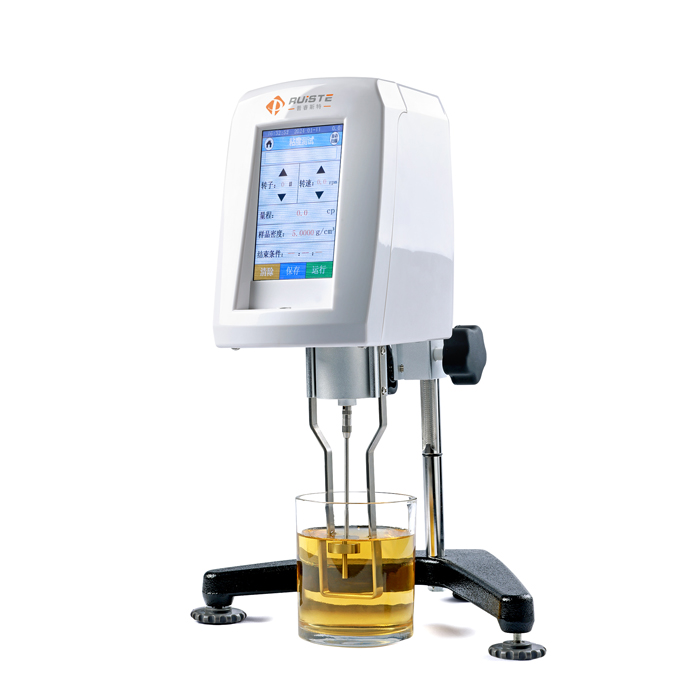
The operational logic of the rotational digital viscometer is rooted in the basic laws of fluid mechanics, centering on the quantitative correlation between fluid viscous resistance and rotational torque. The core testing process relies on a precision rotating spindle that is fully immersed in the sample material to be tested. Driven by a stable motor system, the spindle rotates at a preset constant speed, driving the surrounding fluid to generate layered flow and shear deformation. During this process, the internal viscous force of the fluid creates a blocking resistance against the rotating spindle, and the magnitude of this resistance is converted into a measurable torque signal. For Newtonian fluids with stable and uniform flow characteristics, the torque generated by fluid resistance maintains a stable proportional relationship with the dynamic viscosity of the material. For non-Newtonian fluids that are widely present in industrial production, the device can capture the apparent viscosity changes under different shear rates, effectively recording the shear thinning or shear thickening characteristics of materials, which provides comprehensive data support for analyzing the rheological properties of complex fluids.
The overall structural design of the rotational digital viscometer follows the integration of mechanical transmission, sensor detection, and intelligent data processing, with each functional module cooperating closely to ensure the accuracy and stability of testing results. The mechanical drive module is mainly composed of a precision stepper motor and a stable transmission structure, which can output continuous and uniform rotational power and realize adjustable rotation speed within a wide range. This adjustable speed design enables the device to adapt to testing scenarios of different fluid viscosities, avoiding detection deviations caused by mismatched shear rates. The torque sensing module is the core component for data acquisition, which can sensitively capture tiny resistance changes generated during spindle rotation and convert mechanical torque signals into electronic signals that can be identified and calculated by the system. Compared with traditional mechanical viscometers that rely on manual reading and mechanical pointer indication, the digital sensing method effectively reduces human-induced reading errors and improves the stability of repeated testing data.
The data processing and display module built into the rotational digital viscometer adopts microcomputer control technology, which can automatically complete signal collection, data conversion, viscosity calculation, and result output after the testing parameters are set. After the operator selects the matching spindle model and rotational speed according to the state of the sample, the system can automatically calculate the corresponding viscosity value through the built-in algorithm based on the collected torque data, and directly present the numerical result on the digital display screen. Meanwhile, the system can record real-time data changes during the testing process, which is conducive to observing the viscosity fluctuation of materials in a continuous testing state. This intelligent data processing mode simplifies the complex calculation steps of traditional viscosity testing, shortens the testing cycle, and enables operators to complete efficient and accurate viscosity detection without professional rheological knowledge background.
Spindle configuration is a key factor affecting the applicability and testing accuracy of the rotational digital viscometer. Different spindles are designed with distinct geometric sizes and structural parameters to adapt to samples with different viscosity ranges. Low-viscosity fluid samples, such as dilute aqueous solutions, light oils, and low-concentration solvent coatings, require spindles with small structural volumes and low resistance coefficients to capture weak viscous resistance signals. High-viscosity semi-solid samples, including grease, thick coatings, adhesives, and cosmetic creams, need spindles with larger contact areas to generate stable shear torque, ensuring effective signal acquisition. In actual testing work, the matching of spindle and rotational speed needs to be adjusted according to the sample state, and the reasonable cooperation of the two parameters can keep the testing torque within the optimal detection range of the sensor, thus ensuring the authenticity and effectiveness of viscosity data.
Temperature is an important environmental factor that cannot be ignored in viscosity testing, as the viscosity characteristics of most fluid materials are highly sensitive to temperature changes. Generally, the viscosity of liquid materials decreases with the rise of temperature, while the viscosity of some colloidal and polymer materials will show irregular changes with temperature fluctuation. The rotational digital viscometer can be used with a constant temperature auxiliary device to control the sample testing temperature within a fixed range, eliminating detection errors caused by ambient temperature differences. In standardized testing operations, it is necessary to place the sample in a constant temperature environment for sufficient preheating or cooling before testing, so that the overall temperature of the sample is uniform and stable. This operation standard ensures that the viscosity data obtained under fixed temperature conditions has comparability, which is essential for formula research and production quality comparison of materials.
In terms of operational characteristics, the rotational digital viscometer has obvious advantages in test repeatability and scene adaptability. The whole testing process is controlled by a program, with stable rotation speed and sensitive signal response, which can maintain consistent testing conditions in multiple repeated tests for the same sample, making the obtained data highly repeatable. In terms of application scenarios, the device can meet the testing needs of laboratory precision research and on-site rapid detection in production workshops. In scientific research laboratories, it is used to analyze the rheological properties of new materials, record viscosity changes of materials under different shear conditions and temperature environments, and provide basic data for material formula optimization and performance improvement. In industrial production links, it is applied to routine quality inspection of raw materials, semi-finished products and finished products, helping production personnel judge the stability of material properties and ensure the consistency of batch product quality.
The application scope of rotational digital viscometers covers multiple key industries closely related to fluid materials. In the coating and ink industry, viscosity directly affects the spraying performance, leveling effect, drying speed and film forming quality of products. Testing the viscosity of coating and ink samples at regular intervals can effectively avoid product defects such as uneven coating surface and poor color uniformity caused by excessive viscosity fluctuation. In the petrochemical industry, it is used to detect the viscosity of lubricating oil, hydraulic oil, fuel oil and other petroleum products, and the viscosity index is an important basis for evaluating the lubricating performance and service stability of oil products. In the food processing industry, the viscosity detection of syrup, jam, dairy products, beverage thick liquid and other materials helps control the taste consistency and processing adaptability of food, and provides data support for standardized production of food formulas.
In the daily chemical and cosmetic industry, rotational digital viscometers are widely used for viscosity testing of facial cream, body lotion, shampoo, toothpaste and other products. The viscosity state of daily chemical products directly determines their usability, spreadability and storage stability. Appropriate viscosity can ensure that the products have comfortable use experience and will not have quality problems such as stratification and precipitation during storage. In the adhesive and glue industry, viscosity parameters affect the coating performance and bonding effect of adhesives. Real-time detection of adhesive viscosity in the production process can adjust production parameters in time to ensure the uniform bonding performance of finished products. In the pharmaceutical industry, it is used to test the viscosity of liquid medicines, ointments and pharmaceutical suspensions, providing guarantee for the stability of pharmaceutical ingredients and the safety of clinical use.
Standardized operation and daily maintenance are crucial to maintain the long-term stable performance and accurate detection effect of the rotational digital viscometer. Before each test, operators need to check the working state of the equipment, including the stability of the rotating structure, the cleanliness of the spindle surface, and the normal display of the digital system. The spindle must be kept clean and dry; residual sample attachments on the spindle surface will directly affect the accuracy of torque signal acquisition and lead to deviation in test results. When installing the spindle, it is necessary to ensure stable assembly and no shaking, so as to avoid abnormal torque fluctuation caused by mechanical vibration during rotation. During the test, the sample liquid level must reach the standard scale position of the spindle immersion depth, and insufficient or excessive immersion depth will change the effective shear area and affect the test data.
After the completion of the test, the spindle should be cleaned in time with a matching solvent according to the properties of the sample, and placed in a dry and dust-free environment after drying to avoid corrosion and contamination of the precision structure. The equipment should be placed on a horizontal and stable working platform during use and storage, and long-term tilt and vibration should be avoided to prevent deviation of the internal mechanical structure and sensor position. In addition, regular calibration and performance inspection of the equipment are required. With the extension of service time, the mechanical transmission and sensor sensitivity may have slight attenuation, and regular parameter correction can ensure that the equipment always maintains a good detection state and meets the accuracy requirements of daily testing work.
Compared with traditional manual viscometers and other types of viscosity testing equipment, the rotational digital viscometer has unique advantages in testing efficiency, data accuracy and operation convenience. It abandons the cumbersome manual observation and manual calculation links, realizes automatic testing and digital output, reduces the interference of human factors on test results, and improves the objectivity and credibility of detection data. The adjustable multi-speed and multi-spindle matching mode greatly expands the testing range, enabling it to cover viscosity detection from low-viscosity dilute liquids to high-viscosity pasty semi-solids. At the same time, the equipment has good anti-interference performance, can adapt to different working environments, and maintains stable working performance in conventional laboratory and production workshop environments.
With the continuous development of material science and industrial manufacturing technology, the requirements for fluid material performance detection are becoming increasingly refined, and the application value of rotational digital viscometers is also constantly improving. In the research and development of new polymer materials, new environmental protection coatings, new functional daily chemicals and other emerging materials, accurate viscosity and rheological characteristic data are important bases for verifying material formulas and optimizing production processes. The continuous upgrading of rotational digital viscometer technology is also adapting to the development trend of the industry, with more precise sensor recognition, richer parameter adjustment modes and more perfect data recording functions, providing more comprehensive and accurate technical support for material performance research and industrial quality control.
In conclusion, the rotational digital viscometer, as a professional and efficient viscosity detection device, relies on mature mechanical principles and intelligent control technology to realize accurate measurement of fluid viscosity and rheological properties. Its stable performance, wide application range and simple operation mode make it an important basic equipment in scientific research experiments and industrial production and manufacturing. Standardized operation, reasonable parameter matching and scientific daily maintenance can maximize the working performance of the equipment, provide reliable viscosity data support for material research and development, production quality control and product performance optimization, and play an indispensable role in promoting the standardized development and performance upgrading of various fluid material industries.
Rotational Digital Viscometer
https://www.pruiste.com/digital-viscometer.html
Post Date: May 23, 2026
https://www.supplier-manufacturer.com/digital-viscometer/rotational-digital-viscometer.html

![Electronic Balance Supplier]()
Electronic Balance Supplier
In the modern industrial and scientific measurement ecosystem, electronic balances have evolved into indispensable weighing instruments, serving as fundamental tools for q…![Precision Electronic Balance]()
Precision Electronic Balance
Precision electronic balance stands as an essential measuring instrument widely utilized in professional scenarios that demand subtle mass detection and stable data output…![Laboratory Weighing Scale]()
Laboratory Weighing Scale
In modern scientific research, industrial testing, and academic experimental environments, laboratory weighing scales stand as indispensable measuring instruments dedicate…![Counting Scale Wholesale]()
Counting Scale Wholesale
The wholesale trade of counting scales has gradually become an indispensable segment within the global weighing instrument industry, catering to diverse operational demand…![Electronic Weighing Scale]()
Electronic Weighing Scale
Electronic weighing scales have become an indispensable measuring device in modern daily life and industrial production, gradually replacing traditional mechanical weighin…