High-shear Digital Viscometer
Viscosity serves as one of the most fundamental physical properties of fluid materials, reflecting the internal friction and flow resistance generated during fluid deformation and movement. In modern industrial production, material research and quality inspection, accurate viscosity measurement under high-shear conditions has become an indispensable technical means to evaluate fluid flow characteristics, formulate production processes, and control product stability. High-shear digital viscometers are specialized testing instruments designed for high-precision viscosity detection under high-speed shear environments, which can simulate the intense shear forces that fluids bear in actual production, transportation, and application scenarios, and convert subtle mechanical changes of fluid flow into intuitive digital data through integrated sensing and computing systems. Different from conventional low-shear viscometers that only adapt to static or low-speed flow measurement, this type of equipment focuses on capturing the rheological changes of non-Newtonian fluids under high shear, filling the technical gap of accurate viscosity testing in high dynamic flow environments, and has been widely applied in multiple industrial and scientific research fields.
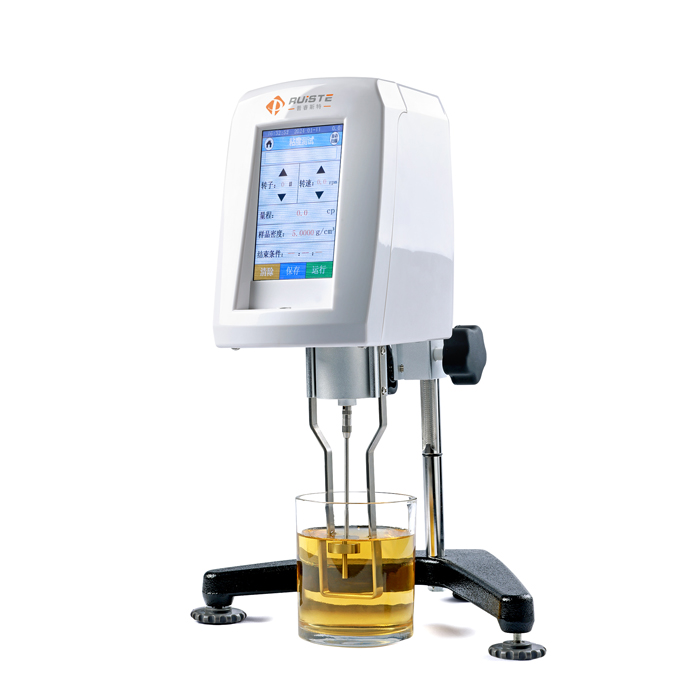
The working logic of high-shear digital viscometers is based on Newton’s law of viscosity and rotational shear principle, with mature and reliable mechanical and electronic integration mechanisms. The core measurement process relies on the relative motion between the precision rotating component and the fluid sample. During operation, a specially designed spindle or cone-plate structure is driven by a stable motor to perform constant-speed or variable-speed rotational motion, applying uniform and controllable shear force to the fluid filled in the tiny gap between the rotating component and the fixed base. When the fluid is subjected to high-speed shear, internal molecular friction will generate corresponding flow resistance, which forms torque resistance on the rotating component. The high-sensitivity sensing module built into the instrument can accurately capture real-time torque changes, and the embedded microprocessor automatically calculates the dynamic viscosity value of the fluid according to the preset geometric parameters of the testing component, shear rate and torque data, realizing real-time digital output of measurement results. The whole measurement process realizes closed-loop control of mechanical movement, signal acquisition and data calculation, avoiding the manual reading error and low precision of traditional mechanical viscometers.
The structural design of high-shear digital viscometers fully targets the measurement requirements of high-shear scenarios and complex fluid samples, with rational layout and precise component matching. The core motion unit adopts a high-stability servo drive system, which can maintain stable rotational speed output in a wide range from low speed to ultra-high speed, providing continuous and adjustable shear rate conditions for fluid testing. This stable speed control capability ensures that the fluid sample is always in a uniform shear state during the test, preventing data deviation caused by speed fluctuation. The testing sensing component is made of high-precision materials with stable physical properties, which can maintain consistent geometric accuracy and surface smoothness during long-term high-speed operation, effectively reducing measurement interference caused by component wear and deformation. In addition, most equipment is equipped with a real-time temperature monitoring and adaptive temperature control module. Fluid viscosity is highly sensitive to temperature changes, and slight temperature fluctuation will lead to obvious deviation of viscosity data. The built-in temperature probe can track the sample temperature in real time during the high-shear test, and cooperate with the constant-temperature sample tank to maintain a stable testing temperature environment, greatly improving the repeatability and authenticity of measurement data. The digital processing and display unit can automatically record, store and sort test data, and support real-time data viewing and subsequent data derivation, providing complete data support for experimental analysis and production quality traceability.
The core technical advantages of high-shear digital viscometers are mainly reflected in their adaptability to high-shear environments and compatibility with complex fluid samples. In actual industrial scenarios, most functional fluids will experience high-intensity shear effects such as rapid stirring, pipeline transportation, spraying and coating during use. The viscosity of many non-Newtonian fluids will change significantly with the change of shear rate, showing shear thinning or shear thickening characteristics. Conventional viscometers can only complete testing under low-shear static conditions, and the obtained data cannot reflect the actual flow state of fluids in working conditions. High-shear digital viscometers can simulate the shear rate range of actual production and application, accurately capture the dynamic viscosity changes of fluids under high-speed shear, and the test data can truly reflect the service performance of materials. At the same time, the equipment has a wide measurement range, which can adapt to low-viscosity thin fluids such as coatings and solvents, as well as high-viscosity thick fluids such as adhesives and slurries, realizing multi-scene and multi-type sample testing.
In terms of measurement accuracy and stability, high-shear digital viscometers adopt optimized signal processing algorithms and anti-interference design. The high-sensitivity torque sensor can capture tiny resistance changes generated by fluid shear, and filter out external vibration, electromagnetic interference and other noise signals through digital signal processing technology, ensuring the accuracy of original data. The internal calibration mechanism can correct system errors in real time during operation, avoiding long-term use drift of equipment parameters. In repeated tests, the equipment can maintain low data deviation, with good repeatability, which is crucial for industrial batch production quality control. For laboratory scientific research, this stable and accurate measurement capability provides reliable data basis for the study of fluid rheological properties, material formula optimization and process parameter adjustment.
High-shear digital viscometers have extensive and in-depth application value in multiple industries. In the coating and ink industry, the spraying and roller coating process of products requires fluids to have appropriate high-shear viscosity. Too high viscosity will cause uneven coating and poor fluidity, while too low viscosity will lead to sagging and thin coating film. By using high-shear digital viscometers to test the viscosity of coatings and inks under high shear, technicians can optimize solvent ratio and formula composition, adjust product construction performance, and ensure the uniformity and stability of coating effect. In the daily chemical industry, products such as shampoo, body wash, lotion and cream are typical non-Newtonian fluids. These products need to maintain stable viscosity in daily storage, and have good fluidity under the shear force of extrusion and smearing. High-shear viscosity testing can effectively evaluate the user experience and product stability of daily chemical products, guide formula improvement, and balance the thickening effect and construction fluidity of products.
In the chemical new material industry, polymer solutions, resin materials and composite slurries are greatly affected by shear force during processing. High-shear viscosity data can guide the setting of processing parameters such as stirring speed, extrusion pressure and molding temperature, optimize the production process of new materials, and improve the uniformity and mechanical properties of finished materials. In the petroleum industry, drilling fluid and lubricating oil will bear strong shear force during downhole operation and mechanical lubrication. The dynamic viscosity change under high shear directly affects the lubricating performance and working stability of oil products. High-shear digital viscometers can detect the viscosity attenuation law of oil products under long-term high shear, evaluate the service life and working performance of oil products, and provide data support for petroleum operation safety control. In the food industry, fluid food materials such as sauce, beverage concentrate and edible glue have strict flow performance requirements in production filling and eating processes. High-shear viscosity testing can standardize production process parameters and ensure consistent taste and texture of batch products.
Standardized operation is the key to ensure the accuracy of test results and extend the service life of high-shear digital viscometers. Before the test, it is necessary to check the running state of the equipment, including the stability of the rotating system, the sensitivity of the sensor and the accuracy of the temperature control system. The testing spindle or cone-plate component needs to be cleaned and dried to avoid residual impurities affecting the fluid state of the sample. The sample should be prepared in accordance with standard specifications, with uniform composition and stable temperature, and bubbles in the sample should be eliminated as much as possible, because bubbles will change the internal structure of the fluid and cause test data deviation. During the test, it is necessary to select a reasonable shear rate and testing time according to the fluid characteristics. For shear-thinning fluids, graded shear rate testing can be adopted to record the viscosity change trend under different shear intensities; for fluids with stable performance, fixed shear rate testing can ensure the consistency of comparison data. In the test process, sudden vibration and temperature mutation of the external environment should be avoided to maintain a stable testing environment.
Daily maintenance and regular maintenance play an important role in maintaining the long-term stable performance of high-shear digital viscometers. After each use, the testing components in contact with the sample must be thoroughly cleaned to prevent fluid residue from curing and adhering, which will affect the geometric accuracy and surface smoothness of the components. The rotating transmission part needs regular lubrication maintenance to ensure flexible operation and stable speed. The equipment should be placed in a dry, dust-free and constant-temperature environment for a long time, avoiding moisture, high temperature and corrosive gas erosion to prevent circuit aging and component damage. Regular parameter calibration is required according to the use frequency. By using standard viscosity fluids to calibrate the equipment, the system error can be eliminated in time, and the long-term measurement accuracy of the equipment can be guaranteed. In addition, the stored test data should be sorted and backed up regularly to avoid data loss, which is convenient for subsequent experimental analysis and production quality tracking.
With the continuous progress of industrial intelligence and precision manufacturing technology, high-shear digital viscometers are developing towards higher precision, stronger intelligence and wider applicability. The updated equipment integrates more refined shear rate regulation technology, which can realize stepless adjustment of high shear rate and capture the subtle rheological changes of fluids in a more comprehensive manner. The intelligent data analysis system can automatically generate test reports, compare historical data, and analyze the correlation between shear rate, temperature and viscosity changes, providing more intuitive and detailed technical reference for users. At the same time, the volume of the equipment is further optimized, and the operation process is more simplified, which reduces the professional threshold of use, and can meet the dual needs of professional laboratory precision research and industrial factory rapid detection. In the future, with the continuous upgrading of new material systems and industrial production processes, the demand for high-shear viscosity testing will continue to increase, and high-shear digital viscometers will play a more important role in material research and development, process optimization and quality control in various industries.
In summary, high-shear digital viscometers bridge the gap between traditional static viscosity testing and actual dynamic flow characteristics of fluids. With their unique high-shear simulation capability, high-precision digital detection and stable operating performance, they provide reliable technical support for fluid rheological research and industrial production quality control. Different from conventional testing equipment, it focuses on the dynamic performance of materials in actual working conditions, making the test data more practical and guiding. Standardized operation and scientific daily maintenance can maximize the performance of the equipment, ensure the accuracy and repeatability of test results. As an important testing equipment in the field of modern fluid performance detection, high-shear digital viscometers will continue to iterate and progress with industrial technology, and provide more accurate and efficient testing solutions for the innovative development of various industries.
High-shear Digital Viscometer
https://www.pruiste.com/digital-viscometer.html
Post Date: May 23, 2026
https://www.supplier-manufacturer.com/digital-viscometer/high-shear-digital-viscometer.html

![Electronic Balance RT SERIES]()
Electronic Balance RT SERIES
The RT series adopts high-definition keys, which is economical. The entire series of balances adopt domestic sensors, brand sensors, and aluminum alloy structure to ensure…![Low-shear Digital Viscometer]()
Low-shear Digital Viscometer
Viscosity stands as one of the most critical rheological properties that define the flow behavior of fluid materials, directly influencing the processing performance, stor…![Digital Viscometer Manufacturer]()
Digital Viscometer Manufacturer
Viscosity stands as one of the most fundamental physical properties of fluid materials, directly influencing the flow performance, processing characteristics, and final qu…![Laboratory Digital Viscometer]()
Laboratory Digital Viscometer
Viscosity stands as one of the most fundamental physical properties of fluid substances, reflecting the internal friction and flow resistance that occurs when a liquid or …![Compact Moisture Analyzer]()
Compact Moisture Analyzer
Moisture content detection stands as a fundamental analytical procedure across industrial production, laboratory research, and quality inspection workflows, as the proport…