Types of Weighing Scale
Weighing scales stand as essential measuring instruments that determine the mass or weight of physical objects, serving indispensable roles in daily life, commercial transactions, industrial manufacturing, laboratory research and medical services. Throughout human development, weighing tools have evolved from simple manual mechanical structures to intelligent electronic devices with sophisticated sensing systems. Diverse working principles, structural designs and functional configurations lead to a wide variety of weighing scales, each tailored to distinct usage environments and measurement requirements. Understanding different categories of weighing scales helps users select suitable equipment according to practical demands, and it also reveals the technological progression of weight measurement technology. These measuring devices can be classified through multiple perspectives, including mechanical structure, working principle, application scenario and measurement accuracy, and each type possesses unique structural characteristics, functional attributes and applicable ranges.
Mechanical weighing scales represent the earliest invented form of weighing equipment, relying purely on physical mechanical structures without the support of electronic components or power supply. Most mechanical scales follow the lever equilibrium principle, which uses the torque balance of levers to compare the mass of measured objects with standard counterweights. The basic structure of such scales generally includes load-bearing components, lever transmission parts, reading accessories and stable scale bodies. Among traditional mechanical scales, handheld beam scales are one of the most primitive designs, featuring a slender rigid beam carved with uniform measurement scales, a movable counterweight and hanging hooks for bearing items. This kind of scale is compact in structure, convenient to carry and free from environmental power restrictions, which made it widely used in small commodity trading in the early stage. Despite its simple structure, the measurement accuracy of handheld beam scales is easily affected by manual operation and external vibration, limiting its application in modern high-precision measurement scenarios.
Platform mechanical scales are another common type of mechanical weighing equipment, designed with flat load-bearing tables to accommodate bulk or regular-shaped items. Different from handheld beam scales, platform mechanical scales adopt multi-stage lever combination structures to enhance bearing capacity and improve measurement stability. They are usually placed on flat ground, suitable for weighing medium and heavy goods in workshops, small warehouses and rural trading markets. Equipped with sliding weights and fixed counterweights, users can complete weight reading by adjusting the position of sliding parts and matching standard weights. The durable metal structure enables these scales to resist minor external impact and mechanical wear, realizing long-term stable operation in harsh working conditions. However, due to the mechanical friction between internal lever parts, regular manual calibration is required to maintain basic measurement stability, and the reading process consumes manual labor with relatively low efficiency.
With the advancement of sensor technology, electronic weighing scales have gradually replaced traditional mechanical scales and become mainstream measuring equipment in various industries. Different from mechanical scales, electronic scales convert gravity pressure into identifiable electrical signals through built-in sensing components, and then calculate and display weight data through internal circuit systems. Resistance strain sensors are widely adopted in most common electronic scales. When an object is placed on the load-bearing surface, the sensor undergoes slight elastic deformation, and the deformation degree is converted into electrical signal changes. After amplification and digital processing, accurate weight values are presented on the electronic display screen. This working principle eliminates mechanical friction interference, effectively improving measurement sensitivity and data stability.
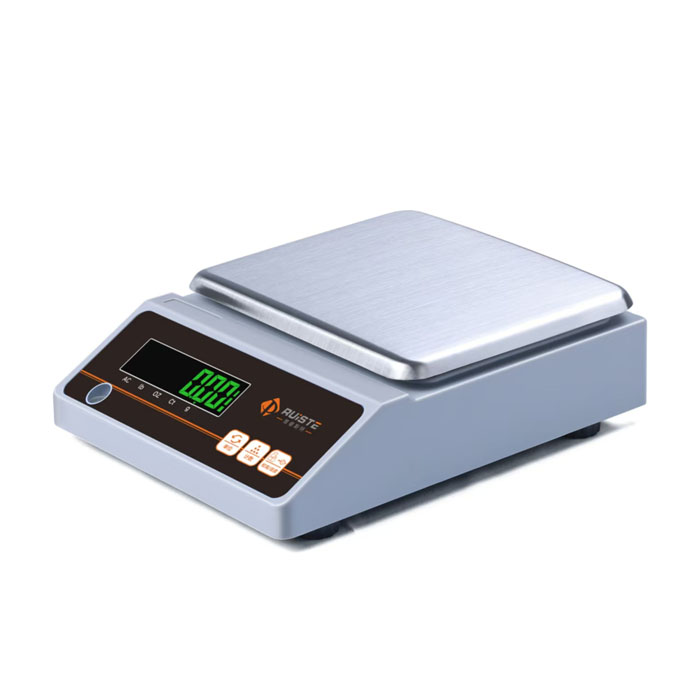
Commercial electronic platform scales are extensively applied in daily trading scenarios such as supermarkets, grocery stores and agricultural markets. These scales are optimized for daily commodity measurement, with moderate measurement ranges and stable basic accuracy. In addition to displaying weight values, they are embedded with simple computing modules to realize auxiliary functions including unit conversion and data storage. Made of corrosion-resistant and easy-to-clean materials, the surfaces of these scales can adapt to frequent contact with food, daily groceries and other commodities, reducing the difficulty of daily maintenance. Simple operation steps enable ordinary operators to get familiar with the usage method in a short time, meeting the efficient measurement demands of high-flow commercial scenarios.
For industrial production and logistics transportation industries, heavy-duty electronic weighing equipment is designed to meet the measurement needs of large-quality goods. Floor scales, as typical industrial weighing tools, are installed on fixed ground positions with thickened load-bearing structures and high-strength sensing components. They can bear heavy loads such as pallet goods, mechanical parts and packaged industrial raw materials, and maintain stable measurement performance in dust-covered and vibration-prone industrial environments. Some floor scales are equipped with anti-slip load-bearing plates and waterproof shell structures to adapt to complex factory environments. Vehicle-mounted weighing scales derived from floor scales are specially used to measure the total weight of transport vehicles. By laying weighing platforms on fixed road sections, they complete the weighing of loaded vehicles, providing accurate data support for cargo transportation metering and transportation supervision.
Suspension weighing scales are a special type of electronic weighing equipment, adopting a suspended installation structure to measure items that are inconvenient to place on flat platforms. Such scales are usually fixed on overhead supports, and measured objects are hung on the bottom hooks through connecting parts. They are commonly used in cargo handling, port loading and unloading, and large goods detection. Compared with platform scales, suspension weighing scales avoid the measurement error caused by contact friction between goods and the bearing surface. The wireless transmission module built into some suspension scales can transmit real-time weight data to remote display terminals, facilitating staff to record and sort data in real time during high-altitude operation. The shell of suspension scales is usually made of high-strength alloy materials to resist tensile damage and ensure operational safety during long-term suspension measurement.
Laboratory analytical balances belong to high-precision weighing scales, which are dedicated to tiny mass measurement in scientific research, chemical experiments and pharmaceutical preparation. These scales adopt high-sensitivity electromagnetic force balance sensors, which can capture subtle gravity changes and achieve extremely high measurement accuracy. The internal measurement cavity is equipped with a closed windshield structure to prevent air flow from interfering with tiny items. Strict production standards make these balances have low data fluctuation and strong anti-interference ability, which can meet the precise measurement requirements of chemical reagents, experimental samples and micro precision parts. Due to the high sensitivity of internal components, laboratory balances need to be placed in dry, flat and vibration-free environments, and regular professional calibration is required to maintain long-term measurement accuracy.
Medical weighing scales are customized for human body measurement and medical detection scenarios, including household body scales and professional medical weighing equipment. Household body scales focus on convenient human body weight detection, with lightweight and compact designs suitable for family daily use. Most household electronic body scales adopt high-precision miniature sensors, which can stably detect weight changes and present intuitive digital readings. Professional medical weighing scales are used in hospitals, rehabilitation centers and maternal and child health institutions. They have anti-slip and anti-pressure structural designs to ensure the safety of patients during weighing. Some medical scales are combined with height measuring components to synchronously record physical data, providing basic reference for physical examination and physical condition monitoring.
In addition to the above common types, there are many specialized weighing scales designed for specific industries. Automatic checkweighing scales are widely used in food processing and packaging industries. They are embedded in assembly lines to complete continuous rapid weighing of packaged products. By setting standard weight ranges, these scales can screen out unqualified products with excessive or insufficient weight, realizing automatic quality inspection. Hydraulic weighing scales apply hydraulic pressure transmission principle. The gravity of measured objects acts on hydraulic oil, and the pressure change is converted into weight data through hydraulic sensing elements. Such scales have strong pressure resistance and are mostly used for ultra-heavy equipment weighing in heavy industry. Photoelectric weighing scales, as early electromechanical combined equipment, convert mechanical displacement into photoelectric signals through grating and coding structures, and are often applied in some traditional industrial detection links with moderate accuracy requirements.
Different types of weighing scales have distinct advantages and applicable limitations in actual use. Mechanical scales have simple structures, low maintenance costs and no dependence on power resources, but they are inferior to electronic scales in measurement accuracy and reading efficiency. Ordinary commercial electronic scales balance accuracy and cost, suitable for daily trading scenarios, while industrial heavy-duty scales prioritize structural firmness and environmental adaptability to cope with harsh industrial conditions. High-precision laboratory balances emphasize data sensitivity and stability, requiring strict placement and maintenance conditions. Specialized industrial scales realize targeted functional optimization according to industry characteristics, meeting the personalized measurement needs of different production links.
With the continuous innovation of sensing technology and intelligent control technology, modern weighing scales are gradually developing towards intelligent, miniaturized and multi-functional directions. Many new-type weighing scales are equipped with data storage, intelligent counting and wireless connection functions, which can synchronously upload measurement data to terminal equipment to facilitate data sorting and statistical analysis. While optimizing measurement performance, manufacturers also pay attention to the portability and aesthetic design of scales, making weighing equipment adapt to more diversified usage scenarios. From primitive manual mechanical scales to modern intelligent electronic scales, the evolution of weighing scale types reflects the continuous progress of measurement technology. Reasonably distinguishing and selecting different types of weighing scales according to usage scenarios, measurement range and accuracy requirements can give full play to the use value of weighing equipment, providing reliable data guarantees for daily life, industrial production and scientific research activities.
Types of Weighing Scale
https://www.pruiste.com/weighing-scale.html
Post Date: May 13, 2026
https://www.supplier-manufacturer.com/weighing-scale/types-of-weighing-scale.html

![Electronic Balance RT SERIES]()
Electronic Balance RT SERIES
The RT series adopts high-definition keys, which is economical. The entire series of balances adopt domestic sensors, brand sensors, and aluminum alloy structure to ensure…![Low-shear Digital Viscometer]()
Low-shear Digital Viscometer
Viscosity stands as one of the most critical rheological properties that define the flow behavior of fluid materials, directly influencing the processing performance, stor…![Digital Viscometer Manufacturer]()
Digital Viscometer Manufacturer
Viscosity stands as one of the most fundamental physical properties of fluid materials, directly influencing the flow performance, processing characteristics, and final qu…![Laboratory Digital Viscometer]()
Laboratory Digital Viscometer
Viscosity stands as one of the most fundamental physical properties of fluid substances, reflecting the internal friction and flow resistance that occurs when a liquid or …![Compact Moisture Analyzer]()
Compact Moisture Analyzer
Moisture content detection stands as a fundamental analytical procedure across industrial production, laboratory research, and quality inspection workflows, as the proport…