Specifications of Precision Balance
A precision balance is a sophisticated mass measuring instrument designed to capture subtle mass variations of samples with high degrees of numerical resolution and stable reading output, widely deployed in laboratory analysis, material research, industrial formulation testing, and daily quantitative sample preparation processes. Its complete specification system covers mechanical structure, physical performance parameters, electronic configuration, environmental adaptability, and auxiliary functional settings, all of which jointly determine the measuring state, data stability, and application boundary of the instrument. Different from ordinary weighing devices that focus on rough mass judgment, the specification design of a precision balance emphasizes subtle control of mechanical displacement, precise conversion of electrical signals, and systematic suppression of external interference, forming a standardized technical framework to meet consistent and repeatable high-precision weighing requirements in various scenarios.
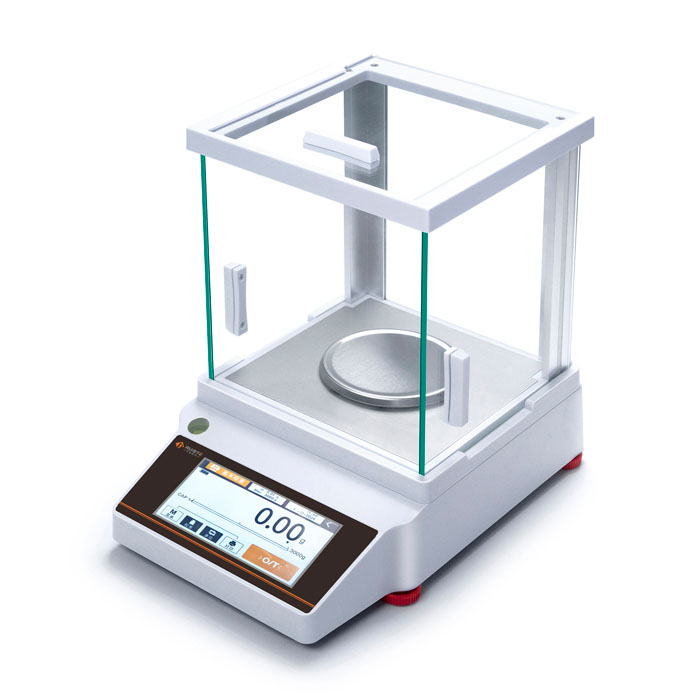
The working principle specification constitutes the core technical foundation of modern precision balances, and most mainstream models adopt the electromagnetic force balance mechanism for mass conversion and calculation. When a sample is placed on the weighing pan, the mechanical bearing structure inside the instrument produces tiny vertical displacement under the action of the sample’s gravity. The built-in position sensing component captures this micro-displacement in real time and converts the mechanical displacement signal into a continuous electrical signal. The internal control circuit dynamically adjusts the current passing through the electromagnetic coil according to the signal amplitude, generating reverse electromagnetic force to offset the gravity of the sample and restore the mechanical structure to its initial balanced position. Within the effective measuring range, the current intensity in the coil maintains a stable proportional relationship with the sample mass, and the mass data is obtained through algorithm conversion and displayed on the output screen. Some basic types of precision balances adopt strain sensing structures, which rely on elastic deformation of sensitive components to generate resistance changes for mass deduction; such structural specifications are simpler in mechanical composition and suitable for conventional weighing scenarios with moderate precision requirements.
Basic physical parameter specifications are the most intuitive indicators to define the weighing capacity of a precision balance, including measuring range, readability, repeatability, and linear deviation. The measuring range refers to the maximum mass load that the instrument can bear under normal operating conditions, covering multiple gradient intervals from dozens of grams to several kilograms to adapt to samples of different volumes and densities. Readability represents the minimum numerical division value that the instrument can identify and display, reflecting the sensitivity of the balance to tiny mass changes, with common gradient settings ranging from one milligram to one hundredth of a milligram. Repeatability describes the deviation degree of multiple measurement results of the same sample under identical placement and environmental conditions, which is used to evaluate the short-term stability of the instrument; low repeatability deviation ensures that continuous weighing operations will not produce obvious data fluctuations caused by internal mechanical fatigue or electronic signal drift. Linear deviation reflects the data error distribution of the full measuring range, and qualified structural design keeps the deviation within a narrow fixed interval at any load point, avoiding excessive data offset in partial range sections. In addition, eccentric load specification is also included in basic parameters, detecting data changes when the sample is placed at different positions of the weighing pan to verify the rationality of internal force transmission structure.
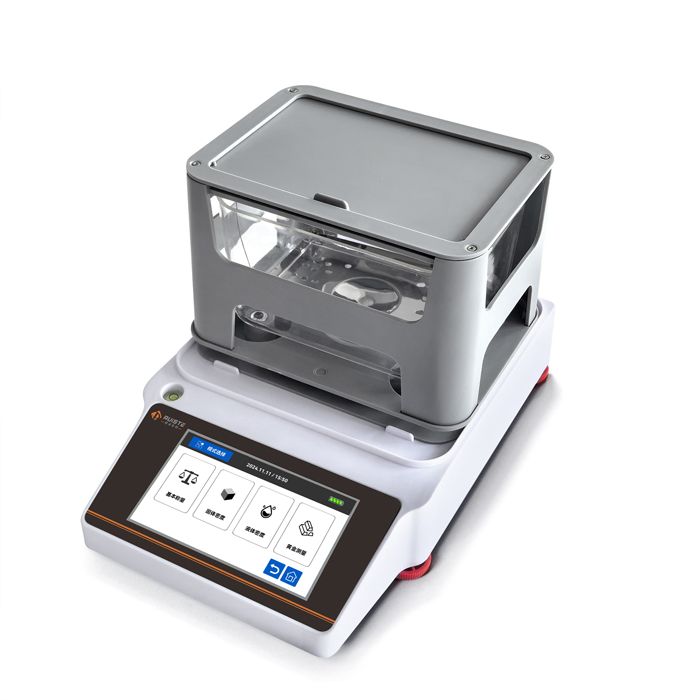
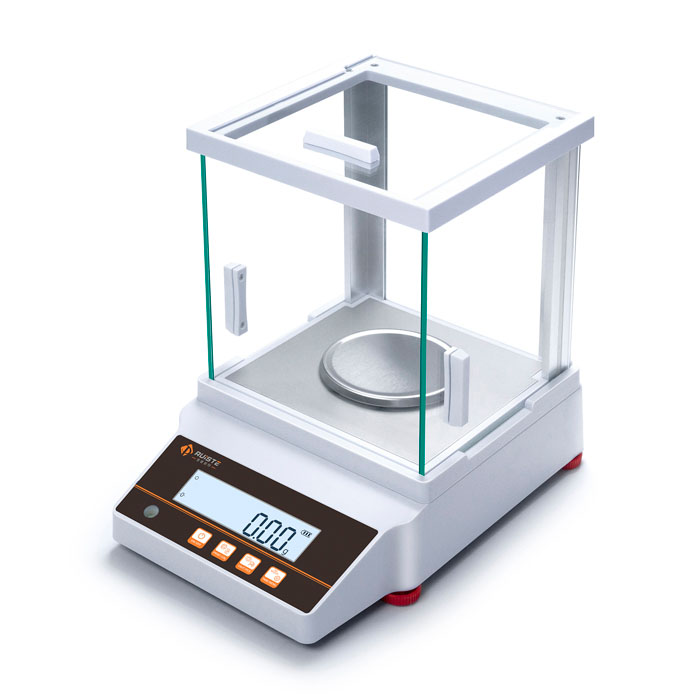
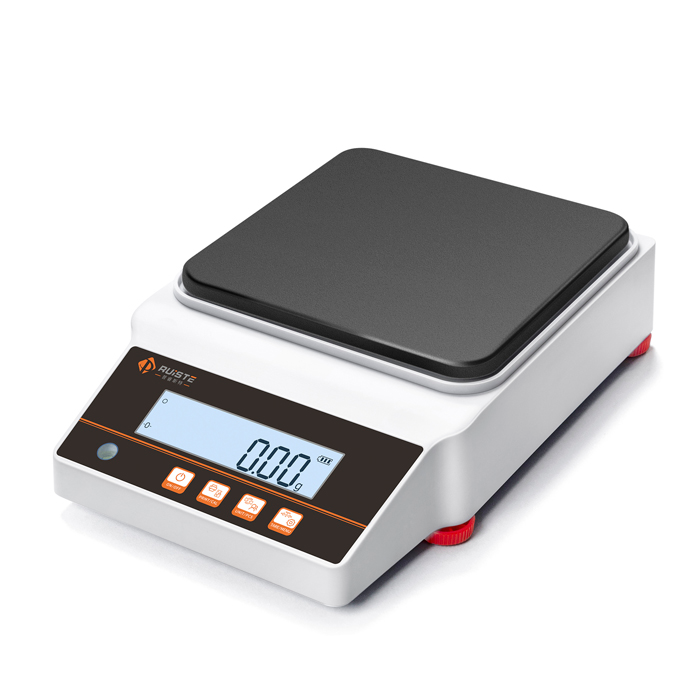
Mechanical structure specifications determine the physical durability and anti-interference ability of the precision balance, involving weighing pan, bearing support, internal sensing framework, and external protective components. The weighing pan is usually made of smooth and corrosion-resistant metal materials, with regular geometric shapes such as square or circle and diverse caliber sizes to match different measuring ranges; the surface polishing treatment reduces sample residue and facilitates daily cleaning. The bearing support adopts an integrated rigid structural design to minimize mechanical deformation caused by load changes, and the optimized connection gap between structural parts lowers friction resistance during tiny displacement movement. High-performance precision balances are equipped with integrated sensing frameworks, which integrate force-bearing components and signal sensing components into a single unit to reduce assembly gaps and mechanical transmission errors generated by multi-part connection. The external protective structure includes a fully enclosed windproof cover for high-precision models and a simple baffle structure for conventional models; transparent windproof components reduce airflow interference on tiny samples, while the fixed base with anti-slip foot pads can adjust horizontal height to offset the influence of uneven placement surfaces, maintaining the horizontal balance of the overall instrument.
Electronic system specifications cover display modules, control circuits, power supply components, and data transmission structures, realizing intelligent output and stable operation of weighing data. The display module adopts high-definition digital screen with clear character resolution, which can present real-time weighing values, state prompts, and function parameter settings; some models are equipped with touch control screens to simplify parameter adjustment steps. The internal circuit system uses low-noise electronic components to suppress current fluctuation and signal interference, ensuring stable transmission of sensing signals during long-term operation. The power supply specification includes constant voltage alternating current input and built-in energy storage modules; the constant voltage power supply structure reduces data deviation caused by external voltage fluctuations, while the energy storage module can maintain short-term normal operation during power interruption to avoid data loss in ongoing measurement. The data transmission interface supports stable connection with external terminal equipment, realizing real-time data output, storage, and batch sorting; the built-in low-power consumption mode can reduce energy consumption during standby state and extend the service life of electronic components.
Environmental adaptability specifications define the external condition boundaries for stable operation of the precision balance, including temperature range, humidity threshold, and air pressure applicability. The suitable ambient temperature for conventional models is maintained within a moderate interval, and the internal temperature compensation structure can offset minor data drift caused by slow temperature changes. Excessively high temperature will accelerate the aging of internal electronic components, while excessively low temperature will increase the viscosity of mechanical damping materials and extend the stabilization time of data reading. The ambient humidity should be controlled within a non-condensing range to prevent moisture from adhering to circuit boards and metal structures, avoiding short circuit failure or metal oxidation corrosion. In addition, the instrument has certain anti-vibration and anti-electromagnetic interference specifications; the damping structure weakens the vibration conduction from the placement platform, and the electromagnetic shielding layer isolates the interference of surrounding electronic equipment on internal current signals, ensuring the consistency of measured data in complex laboratory environments.
Functional auxiliary specifications optimize the operational convenience and measurement flexibility of the precision balance, covering peeling function, calibration mode, sampling timing, and data optimization settings. The peeling function can deduct the mass of containers such as weighing boats and test tubes, directly displaying the net mass of samples and simplifying the subtraction calculation steps in repeated weighing. The calibration mode is divided into external weight calibration and internal automatic calibration; external calibration relies on standard mass weights to complete manual parameter correction, while internal calibration uses built-in counterweights and automatic driving structures to trigger calibration procedures under temperature changes or long-term standby conditions. The stabilization time refers to the duration required for data to reach a stable display state after sample placement, and optimized mechanical damping and signal processing algorithms can shorten the stabilization cycle to improve the efficiency of batch sample detection. Moreover, the instrument is embedded with data filtering functions, which can shield transient data jumps caused by accidental airflow and tiny vibration through graded filtering modes, presenting smooth and effective measurement results.
Material and durability specifications focus on component wear resistance and structural stability during long-term use. The external shell is made of high-strength non-deformable materials, which can resist daily scratch abrasion and chemical reagent splashing corrosion. The internal transmission mechanism adopts high-precision polished metal parts, with low mechanical wear rate during repeated displacement movements, maintaining consistent force transmission efficiency for a long time. The surface of electronic components is covered with insulating and moisture-proof protective layers to adapt to long-term indoor placement and reduce component aging speed. The overall weight configuration of the instrument is matched with the measuring range; models with larger load capacity are equipped with heavier counterweight structures to enhance placement stability and prevent tilting during sample placement.
Maintenance and expandable specifications clarify the daily maintenance standards and functional expansion potential of the precision balance. The detachable weighing pan and windproof baffle facilitate manual disassembly and cleaning, reducing the residual pollution of adhered samples to subsequent measurement. The built-in fault self-checking program can detect abnormal states such as unlevel placement, unstable power supply, and blocked mechanical structures, and feed back prompt information through the display screen to guide users to eliminate hidden troubles. In terms of functional expansion, the instrument can be connected with peripheral auxiliary equipment such as printers and data collectors through external interfaces to realize paper data recording and remote data storage. Some models support customized parameter setting of weighing units, meeting the unit conversion requirements of different industrial detection and scientific research scenarios.
In practical application scenarios, the matching of precision balance specifications and usage requirements directly affects the rationality of measurement work. Fine chemical testing and trace reagent preparation require models with high readability and low repeatability deviation to capture subtle mass changes of micro samples; industrial raw material batching and bulk particle detection need instruments with large measuring ranges to improve single-batch weighing efficiency; daily conventional laboratory testing can select balanced specification models with moderate parameters to balance usage cost and detection performance. Regardless of the application scenario, all specification parameters of the precision balance are mutually constrained and coordinated. The improvement of single index needs the support of optimized design of multiple structures, forming a complete and systematic performance evaluation system.
In conclusion, the specifications of a precision balance cover multi-dimensional technical indicators from internal working mechanism to external use conditions, from basic weighing performance to auxiliary expansion functions. Each parameter is set based on mechanical operation laws and electronic signal conversion principles, aiming to maintain long-term stable and accurate mass measurement. Understanding the complete specification system helps users select appropriate instruments according to actual usage scenarios, standardize daily operation and maintenance procedures, and give full play to the inherent performance advantages of precision balances. With the continuous optimization of structural design and electronic control technology, the specification indicators of such instruments will be further refined, providing more reliable technical support for high-precision quantitative measurement in various industries.
Specifications of Precision Balance
https://www.pruiste.com/precision-balance.html
Post Date: May 18, 2026
https://www.supplier-manufacturer.com/precision-balance/specifications-of-precision-balance.html

![Weighing Scale Wholesale]()
Weighing Scale Wholesale
The global weighing scale wholesale sector has maintained steady development momentum amid the continuous expansion of downstream application industries, evolving consumpt…![Axle Weighing Scale]()
Axle Weighing Scale
Axle weighing scale has become an indispensable piece of weighing equipment in modern transportation management, industrial production and logistics operation, focusing on…![Density Balance ME Series]()
Density Balance ME Series
The ME series density balance adopts the Internet of Things 5-inch color TFT control system integrated touch high-definition screen. The entire series of balances adopts G…![Compact Weighing Scale]()
Compact Weighing Scale
In modern daily life and various lightweight industrial scenarios, the demand for portable and space-saving measuring tools continues to grow steadily, and compact weighin…![Lightweight Counting Scale]()
Lightweight Counting Scale
In modern daily operation and small-scale production environments, the demand for efficient and convenient counting tools continues to grow, especially for scenarios that …