Advanced Laboratory Balance
In modern scientific research, industrial quality inspection, pharmaceutical development, and chemical analysis, accurate mass measurement serves as the fundamental foundation for reliable experimental data and standardized production processes. The advanced laboratory balance stands as a core analytical instrument designed to deliver high-precision mass detection for tiny and trace samples, distinguishing itself from conventional weighing devices through its sophisticated internal structure, sensitive sensing systems, and stable operational performance. Unlike traditional mechanical weighing tools that rely on lever balance and weight comparison, contemporary advanced laboratory balances adopt electromagnetic force compensation technology, a mature and efficient working mechanism that supports high-resolution mass reading and meets the rigorous measurement demands of professional laboratory scenarios. This instrument has become an indispensable piece of equipment in quantitative analysis, formula preparation, sample testing, and experimental data verification across multiple scientific and industrial fields.
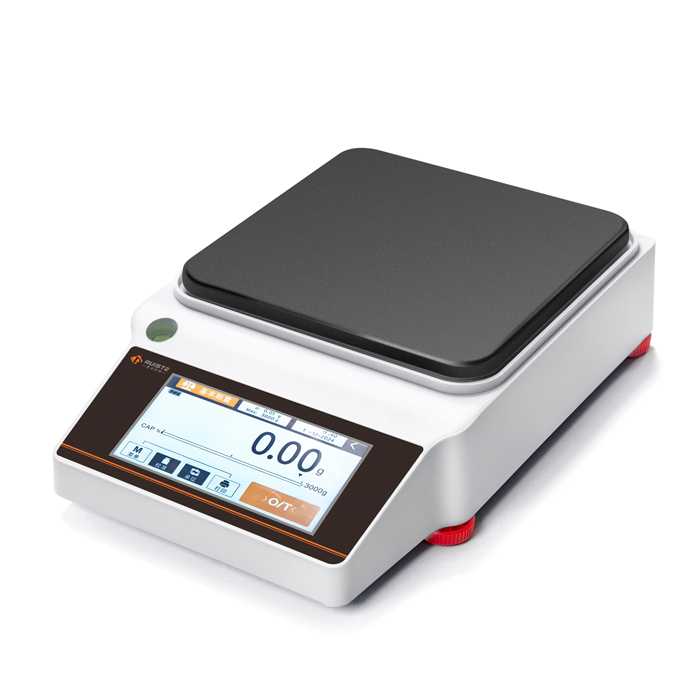
The core operational logic of advanced laboratory balances centers on the principle of electromagnetic force compensation, a physical mechanism that ensures consistent and accurate mass measurement. When a sample is placed on the weighing pan, the gravitational force exerted by the sample triggers a slight displacement of the internal sensing component connected to the pan. A high-sensitivity position detector immediately captures this tiny structural deviation and converts the physical displacement into a weak electrical signal. The instrument’s built-in precision amplifier amplifies the low-intensity signal, which is then transmitted to a dedicated microprocessor for real-time calculation and processing. The system dynamically adjusts the current flowing through the internal electromagnetic coil to generate an upward restoring force that counteracts the downward gravitational force of the sample, restoring the weighing system to its original equilibrium position. Since the current required to maintain structural balance is directly proportional to the mass of the loaded sample, the microprocessor can convert the precise current value into a standardized mass reading and display it on the digital screen with clear and intuitive numerical output. This non-mechanical balance method effectively avoids the systematic errors caused by mechanical friction, lever wear, and weight deviation that plague traditional mechanical balances, laying a solid foundation for stable and repeatable measurement results.
The structural design of advanced laboratory balances is fully optimized for precision, stability, and anti-interference performance, with every component tailored to minimize external and internal measurement errors. The weighing pan is usually made of corrosion-resistant, high-rigidity metal materials with a smooth and flat surface, ensuring uniform force bearing of samples and preventing mass deviation caused by uneven contact or surface deformation. The internal weighing cell, as the core sensing unit, is encapsulated in a shockproof and sealed structure to isolate fine internal components from dust, moisture, and minor mechanical vibration. Most professional models are equipped with a transparent wind shield composed of high-transparency glass or plastic panels, which encloses the weighing area to eliminate the impact of indoor air convection, light wind, and floating dust on tiny sample measurements. This protective structure is particularly critical for trace sample weighing, as even subtle air flow can cause numerical fluctuations and affect data consistency. In addition, the base of the balance is fitted with adjustable horizontal feet and a bubble level indicator, allowing operators to calibrate the instrument’s horizontal state before use. A level working state ensures the vertical alignment of internal force transmission structures, preventing measurement errors induced by tilting and guaranteeing the accuracy of force compensation and signal conversion processes.
Modern advanced laboratory balances integrate intelligent sensing and algorithm compensation technologies to adapt to complex and variable laboratory environments, greatly improving the stability and reliability of long-term operation. Laboratory environments are inevitably affected by subtle temperature changes, humidity fluctuations, and low-frequency ground vibrations, all of which can interfere with high-precision weighing results. To address these environmental disturbances, advanced balances are embedded with temperature and humidity sensing modules that monitor ambient conditions in real time. The built-in intelligent algorithm automatically compensates for measurement deviations caused by temperature drift and humidity variation, correcting signal errors generated by minor changes in internal component resistance and magnetic field performance. Meanwhile, the vibration suppression system filters out high-frequency signal noise caused by external micro-vibrations, ensuring that the final displayed data remains stable without frequent jitter. Many units also feature automatic calibration functions that trigger regular calibration cycles according to preset time intervals or detected temperature changes. This active calibration mechanism eliminates gradual measurement drift caused by long-term instrument operation, maintaining consistent weighing performance over extended use and reducing the frequency of manual calibration operations for laboratory staff.
Standardized operation is essential to maximize the performance of advanced laboratory balances and ensure the authenticity and repeatability of experimental data. Before initiating any weighing operation, a complete pre-use preparation process must be followed to eliminate potential interference factors. First, the instrument should be placed on a stable, horizontal workbench away from direct sunlight, air condition vents, and high-traffic areas to avoid continuous light radiation, air flow impact, and accidental vibration. After powering on the device, a sufficient warm-up period is required to allow internal electronic components and magnetic field systems to reach a stable working state, as insufficient warm-up often leads to unstable initial readings and gradual data drift. Operators must check the horizontal level of the instrument through the bubble indicator and adjust the support feet in a timely manner if deviation occurs. Subsequently, zero calibration is mandatory to clear the residual weight of the weighing pan and wind shield, ensuring the instrument starts measurement from a standard zero state and eliminates zero offset errors.
During the formal weighing process, standardized sample handling and operation habits play a decisive role in data accuracy. Samples to be tested should be placed gently in the center of the weighing pan to avoid eccentric loading, which can cause uneven force on the sensing structure and lead to inaccurate readings. For powdered, liquid, or volatile samples, closed weighing containers such as weighing bottles and crucibles must be used to prevent sample loss, volatilization, or contamination of the weighing pan. It is strictly prohibited to place overloaded samples on the pan, as excessive load will not only cause measurement distortion but also produce permanent fatigue damage to the internal weighing cell, shortening the service life of the instrument. Operators should avoid touching the weighing pan and sample containers directly with their hands, as skin grease, sweat, and fine impurities will increase extra mass and contaminate the instrument surface. It is also necessary to maintain a stable operating posture during weighing, avoiding sudden movements, loud noises, or nearby equipment operation that may generate air flow and vibration interference. After the reading stabilizes, the data should be recorded in a timely manner to prevent numerical changes caused by long-term exposure of samples to the environment.
Post-use maintenance and daily management are key to sustaining the long-term precision and service life of advanced laboratory balances. After completing daily weighing work, operators must remove all samples and residual impurities from the weighing pan and wind shield, using soft, lint-free cleaning tools to wipe the surface gently. Corrosive liquids, strong detergents, and hard cleaning tools are forbidden to prevent scratching the pan surface or corroding internal components. The wind shield should be kept closed when the instrument is not in use to block dust accumulation in the weighing cavity. For long-term idle storage, the instrument should be covered with a dust cover and placed in a dry, constant-temperature environment to avoid moisture-induced circuit aging and component oxidation. Regular deep maintenance includes checking the flexibility of wind shield sliding parts, verifying the sensitivity of the horizontal adjustment structure, and confirming the stability of power connection. Periodic manual calibration is also recommended to supplement automatic calibration functions, ensuring that the instrument’s measurement accuracy always meets experimental requirements. Reasonable maintenance habits can effectively reduce instrument failure rates, avoid abnormal data fluctuations caused by component aging, and maintain consistent weighing performance for years of use.
Advanced laboratory balances have extensive application value in multiple professional fields, supporting the development of high-precision experimental research and standardized production testing. In chemical analysis laboratories, they are used for accurate weighing of chemical reagents, preparation of standard solutions, and quantitative analysis of reaction products, providing precise data support for chemical reaction ratio calculation, purity detection, and component content analysis. In pharmaceutical research and production, the instrument assists in weighing trace raw materials, auxiliary materials, and test samples, ensuring the accurate proportion of pharmaceutical formulas and meeting the strict precision requirements of drug development and quality testing. In environmental monitoring experiments, it is applied to weigh filter membranes, sediment samples, and pollutant residues, supporting the quantitative detection of air, water, and soil pollutants and providing reliable data for environmental quality assessment.
In material science research, advanced laboratory balances are used to test the mass changes of new materials before and after experiments, including weight loss rate analysis of high-temperature oxidation, corrosion resistance testing, and material adsorption and desorption performance evaluation, helping researchers explore the physical and chemical properties of innovative materials. In food safety testing, the instrument completes precise weighing of food samples and detection reagents, supporting the quantitative analysis of additives, harmful residues, and nutritional components to ensure food quality compliance. In industrial quality control departments, it is used for sampling and testing of raw materials and finished products, controlling product component ratios and quality indicators, and providing data basis for standardized industrial production. In academic and scientific research fields, the instrument’s high-precision measurement capability supports innovative experiments and data verification, ensuring the reproducibility and credibility of research results and promoting the steady progress of scientific research work.
It is crucial to distinguish the concepts of mass and weight in the application of advanced laboratory balances, as this cognition determines the standardization of measurement data interpretation. Weight refers to the gravitational force acting on an object, which varies with changes in gravitational acceleration in different environments, while mass is an inherent physical property of an object that remains constant regardless of environmental changes. Advanced laboratory balances are designed to measure mass rather than weight. Through the electromagnetic force compensation mechanism, they eliminate the interference of gravitational acceleration differences and environmental changes, outputting stable and accurate mass data that conforms to unified scientific measurement standards. This characteristic makes the measurement results of the instrument universally applicable in scientific research and industrial testing, ensuring the consistency and comparability of experimental data obtained in different laboratories and different environments.
In practical laboratory work, understanding and avoiding common weighing errors can further optimize the application effect of advanced laboratory balances. Systematic errors are mainly derived from incomplete instrument calibration, unlevel placement, and environmental parameter drift, which can be effectively avoided through standardized pre-use calibration, horizontal adjustment, and real-time environmental compensation. Random errors are caused by accidental air flow, minor vibration, and human operational deviation, which can be reduced by averaging multiple measurements and maintaining standardized operating habits. Gross errors are usually attributed to human misoperation, such as eccentric sample placement, overloading, and inaccurate zero setting, which can be eliminated by strengthening operational standardization and improving operator proficiency. By controlling error sources from equipment, environment, and operation dimensions, the weighing data of advanced laboratory balances can maintain high accuracy and repeatability, fully exerting the instrument’s core advantages in precision measurement.
With the continuous progress of laboratory technology, advanced laboratory balances are evolving toward intelligent integration, environmental adaptability, and multi-scenario applicability. Modern models are equipped with rich data transmission interfaces, supporting stable connection with laboratory data management systems, printers, and peripheral auxiliary equipment. This function realizes automatic recording, uploading, and sorting of weighing data, avoiding manual recording errors and improving the digital and standardized level of laboratory data management. Meanwhile, the optimized internal circuit and algorithm structure further enhances the instrument’s anti-interference ability, enabling it to maintain stable and accurate operation in complex laboratory environments with variable temperature and humidity. The continuous upgrading of structural design also improves the instrument’s dustproof, moisture-proof, and shockproof performance, expanding its applicable scenarios and adapting to the increasingly diverse and high-precision measurement needs of modern laboratories. As a basic precision measuring instrument, the advanced laboratory balance will continue to serve as an important guarantee for the authenticity and accuracy of laboratory data, providing solid technical support for scientific research innovation, industrial quality upgrading, and public service testing in various fields.
Advanced Laboratory Balance
https://www.pruiste.com/laboratory-balance.html
Post Date: May 22, 2026
https://www.supplier-manufacturer.com/laboratory-balance/advanced-laboratory-balance.html

![Low-shear Digital Viscometer]()
Low-shear Digital Viscometer
Viscosity stands as one of the most critical rheological properties that define the flow behavior of fluid materials, directly influencing the processing performance, stor…![Digital Viscometer Manufacturer]()
Digital Viscometer Manufacturer
Viscosity stands as one of the most fundamental physical properties of fluid materials, directly influencing the flow performance, processing characteristics, and final qu…![Laboratory Digital Viscometer]()
Laboratory Digital Viscometer
Viscosity stands as one of the most fundamental physical properties of fluid substances, reflecting the internal friction and flow resistance that occurs when a liquid or …![Compact Moisture Analyzer]()
Compact Moisture Analyzer
Moisture content detection stands as a fundamental analytical procedure across industrial production, laboratory research, and quality inspection workflows, as the proport…![Moisture Analyzer For Sale]()
Moisture Analyzer For Sale
Moisture content stands as one of the most critical physical indicators that determine the quality, stability, and usability of various raw materials and finished products…