Counting Laboratory Balance
In modern laboratory environments and industrial quality control workflows, accurate quantification extends far beyond simple mass measurement, as many research, production, and inventory management tasks require precise determination of small item quantities rather than just overall weight. A counting laboratory balance serves as a fundamental precision instrument designed to bridge the gap between mass detection and numerical counting, delivering reliable and consistent results for tiny, uniform objects that would be impractical or inefficient to count by manual handwork. Unlike conventional weighing devices that only display total mass readings, this specialized balance integrates high-sensitivity sensing technology with intelligent data processing functions, enabling it to calculate individual unit weight of sampled items and automatically compute the total number of bulk samples based on overall mass data. This core functionality makes it an indispensable tool across scientific research laboratories, pharmaceutical development facilities, industrial production workshops, agricultural research stations, and material testing centers, where both measurement accuracy and operational efficiency are essential to maintain standardized work processes and credible experimental or production data.
The basic working mechanism of a counting laboratory balance relies on the mature and stable electromagnetic force balance compensation principle, which forms the technical foundation for all modern precision weighing and counting equipment. When a batch of small items is placed on the balance’s load-bearing pan, the combined gravitational force of the samples triggers a slight downward displacement of the pan and the connected internal load reception structure. High-precision displacement detection components immediately capture this minimal positional change and convert the physical displacement into continuous electrical signals, which are then transmitted to the built-in microprocessor for real-time analysis and adjustment. The internal control system regulates the current flowing through the electromagnetic coil inside the sensor, generating an electromagnetic force that counteracts the gravitational force exerted by the samples on the pan. This dynamic balance process ensures the load-bearing structure returns to its original stable position, and the magnitude of the current required to maintain this equilibrium maintains a strict proportional relationship with the total mass of the placed samples. Through internal algorithm conversion, the balance first obtains accurate total mass data, and with the support of pre-set sampling parameters, it further converts mass information into clear quantity readings, realizing the seamless transition from weight measurement to digital counting.
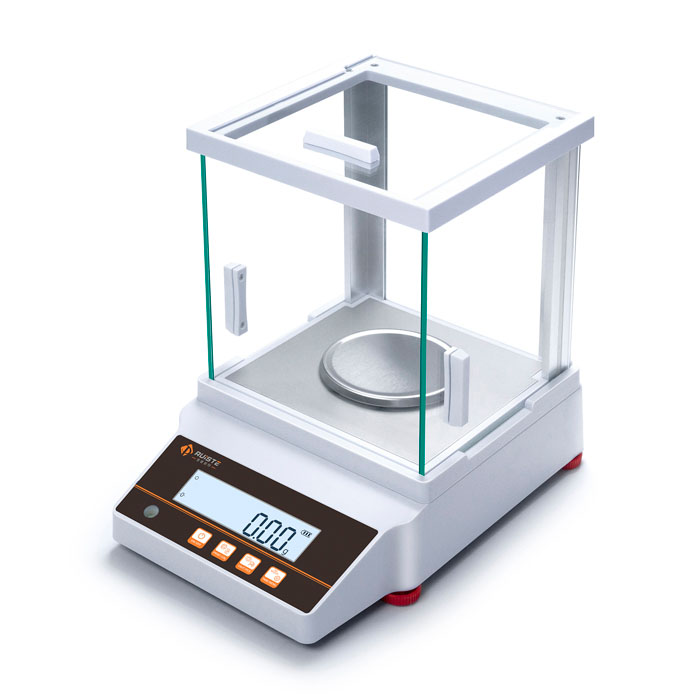
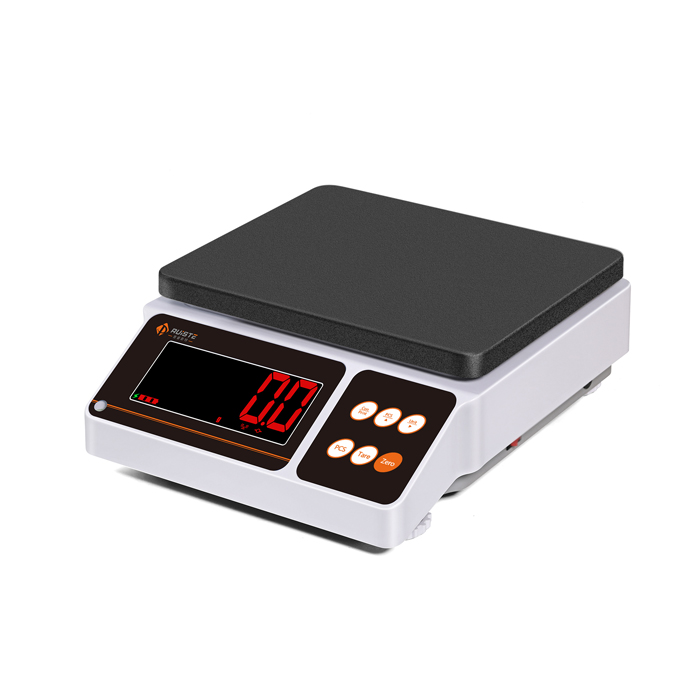
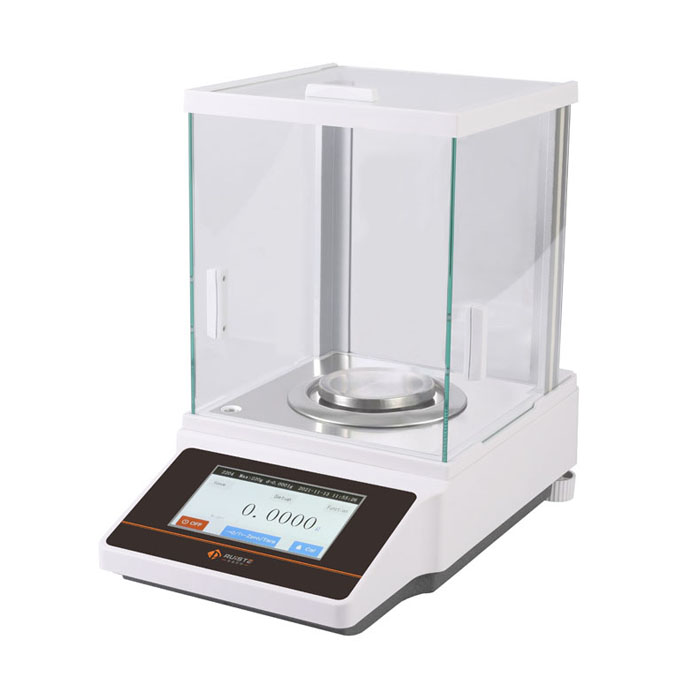
The overall structural design of a counting laboratory balance focuses on both structural stability and environmental adaptability, with every component optimized to reduce external interference and enhance long-term measurement stability. The core load-bearing part consists of a smooth, corrosion-resistant weighing pan with sufficient flatness to ensure uniform force distribution for all placed samples, preventing inaccurate readings caused by unbalanced placement or uneven contact surfaces. Beneath the pan lies the high-sensitivity electromagnetic sensor unit, the core component responsible for converting mechanical force into measurable electrical signals, featuring excellent linear response and low drift characteristics to maintain consistent sensing performance during long-duration continuous use. The internal circuit system includes signal amplification modules, data processing chips, and digital conversion units, working together to filter out minor signal fluctuations caused by subtle environmental changes and ensure the authenticity and stability of collected data. The external shell adopts a sturdy and shockproof structural design, effectively isolating internal precision components from external vibration, airflow disturbance, and minor physical impact, while some models are equipped with simple protective barriers to reduce the impact of ambient air movement on tiny mass measurement, especially crucial when counting ultra-light small items with minimal individual weight.
The standard counting operation workflow of a laboratory counting balance follows a simple and logical process, designed to ensure both operational convenience and result accuracy for users with different levels of professional experience. Before starting any counting task, preliminary preparation work is essential to create a suitable measurement environment and ensure the balance operates in optimal condition. Users need to place the balance on a stable, horizontal work surface away from direct airflow, strong electromagnetic interference, and areas with frequent temperature and humidity fluctuations, as environmental instability is one of the main factors affecting counting precision. After powering on the equipment, a sufficient warm-up period is required to allow internal electronic components and sensors to reach a stable working state, avoiding initial reading deviations caused by insufficient component temperature stabilization. The next step involves zeroing the balance to eliminate the influence of the weighing pan itself and any temporary residual weight on the pan, ensuring all subsequent measurements only record the effective mass of the actual samples to be counted.
Sampling setting is the most critical step in the entire counting process, directly determining the final accuracy of quantity calculation. Users need to select a representative small number of sample units as the calibration sample group, choosing a quantity that can reflect the average individual weight characteristics of all bulk samples. Too few sampled units may lead to large errors in individual unit weight calculation due to minor natural differences between individual items, while an excessively large sampling quantity will reduce operational efficiency without significant improvement in counting accuracy. After placing the sampled units on the weighing pan and confirming stable readings, the user activates the sampling function on the balance, and the internal system automatically calculates and stores the average single unit weight of the sampled items. Once the unit weight calibration is completed, the formal counting process can begin: users place all bulk items to be counted on the weighing pan, and the balance instantly divides the total real-time mass by the pre-calibrated single unit weight, quickly displaying the accurate total quantity of the samples on the digital screen. Throughout the process, the balance continuously updates data readings to reflect any changes in sample quantity, supporting gradual addition or reduction of samples to meet different counting and batching needs.
Counting laboratory balances exhibit extensive application value in multiple professional fields, adapting to the diverse counting demands of different industries and research scenarios with their precise and efficient counting capabilities. In scientific research and university laboratories, these balances are widely used for counting tiny experimental materials such as seed particles, biological sample capsules, micro experimental reagents, and small structural parts for material science research. Many agricultural research projects require accurate counting of crop seeds during germination rate testing and variety breeding experiments, where consistent sample quantity ensures the comparability and credibility of experimental data. In biological and medical research laboratories, researchers rely on counting balances to count small biological samples, experimental tablets, and tiny laboratory consumables, avoiding counting errors caused by manual operation and ensuring standardized experimental sample preparation and data recording.
In industrial production and quality management links, counting laboratory balances play a vital role in parts inventory control and production batch inspection. Mechanical processing and electronic manufacturing industries involve a large number of small standard parts such as screws, nuts, gaskets, and miniature electronic components, which are small in size, large in total quantity, and highly time-consuming to count manually. Using a counting balance can quickly complete inventory counting of these parts and quantity inspection of production batches, ensuring the accurate matching of raw materials and accessories in the production process and avoiding production delays or material waste caused by quantity discrepancies. In warehousing and logistics management for high-value small commodities, the balance supports rapid inventory checking and goods sorting, improving the overall efficiency of warehouse management while maintaining accurate quantity records for each batch of goods.
In pharmaceutical production and food testing fields, the counting accuracy of laboratory counting balances is closely related to product quality and safety compliance. Pharmaceutical production requires precise counting of various tablets, capsules, and granular pharmaceutical raw materials during research and production processes, ensuring consistent content specifications for each finished pharmaceutical product and meeting standardized production requirements. Food detection and processing enterprises use counting balances to quantify bulk granular food, small packaged food accessories, and raw material particles, realizing accurate batching and quantity control in food processing, and ensuring stable product specifications and consistent quality for each production batch. In these fields, the reliable counting performance of the balance avoids quality risks and product inconsistency problems caused by inaccurate manual counting, providing solid data support for standardized production and quality supervision.
Daily maintenance and proper use habits are key factors to maintain the long-term performance and stable counting accuracy of a counting laboratory balance, as precision measuring instruments require careful maintenance to avoid performance attenuation and measurement deviation. Regular cleaning work is essential; users should keep the weighing pan and external shell clean and tidy at all times, promptly wiping away sample residues, dust, and stains with soft and non-corrosive cleaning materials to prevent dirt accumulation from affecting the sensitivity of the weighing pan and internal sensor components. It is important to avoid using corrosive cleaning agents or rough cleaning tools that may scratch the weighing pan surface or damage the external protective structure, ensuring the structural integrity of the equipment appearance and internal components.
Regular calibration and performance inspection are also indispensable maintenance steps. Although modern counting laboratory balances have good long-term stability, long-term use, environmental changes, and minor mechanical vibration will cause slight drift in measurement performance over time. Users need to conduct regular calibration operations in accordance with standard operating procedures to correct minor reading deviations and ensure the accuracy and consistency of counting results for a long time. During use, it is necessary to avoid overloading the balance beyond the specified load range, as long-term overload operation will cause irreversible damage to the internal precision sensor, affecting measurement accuracy and even shortening the service life of the equipment. In addition, when the balance is not in use for a long time, it should be placed in a dry, dust-free, and constant-temperature storage environment, with the power supply turned off and the weighing pan protected to prevent long-term static pressure and environmental moisture from affecting internal precision components.
With the continuous advancement of laboratory measurement technology and the upgrading of industrial production management requirements, counting laboratory balances are constantly evolving in terms of performance optimization and functional expansion. Modern upgraded counting balances are equipped with more intelligent data processing functions, supporting data recording, statistical analysis, and simple data output, which facilitates users to archive experimental and production counting data and realize traceable management of measurement results. The anti-interference performance of the equipment has also been continuously improved, with optimized internal circuit design and structural shockproof technology, enabling the balance to maintain stable counting accuracy in more complex working environments and adapting to the diverse use needs of laboratories and industrial sites with different conditions. The humanized operation interface and simplified operating steps also reduce the difficulty of equipment operation, allowing operators without professional measurement background to quickly master counting operations and obtain accurate and reliable quantity data.
In conclusion, the counting laboratory balance is a vital precision instrument that combines professional weighing technology and intelligent counting functions, providing convenient, efficient, and accurate quantity measurement solutions for numerous professional fields. Its unique working principle, stable structural design, and flexible application scenarios make it an essential basic equipment for laboratory research, industrial production quality control, and material inventory management. Scientific standardized operation methods and reasonable daily maintenance can effectively maintain the long-term stable performance of the balance, ensuring that every counting measurement result is true and reliable. In all work links that require accurate quantity control of small uniform items, the counting laboratory balance effectively replaces inefficient and error-prone manual counting work, improving overall work efficiency while ensuring the standardization and accuracy of experimental research and production management work, laying a solid foundation for the smooth development of various professional work and the acquisition of credible data results.In modern laboratory environments and industrial quality control workflows, accurate quantification extends far beyond simple mass measurement, as many research, production, and inventory management tasks require precise determination of small item quantities rather than just overall weight. A counting laboratory balance serves as a fundamental precision instrument designed to bridge the gap between mass detection and numerical counting, delivering reliable and consistent results for tiny, uniform objects that would be impractical or inefficient to count by manual handwork. Unlike conventional weighing devices that only display total mass readings, this specialized balance integrates high-sensitivity sensing technology with intelligent data processing functions, enabling it to calculate individual unit weight of sampled items and automatically compute the total number of bulk samples based on overall mass data. This core functionality makes it an indispensable tool across scientific research laboratories, pharmaceutical development facilities, industrial production workshops, agricultural research stations, and material testing centers, where both measurement accuracy and operational efficiency are essential to maintain standardized work processes and credible experimental or production data.
The basic working mechanism of a counting laboratory balance relies on the mature and stable electromagnetic force balance compensation principle, which forms the technical foundation for all modern precision weighing and counting equipment. When a batch of small items is placed on the balance’s load-bearing pan, the combined gravitational force of the samples triggers a slight downward displacement of the pan and the connected internal load reception structure. High-precision displacement detection components immediately capture this minimal positional change and convert the physical displacement into continuous electrical signals, which are then transmitted to the built-in microprocessor for real-time analysis and adjustment. The internal control system regulates the current flowing through the electromagnetic coil inside the sensor, generating an electromagnetic force that counteracts the gravitational force exerted by the samples on the pan. This dynamic balance process ensures the load-bearing structure returns to its original stable position, and the magnitude of the current required to maintain this equilibrium maintains a strict proportional relationship with the total mass of the placed samples. Through internal algorithm conversion, the balance first obtains accurate total mass data, and with the support of pre-set sampling parameters, it further converts mass information into clear quantity readings, realizing the seamless transition from weight measurement to digital counting.
The overall structural design of a counting laboratory balance focuses on both structural stability and environmental adaptability, with every component optimized to reduce external interference and enhance long-term measurement stability. The core load-bearing part consists of a smooth, corrosion-resistant weighing pan with sufficient flatness to ensure uniform force distribution for all placed samples, preventing inaccurate readings caused by unbalanced placement or uneven contact surfaces. Beneath the pan lies the high-sensitivity electromagnetic sensor unit, the core component responsible for converting mechanical force into measurable electrical signals, featuring excellent linear response and low drift characteristics to maintain consistent sensing performance during long-duration continuous use. The internal circuit system includes signal amplification modules, data processing chips, and digital conversion units, working together to filter out minor signal fluctuations caused by subtle environmental changes and ensure the authenticity and stability of collected data. The external shell adopts a sturdy and shockproof structural design, effectively isolating internal precision components from external vibration, airflow disturbance, and minor physical impact, while some models are equipped with simple protective barriers to reduce the impact of ambient air movement on tiny mass measurement, especially crucial when counting ultra-light small items with minimal individual weight.
The standard counting operation workflow of a laboratory counting balance follows a simple and logical process, designed to ensure both operational convenience and result accuracy for users with different levels of professional experience. Before starting any counting task, preliminary preparation work is essential to create a suitable measurement environment and ensure the balance operates in optimal condition. Users need to place the balance on a stable, horizontal work surface away from direct airflow, strong electromagnetic interference, and areas with frequent temperature and humidity fluctuations, as environmental instability is one of the main factors affecting counting precision. After powering on the equipment, a sufficient warm-up period is required to allow internal electronic components and sensors to reach a stable working state, avoiding initial reading deviations caused by insufficient component temperature stabilization. The next step involves zeroing the balance to eliminate the influence of the weighing pan itself and any temporary residual weight on the pan, ensuring all subsequent measurements only record the effective mass of the actual samples to be counted.
Sampling setting is the most critical step in the entire counting process, directly determining the final accuracy of quantity calculation. Users need to select a representative small number of sample units as the calibration sample group, choosing a quantity that can reflect the average individual weight characteristics of all bulk samples. Too few sampled units may lead to large errors in individual unit weight calculation due to minor natural differences between individual items, while an excessively large sampling quantity will reduce operational efficiency without significant improvement in counting accuracy. After placing the sampled units on the weighing pan and confirming stable readings, the user activates the sampling function on the balance, and the internal system automatically calculates and stores the average single unit weight of the sampled items. Once the unit weight calibration is completed, the formal counting process can begin: users place all bulk items to be counted on the weighing pan, and the balance instantly divides the total real-time mass by the pre-calibrated single unit weight, quickly displaying the accurate total quantity of the samples on the digital screen. Throughout the process, the balance continuously updates data readings to reflect any changes in sample quantity, supporting gradual addition or reduction of samples to meet different counting and batching needs.
Counting laboratory balances exhibit extensive application value in multiple professional fields, adapting to the diverse counting demands of different industries and research scenarios with their precise and efficient counting capabilities. In scientific research and university laboratories, these balances are widely used for counting tiny experimental materials such as seed particles, biological sample capsules, micro experimental reagents, and small structural parts for material science research. Many agricultural research projects require accurate counting of crop seeds during germination rate testing and variety breeding experiments, where consistent sample quantity ensures the comparability and credibility of experimental data. In biological and medical research laboratories, researchers rely on counting balances to count small biological samples, experimental tablets, and tiny laboratory consumables, avoiding counting errors caused by manual operation and ensuring standardized experimental sample preparation and data recording.
In industrial production and quality management links, counting laboratory balances play a vital role in parts inventory control and production batch inspection. Mechanical processing and electronic manufacturing industries involve a large number of small standard parts such as screws, nuts, gaskets, and miniature electronic components, which are small in size, large in total quantity, and highly time-consuming to count manually. Using a counting balance can quickly complete inventory counting of these parts and quantity inspection of production batches, ensuring the accurate matching of raw materials and accessories in the production process and avoiding production delays or material waste caused by quantity discrepancies. In warehousing and logistics management for high-value small commodities, the balance supports rapid inventory checking and goods sorting, improving the overall efficiency of warehouse management while maintaining accurate quantity records for each batch of goods.
In pharmaceutical production and food testing fields, the counting accuracy of laboratory counting balances is closely related to product quality and safety compliance. Pharmaceutical production requires precise counting of various tablets, capsules, and granular pharmaceutical raw materials during research and production processes, ensuring consistent content specifications for each finished pharmaceutical product and meeting standardized production requirements. Food detection and processing enterprises use counting balances to quantify bulk granular food, small packaged food accessories, and raw material particles, realizing accurate batching and quantity control in food processing, and ensuring stable product specifications and consistent quality for each production batch. In these fields, the reliable counting performance of the balance avoids quality risks and product inconsistency problems caused by inaccurate manual counting, providing solid data support for standardized production and quality supervision.
Daily maintenance and proper use habits are key factors to maintain the long-term performance and stable counting accuracy of a counting laboratory balance, as precision measuring instruments require careful maintenance to avoid performance attenuation and measurement deviation. Regular cleaning work is essential; users should keep the weighing pan and external shell clean and tidy at all times, promptly wiping away sample residues, dust, and stains with soft and non-corrosive cleaning materials to prevent dirt accumulation from affecting the sensitivity of the weighing pan and internal sensor components. It is important to avoid using corrosive cleaning agents or rough cleaning tools that may scratch the weighing pan surface or damage the external protective structure, ensuring the structural integrity of the equipment appearance and internal components.
Regular calibration and performance inspection are also indispensable maintenance steps. Although modern counting laboratory balances have good long-term stability, long-term use, environmental changes, and minor mechanical vibration will cause slight drift in measurement performance over time. Users need to conduct regular calibration operations in accordance with standard operating procedures to correct minor reading deviations and ensure the accuracy and consistency of counting results for a long time. During use, it is necessary to avoid overloading the balance beyond the specified load range, as long-term overload operation will cause irreversible damage to the internal precision sensor, affecting measurement accuracy and even shortening the service life of the equipment. In addition, when the balance is not in use for a long time, it should be placed in a dry, dust-free, and constant-temperature storage environment, with the power supply turned off and the weighing pan protected to prevent long-term static pressure and environmental moisture from affecting internal precision components.
With the continuous advancement of laboratory measurement technology and the upgrading of industrial production management requirements, counting laboratory balances are constantly evolving in terms of performance optimization and functional expansion. Modern upgraded counting balances are equipped with more intelligent data processing functions, supporting data recording, statistical analysis, and simple data output, which facilitates users to archive experimental and production counting data and realize traceable management of measurement results. The anti-interference performance of the equipment has also been continuously improved, with optimized internal circuit design and structural shockproof technology, enabling the balance to maintain stable counting accuracy in more complex working environments and adapting to the diverse use needs of laboratories and industrial sites with different conditions. The humanized operation interface and simplified operating steps also reduce the difficulty of equipment operation, allowing operators without professional measurement background to quickly master counting operations and obtain accurate and reliable quantity data.
In conclusion, the counting laboratory balance is a vital precision instrument that combines professional weighing technology and intelligent counting functions, providing convenient, efficient, and accurate quantity measurement solutions for numerous professional fields. Its unique working principle, stable structural design, and flexible application scenarios make it an essential basic equipment for laboratory research, industrial production quality control, and material inventory management. Scientific standardized operation methods and reasonable daily maintenance can effectively maintain the long-term stable performance of the balance, ensuring that every counting measurement result is true and reliable. In all work links that require accurate quantity control of small uniform items, the counting laboratory balance effectively replaces inefficient and error-prone manual counting work, improving overall work efficiency while ensuring the standardization and accuracy of experimental research and production management work, laying a solid foundation for the smooth development of various professional work and the acquisition of credible data results.
Counting Laboratory Balance
https://www.pruiste.com/laboratory-balance.html
Post Date: May 5, 2026
https://www.supplier-manufacturer.com/laboratory-balance/counting-laboratory-balance.html

![Purposes of Moisture Analyzer]()
Purposes of Moisture Analyzer
Moisture content stands as one of the most fundamental and influential physical properties of nearly all raw materials, semi-finished goods, and finished products across i…![Types of Moisture Analyzer]()
Types of Moisture Analyzer
Moisture analysis stands as a fundamental testing procedure across industrial manufacturing, laboratory research, agricultural processing, and material quality inspection.…![Portable Moisture Analyzer]()
Portable Moisture Analyzer
Moisture content stands as one of the most critical physical indicators that determine the quality, stability, and processing performance of diverse materials across indus…![Ultra-precision Laboratory Balance]()
Ultra-precision Laboratory Balance
Ultra-precision laboratory balances serve as foundational measuring instruments in modern scientific research, industrial analysis, and precision material testing, designe…![Laboratory Balance Factory]()
Laboratory Balance Factory
Laboratory balances stand as foundational analytical instruments across scientific research, industrial production, pharmaceutical development, environmental monitoring, a…