What is Laboratory Balance
Mass weighing is the fundamental core link in scientific research testing, sample preparation and data calibration in various laboratories. As basic measuring instruments for accurately determining the mass of samples, laboratory balances directly affect the reliability of various experimental data and the accuracy of experimental results in terms of weighing accuracy and operational stability. Different experimental scenarios have significantly diverse requirements for weighing range, accuracy level and anti-interference capability, and the corresponding balance types have their own characteristics in classification criteria, functional features, manufacturing materials and internal structures. Clarifying all core attributes of laboratory balances and selecting appropriate balances matching different experimental working conditions are the basic prerequisites for standardized laboratory operation and controllable accuracy of experimental data, as well as essential basic professional literacy for laboratory operators.
Mainstream Core Classification of Laboratory Balances
Laboratory balances have a diverse classification system, and the industry commonly adopts two major classification standards to meet the needs of different selection, use and management. Divided by the core weighing working principle, they can be categorized into traditional mechanical lever balances and modern electronic sensing balances, which form the basic classification basis for laboratories. Mechanical lever balances operate based on the physical principle of lever moment balance, with weight counterweight and rider adjustment for value reading, belonging to classic mechanical measuring equipment. Electronic sensing balances work on the electromagnetic force balance sensing principle; built-in sensing components detect mass changes and automatically convert them into digital signals for direct display, making them the mainstream and widely used type in current laboratories.
Classified by accuracy level and range specification, laboratory balances are divided into four gradient types: basic tray balances, general precision balances, analytical balances, and micro and ultra-micro balances. The accuracy increases gradually while the range decreases progressively, fully adapting to the full spectrum of experimental needs from rough sample weighing to micro-trace sample detection. Each gradient balance has a clear core positioning, covering all laboratory work including routine pretreatment, precise analysis and micro scientific research with clear division of labor, and the classification is highly compatible with the actual operational needs of laboratories.
Differential Analysis of Core Functional Characteristics of Various Balances
As entry-level weighing equipment for laboratories, basic tray balances are mainly used for rough mass measurement of samples. With moderate accuracy standards, they feature simple operating logic, low learning threshold, no complex commissioning or professional operation skills required, strong resistance to minor environmental interference, and convenient and labor-saving later maintenance. These balances deliver fast weighing response without long preheating and stabilization time, enabling rapid weighing immediately after startup. Focusing on practicality and convenience, they have no complex auxiliary functions and only meet low-precision needs such as basic mass proportioning and rough sample subpackaging.
General precision balances balance a moderate range and good weighing accuracy with well-balanced functional configuration, good repeatability of weighing values and small error fluctuation. They are equipped with practical auxiliary functions including basic tare zeroing, unit switching and simple counting. Compared with basic tray balances, they have significantly improved weighing stability with minimal numerical fluctuation and stronger environmental adaptability. They can handle medium-precision operations such as routine laboratory sample pretreatment, regular reagent proportioning and quantitative consumable weighing, balancing operational efficiency and weighing accuracy with the widest application coverage.
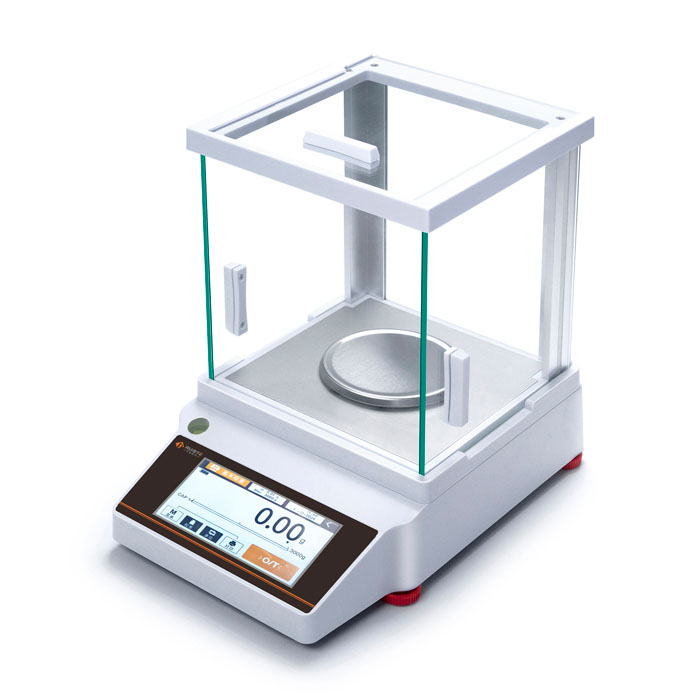
Analytical balances are special high-precision weighing devices focusing on micro precise weighing with micro-level graduation values, strong anti-interference capability and high data stability. They are equipped with advanced functions such as automatic calibration, constant temperature and voltage adaptation, and data memory storage. Extremely sensitive to tiny mass changes, they can accurately capture subtle mass differences of samples and effectively avoid numerical deviations during weighing. Their core advantages lie in high-precision measurement and accurate data tracing, suitable for core operations of various fine quantitative analysis experiments. Micro and ultra-micro balances are research-oriented high-end high-precision weighing equipment with trace-level accuracy and strong specificity. Designed only for ultra-tiny sample weighing, they feature ultra-high sensitivity sensing regulation to shield all kinds of subtle environmental interference and ensure accurate and reliable weighing data of trace samples.
Overview of Core Manufacturing Materials and Overall Structural Composition
Laboratory balances are made of materials selected based on the core principles of corrosion resistance, aging resistance, stable load-bearing and low deformation, with materials for different parts matching corresponding working needs to balance durability and weighing accuracy. The weighing pan of all balances is made of high-quality stainless steel, featuring corrosion resistance, wear resistance, easy cleaning and resistance to chemical reagent erosion. It can be directly used for weighing various acid-base salt reagents, powders and solid samples, keeping the bearing surface flat and stable without rusting or deformation after long-term use. The balance base is mostly made of high-density cast iron or reinforced engineering plastic with sufficient self-weight and stable center of gravity, effectively reducing the impact of minor external vibration on weighing and consolidating the foundation for stable equipment operation. The body shell is made of impact-resistant industrial plastic or light alloy, which is dust-proof, moisture-proof, anti-oxidation and corrosion-resistant, protecting internal core components from erosion by external dust and moisture and extending the service life of the equipment. The wind shield of high-precision balances is made of transparent tempered glass with good light transmittance, high strength and breakage resistance, isolating the interference of air flow and dust on weighing values.
In terms of structural composition, all laboratory balances consist of general basic components and special supporting parts. The universal core structure includes five major parts: load-bearing weighing components, core induction or lever transmission components, value display and regulation components, stable base support components, and operation control key components. The coordinated operation of these five components ensures the basic and orderly progress of weighing work. Mechanical lever balances are additionally equipped with weight counterweight components, rider adjustment components and knife-edge support transmission components, relying on mechanical structure moment balance for weighing adjustment and value verification. Electronic balances have built-in high-precision sensing components, signal conversion processing chips and stabilized power supply components, realizing automatic mass signal collection, conversion and numerical display without manual weight counterweight. High-precision analytical balances and micro balances are additionally fitted with sealed wind protection structures and shockproof buffer base components to further weaken environmental interference, and micro balances are equipped with special micro sample bearing adaptive parts for accurate placement and weighing of ultra-small mass samples.
Core Application Scenarios of Different Types of Balances
Basic tray balances are widely used in basic physics and chemistry experiments in primary and secondary schools, general basic experiments in colleges and universities, rough proportioning of conventional materials in industrial and mining enterprises, and rough subpackaging of routine laboratory consumables and other low-precision weighing scenarios. They do not require accurate numerical control and only need basic mass verification, suitable for batch and simple routine pretreatment operations. General precision balances are applicable to medium-precision experimental scenarios such as conventional chemical batching, routine food sample testing, basic environmental monitoring sample weighing and teaching and scientific research sample preparation, serving as high-frequency core weighing equipment in ordinary scientific research laboratories and basic quality inspection departments.
Analytical balances are specially used for high-precision core operation scenarios including chemical quantitative analysis, pharmaceutical ingredient testing, biological preparation proportioning, fine chemical sample calibration and routine precise scientific research experiments. They are essential basic equipment for various quality inspection laboratories, R&D core laboratories and pharmaceutical testing institutions, ensuring accurate and reliable data for fine experiments. Micro and ultra-micro balances are mainly applied to ultra-high-precision special scenarios such as precise scientific research experiments in high-end research institutes, trace pollutant detection, micro biological sample weighing and micro proportioning of new material research and development. They have strict requirements on experimental environment and operation specifications, specially serving cutting-edge fine scientific research and detection work.
What is Laboratory Balance
https://www.pruiste.com/laboratory-balance.html
Post Date: May 5, 2026
https://www.supplier-manufacturer.com/laboratory-balance/what-is-laboratory-balance.html

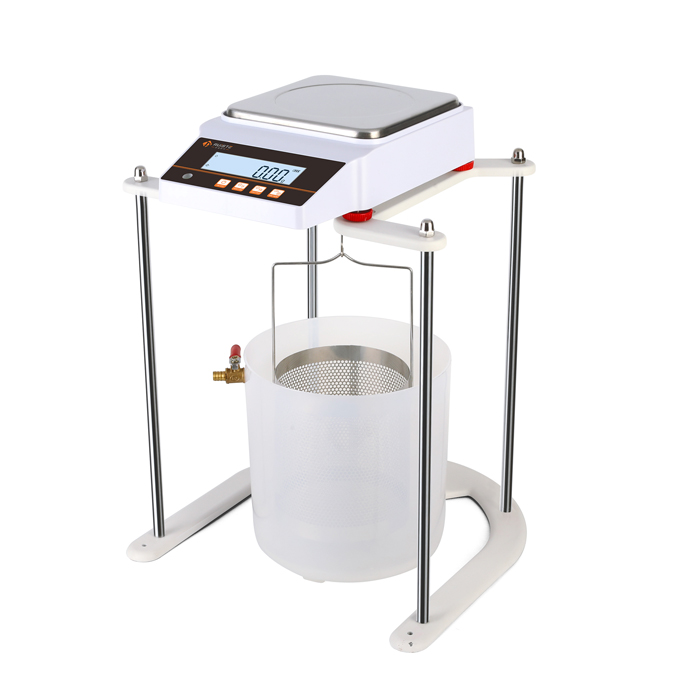
![Hydrostatic Balance JY SERIES]()
Hydrostatic Balance JY SERIES
The entire series of JY balances uses branded sensors to ensure high accuracy and stability of weighing results. This series of precision casting ABS Environmental protect…![Digital Viscometer Exporter]()
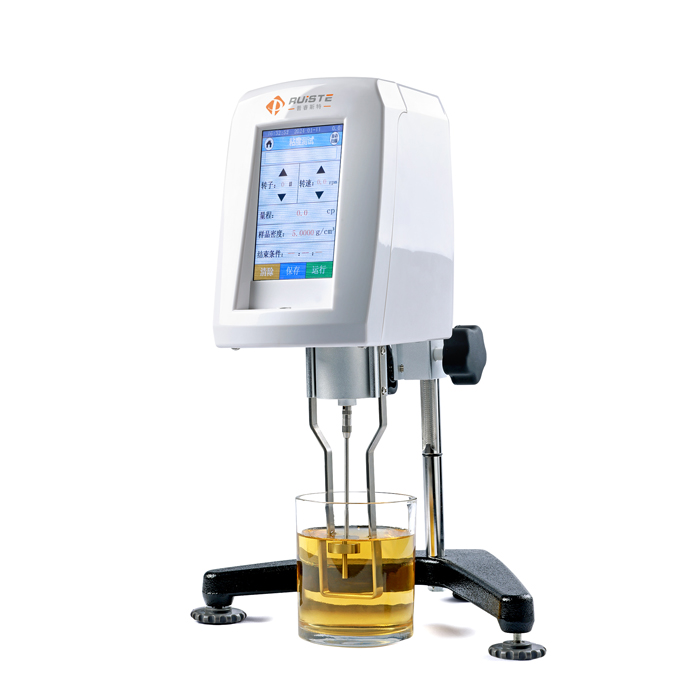
Digital Viscometer Exporter
Viscosity stands as one of the most fundamental physical properties of fluid materials, reflecting the internal friction and flow resistance of substances during movement.…![Digital Viscometer For Sale]()
Digital Viscometer For Sale
Viscosity serves as one of the most fundamental physical properties of fluid substances, reflecting the internal friction and flow resistance of liquids during movement. I…![Industrial Digital Viscometer]()
Industrial Digital Viscometer
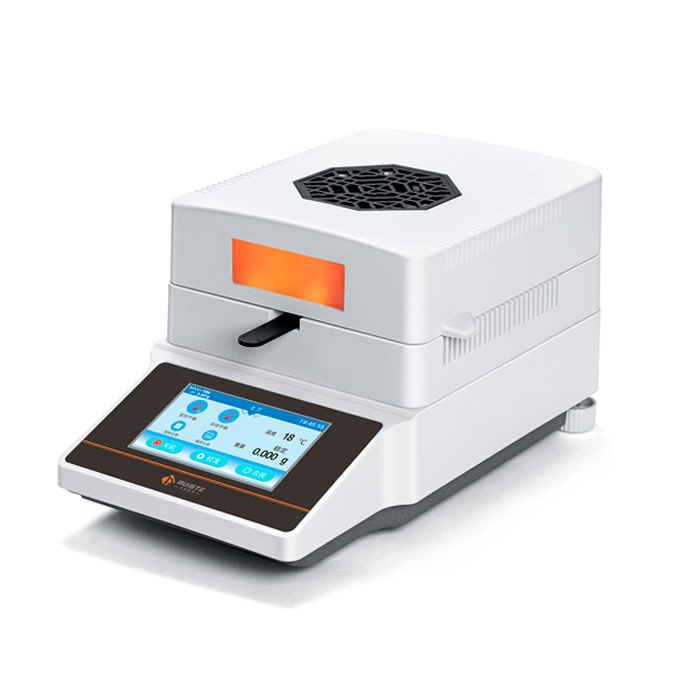
Viscosity stands as one of the most critical physical properties of fluid materials, reflecting the internal frictional resistance that occurs when a fluid undergoes flow …![Gravimetric Moisture Analyzer]()
Gravimetric Moisture Analyzer
Moisture content stands as one of the most critical physical parameters that define the quality, stability, and processing performance of diverse materials across industri…