Gravimetric Moisture Analyzer
Moisture content stands as one of the most critical physical parameters that define the quality, stability, and processing performance of diverse materials across industrial production, scientific research, and quality inspection fields. Even minor variations in moisture levels can alter material texture, chemical stability, storage durability, and processing compatibility, making precise moisture quantification an indispensable part of routine material analysis. The gravimetric moisture analyzer has emerged as a mainstream analytical instrument for such detection tasks, relying on mature thermogravimetric measurement logic to deliver reliable and repeatable moisture data without dependence on chemical reagents or complex auxiliary testing procedures. This instrument focuses on the fundamental physical change of moisture volatilization under controlled thermal conditions, realizing quantitative detection by capturing subtle weight variations of samples before and after drying, and has become a foundational tool for standardized moisture testing in multiple industries.
The core working logic of a gravimetric moisture analyzer originates from the loss-on-drying technique, a classic physical detection method recognized for its intuitive and reliable measurement logic. All substances contain free or bound moisture that can be completely volatilized within a specific temperature range, while the dry base components of most solid and semi-solid materials remain thermally stable under corresponding heating conditions. The instrument precisely records the initial mass of a prepared sample, then applies uniform and controllable thermal energy to evaporate all volatile moisture components in the sample. Throughout the entire drying process, a high-precision weighing module continuously monitors real-time sample weight changes. When the sample weight stabilizes and no longer decreases within a set time interval, it indicates that internal moisture has been fully volatilized. The total weight loss during this process is calculated as the total moisture content of the sample, and the instrument automatically converts this weight difference into a standardized moisture percentage value based on built-in computational formulas.
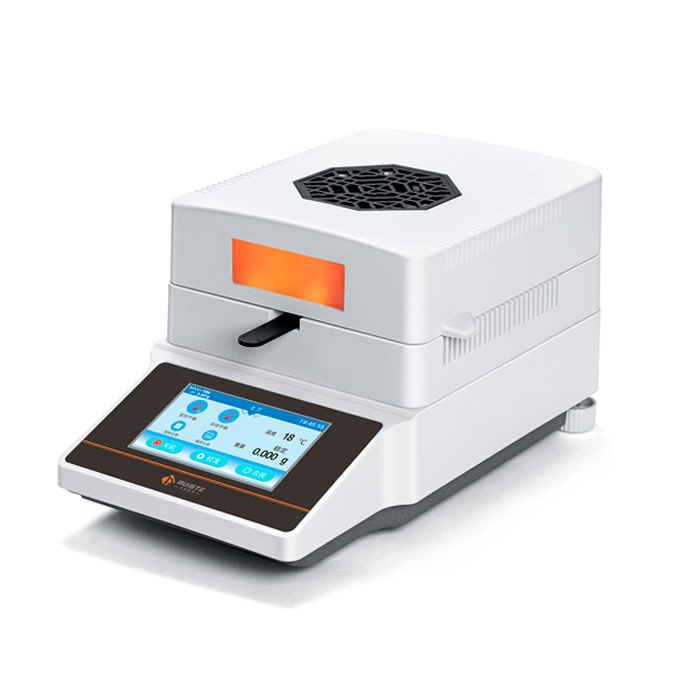
A complete gravimetric moisture analyzer consists of two core functional modules and multiple auxiliary control components, with each part coordinating closely to ensure detection accuracy and operational stability. The high-precision weighing unit serves as the core sensing component, capable of capturing micro weight changes of samples with high sensitivity. It maintains stable weighing performance in variable temperature environments, effectively avoiding data deviation caused by thermal airflow or subtle mechanical vibration during heating. The thermal drying system acts as the key execution unit for moisture removal, adopting efficient heating modes that deliver uniform and stable thermal radiation to the sample surface. This heating mode ensures consistent temperature distribution across the entire sample area, preventing local overheating that may cause sample decomposition, carbonization, or loss of dry base components, as well as uneven drying that leads to incomplete moisture volatilization. Auxiliary components include intelligent temperature control units, real-time data acquisition modules, and operation control systems, which work together to regulate heating temperature, drying duration, and data recording frequency throughout the test process.
The entire detection workflow of the gravimetric moisture analyzer follows standardized and systematic procedures, ensuring consistent test conditions and comparable results for different samples. Sample preparation constitutes the primary step affecting detection accuracy, requiring reasonable pretreatment according to sample physical properties. For solid block or granular materials, proper crushing, grinding, or spreading is necessary to reduce sample particle size and increase contact area with thermal radiation, facilitating rapid and uniform moisture volatilization. For viscous, powdery, or liquid samples, even spreading in dedicated sample trays avoids accumulation or uneven thickness, which could lead to incomplete internal drying. It is also essential to ensure clean and dry sample containers and testing platforms to prevent external moisture contamination that interferes with initial weighing data.
After sample pretreatment, the formal testing process begins with baseline calibration of the instrument. The system first performs tare weighing on the empty sample tray to eliminate the weight interference of the container itself, then prompts for sample placement and automatically records the initial sample mass. Users set targeted heating parameters based on sample material characteristics, including constant temperature drying temperature and automatic termination conditions. Different materials have distinct thermal tolerance and moisture binding states: materials with high thermal stability can adapt to relatively higher drying temperatures to accelerate moisture volatilization, while heat-sensitive materials require milder temperature settings to protect their inherent structural stability and avoid thermal degradation of dry components.
During the continuous drying stage, the instrument operates in an automatic monitoring state, with the internal system synchronously collecting temperature data and sample weight data at fixed intervals. As internal moisture gradually evaporates, the sample mass decreases steadily, and the system dynamically tracks weight changes in real time. The automatic termination mechanism is a key intelligent feature of the instrument, which judges the completion of drying based on real-time weight fluctuation data. When the sample weight change remains below a preset threshold for a continuous period, the system determines that moisture volatilization has reached a stable state, automatically stops heating, and terminates the test. This intelligent judgment mode effectively avoids manual timing errors, insufficient drying caused by premature termination, or ineffective energy consumption and sample deterioration caused by excessive drying.
Once the test is completed, the system immediately calculates and displays multiple core data indicators, including initial sample weight, final dry weight, total weight loss, and moisture content expressed in percentage or mass ratio. Most instruments support real-time data storage and trend curve recording, which can intuitively reflect the weight change rate and drying speed of the sample throughout the heating process. These recorded data not only serve as the final test result basis but also help users analyze the drying characteristics of specific materials, providing reference data for optimizing subsequent detection parameters and industrial production processes.
Compared with traditional moisture detection methods, the gravimetric moisture analyzer exhibits prominent comprehensive advantages in detection efficiency, operational simplicity, and result stability. Traditional oven drying methods require long-term constant-temperature baking followed by repeated cooling and weighing operations, involving cumbersome steps, long detection cycles, and high manual operation errors. In contrast, the integrated structural design of the gravimetric moisture analyzer integrates heating, weighing, and data calculation into one device, realizing one-button automatic detection after parameter setting, which greatly simplifies operational steps and shortens the entire detection cycle. Unlike chemical moisture detection methods that require matched reagents, complex titration operations, and strict environmental control, the physical drying principle of the gravimetric analyzer avoids chemical reaction interference and reagent consumption, reducing detection costs and operational risks while improving test safety and environmental friendliness.
In terms of detection stability and repeatability, the instrument’s standardized control system effectively eliminates human operational differences. Fixed temperature control accuracy, unified data recording frequency, and objective automatic termination criteria ensure that test results from different operators and different test batches maintain high consistency. The high-sensitivity weighing module and uniform thermal system also avoid systematic errors such as uneven heating, local incomplete drying, or excessive volatilization of dry components, laying a solid foundation for accurate and reliable detection data. Additionally, the instrument features strong adaptability to samples, covering solid, powder, paste, and partial liquid materials, and can flexibly adjust detection parameters to adapt to free moisture and bound moisture detection requirements of different materials.
The application scenarios of gravimetric moisture analyzers cover almost all industrial and scientific fields that require moisture control, with prominent practical value in quality control and process optimization. In the food and agricultural industry, moisture content directly affects the shelf life, taste texture, and storage safety of products. Grain, oil crops, dried fruits, spices, and various processed snack foods all require strict moisture detection to inhibit microbial growth, prevent product mildew and deterioration, and maintain stable product quality during long-term storage and circulation. Agricultural seed and feed testing also relies on this instrument to detect moisture indicators, providing data support for seed storage preservation and feed formula optimization.
In the chemical and new material industry, moisture control is critical to the production performance and application effect of materials. Polymer raw materials, resin products, plastic particles, and chemical powder materials will experience changes in physical properties and chemical stability due to excessive moisture, affecting subsequent processing molding and product service life. Gravimetric moisture analyzers are used for batch detection of raw material moisture and finished product sampling inspection, helping enterprises strictly control production indicators and ensure consistent material performance. In the construction material industry, materials such as cement, gypsum, and mineral aggregates have strict moisture standards, as excessive moisture will affect the bonding performance and structural stability of building materials, and accurate detection effectively guarantees construction quality.
In the pharmaceutical and biological industry, material moisture is closely related to the stability and efficacy of pharmaceutical products. Traditional Chinese medicine powders, tablet raw materials, granular preparations, and biological auxiliary materials all require precise moisture monitoring. Excessive moisture may cause drug deliquescence, mold growth, or component degradation, while insufficient moisture may affect the molding effect and dissolution performance of drugs. The high-precision detection capability of the gravimetric moisture analyzer meets the strict quality control requirements of the pharmaceutical industry, providing reliable data support for drug production and quality inspection. In environmental detection and laboratory routine analysis, the instrument is also used for moisture testing of soil samples, sediment samples, and various experimental raw materials, supporting environmental monitoring and scientific research experiments.
To maintain long-term stable detection performance and accurate test results, standardized daily operation and regular maintenance of the gravimetric moisture analyzer are essential. In daily use, attention should be paid to the operating environment, avoiding placement in environments with strong airflow, severe vibration, high humidity, or excessive dust, as external environmental interference may affect weighing accuracy and heating stability. Before each test, it is necessary to check the cleanliness of the heating cavity and sample tray to ensure no residual sample impurities from previous tests, which could cause cross-contamination and affect detection results. For heat-sensitive samples, temperature parameters must be strictly verified before testing to prevent thermal decomposition of samples at excessive temperatures, which would lead to falsely high moisture data.
Regular maintenance work includes regular calibration of the weighing system to ensure long-term weighing accuracy of the module, and inspection of the heating system to check for uniform thermal radiation and stable temperature control. After long-term operation, dust and residual substances in the heating cavity should be cleaned regularly to avoid affecting heat conduction efficiency. In addition, users need to select appropriate sample dosage according to sample characteristics: excessive sample dosage may lead to overlapping accumulation and incomplete internal drying, while insufficient dosage may amplify micro weighing errors and reduce result representativeness. Reasonable parameter setting and standardized sample selection collectively ensure the scientificity and accuracy of each test result.
With the continuous upgrading of industrial production standards and laboratory detection requirements, gravimetric moisture analyzer technology is also evolving toward higher intelligence, stronger stability, and wider adaptability. Modern instruments gradually optimize temperature control algorithms and weight sensing technologies, realizing more precise temperature regulation and more sensitive micro weight detection. Meanwhile, the intelligent data management function is continuously improved, supporting data classification storage, trend analysis, and remote viewing, which facilitates enterprise batch data management and laboratory standardized record keeping. As a classic and efficient moisture detection tool based on thermogravimetric principles, the gravimetric moisture analyzer will continue to play an irreplaceable role in industrial quality control, academic research, and material performance testing, providing basic and reliable technical support for the standardized production and performance optimization of various materials.
Gravimetric Moisture Analyzer
https://www.pruiste.com/moisture-analyzer.html
Post Date: May 23, 2026
https://www.supplier-manufacturer.com/moisture-analyzer/gravimetric-moisture-analyzer.html

![Electronic Balance YP SERIES]()
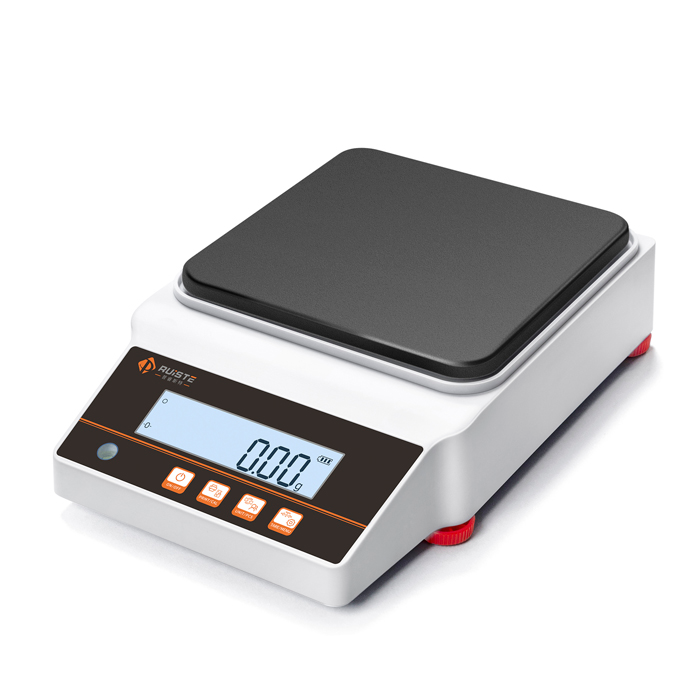
Electronic Balance YP SERIES
The YP series adopts high-definition keys, which is economical. The entire series of balances adopt Nuosheng sensors, brand sensors, and aluminum alloy structure to ensure…![Digital Viscometer Factory]()
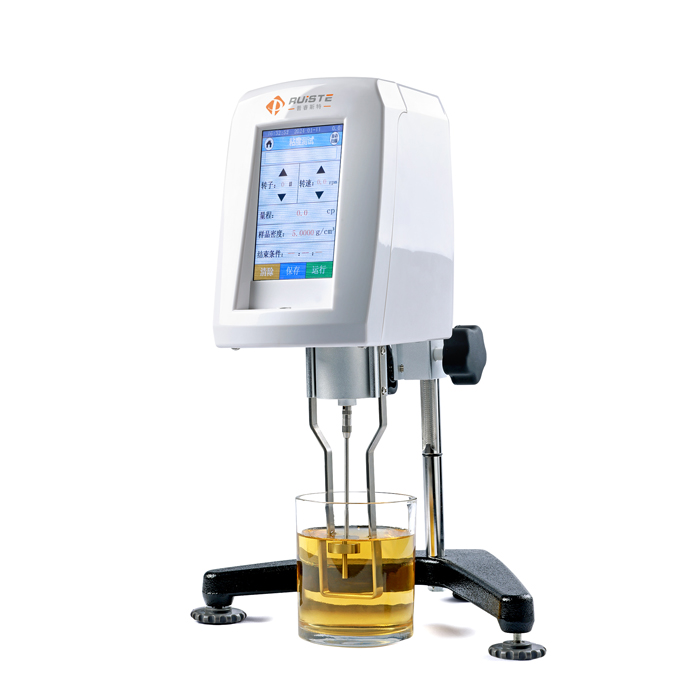
Digital Viscometer Factory
Viscosity stands as one of the most fundamental physical properties of fluid materials, reflecting the internal friction and flow resistance that occur when fluids undergo…![Compact Digital Viscometer]()
Compact Digital Viscometer
Viscosity stands as one of the most fundamental physical properties of fluid materials, reflecting the internal friction and flow resistance that occur when a substance un…![Benchtop Digital Viscometer]()
Benchtop Digital Viscometer
Viscosity stands as one of the most fundamental physical properties of fluid substances, reflecting the internal friction and flow resistance generated during the movement…![Moisture Analyzer Exporter]()
Moisture Analyzer Exporter
Moisture content stands as one of the most critical physical indicators that determine the quality, stability, and usability of raw materials and finished products across …