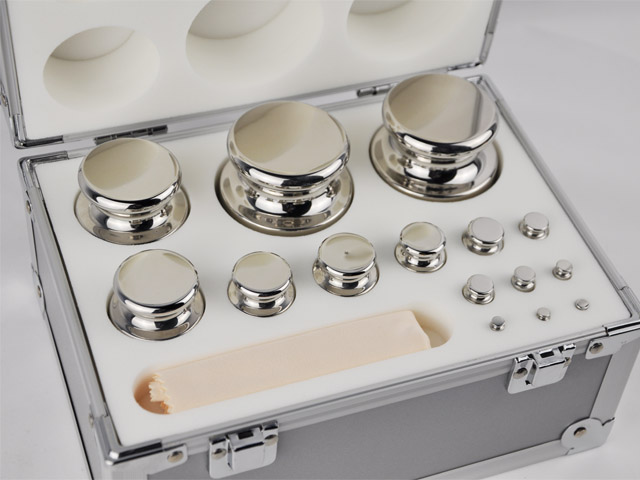
Analytical Balance Calibration Weight For Lab Use
In modern laboratory operations, precise mass measurement serves as the fundamental foundation for countless experimental researches, chemical analyses, pharmaceutical tests, and material science studies. Even minor deviations in mass detection results can lead to inaccurate experimental data, flawed research conclusions, and inconsistent test outcomes in subsequent batch tests. Analytical balances, as high-precision measuring instruments designed for trace and accurate mass determination, rely entirely on supporting calibration weights to maintain stable and reliable measurement accuracy during long-term use. Analytical balance calibration weights for laboratory use are specialized mass standard artifacts tailored to match the precision parameters of analytical balances, undertaking the core task of correcting instrument errors, verifying measurement status, and unifying laboratory mass measurement standards. Their rational selection, standard application, and scientific maintenance are indispensable links to ensure the authenticity and repeatability of all quantitative experimental data in laboratory scenarios.
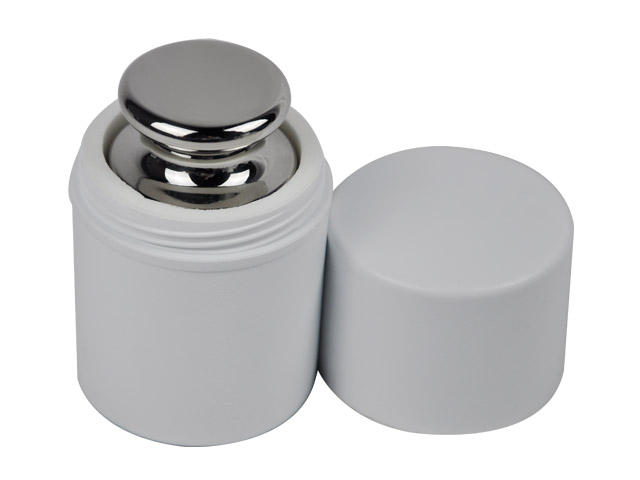
The essential value of laboratory analytical balance calibration weights lies in solving the systematic and drift errors of precision weighing equipment. After long-term operation, frequent vibration, ambient temperature and humidity changes, and slight mechanical wear of internal components, analytical balances will gradually produce subtle measurement deviations that cannot be identified by daily visual observation. These deviations do not affect rough mass measurement but will cause obvious data errors in high-precision testing scenarios such as micro-sample weighing, reagent ratio preparation, and product purity detection. Calibration weights, with stable and fixed mass attributes, provide a unified reference standard for judging the accuracy of balance readings. By placing standard weights on the balance weighing pan and comparing the displayed value with the nominal mass of the weight, laboratory staff can accurately judge the magnitude of instrument deviation, complete parameter correction, and restore the balance to a normal working state that meets experimental precision requirements.
The material composition of analytical balance calibration weights directly determines their mass stability, environmental adaptability, and service cycle in laboratory environments. Most mainstream laboratory calibration weights are made of high-density, low-thermal-expansion metal alloys with excellent physical and chemical stability. Such materials feature compact internal structure, uniform density, and weak sensitivity to external environmental changes, which can effectively avoid mass fluctuation caused by temperature variation, air humidity erosion, and minor mechanical friction. In daily laboratory environments, factors such as air oxidation, trace chemical gas volatilization, and dust adhesion may affect the surface of metal artifacts. The materials used for qualified calibration weights undergo special processing to enhance surface corrosion resistance and oxidation resistance, ensuring that the actual mass of the weight remains consistent with the nominal value for a long time and avoiding gradual mass change that affects calibration accuracy. Meanwhile, the material density of these weights is matched with the working characteristics of analytical balances, which can reduce the influence of air buoyancy on weighing results during calibration operations and further improve the accuracy of calibration comparison.
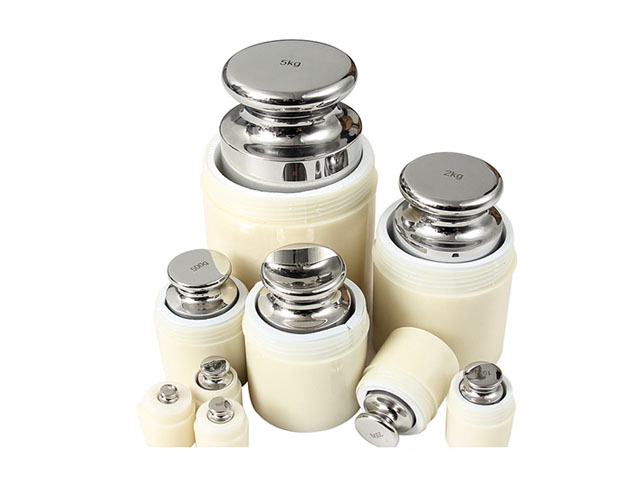
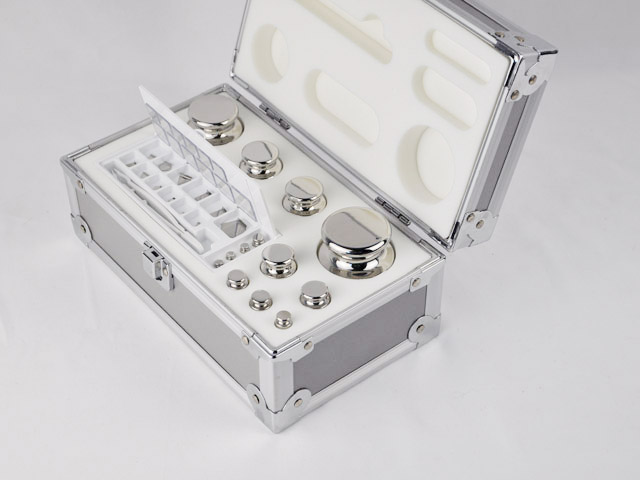
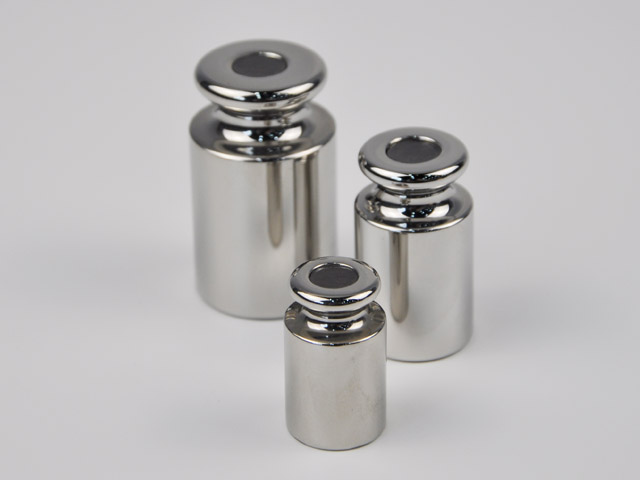
The structural design of laboratory analytical balance calibration weights follows the core principle of convenient operation and stable measurement. Conventional calibration weights adopt a regular geometric structure with smooth and flat surfaces, no protruding edges and corners, and no complex grooves. This structural design effectively reduces the contact area with air, minimizes dust accumulation and residual contaminants, and facilitates daily cleaning and maintenance. The overall size of the weight is precisely controlled according to its nominal mass, realizing a reasonable match between volume and mass, which prevents excessive volume from causing extra air interference in high-precision weighing. In addition, the surface of the weight is polished finely to remove surface burrs and uneven structures, ensuring stable placement on the balance weighing pan without tilt or shaking during calibration, thus avoiding unstable reading data caused by poor contact. Some calibration weight sets are designed with matched tweezers and storage boxes to avoid direct manual contact during use, which is an important auxiliary design to protect the precision and stability of weights.
Standardized use specifications are key to giving full play to the calibration effect of analytical balance calibration weights. Before each calibration operation, it is necessary to place the calibration weights and the analytical balance in the same laboratory environment for a period of temperature adaptation. The temperature difference between the weight, instrument and ambient air will cause subtle thermal expansion and contraction, leading to temporary mass deviation and affecting calibration accuracy. After temperature balance is achieved, the surface of the weight and the balance weighing pan need to be inspected and cleaned gently to remove surface dust, fine particles and residual impurities. Any tiny foreign matter attached to the weight surface will change its actual mass, resulting in inaccurate calibration results. During the calibration process, staff should use special tweezers to take and place weights, and direct contact with fingers is strictly prohibited. Grease, sweat and tiny dirt on human fingers will adhere to the weight surface, causing slow oxidation and mass change of the weight in long-term accumulation, which will damage its standard mass attribute.
The calibration operation process needs to follow gradual and standardized steps to ensure comprehensive error correction of the analytical balance. Generally, the calibration work starts from zero point verification. After the balance is preheated and stabilized, no-load zero calibration is carried out first to eliminate zero drift errors caused by instrument standby and environmental changes. Then, calibration weights of different nominal masses are placed on the weighing pan in accordance with the range from small to large mass, covering the conventional weighing range of the analytical balance. This step-by-step calibration method can effectively detect linear errors of the balance in different weighing intervals, avoid missing local deviation points, and ensure that the instrument maintains high accuracy in the entire working range. After placing each weight, wait for the balance reading to stabilize and record the displayed data, then compare it with the nominal mass of the weight to calculate the deviation value. For slight deviations, fine adjustment of the balance parameters can be completed according to the instrument operation guidelines; for excessive deviations that cannot be corrected by conventional adjustment, the instrument should be suspended from use and inspected for internal component faults.
Scientific daily maintenance and storage can effectively extend the service life of analytical balance calibration weights and maintain long-term measurement stability. After each use, the weights need to be gently cleaned with a professional soft cleaning tool to remove surface floating dust and subtle contaminants, and then placed in a dry, closed and dust-proof special storage box. The storage environment should maintain stable temperature and moderate humidity, avoiding long-term exposure to high temperature, low temperature, high humidity and dry environments. Extreme environments will accelerate material aging and surface oxidation of weights, leading to mass drift. Meanwhile, calibration weights need to be stored separately from conventional experimental tools and chemical reagents to prevent contact with corrosive gases, liquids and acidic substances, so as to avoid surface corrosion and structural damage. In daily handling and storage, violent collision, extrusion and friction should be avoided. Although the weight material has high hardness, severe mechanical impact will cause surface deformation and internal structural changes, resulting in irreversible mass deviation.
Regular periodic inspection and re-verification are essential links to ensure the continuous effectiveness of calibration weights. With the increase of service time, even if the weights are used and stored in full accordance with specifications, subtle mass changes may still occur due to long-term environmental influence and micro-friction. Laboratories need to formulate a fixed inspection cycle for calibration weights, conduct regular mass comparison and stability detection, and record the detection data completely. By tracking the mass change trend of weights for a long time, potential stability problems can be found in advance. For individual weights with obvious mass deviation and unstable performance, they should be eliminated in a timely manner to prevent unqualified standard artifacts from being used for instrument calibration and causing large-scale errors in experimental data. The periodic inspection work also includes checking the surface integrity of weights, observing whether there are scratches, corrosion, deformation and other defects, and eliminating hidden dangers affecting calibration accuracy from the source.
Analytical balance calibration weights have wide and indispensable application value in various laboratory fields. In chemical analysis laboratories, accurate reagent preparation and solution concentration calculation rely on calibrated analytical balances, and calibration weights ensure the accuracy of raw material weighing, thereby guaranteeing the reproducibility and accuracy of chemical reaction experiments and component analysis results. In pharmaceutical research and testing laboratories, the weighing precision of trace drugs and active ingredients is directly related to the validity and safety of drug test data, and regular calibration of balances through standard weights provides reliable data support for drug formula research and quality inspection. In environmental monitoring laboratories, the detection of trace pollutants in water, soil and air requires high-precision mass measurement, and calibration weights eliminate instrument measurement errors, ensuring the authenticity of environmental monitoring data and providing a credible basis for environmental analysis and evaluation.
In material science research, the precise mass change of samples before and after experiments is an important index to judge material performance, such as corrosion resistance, wear resistance and thermal stability of materials. The accurate data obtained by calibrated analytical balances can objectively reflect the performance changes of materials under different experimental conditions. In food testing laboratories, the detection of nutrient content, additive content and harmful residues in food depends on precise weighing results, and calibration weights maintain the stability of balance measurement accuracy, avoiding data distortion caused by instrument deviation and ensuring the compliance and safety of food testing results. In university teaching and scientific research laboratories, a large number of basic experiments and innovative research projects require high-precision mass measurement, and standardized calibration of balances helps students and researchers obtain true and reliable experimental data, laying a solid foundation for scientific research exploration and experimental teaching.
It is necessary to match calibration weights with the precision level and measuring range of analytical balances in actual laboratory applications. Different analytical balances have different precision grades and effective weighing ranges, and only matching standard weights can complete accurate calibration work. Ultra-high precision analytical balances used for micro-sample testing need to be matched with high-stability small-mass calibration weights, while conventional analytical balances for routine experimental weighing can adapt to standard mass calibration weight sets. Blindly using unmatched weights will not only fail to achieve accurate calibration results, but may also cause unnecessary load loss to the balance instrument and affect the service life of the equipment. At the same time, laboratories need to select a reasonable number of calibration weights according to the frequency of instrument use and experimental demand. Instruments with high daily use frequency and frequent precision testing need more frequent calibration, and complete weight sets can meet the calibration needs of the full range of the instrument.
In the whole process of laboratory precision measurement, analytical balance calibration weights act as the bridge connecting instruments and standard values, and their importance is self-evident. All high-precision experimental data and testing results are based on accurate mass measurement, and accurate measurement is inseparable from the standard correction of calibration weights. In the context of increasingly refined laboratory experimental standards and increasingly strict data quality requirements, the standardized use, scientific maintenance and periodic verification of calibration weights have become important contents of laboratory daily management. Only by establishing a complete set of calibration weight management systems, standardizing operation processes, and paying attention to daily maintenance and regular inspection, can we ensure that analytical balances always maintain high-precision working performance, provide stable, true and reliable mass measurement data for various laboratory experiments and testing work, and effectively support the smooth development of scientific research, testing and teaching work in various fields.
Analytical Balance Calibration Weight For Lab Use
https://www.veidtweighing.com/laboratory-weights.html
Post Date: Jun 7, 2026

![Heavy Duty Stainless Steel Large Industrial Test Weight]()
Heavy Duty Stainless Steel Large Industrial Test Weight
Heavy duty stainless steel large industrial test weights are essential precision components tailored for heavy-load industrial calibration and load testing scenarios, serv…![Standard Weight For Bench Scales]()
Standard Weight For Bench Scales
Bench scales serve as fundamental weighing instruments across industrial production, laboratory testing, commercial transactions, and quality inspection fields, delivering…![Stackable Cast Iron Weight]()
Stackable Cast Iron Weight
Stackable cast iron weights stand as a foundational and versatile tool across industrial, commercial, and residential functional scenarios, earning long-standing popularit…![F1 Class Calibration Weight]()
F1 Class Calibration Weight
Precision mass measurement forms the foundational pillar of modern scientific research, industrial manufacturing, quality control, and material testing, where even minor d…![25kg Oiml Standard Calibration Weight Crane Scale Test]()
25kg Oiml Standard Calibration Weight Crane Scale Test
Industrial weighing operations rely heavily on the stable and consistent performance of crane scales, which undertake weight measurement tasks for suspended loads in manuf…