Purposes of Laboratory Weight
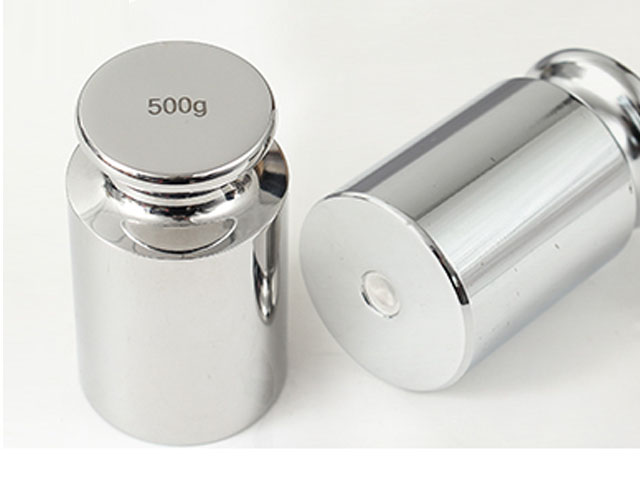
Laboratory weights stand as fundamental and indispensable tools in all forms of scientific research, experimental analysis, industrial testing, and academic laboratory operations. Serving as standard mass references, these precision objects are designed to deliver consistent, reliable, and repeatable mass measurement benchmarks that underpin the accuracy of nearly all quantitative weighing work in laboratory environments. Unlike ordinary mass objects used for daily rough weighing, laboratory weights are manufactured with strict dimensional uniformity, stable material properties, and consistent mass performance, enabling them to fulfill a wide range of professional functions that support the rigor and credibility of experimental and operational data across diverse scientific and industrial fields. Their core value lies in establishing a unified mass reference standard, eliminating systematic errors in weighing equipment operation, and ensuring that all mass-related experimental results and production data maintain consistency, comparability, and traceability in professional scenarios.

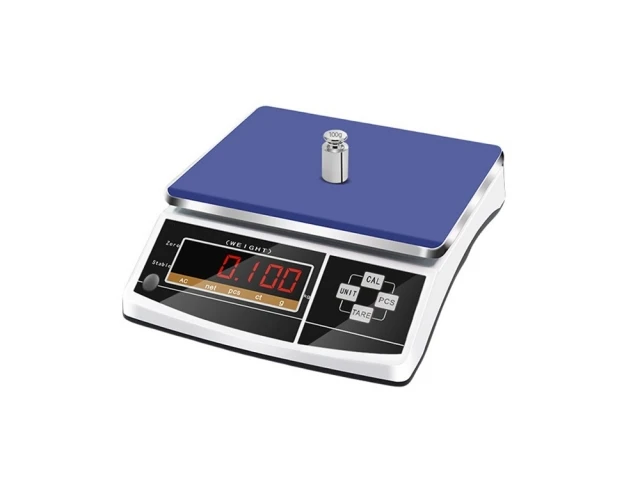
The most primary purpose of laboratory weights is the routine calibration and verification of weighing instruments used in laboratories. All electronic balances, mechanical scales, and precision weighing devices gradually generate subtle deviations during long-term use, which stem from environmental changes, mechanical wear, electronic component aging, and frequent operational vibration. These minor deviations can accumulate over time and eventually lead to inaccurate weighing results, which will directly affect the validity of subsequent experimental analysis and data recording. Laboratory weights act as fixed mass references to detect and correct such deviations. By placing standard laboratory weights on weighing platforms, operators can observe the display data of weighing equipment, compare the measured value with the known standard mass of the weights, and adjust the instrument parameters to eliminate existing errors. This regular calibration work ensures that weighing instruments maintain stable and accurate working performance at all times, providing a basic guarantee for all subsequent quantitative experimental work. This function applies to all types of laboratory scenarios, including chemical component analysis, physical property testing, biological sample preparation, and material performance detection, where accurate mass data is the prerequisite for valid experimental conclusions.
In scientific experimental research, laboratory weights play a vital role in ensuring the precision and repeatability of experimental data. Most laboratory experiments require precise configuration of sample materials, reagents, and test substances, and tiny differences in mass dosage can lead to completely different experimental results and data trends. In chemical experiments, for example, the preparation of standard solutions, the proportioning of reaction reagents, and the sampling of solid raw materials all rely on accurate mass measurement supported by calibrated weighing equipment and verified by laboratory weights. Stable mass reference ensures that the dosage of experimental materials is consistent in each group of parallel experiments, effectively reducing experimental errors caused by inaccurate weighing. In physical experiments involving density measurement, gravity testing, and material mass parameter analysis, laboratory weights provide unified mass standards for calculating physical constants and verifying physical formulas, making experimental data more authentic and persuasive. In biological and environmental laboratories, the precise weighing of microbial culture samples, soil samples, water quality precipitates, and plant tissue samples also depends on the calibration effect of laboratory weights, ensuring that sample processing standards remain unified in different experimental batches and different test cycles.
Laboratory weights are also essential tools for maintaining experimental consistency and data comparability in multi-batch and long-term research projects. Many scientific research experiments and industrial testing work require repeated testing over weeks, months, or even longer periods, and some collaborative research projects involve multiple laboratories and multiple testing personnel to complete parallel experiments. Without unified and stable mass reference standards, subtle differences in weighing equipment performance and operational habits will lead to inconsistent data from different batches and different testing environments, making it impossible to summarize experimental rules and verify research conclusions. Laboratory weights provide a unified mass benchmark for all testing work, enabling all experimental data to be based on the same standard system. Whether the same experiment is repeated by different operators in the same laboratory or carried out in different laboratory environments, the calibration of standard weights can eliminate systematic differences between equipment, ensuring that experimental data has horizontal comparability and vertical continuity. This capability is particularly critical for long-term scientific research projects, data accumulation analysis, and experimental result verification, helping researchers accurately screen accidental errors and summarize objective experimental laws.
In industrial quality control and product testing laboratories, laboratory weights undertake the important task of standardizing product quality detection standards. Many industrial production processes require strict control of raw material dosage, product component content, and finished product quality parameters, and mass measurement accuracy is directly related to product qualification rate and production stability. Production laboratories use laboratory weights to regularly calibrate online weighing equipment and offline testing balances, ensuring that the weighing data of raw material batching, semi-finished product testing, and finished product sampling is accurate and effective. In the food processing industry, the detection of nutrient content, additive dosage, and product net content all require precise mass measurement supported by standard weight calibration. In the pharmaceutical industry, the preparation of pharmaceutical raw materials and the testing of drug component content rely on accurate weighing standards to ensure product safety and efficacy. In new material and chemical manufacturing industries, the precise proportioning of raw materials directly affects material performance and product stability, and laboratory weights provide reliable standard support for all these links, helping enterprises control production quality and maintain stable product performance.
Teaching and skill training in educational laboratories also rely heavily on the application of laboratory weights to cultivate standardized experimental operation abilities. In middle school and university physics, chemistry, and comprehensive science laboratories, students need to learn basic weighing operation skills and understand the basic principles of mass measurement and error control. The use of laboratory weights enables students to intuitively recognize the importance of standard references in measurement work, master the basic methods of instrument calibration and error detection, and develop rigorous experimental thinking and standardized operation habits. In the process of experimental teaching, teachers guide students to use standard weights to calibrate balances, observe weighing errors, and analyze the causes of data deviations, which helps students understand the source of experimental errors and master basic data correction methods. This practical training not only improves students' operational proficiency in laboratory equipment but also lays a solid foundation for their future scientific research and professional technical work, cultivating the rigorous and realistic scientific literacy required for experimental research.
Another important purpose of laboratory weights is error analysis and experimental quality assessment. In daily laboratory work, abnormal experimental data often occurs due to equipment errors, operational irregularities, or environmental interference. When data deviation is found in experimental results, technicians need to troubleshoot error sources step by step, and weighing equipment error is one of the most common influencing factors. Laboratory weights can be used for targeted testing of weighing equipment performance. By testing weighing accuracy, linearity, and repeatability with standard weights of different mass specifications, technicians can accurately judge whether the abnormal data is caused by equipment deviation, human operation error, or experimental condition changes. This error diagnosis function helps laboratories quickly locate problems, correct faulty equipment in a timely manner, and avoid continuous generation of invalid experimental data. At the same time, regular weight calibration and error recording also constitute an important part of laboratory quality management, helping laboratories form standardized experimental quality control processes and improve the overall accuracy and reliability of laboratory testing work.
Laboratory weights also support the research and verification of new testing methods and new experimental technologies. With the continuous development of scientific and technological research, new experimental detection technologies, new material testing methods, and new analytical instruments are constantly emerging. The performance verification and method optimization of these new technologies and new equipment require stable and reliable standard mass references. Researchers use laboratory weights with stable mass performance to test the accuracy, sensitivity, and stability of new weighing and testing equipment, verify the feasibility and scientificity of new experimental operation methods, and optimize experimental parameter settings. In the research of high-precision micro-weighing technology and ultra-large mass testing methods, laboratory weights of different specifications provide gradient standard references for performance testing, helping researchers improve the precision and applicability of new testing technologies and promote the continuous upgrading of laboratory testing capabilities.
Environmental adaptability testing of laboratory equipment is also inseparable from the auxiliary function of laboratory weights. Laboratory temperature, humidity, air flow, and ground vibration will all affect the working state of precision weighing instruments, leading to fluctuations in weighing accuracy. In the process of laboratory environmental optimization and equipment performance debugging, technicians use laboratory weights to conduct repeated weighing tests under different environmental conditions, record the change rules of weighing data, and determine the optimal working environment parameters for weighing equipment. Through long-term comparative testing, laboratories can summarize the influence degree of environmental factors on weighing accuracy, formulate targeted environmental control standards and equipment use specifications, and reduce the interference of environmental changes on experimental weighing work. This auxiliary testing function helps laboratories build a more stable and standardized experimental environment and further improve the overall level of experimental data quality control.
In summary, laboratory weights are not merely simple mass measuring tools, but core standard components that support the entire laboratory quantitative measurement system. They run through all links of laboratory daily operation, scientific research, industrial testing, teaching training, and quality control, providing stable, unified, and accurate mass reference standards for all mass-related experimental and testing work. From daily instrument calibration and routine error correction to scientific research data guarantee, industrial quality control, and professional talent training, laboratory weights play an irreplaceable role in maintaining experimental accuracy, ensuring data consistency, standardizing testing processes, and promoting technological research and development. For any professional laboratory that takes quantitative measurement and data analysis as the core work, standardized and reasonable application of laboratory weights is the basic premise to ensure the authenticity, reliability, and scientificity of all experimental results, and it is also an important foundation for the steady development of scientific research and industrial testing undertakings.
Purposes of Laboratory Weight
https://www.veidtweighing.com/laboratory-weights.html
Post Date: Jun 7, 2026
https://www.supplier-manufacturer.com/laboratory-weight/purposes-of-laboratory-weight.html

![500g Standard Weight]()
500g Standard Weight
In every corner of human daily life and professional production, the concept of weight measurement exists as an invisible and fundamental foundation, shaping the way peopl…![Wheelchair Scales]()
Wheelchair Scales
Weight measurement serves as one of the most fundamental and routine health assessment methods in daily care and clinical medical work, offering intuitive data support for…![1kg Standard Weight]()
1kg Standard Weight
In the intricate and interconnected world of modern measurement science, industrial production, daily commercial transactions, and scientific research exploration, the con…![Weighing Scales]()
Weighing Scales
A weighing scale stands as one of the most practical and widely used measuring tools in human daily life and industrial activities, serving as a reliable medium for people…![Purposes of Cast Iron Weight]()
Purposes of Cast Iron Weight
Cast iron weights stand as one of the most fundamental and widely utilized weighted components across industrial, commercial, residential, and recreational sectors worldwi…