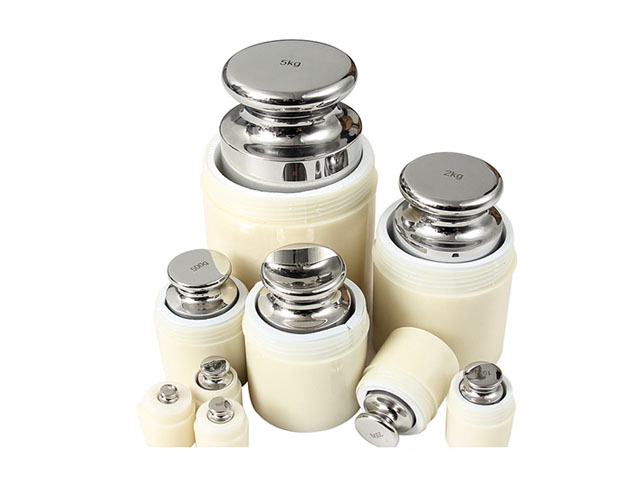
100g Calibration Weight For Pocket Scale Calibration
Pocket scales have become indispensable tools in countless daily and professional scenarios, favored for their compact size, portability, and ability to deliver fine weight readings for small objects. From measuring delicate jewelry pieces and crafting materials to portioning fine ingredients for precise cooking and testing small laboratory samples, these lightweight weighing devices support accurate quantification in many meticulous tasks. However, like all precision measuring instruments, pocket scales are susceptible to subtle deviations in readings over time, triggered by various external and internal factors. Minor shifts in ambient temperature, repeated mechanical pressure from daily use, slight vibrations during transportation, or even minor surface unevenness during placement can gradually compromise the consistency of their measurement results. This is where regular calibration with a standard 100g calibration weight emerges as a fundamental practice to sustain the weighing accuracy and operational reliability of pocket scales.
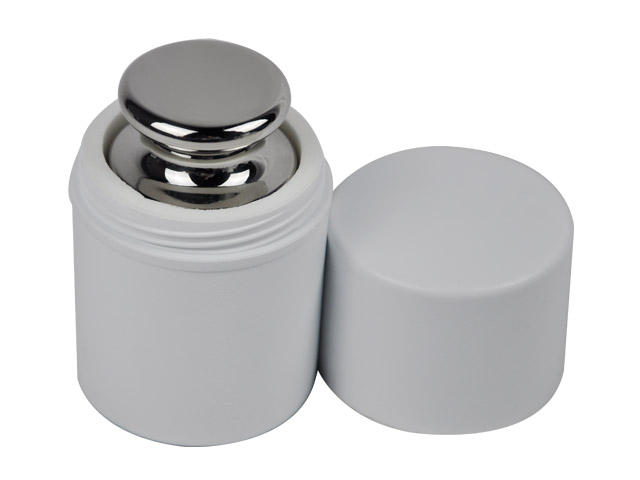
A 100g calibration weight serves as a standardized reference tool designed specifically for fine-tuning portable precision scales. Its core value lies in providing a fixed, stable, and consistent mass reference point that allows pocket scales to recalibrate their internal sensing systems and eliminate accumulated measurement errors. Unlike makeshift weighing references that carry uncertain mass deviations, a dedicated 100g calibration weight is manufactured with strict attention to mass uniformity and surface stability, ensuring that its actual mass remains steady under conventional usage environments. This stability makes it an ideal matching reference for most common pocket scale models, which typically set 100g as a core calibration point for middle-range weight detection, covering the most frequently used weighing interval for daily fine measurement tasks.
To understand why regular calibration with a 100g weight is essential, it is necessary to recognize the working mechanism of pocket scales. Most portable digital pocket scales rely on strain gauge sensors to convert pressure changes from placed objects into measurable digital signals. These highly sensitive sensors can capture tiny pressure variations, which enables the scales to deliver precise readings, yet also makes them prone to gradual drift after long-term operation. Frequent zero-point offset, inconsistent readings for the same object measured at different times, and minor discrepancies between repeated measurements are all typical signs of sensor drift. Without timely calibration, these small errors will continue to accumulate, gradually affecting the credibility of weighing data and even leading to inaccurate results in tasks that require strict precision.
Many users tend to overlook the importance of regular scale calibration, mistakenly believing that pocket scales can maintain stable accuracy permanently after initial use. In reality, daily use brings numerous subtle impacts on scale performance. Carrying pocket scales in bags exposes them to continuous minor jolts and friction; placing them on different table surfaces with varying flatness during use alters the stress distribution on the weighing platform; seasonal temperature and humidity changes also affect the sensitivity of internal electronic components. All these subtle influences will slowly disrupt the calibrated balance of the scale. Using a 100g calibration weight for periodic calibration can effectively reset the scale’s internal parameters, correct sensor drift, and restore the instrument to its optimal working state.
The applicability of a 100g calibration weight aligns perfectly with the functional positioning of mainstream pocket scales. Most portable pocket scales have a maximum weighing capacity ranging from 200g to 500g, with a precision resolution reaching 0.01g or 0.05g. The 100g mass point sits in the middle of the common weighing range of these scales, representing the most stable and accurate detection interval for precision sensors. Calibrating at this mid-range weight point can effectively correct full-range measurement deviations, achieving a more comprehensive calibration effect compared with calibrating only at low-weight zero points or near-maximum load points. This is why the 100g specification has become the most universal and practical calibration standard for daily pocket scale maintenance.
Proper use of a 100g calibration weight requires standardized operating steps to ensure valid calibration results, as improper operation can lead to ineffective calibration or even new measurement errors. Before starting the calibration process, preparing a suitable working environment is the primary step. It is essential to select a flat, horizontal, and stable hard surface for operation, avoiding soft surfaces such as cloth, foam, or uneven desktop areas. Soft surfaces can absorb pressure and cause subtle tilting of the weighing platform, while unlevel placement will directly affect the sensor’s pressure induction, resulting in inaccurate calibration data. Meanwhile, the working environment should maintain stable temperature and humidity, avoiding direct sunlight, strong wind, or places with severe temperature fluctuations, as extreme environmental conditions can interfere with the scale’s electronic response.
Preheating the pocket scale is another crucial preparatory step that many users ignore. After turning on the scale, it should be left to stand for one to three minutes to allow the internal electronic components and sensors to fully warm up and enter a stable working state. Newly started scales often have unstable circuit signals, and immediate calibration at this time cannot eliminate systematic errors. After preheating, check whether the scale’s zero point is accurate. If the display does not show zero when no object is placed on the platform, press the tare button to complete manual zero clearing to ensure the baseline of calibration is correct.
When the scale is ready, enter the dedicated calibration mode according to the basic operation guidelines of the pocket scale. Most portable scales enter calibration mode by long-pressing the tare or unit button, and the screen will display flashing calibration prompts or fixed numerical values to indicate readiness. Once the calibration interface is activated, gently place the 100g calibration weight in the exact center of the weighing platform. Central placement is vital because off-center placement causes uneven stress on the platform, leading to biased sensor feedback data and failed calibration. It is important to handle the weight gently without tossing or sliding it, as violent placement may generate instantaneous pressure impact and damage the delicate internal sensors of the scale.
After placing the weight steadily, wait for several seconds for the scale’s internal system to fully capture and stabilize the weight signal. The scale will automatically compare the detected pressure signal with the standard 100g mass parameter and complete the correction of internal offset values. When the screen displays a prompt indicating successful completion or a stable reading consistent with the standard mass, the calibration process is finished. After calibration, remove the weight and let the scale return to standby mode, then conduct multiple repeated weighing tests with the same 100g weight to verify reading consistency. Stable and consistent repeated readings confirm that the calibration is effective and the scale has regained accurate measurement performance.
Beyond mastering correct calibration steps, proper daily maintenance of the 100g calibration weight itself is key to ensuring long-term accurate calibration effects. The weight’s surface mass uniformity is the foundation of reliable reference value, so avoiding surface wear, scratches, and contamination is essential. Long-term friction, surface oxidation, or adhesion of dust, oil stains, and other impurities will alter the actual mass of the weight, leading to reference deviations and invalid scale calibration. Daily maintenance should include regular wiping of the weight surface with a clean, soft dry cloth to remove dust and stains, avoiding contact with corrosive liquids or chemical substances.
Storage conditions also affect the service life and mass stability of the calibration weight. It should be stored in a dry, clean, and dust-proof enclosed space, avoiding long-term exposure to humid air which may cause surface oxidation and rust. Additionally, the weight should be prevented from falling, colliding, or being squeezed by heavy objects, as impact and extrusion can cause subtle structural deformation and mass changes that are difficult to observe with the naked eye. Maintaining the intact surface and stable mass of the calibration weight ensures that it can provide consistent and reliable reference data for each calibration operation.
Understanding the scenarios that require timely calibration helps users develop a scientific maintenance routine for pocket scales. Newly purchased pocket scales need calibration before their first official use, as errors may occur during factory transportation and long-term storage. For scales used frequently in daily life, regular monthly calibration is suitable to maintain stable accuracy. Calibration should also be conducted promptly after any accidental dropping, violent vibration, or movement of the scale to a new usage environment with obvious temperature and humidity differences. Moreover, if users notice inconsistent repeated weighing results, obvious deviations in measured data, or slow response of the scale screen, immediate calibration with a 100g weight is necessary to troubleshoot and correct errors.
The practical value of 100g calibration weight calibration covers a wide range of user groups and application scenarios. For handmade craft enthusiasts engaged in jewelry making, metal processing, and material proportioning, accurate weighing ensures consistent material ratios and standardized finished product quality, avoiding quality fluctuations caused by inaccurate material measurement. For home users who pursue refined life management, precise measurement of baking ingredients, tea leaves, and nutritional supplements helps standardize daily diet production and maintain a healthy lifestyle.
In small-scale experimental testing, sample preparation, and fine chemical proportioning scenarios, stable and accurate pocket scale data provides reliable basic support for daily experimental records and data accumulation. Even in daily commodity inspection and small item weighing sorting work, calibrated pocket scales can deliver consistent and credible data, avoiding disputes and errors caused by inaccurate weighing. It is precisely in these refined and trivial daily and lightweight professional scenarios that the calibration effect of 100g standard weights is fully reflected, continuously stabilizing the use value of pocket scales.
It is also important to distinguish professional calibration weights from common alternative weighing objects. Many users try to use daily items with approximate fixed weight for scale calibration, but such methods have obvious limitations. Daily items such as coins and small accessories are affected by wear, dirt adhesion, and production errors, with unstable actual mass that cannot provide accurate reference standards. Only dedicated calibration weights are produced with standardized mass control, featuring stable performance and small mass deviation, which can meet the precision calibration requirements of pocket scales. The 100g specification, in particular, balances calibration accuracy and applicability, making it more suitable for daily precision maintenance of pocket scales than other weight specifications.
In summary, the 100g calibration weight is an essential supporting tool for maintaining the long-term accurate operation of pocket scales. Its stable standard mass provides a reliable correction benchmark for the sensor drift and systematic errors of portable precision scales. Standardized calibration operations and daily maintenance habits can effectively extend the service life of pocket scales, stabilize measurement accuracy, and ensure the authenticity and consistency of weighing data in various usage scenarios. For all users who rely on pocket scales for refined measurement, mastering the correct use of 100g calibration weights and establishing a regular calibration routine is a simple and effective way to maintain instrument precision, ensuring that every weighing result is trustworthy and every refined measurement task can be completed with stable quality.
100g Calibration Weight For Pocket Scale Calibration
https://www.veidtweighing.com/calibration-weights.html
Post Date: Jun 19, 2026

![Precision Test Weight]()
Precision Test Weight
In every corner of modern industrial production, scientific research exploration, laboratory analysis, and daily quality inspection work, accurate weighing measurement has…![2kg Calibration Weight]()
2kg Calibration Weight
In the modern system of industrial production, laboratory scientific research, commercial measurement and daily precision weighing management, the stability and consistenc…![Stainless Steel Calibration Weight For School Laboratory Teaching]()
Stainless Steel Calibration Weight For School Laboratory Teaching
Stainless steel calibration weights are fundamental teaching tools tailored for school laboratory science courses, covering physics, chemistry, and general science experim…![Standard Weight For Counting Scales]()
Standard Weight For Counting Scales
In modern industrial production, inventory management, and precision manufacturing, counting scales have become indispensable tools for quantifying bulk small parts, compo…![Standard Weight For Laboratory Balances]()
Standard Weight For Laboratory Balances
In modern laboratory scientific research, industrial detection, and analytical testing, the accuracy and reliability of weighing data serve as the fundamental guarantee fo…