E2 Class Laboratory Weight
In every modern analytical laboratory, research institution, and quality control facility focused on accurate physical measurement, the pursuit of reliable and consistent mass data stands as a core operational priority. All experimental analysis, material component testing, product quality inspection, and scientific data verification work rely on the basic guarantee of accurate mass calibration, and E2 class laboratory weight has long been an essential fundamental tool to support this key link. As a specialized mass standard artifact designed for high-precision weighing scenarios, this type of laboratory weight undertakes the important task of calibrating precision weighing instruments, verifying measurement stability, and maintaining the consistency of experimental data across different testing environments and experimental cycles. Unlike ordinary common weighing tools used in daily production and simple testing, E2 class laboratory weight is manufactured with strict control over raw material selection, production processing, surface treatment, and performance stability, with every production and processing procedure formulated around the core goal of maintaining long-term mass stability and low environmental interference sensitivity. In the daily operation of professional laboratories, even tiny deviations in mass measurement will lead to inaccurate experimental conclusions, failed product testing, and inconsistent data comparison between different batches of samples, which makes the rational application and proper maintenance of E2 class laboratory weight an indispensable part of standardized laboratory management and reliable scientific research output.
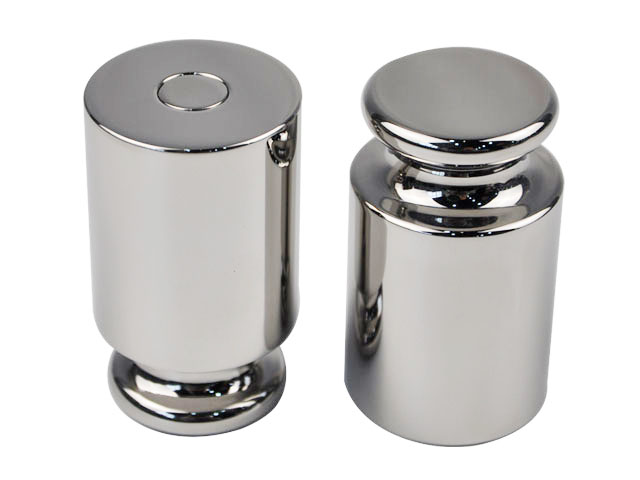
The inherent physical properties of the materials used to produce E2 class laboratory weight determine its basic performance in long-term laboratory use, and material selection follows the core principles of stable density, low magnetic susceptibility, strong corrosion resistance, and good structural uniformity. High-quality polished stainless steel is the mainstream material choice for this type of laboratory weight, with a stable density value maintained within a fixed and controllable range, ensuring that the mass of each weight will not undergo obvious changes due to subtle fluctuations in conventional environmental conditions inside the laboratory. The material is processed to achieve extremely low magnetic characteristics, effectively avoiding mass measurement interference caused by magnetic field induction inside laboratory equipment or surrounding experimental instruments. Many laboratory environments are equipped with various precision analytical instruments, electronic testing equipment, and chemical experimental devices, which will generate weak magnetic fields during long-term operation; if the weight material has high magnetic susceptibility, it will produce subtle adsorption force under the influence of these magnetic fields, resulting in unstable weighing data and deviation in calibration results. The low magnetic property of E2 class laboratory weight material can well eliminate such external magnetic interference, ensuring that each calibration and weighing operation is based on pure mass measurement without additional physical influence factors. In addition, the stainless steel material after special polishing treatment has excellent corrosion resistance, adapting to the complex atmospheric environment inside the laboratory, including slight humidity changes, occasional volatile chemical gas contact, and long-term indoor placement storage, effectively preventing surface oxidation, rust, or chemical corrosion that may cause mass changes and surface damage.
The surface processing technology of E2 class laboratory weight is another key part to ensure its long-term stable performance and convenient daily management, adopting fine mirror polishing craftsmanship to make the surface of each weight smooth and flat without any burrs, depressions, or uneven areas. This smooth surface treatment not only optimizes the overall structural uniformity of the weight but also brings two practical advantages for laboratory daily use and maintenance. First, the smooth mirror surface is not easy to adhere to dust, fine particles, experimental residue, or other tiny pollutants that are common in laboratory environments; tiny attachments on the weight surface will directly affect the actual effective mass, leading to calibration deviation of precision balances and weighing instruments. In the process of frequent repeated calibration work, even invisible fine dust accumulation will gradually change the effective mass of the weight, affecting the accuracy of subsequent experimental testing data. The polished smooth surface can greatly reduce the adhesion of various pollutants, and daily cleaning and wiping work can be completed simply and efficiently without leaving cleaning residues or causing surface scratches. Second, the fine polishing process ensures that the surface structure of the weight will not produce uneven wear during long-term handling, placement, and repeated use, maintaining the consistency of surface state and overall structural stability for a long time. Each edge and contact part of the weight is processed with rounded transition treatment, avoiding sharp corners that may cause accidental collision damage during handling, and also reducing the risk of surface wear and local mass loss caused by frequent friction and contact.
The structural design of E2 class laboratory weight fully conforms to the actual operational needs of professional laboratories, taking into account both the accuracy of mass standard and the convenience of daily manual handling and safe storage. Most single weights and weight sets adopt compact structural layout, which does not occupy excessive storage space in the laboratory, and is convenient for classified placement and centralized management according to different nominal mass specifications. Some specifications are designed with recessed grip structures, which make the picking and placing process more stable and labor-saving for operators, avoiding direct finger contact with the main weighing surface of the weight as much as possible. Direct contact between human hands and the weight surface will leave sweat, grease, and skin residue, which will not only cause surface pollution but also lead to subtle changes in surface quality over time, affecting the long-term mass stability of the weight. The reasonable grip design effectively standardizes the operation process, reduces the probability of human-induced pollution and surface damage, and prolongs the stable service life of each weight. The overall structural compactness also ensures that the weight will not produce structural deformation or local stress changes during normal placement and handling; even after long-term repeated use and multiple transfers between different experimental stations, the overall mass structure can remain stable without subtle deformation affecting mass accuracy.
E2 class laboratory weight covers a complete nominal mass range from tiny milligram specifications to large kilogram specifications, which can meet the calibration and testing needs of various types of high-precision weighing equipment in different laboratory scenarios. In analytical chemistry laboratories engaged in trace component testing and micro sample analysis, small-specification E2 class laboratory weight is used for regular calibration of micro-analytical balances and ultra-precision electronic weighing instruments, ensuring accurate weighing of tiny experimental samples and trace chemical reagents. The accurate weighing of these micro samples is directly related to the accuracy of chemical reaction ratio calculation, sample component content detection, and experimental result data analysis; any small weighing deviation may lead to wrong experimental data and affect the repeatability and reliability of scientific research experiments. In material testing laboratories responsible for new material performance research and physical property testing, medium and large-specification E2 class laboratory weight is applied to the calibration of precision industrial balances and material physical testing weighing equipment, providing reliable mass standard support for material density measurement, sample quality comparison, and mechanical performance auxiliary testing. In food testing, pharmaceutical research, and environmental monitoring laboratories, this type of weight is used for daily verification and regular calibration of routine testing weighing instruments, ensuring that all testing data meets the basic requirements of experimental standardization and data traceability.
In the laboratory measurement traceability system, E2 class laboratory weight occupies an important intermediate link position, connecting higher-level mass reference standards and lower-level daily testing weighing equipment, and undertaking the important work of measurement value transmission and accuracy maintenance. Higher-level reference mass standards are mainly used for professional metering institutions to maintain basic mass benchmarks, while E2 class laboratory weight, as a secondary high-precision mass standard, can be directly used in the daily working environment of various laboratories to complete regular calibration and daily verification of various precision weighing instruments. This hierarchical measurement value transmission mode ensures that all weighing data generated in laboratory testing and scientific research work can be traced back to unified basic mass standards, realizing data consistency and comparability between different laboratories, different experimental projects, and different time periods. For laboratory quality management work, stable and reliable mass calibration is the basis for ensuring the validity of experimental data and the compliance of testing work; E2 class laboratory weight provides stable technical support for laboratory standardized operation, helping each laboratory maintain a high level of measurement management and ensure the authenticity and credibility of all testing and research results.
Daily maintenance and scientific management are crucial to maintaining the long-term accuracy and service life of E2 class laboratory weight, and standardized use and storage habits can effectively avoid unnecessary mass deviation and performance attenuation. All weights need to be placed in a dry, dust-proof, and temperature-stable special storage container when not in use, avoiding long-term exposure to humid air, direct sunlight, or environments with volatile corrosive gases. Humid environment will accelerate the oxidation and corrosion of metal surfaces, while frequent temperature drastic changes will cause subtle thermal expansion and contraction of the weight structure, affecting long-term mass stability. Operators need to wear clean and soft protective gloves when using the weights, strictly avoiding direct hand contact with the weight surface; after each use, the weight surface should be gently wiped with a special soft cleaning tool to remove tiny dust and possible slight attachments, and then placed back into the sealed storage container in a classified manner. It is necessary to regularly check the surface state of each weight, observe whether there are scratches, corrosion, deformation, or obvious pollution problems, and conduct regular performance inspection according to the laboratory measurement management cycle to ensure that the mass state of the weight always meets the basic use requirements. Collision, falling, and violent friction of weights should be avoided in the handling and use process; external mechanical impact will cause local structural deformation and surface damage, directly changing the accurate mass of the weight and affecting subsequent calibration and testing work.
In the context of continuous development of modern scientific research and industrial testing, the requirements for laboratory measurement accuracy and data stability are constantly improving, and the role of E2 class laboratory weight in laboratory basic management and precision measurement work has become more prominent. All scientific research innovation, product quality upgrading, and environmental safety testing work cannot be separated from accurate basic mass measurement data, and this type of high-precision laboratory weight is the basic guarantee for realizing accurate measurement and reliable data output. Its excellent material performance, fine processing technology, reasonable structural design, and wide application adaptability make it a necessary basic equipment for all professional laboratories that attach importance to measurement standardization and data accuracy. Through standardized selection, scientific use, and careful maintenance, E2 class laboratory weight can maintain long-term stable working performance, continuously provide reliable mass calibration support for various laboratory work, lay a solid foundation for the smooth development of scientific research experiments, testing and inspection, and quality control work, and escort the authenticity, accuracy and traceability of all experimental and testing data in various professional fields.
E2 Class Laboratory Weight
https://www.veidtweighing.com/laboratory-weights.html
Post Date: May 4, 2026
https://www.supplier-manufacturer.com/laboratory-weight/e2-class-laboratory-weight.html

![Structure of Cast Iron Weight]()
Structure of Cast Iron Weight
The structure of cast iron weight forms the fundamental foundation that determines its overall performance in industrial balancing, load stabilization, counterforce provis…![Height Weight Scales]()
Height Weight Scales
In modern daily life and public health management, the height weight scale stands as a fundamental and indispensable measuring device, serving as a basic tool for people t…![Cast Iron Weight Vender In China]()
Cast Iron Weight Vender In China
The cast iron weight sector stands as a fundamental and indispensable segment within China’s broader casting and metal manufacturing landscape, serving as a core supporti…![Spoon Scales]()
Spoon Scales
In daily cooking, baking, and ingredient preparation, the accuracy of ingredient measurement often determines the final quality of food and beverage. Many people rely on t…![Cast Iron Weight With Handle]()
Cast Iron Weight With Handle
Cast iron weight with handle stands as a fundamental and reliable tool widely adopted across industrial production, commercial operation, daily maintenance work and variou…