Moisture-analyzer Precision Balance
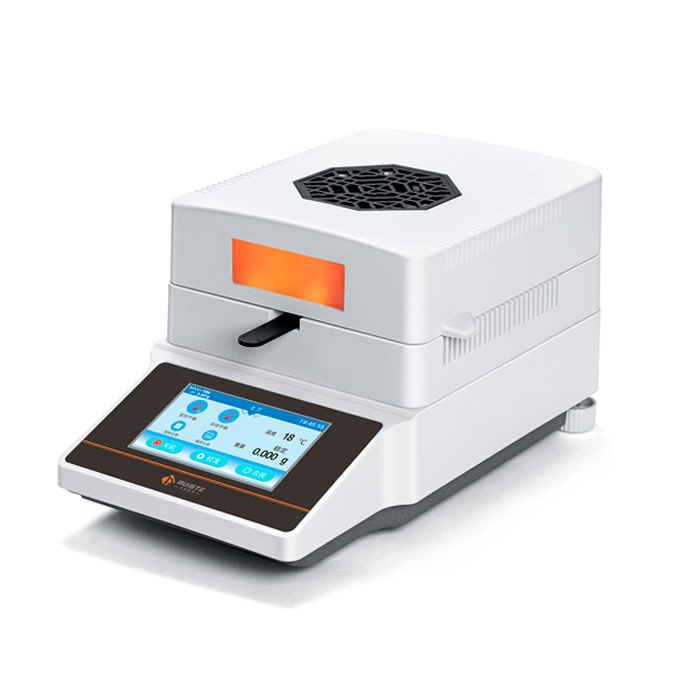
Moisture content stands as one of the most fundamental physical indicators for evaluating the inherent properties of various substances, exerting profound influences on the physical stability, chemical activity, storage cycle and comprehensive quality of raw materials and finished products across diverse industrial sectors. A moisture-analyzer precision balance serves as a sophisticated integrated testing instrument that combines high-precision weighing modules with constant-temperature heating structures, designed to quantitatively detect the moisture proportion in solid, powdered, paste and partial liquid samples. Different from conventional analytical balances that merely complete static mass measurement, this type of testing equipment integrates real-time weight monitoring and thermal drying functions, enabling continuous tracking of sample mass changes during the dehydration process and deriving accurate moisture data through internal algorithm calculation. With the growing demand for standardized quality control in modern industrial production and scientific research, such precision testing devices have become essential auxiliary tools in material analysis, helping technical staff grasp the internal moisture characteristics of samples and provide reliable data support for process optimization and quality screening.
The core working mechanism of the moisture-analyzer precision balance follows the loss-on-drying principle, a mature and widely recognized detection logic in physical analytical testing. The complete testing process consists of three continuous and interlinked stages: initial weighing, constant-temperature drying and data calculation. Before the formal drying procedure, the built-in high-sensitivity weighing sensor accurately records the original mass of the placed sample, with the weighing module maintaining stable data output to eliminate subtle mass fluctuations caused by external environmental interference. In the drying stage, the heating component generates uniform and stable thermal radiation to raise the ambient temperature of the sample chamber, gradually evaporating free moisture and partial bound moisture inside the sample. Throughout the heating cycle, the precision balance keeps capturing real-time mass variations of the sample, automatically filtering out invalid data generated by tiny air convection and surface dust adhesion. When the sample mass stops changing within a set time range, the system judges that the internal moisture has been completely volatilized, terminates the heating program, and calculates the moisture content by comparing the mass difference before and after drying. This physical detection method avoids chemical reagent contamination and complex chemical reaction processes, boasting mild detection conditions and broad applicability for most non-volatile solid and colloidal samples.
The internal structural design of a qualified moisture-analyzer precision balance focuses on structural stability and functional coordination, mainly comprising a precision weighing system, a constant-temperature heating system, an intelligent data processing module and a protective mechanical structure. The weighing system, as the core component determining detection accuracy, adopts high-resolution sensing units made of anti-interference metal materials. These sensing units can perceive tiny mass changes at the milligram level, with internal damping structures to reduce vibration interference from the external working environment. The heating system mostly uses infrared radiation heating components, which can achieve rapid temperature rise and form a uniform temperature field in the sealed sample chamber. This heating mode prevents local overheating of the sample, effectively avoiding thermal decomposition, carbonization and other adverse phenomena that may affect detection results. The temperature control unit supports adjustable temperature settings within a reasonable range, adapting to the dehydration requirements of different types of samples, from low-temperature drying of heat-sensitive materials to medium-temperature dehydration of stable inorganic powders. The data processing module undertakes signal collection, sorting and calculation work, converting analog mass and temperature signals into intuitive digital data, and recording key parameters such as real-time sample weight, heating duration and chamber temperature in the internal storage space. The external protective structure adopts an integrated sealed shell with heat insulation and dustproof coatings, which not only reduces heat loss to improve heating efficiency but also isolates external airflow and dust to ensure the stability of the weighing environment.
Reasonable operational procedures are critical to ensuring the repeatability and authenticity of test data for moisture-analyzer precision balance. The entire operation flow can be divided into pre-test preparation, sample placement and parameter setting, automatic detection and post-test finishing. In the pre-test preparation stage, operators need to place the instrument on a horizontal stable workbench, keep the surrounding environment ventilated and dry, and avoid direct sunlight and strong electromagnetic radiation. It is necessary to preheat the instrument for a certain period to stabilize the internal temperature of the weighing sensor and heating chamber, eliminating data deviation caused by cold-start operation. Meanwhile, testing containers need to be cleaned and dried to remove residual moisture and impurity particles on the surface, preventing interference with blank control experiments. During sample processing, samples should be taken from different parts of the raw material batch to ensure sampling representativeness; block samples need to be crushed and screened to form fine particles with uniform particle size, which increases the contact area between the sample and hot air and accelerates moisture volatilization. The sample mass should be controlled within the applicable range of the instrument. Excessively large samples may lead to incomplete internal dehydration, while overly small samples are prone to data errors due to accidental factors. After placing the sample, operators set heating temperature, constant-temperature duration and data stabilization threshold according to sample physical properties, and start the automatic detection program.
During the automatic testing phase, the instrument operates independently without continuous manual monitoring. The system first reconfirms the initial sample mass and uploads the data to the built-in algorithm model. As the temperature in the heating chamber rises steadily, the moisture inside the sample gradually evaporates, and the balance sensor continuously feeds back mass change data. The intelligent program draws a real-time moisture loss curve based on recorded data, reflecting the dehydration rate and moisture release law of the sample at different temperature stages. For most homogeneous samples, the dehydration rate is fast in the early heating stage and gradually slows down in the later stage until the mass tends to stabilize. Once the system meets the preset termination conditions, it automatically cuts off the heating power and retains the final stable mass data. After the test, the instrument will display multiple key indicators including initial sample mass, dried sample mass, moisture loss amount and moisture percentage, and support data export and local storage for subsequent data sorting and comparative analysis. In the post-test finishing link, operators need to cut off the power after the heating chamber cools down to room temperature, take out and clean the sample container, and wipe the inner wall of the heating chamber to avoid residual sample scraps affecting subsequent testing.
Moisture-analyzer precision balances are widely applied in multiple industrial and scientific research fields, providing standardized moisture detection solutions for diverse sample types. In the food processing industry, such instruments detect moisture content in grain raw materials, baked pastries, dairy powders and preserved fruits. Moderate moisture content can effectively extend food shelf life and maintain taste and texture, while excessive moisture may induce microbial reproduction and raw material mildew. By using precision testing equipment, food production enterprises can control raw material quality and optimize production drying processes. In the pharmaceutical industry, the instrument is used to detect moisture in pharmaceutical intermediates, powdered raw materials and solid preparations. Moisture indicators directly affect the chemical stability and dissolution efficiency of pharmaceutical products, and precise moisture control helps maintain the efficacy stability of pharmaceutical ingredients. In the chemical industry, it is applicable to inorganic mineral powders, polymer particles and chemical additives. Trace moisture may cause chemical reactions such as hydrolysis and agglomeration of chemical materials, so real-time moisture detection is an essential part of chemical raw material quality inspection.
In addition to traditional industrial production, this type of precision balance also plays an important role in agricultural detection, new energy materials and daily chemical product research and development. In agricultural detection, it monitors moisture changes in crop seeds, forage and soil samples, providing data support for seed storage and soil agricultural improvement. In the new energy industry, it detects trace moisture in battery electrode materials and electrolyte raw materials, as excessive moisture will affect the ionic conductivity and service life of energy storage components. In the daily chemical industry, it tests moisture in cosmetics, detergent powders and skin care raw materials to ensure the physical stability and safe use of daily chemical products. Compared with traditional constant-temperature oven drying methods that require manual weighing and long detection cycles, the integrated design of moisture-analyzer precision balance shortens the detection cycle, reduces human operation errors, and realizes one-click automatic testing, which is more suitable for batch sample detection in industrial production lines.
To maintain the long-term stable working performance of the moisture-analyzer precision balance, standardized daily maintenance and regular performance inspection are indispensable. In terms of daily maintenance, the instrument should be placed in a constant-temperature and constant-humidity laboratory environment to avoid severe temperature fluctuations and humid air corrosion of internal precision components. The weighing pan and heating chamber need to be kept clean at all times; viscous and corrosive samples should be placed in special auxiliary containers to prevent sample residues from corroding the sensor and heating elements. The external shell should be regularly wiped with dry soft cloth to keep the equipment surface clean and prevent dust from entering the internal gap. In terms of regular inspection, operators need to conduct blank calibration before daily use to eliminate system errors caused by environmental changes. Regular linear debugging of the weighing sensor is required to ensure the weighing accuracy of the instrument within the full measurement range. For the heating system, it is necessary to check the temperature uniformity and temperature control accuracy periodically to avoid temperature deviation affecting dehydration efficiency.
Meanwhile, operators should strictly abide by safety operation specifications during use. High-temperature heating components are in working condition during the test, so direct contact with the inner wall of the heating chamber is prohibited to prevent scald accidents. Flammable, explosive and volatile corrosive samples are not suitable for this drying and weighing testing method to avoid safety hazards such as combustion and gas volatilization. When abnormal data fluctuations or abnormal sounds occur during instrument operation, the power supply should be cut off immediately for inspection, and the instrument can be reused only after troubleshooting. With the continuous progress of sensor manufacturing technology and intelligent control algorithms, the comprehensive performance of moisture-analyzer precision balances is constantly optimized. Future development directions include miniaturized and portable structural design, intelligent adaptive temperature adjustment programs, and multi-sample simultaneous detection functions, which will further improve detection efficiency and environmental adaptability.
In conclusion, the moisture-analyzer precision balance, as an efficient and accurate moisture detection tool, relies on mature loss-on-drying principle and integrated structural design to realize synchronous completion of sample heating dehydration and high-precision weighing. It has the advantages of simple operation, intuitive data and wide sample adaptability, effectively making up for the shortcomings of traditional manual detection methods. In industrial quality control, academic research experiments and raw material performance evaluation scenarios, this instrument provides reliable moisture data reference for technical personnel. Standardized operation procedures and scientific daily maintenance can maintain the stable working state of the instrument, reduce detection errors, and extend the service life of precision components. As all walks of life raise higher requirements for material quality control, moisture-analyzer precision balances will continue to exert important application value in more professional fields, providing basic technical support for the standardized production and performance optimization of various materials.
Moisture-analyzer Precision Balance
https://www.pruiste.com/precision-balance.html
Post Date: May 18, 2026
https://www.supplier-manufacturer.com/precision-balance/moisture-analyzer-precision-balance.html

![Weighing Balance RSB-W SERIES]()
Weighing Balance RSB-W SERIES
The RSB-W series adopts high-definition keys, which is economical. The entire series of balances adopt Nuosheng sensors, brand sensors, and aluminum alloy structure to ens…![Specifications of Digital Viscometer]()
Specifications of Digital Viscometer
Digital viscometers are essential analytical instruments designed to quantify the viscosity characteristics of various liquid substances, serving as core testing equipment…![Automatic Digital Viscometer]()
Automatic Digital Viscometer
Viscosity stands as one of the most fundamental physical properties of fluid substances, reflecting the internal friction and flow resistance generated between molecular l…![Coaxial Cylinder Digital Viscometer]()
Coaxial Cylinder Digital Viscometer
The coaxial cylinder digital viscometer is a sophisticated laboratory and industrial testing instrument designed to quantify the viscous properties of various fluid materi…![Halogen Moisture Analyzer]()
Halogen Moisture Analyzer
Moisture content stands as one of the most critical physical indicators for a wide range of raw materials, semi-finished goods, and finished products across modern industr…