Weighing Precision Balance
A weighing precision balance stands as an essential measuring instrument designed to determine the mass of small samples with refined measurement resolution, serving as a fundamental tool in numerous professional scenarios that demand accurate mass data. Unlike ordinary weighing devices intended for rough mass estimation, this type of balance focuses on subtle mass detection, capturing minor variations in sample weight that conventional weighing equipment cannot identify. Its consistent and steady measurement performance makes it a staple in laboratory environments, industrial production departments, and research institutions, where reliable mass measurement acts as the foundation for experimental analysis, production formulation, and quality inspection. The evolution of weighing precision balances has long been intertwined with the progress of metrology technology, transitioning from early mechanical structural designs to modern electronic sensing systems, with each technological upgrade optimizing measurement stability and operational convenience to adapt to increasingly complex application requirements.
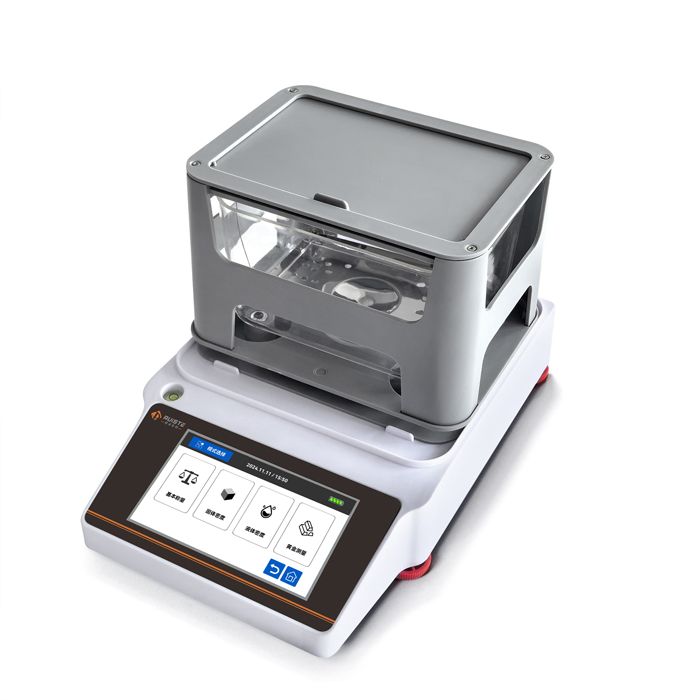
The core working principle of contemporary weighing precision balances primarily relies on the electromagnetic force compensation mechanism, a mature and stable physical measurement principle widely adopted in high-precision weighing equipment. When a sample is placed on the weighing pan, the gravity generated by the sample mass triggers a tiny displacement of the internal mechanical connection structure inside the balance. The built-in displacement detection component promptly captures this subtle positional change and converts the physical displacement into continuous electrical signals. These electrical signals are transmitted to the internal control circuit, which dynamically adjusts the current intensity of the electromagnetic coil. The coil then generates an electromagnetic force that counteracts the gravity of the sample, pulling the displaced mechanical structure back to its initial balanced position. Throughout this working process, the current passing through the coil maintains a stable proportional relationship with the mass of the loaded sample. The internal data processing module converts the collected current data into intuitive mass values, which are finally displayed on the electronic screen to complete the entire weighing procedure. Compared with traditional mechanical balances that rely on lever structures and counterweights, the electromagnetic force compensation principle eliminates the need for manual weight adjustment, effectively reducing human operation interference and optimizing the consistency of measurement results.
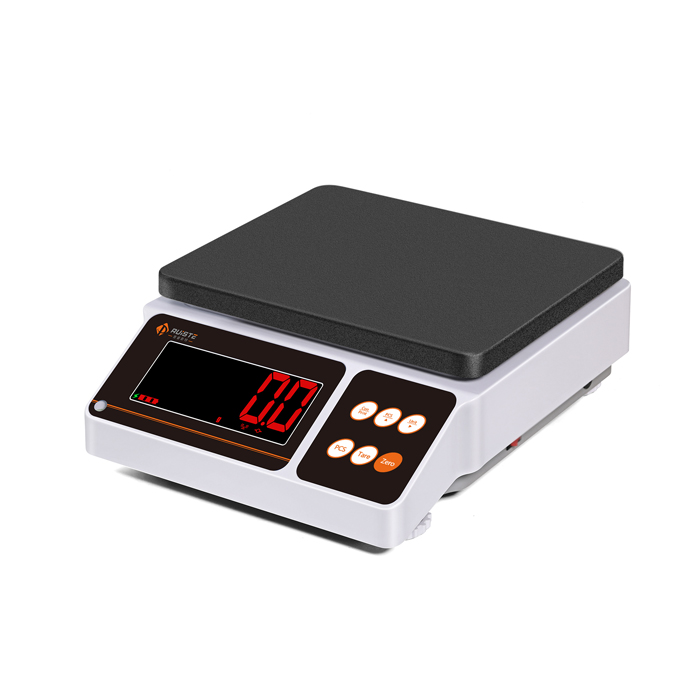
The structural composition of a weighing precision balance is elaborate and reasonable, with each component undertaking an independent functional role to jointly ensure orderly weighing operations. The external part mainly includes a weighing pan, a wind shield, and an operating panel. The weighing pan, usually made of corrosion-resistant metal materials, provides a stable bearing platform for samples and can adapt to the placement of solid particles, block-shaped objects, and container-held liquid samples. The wind shield serves as a crucial protective structure, isolating the weighing chamber from external flowing air. Even slight air flow in the surrounding environment can generate subtle thrust on the sample and the weighing pan, causing data fluctuation; the closed inner space formed by the wind shield effectively weakens such air interference. The operating panel integrates display screens and control keys, enabling operators to observe real-time weighing data and perform basic functional operations such as zeroing and tare weighing. The internal structure covers precision sensors, electromagnetic coils, data processing chips, and damping stabilization components. The sensor captures tiny pressure and displacement changes, while the damping components slow down the jitter of the mechanical structure after sample placement, shortening the data stabilization time and allowing users to obtain stable readings within a short period.
Environmental conditions exert a noticeable influence on the weighing accuracy of precision balances, making environmental control a key part of standardized usage. Temperature variation ranks among the most prominent influencing factors. Drastic temperature fluctuations will cause slight thermal expansion and contraction of internal metal components and circuit parts, altering the magnetic field stability of electromagnetic coils and the sensitivity of sensors, thereby leading to deviations in measurement data. It is advisable to place the balance in an indoor space with mild and stable ambient temperature, avoiding direct exposure to sunlight or heat sources such as heating equipment. Humidity also affects the operating state of the balance. Excessively humid air may cause moisture to accumulate on internal circuit components, potentially slowing down signal transmission and inducing subtle corrosion of metal structures over prolonged use. In environments with high air humidity, auxiliary dehumidification measures are necessary to maintain dry and clean internal components. In addition, ground vibration shall not be ignored. Slight vibration transmitted from the ground can drive the weighing pan to shake subtly, interfering with the judgment of the balance on the balanced state. For this reason, the balance needs to be placed on a solid and stable operating table, keeping a safe distance from large mechanical equipment that generates vibration during operation.
Standardized operating procedures are essential to maintain the measurement performance of weighing precision balances and extend their service life. Before formal weighing, operators need to conduct pre-use preparation work. First, check the horizontal state of the balance through the horizontal bubble indicator; if the equipment tilts slightly, adjust the supporting foot screws at the bottom to restore the horizontal balance, as tilting will directly disrupt the uniformity of internal force transmission. After confirming the horizontal state, turn on the power supply and keep the balance in a standby state for an appropriate warm-up period. The warm-up process stabilizes the operating temperature of internal circuits and magnetic components, reducing data drift caused by cold start of the equipment. Before placing the sample, perform a zeroing operation to eliminate the influence of the weighing pan’s own weight and residual substances on the pan. When weighing samples with containers, use the tare function to deduct the container mass, so that the displayed data can directly reflect the net mass of the sample. During the sample placement process, handle samples gently to prevent impact force from damaging internal precision sensors; avoid placing samples with excessive temperature differences directly on the weighing pan, to prevent local temperature changes from affecting the overall measurement stability.
Weighing precision balances have extensive application coverage across multiple industries and academic fields, providing reliable mass measurement support for various professional work. In chemical laboratories, researchers use such balances to weigh trace chemical reagents. Accurate reagent mass proportion is the prerequisite for smooth chemical reactions, and subtle mass errors may lead to changes in reaction rate and product composition. In pharmaceutical research and production, the balance is applied to the weighing of raw medicinal materials and experimental drug samples. Stable and precise measurement helps control the proportion of medicinal ingredients, ensuring the uniformity of drug properties in different batches. In the food industry, staff rely on precision balances to detect the mass of trace additives and nutrient components in food, providing data basis for food ingredient analysis and nutritional labeling. In material science research, researchers weigh new material samples before and after experiments to observe mass changes, thereby analyzing material characteristics such as corrosion resistance and oxidation resistance. In addition, educational institutions also deploy this kind of balance in physics and chemistry teaching laboratories, helping students understand the basic knowledge of mass metrology and cultivate standardized experimental operation habits through practical weighing exercises.
Daily maintenance and scientific storage methods are vital to sustain the long-term stable performance of weighing precision balances. After each use, operators need to clean the weighing pan and the inner wall of the wind shield in a timely manner. Use soft dust-free cloths to wipe off residual sample particles and dust, avoiding the use of corrosive chemical solvents that may damage the surface coating and internal components. For spilled liquid samples, wipe them dry immediately to prevent liquid from penetrating into the equipment gaps and causing circuit dampness. When the balance is not in use for a long time, cut off the power supply and cover the equipment with a dust cover to prevent dust accumulation in the gaps of internal structures. Regular simple inspections should be conducted during daily placement, including checking whether the power line is aging and whether the supporting feet are worn, to ensure the stability of the equipment placement and power supply safety. It is necessary to avoid placing the balance in a closed space with mixed corrosive gases, as volatile corrosive substances will gradually erode metal components and magnetic parts, reducing measurement sensitivity over time.
In actual measurement work, operators need to avoid common operational misunderstandings to reduce unnecessary measurement errors. A frequent mistake is placing samples in an off-center position on the weighing pan. Eccentric placement leads to uneven force on the weighing pan, resulting in inconsistent stress on internal connecting structures and causing minor data deviation. Another common error is frequent opening of the wind shield door during weighing, which breaks the stable air pressure inside the weighing chamber and introduces air flow interference. In addition, excessive placement of samples beyond the effective weighing range of the balance will not only cause data distortion but also generate persistent pressure on internal sensors, shortening the service life of precision components. Operators should also avoid touching the weighing pan with bare hands during operation, as sweat and grease on the skin will adhere to the metal surface, affecting the accuracy of subsequent weighing results and causing long-term contamination of the equipment.
With the continuous progress of metrology manufacturing technology, the comprehensive performance of weighing precision balances is being continuously optimized. Modern improved models integrate intelligent data recording functions, which can automatically store weighing data within a certain period, facilitating operators to trace and sort experimental data. Some optimized structures adopt anti-static design, which can eliminate static charge accumulation on the surface of the weighing pan and samples, effectively solving the problem of light sample adsorption caused by static electricity. In terms of humanized design, the operating interface is simplified and optimized, with clear data display and sensitive touch control, lowering the operating threshold for novice users. While upgrading basic measurement performance, the equipment also pays more attention to energy-saving design, reducing energy consumption during standby and continuous operation to meet the energy consumption control requirements of modern laboratories and production departments.
As an indispensable precision metrology instrument, the weighing precision balance undertakes the important task of accurate mass measurement in multiple professional fields. Its stable electromagnetic force compensation principle, elaborate structural design, and flexible functional settings enable it to adapt to diverse sample weighing scenarios from trace particles to small block objects. Standardized operation, reasonable environmental control, and scientific daily maintenance jointly determine the long-term working state of the balance, enabling it to maintain stable measurement effects in repeated use. In the future, with the continuous integration of intelligent technology and metrology engineering, weighing precision balances will evolve toward more compact structures, stronger anti-interference capabilities, and more intelligent data management modes. They will continue to provide accurate and reliable mass measurement support for scientific research, industrial production, teaching experiments, and other fields, laying a solid data foundation for the steady development of various professional industries.
Weighing Precision Balance
https://www.pruiste.com/precision-balance.html
Post Date: May 18, 2026
https://www.supplier-manufacturer.com/precision-balance/weighing-precision-balance.html

![Weighing Balance RSB-W SERIES]()
Weighing Balance RSB-W SERIES
The RSB-W series adopts high-definition keys, which is economical. The entire series of balances adopt Nuosheng sensors, brand sensors, and aluminum alloy structure to ens…![Specifications of Digital Viscometer]()
Specifications of Digital Viscometer
Digital viscometers are essential analytical instruments designed to quantify the viscosity characteristics of various liquid substances, serving as core testing equipment…![Automatic Digital Viscometer]()
Automatic Digital Viscometer
Viscosity stands as one of the most fundamental physical properties of fluid substances, reflecting the internal friction and flow resistance generated between molecular l…![Coaxial Cylinder Digital Viscometer]()
Coaxial Cylinder Digital Viscometer
The coaxial cylinder digital viscometer is a sophisticated laboratory and industrial testing instrument designed to quantify the viscous properties of various fluid materi…![Halogen Moisture Analyzer]()
Halogen Moisture Analyzer
Moisture content stands as one of the most critical physical indicators for a wide range of raw materials, semi-finished goods, and finished products across modern industr…