Purposes of Stainless Steel Weight
Stainless steel weights serve as indispensable functional components across a vast spectrum of industrial, commercial, and daily application scenarios, valued primarily for their unique combination of physical stability, durable material properties, and consistent mass performance. Unlike ordinary metal weights made of carbon steel or iron, stainless steel variants maintain steady structural and mass characteristics under diverse environmental conditions, making them a preferred choice for scenarios that demand long-term reliability, corrosion resistance, and precise weight balance. The core value of stainless steel weights lies not merely in their fixed mass, but in their ability to deliver stable, repeatable, and reliable weight-based functions in complex working environments, supporting operational stability, precision adjustment, safety control, and structural balance for various equipment and systems.
One of the most fundamental purposes of stainless steel weights is structural balance and vibration suppression for mechanical and industrial equipment. Most rotating, reciprocating, and moving mechanical systems generate unbalanced force during operation due to uneven material distribution, dimensional deviations in processing, or asymmetric structural design. This unbalanced force triggers mechanical vibration, component wear, operational noise, and even structural fatigue over prolonged use, which undermines equipment stability and shortens service life. Stainless steel weights with customized mass and shape are installed at designated positions of mechanical structures to offset unbalanced inertia force, achieve dynamic and static balance of equipment operation, and reduce amplitude and frequency of mechanical vibration. In industrial production lines, fan impellers, pump rotors, motor spindles, and conveyor systems all rely on such balancing weights to maintain smooth operation. The corrosion resistance of stainless steel ensures that these balancing components will not rust, deform, or suffer mass loss due to exposure to air, moisture, or industrial dust, thus sustaining consistent balancing performance throughout long-term continuous operation. This stable performance effectively lowers equipment maintenance frequency, reduces component replacement costs, and improves the overall operational efficiency of mechanical systems.
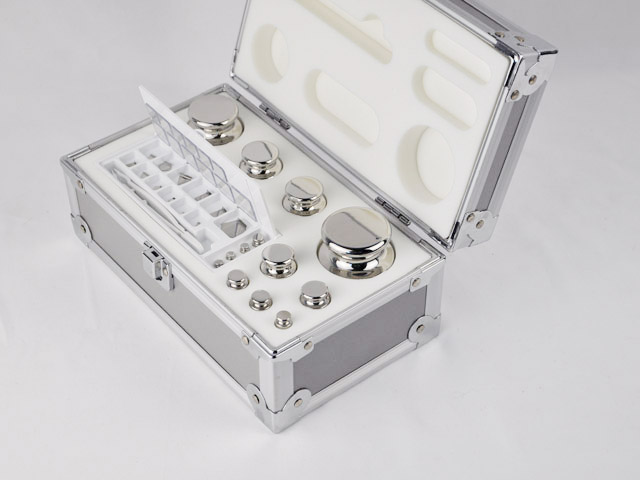
Precision weight calibration and measurement standardization constitute another critical application purpose of stainless steel weights. In fields involving quality detection, experimental testing, and metrology verification, standardized weight components are required to calibrate various weighing instruments, including electronic scales, mechanical balances, and precision measuring devices. Stainless steel is well-suited for this role because of its compact internal structure, stable density, and excellent anti-oxidation properties. It does not absorb moisture from the air or undergo subtle mass changes due to environmental humidity and temperature fluctuations, ensuring that the standard mass of the weight remains consistent for a long time. In laboratory environments, scientific research personnel use stainless steel weights to verify the accuracy of experimental measuring equipment, eliminate systematic errors in testing data, and guarantee the authenticity and repeatability of experimental results. In industrial detection workshops, these weights are used for daily debugging and regular verification of weighing equipment, ensuring that product quality detection, material proportioning, and batch weighing work meet unified dimensional standards. Compared with traditional cast iron weights that are prone to surface oxidation and mass attenuation, stainless steel weights maintain higher precision retention, avoiding frequent calibration adjustments caused by material deterioration and improving the efficiency and accuracy of the entire measurement and calibration system.
Stainless steel weights also play a vital role in improving equipment stability and anti-shake performance for stationary and mobile devices. Many precision instruments, automated equipment, and electromechanical devices are highly sensitive to external vibration and ground shaking; slight external interference may lead to displacement of equipment parts, deviation of working positions, or blunting of operating accuracy. Adding stainless steel counterweights to the base or internal structure of such equipment can effectively increase overall structural inertia, lower the center of gravity of the device, and enhance structural stability. In automated processing equipment, optical testing instruments, and printing machinery, rational configuration of stainless steel weights prevents equipment offset and position deviation during high-frequency operation, ensuring the continuity and accuracy of production and testing work. For mobile devices and transportation equipment, these weights assist in optimizing overall weight distribution, avoiding excessive shaking or tilting during movement. The high density of stainless steel allows designers to obtain ideal weight effects with a smaller volume, saving internal space of equipment while achieving stable counterweight effects, which is particularly important for compact and integrated modern equipment design.
Marine, coastal, and outdoor engineering scenarios fully leverage the environmental adaptability advantages of stainless steel weights, expanding their application value in harsh working conditions. Ordinary metal weights are easily corroded and rusted in humid, saline, and corrosive atmospheric environments, leading to structural damage, mass changes, and reduced service performance. In contrast, stainless steel materials resist electrochemical corrosion from seawater mist, coastal salt spray, and outdoor humid air, maintaining complete structural integrity and stable mass for years. In marine engineering, stainless steel weights are used for mooring auxiliary structures, underwater equipment positioning, and floating body balance adjustment, helping underwater detection equipment, floating platforms, and marine monitoring devices maintain fixed postures and stable positions in flowing seawater. In coastal infrastructure construction, they serve as counterweight components for guardrail structures, lifting equipment, and outdoor mechanical facilities, ensuring structural stability under long-term exposure to harsh coastal environments. In outdoor public facility projects, these weights support the stable operation of landscape equipment, monitoring supports, and ventilation facilities, reducing structural shaking and displacement caused by natural wind force and external interference. Their outstanding weather resistance greatly reduces the replacement frequency of engineering components and improves the long-term operational reliability of outdoor and marine facilities.
Fitness and sports equipment manufacturing is a common civilian application field for stainless steel weights, focusing on safe load bearing and stable exercise experience. Various strength training devices, balance training equipment, and physical rehabilitation instruments require matched weight components to provide standardized load resistance. Stainless steel weights used in fitness equipment feature smooth surface treatment, uniform mass distribution, and structural wear resistance, avoiding surface rust, burrs, or mass imbalance caused by long-term friction and collision. During strength training, stable weight output ensures consistent exercise load, helping users conduct standardized muscle training and scientific physical exercise. For balance training and rehabilitation equipment, precisely manufactured stainless steel weights maintain overall structural balance of the equipment, preventing equipment tipping or shaking during use and improving exercise safety. In commercial fitness venues and professional rehabilitation institutions, the durable and easy-to-clean characteristics of stainless steel weights also meet daily hygiene maintenance needs, adapting to high-frequency public use scenarios and maintaining good equipment operating conditions for a long time.
In automated production and industrial processing systems, stainless steel weights assist in realizing mechanical reset, tension control, and stroke limit functions, serving as key auxiliary functional components of automated structures. Many small mechanical transmission structures, sorting mechanisms, and telescopic devices rely on the gravity of weights to achieve automatic reset and cyclic operation. The stable gravity output of stainless steel weights ensures that mechanical components can return to their initial positions accurately after each operation, maintaining the cyclic continuity of automated production. In material tension control systems such as textile processing, film production, and wire processing, these weights provide constant tension through fixed gravity, avoiding material deformation, stretching deviation, or loose winding caused by unstable tension. This passive tension control method based on stainless steel counterweights features simple structure, stable operation, and low failure rate, effectively improving the qualification rate of processed materials and the stability of production processes. Meanwhile, the wear-resistant and anti-fatigue properties of stainless steel enable the weights to adapt to long-term cyclic mechanical action, without structural deformation or functional failure due to repeated stress, ensuring the long-term stable operation of automated production lines.
In architectural decoration and structural engineering, stainless steel weights are applied to balance adjustment and wind resistance stabilization of special structures. Many lightweight building decorative components, suspended ceiling structures, and outdoor curtain wall accessories have insufficient self-weight, leading to easy shaking and deformation under wind load or external force impact. Installing stainless steel counterweights can effectively increase structural self-weight, optimize stress distribution, and enhance wind resistance and structural stability. For suspended movable decorative structures and adjustable building components, stainless steel weights help achieve balanced stress of the overall structure, avoiding local deformation or structural offset caused by uneven stress. In addition, the smooth and delicate surface of stainless steel can be well integrated with modern architectural decoration styles, avoiding the appearance damage and rust leakage problems caused by corrosion of ordinary counterweight materials, taking into account both structural functionality and decorative aesthetics of buildings.
The comprehensive material advantages of stainless steel determine the wide applicability and long-term practical value of its weights in various industries. Its stable physical properties ensure that the mass and volume of the weight will not change significantly with time and environmental changes, providing a reliable physical foundation for all weight-dependent functional scenarios. Its excellent processing performance allows stainless steel weights to be made into various customized shapes, sizes, and precision specifications according to actual use needs, adapting to diverse equipment structures and working space requirements. Whether in high-precision scientific research and industrial manufacturing fields or in civilian fitness, architectural decoration, and daily equipment supporting scenarios, stainless steel weights provide stable, durable, and efficient counterweight, balancing, and calibration functions. As industrial technology continues to develop and equipment precision and environmental adaptability requirements continue to improve, the application scope of stainless steel weights will be further expanded, and their functional value in ensuring equipment operation stability, improving production accuracy, reducing maintenance costs, and optimizing structural performance will become more prominent, becoming an essential basic component supporting the stable operation of modern industrial and social systems.
Purposes of Stainless Steel Weight
https://www.veidtweighing.com/ssweight/StainlessSteelWeight
Post Date: May 23, 2026
https://www.supplier-manufacturer.com/stainless-steel-weight/purposes-of-stainless-steel-weight.html

![Heavy Duty Stainless Steel Large Industrial Test Weight]()
Heavy Duty Stainless Steel Large Industrial Test Weight
Heavy duty stainless steel large industrial test weights are essential precision components tailored for heavy-load industrial calibration and load testing scenarios, serv…![Standard Weight For Bench Scales]()
Standard Weight For Bench Scales
Bench scales serve as fundamental weighing instruments across industrial production, laboratory testing, commercial transactions, and quality inspection fields, delivering…![Stackable Cast Iron Weight]()
Stackable Cast Iron Weight
Stackable cast iron weights stand as a foundational and versatile tool across industrial, commercial, and residential functional scenarios, earning long-standing popularit…![F1 Class Calibration Weight]()
F1 Class Calibration Weight
Precision mass measurement forms the foundational pillar of modern scientific research, industrial manufacturing, quality control, and material testing, where even minor d…![25kg Oiml Standard Calibration Weight Crane Scale Test]()
25kg Oiml Standard Calibration Weight Crane Scale Test
Industrial weighing operations rely heavily on the stable and consistent performance of crane scales, which undertake weight measurement tasks for suspended loads in manuf…