Maintenance of Test Weight
Test weights serve as foundational reference tools in every scenario that requires accurate mass measurement, forming the essential link that ensures weighing equipment delivers consistent and reliable results across industrial production, laboratory analysis, quality inspection processes, and daily operational weighing tasks. These precision mass references are crafted to maintain stable mass attributes under conventional usage conditions, yet their inherent accuracy and stable performance cannot be sustained automatically over time. Every contact with external substances, every improper handling action, every unfavorable environmental fluctuation, and every long-term operational application will gradually impose subtle impacts on their surface condition, physical structure, and effective mass status. Without systematic and standardized daily maintenance and regular upkeep arrangements, even well-made test weights will gradually develop invisible deviations in mass values, surface damage, and structural wear, which will directly affect the accuracy of subsequent weighing tests, lead to inconsistent measurement data in repeated operations, and eventually interfere with the normal progress of production quality control and experimental data recording. Proper and sustained maintenance of test weights is therefore not merely a routine operational task but a core basic work to maintain the validity of all weighing activities, ensure the comparability of measurement data in different time periods and operational links, and avoid unnecessary operational errors and follow-up work adjustments caused by inaccurate mass reference standards.
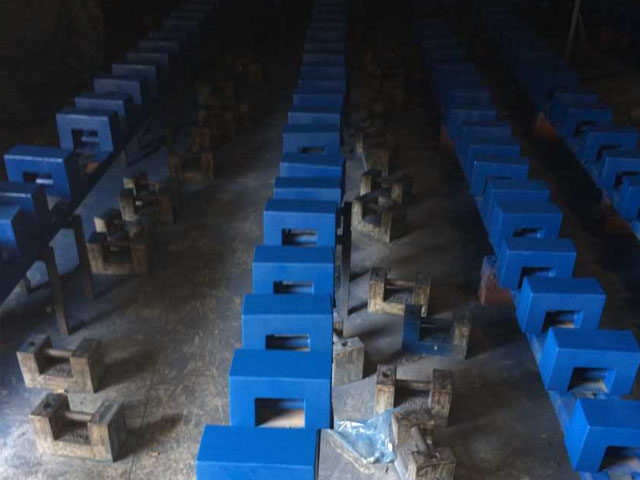
The primary core principle of test weight maintenance lies in reducing all controllable external interference factors that may cause changes in mass and surface state, and maintaining the original physical state of each test weight as consistently as possible throughout its entire service cycle. Many users tend to overlook the subtle cumulative effects of daily improper use, mistakenly believing that test weights with simple solid structures do not require elaborate maintenance and only need to be placed casually after use. This casual usage habit is the main cause of gradual performance degradation of most test weights in practical application. The mass change of a test weight does not happen suddenly in a single use but accumulates slowly through tiny corrosion spots on the surface, slight scratches caused by friction, residual dust and chemical attachments adsorbed on the outer layer, and minor deformation caused by collision and extrusion. Each of these small adverse changes may only bring extremely subtle mass fluctuation in the short term, but after long-term repeated accumulation and continuous superposition, the deviation will gradually expand to a level that affects normal weighing work. Effective maintenance work starts from every detail of daily handling, usage, cleaning, and storage, forming a complete set of standardized operational habits to block all potential factors that may damage the state of test weights from the source and keep their mass characteristics stable for a long time.
Correct manual handling specifications are the first key step in the daily maintenance of test weights, and also the most basic link to avoid artificial damage and pollution. Under no circumstances should test weights be directly touched with bare hands during any use or transfer process, no matter the size or nominal mass of the weight. Human skin surface naturally secretes sweat, grease, and other trace secretions, which will leave invisible thin films on the surface of test weights after direct contact. These attachments do not appear to have any obvious impact in a short period, but over time, they will gradually react with the surface material of the test weight, causing slow surface oxidation, local corrosion, and adhesion of tiny dirt particles. As the oxidation and corrosion deepen, the surface smoothness of the test weight will be damaged, and the effective mass will slowly shift due to material loss and attachment accumulation. In actual operation, special auxiliary handling tools such as clean soft gloves, special weight tweezers, and dedicated weight lifting hooks should be used to pick up and move all test weights uniformly. When gripping or clamping the test weight, it is necessary to ensure uniform stress on the contact part, avoid single-sided force or excessive clamping pressure, so as not to cause local indentation, surface scratches, or internal structural stress changes on the test weight. During the transfer process, rapid shaking, random swinging, and mutual collision between multiple test weights should be strictly prevented, and each test weight should be moved slowly and steadily to ensure that it is always in a stable state without impact friction with other hard objects.
The cleaning work of test weights needs to follow gentle and targeted operation principles, and different cleaning methods should be adopted according to different surface pollution degrees and material characteristics, avoiding any rough cleaning behaviors that may damage the surface protection layer and basic structure of the weights. Daily light dust and floating dirt on the surface can be removed with clean, soft, dry lint-free cloths or special soft brushes made of fine fibers. The wiping and brushing movements should be gentle and follow a single direction to avoid repeated back-and-forth friction that may scratch the surface. For slight stains and trace attachments that cannot be removed by dry wiping, a small amount of neutral and mild cleaning solution can be used with a soft cloth for gentle wiping, and it is necessary to strictly avoid using strong corrosive chemical solvents, abrasive cleaning powders, and hard cleaning tools with rough surfaces. Strong chemical substances will corrode the surface protective layer of test weights, destroy the original smooth surface structure, and even cause irreversible material corrosion and mass loss. Abrasive cleaning tools and powders will leave tiny scratches on the surface, which will not only affect the appearance but also easily accumulate more dirt and corrosive substances in the scratches in subsequent use, accelerating the deterioration of the weight state. After cleaning with a damp cloth or mild cleaning solution, the test weight must be completely dried in a clean and ventilated environment without direct strong wind blowing or high-temperature baking, to avoid residual moisture on the surface causing local oxidation and rust, and ensure that no moisture or cleaning solution residue remains on any part of the test weight before storage and reuse.
Scientific and standardized storage conditions are essential to maintain the long-term stable performance of test weights, and the storage environment and placement methods need to be strictly managed in accordance with the basic protection requirements of precision mass reference tools. Test weights should be placed in a dedicated independent storage cabinet or special storage box made of stable and non-corrosive materials, and mixed storage with other hard tools, chemical reagents, corrosive articles, and sundry items is strictly prohibited. The interior of the storage container should be kept clean, dry, and flat, with soft and shockproof lining materials inside, which can effectively buffer external vibration and accidental collision impact, and avoid direct hard contact between test weights and the bottom and surroundings of the storage container. All test weights should be placed separately in fixed positions according to different specifications and sizes, and stacking, squeezing, and random overlapping placement are not allowed, so as to prevent mutual friction, extrusion deformation, and surface wear between weights. The overall storage space should maintain stable temperature and humidity conditions, avoiding long-term placement in environments with excessive humidity, drastic temperature changes, direct sunlight exposure, and serious dust accumulation. High humidity environment will easily cause surface oxidation and corrosion of test weights, drastic temperature changes will lead to slight thermal expansion and contraction of the weight material, resulting in subtle structural changes and mass deviation, and long-term sunlight exposure will accelerate the aging and damage of the surface protective layer. In addition, the storage location should be kept away from mechanical vibration sources, strong electromagnetic interference equipment, and places with volatile harmful gases, to ensure that test weights are always in a stable, safe, and interference-free static storage state when not in use.
Regular routine inspection and periodic accuracy verification are indispensable core parts of test weight maintenance work, which can timely discover potential hidden dangers such as surface damage, structural changes, and mass deviation, and avoid continuous use of abnormal test weights to affect weighing work quality. Daily visual inspection should be carried out every time before taking and after returning the test weights, focusing on checking whether there are obvious scratches, collision dents, corrosion spots, rust traces, and attachment residues on the surface of each weight, and whether the overall structure has deformation, looseness, and other abnormal phenomena. Once any surface damage or structural abnormality is found, the relevant test weight should be immediately isolated and marked, and suspended from use until follow-up professional processing and performance confirmation are completed. On the basis of daily visual inspection, regular accuracy comparison and detection should be carried out according to the frequency of use of test weights. Test weights that are used frequently in daily work need to be inspected at short intervals, while those used occasionally can adopt a relatively longer inspection cycle. The inspection process should be carried out in a stable and standard weighing environment, using matching stable weighing equipment for comparative testing, to confirm whether the mass state of the test weight is maintained within the normal and available range. The inspection results should be recorded in detail truthfully, forming a complete maintenance and inspection record file, which can track the state changes of each test weight in different time periods, facilitate timely judgment of performance attenuation trends, and arrange maintenance and processing work in advance before obvious deviation occurs.
Avoiding improper use scenarios and reducing unnecessary loss and damage is an important auxiliary measure to extend the service life of test weights and reduce maintenance pressure. Test weights are specially used for weighing calibration and mass reference work, and should never be used for other irrelevant auxiliary work such as knocking objects, pressing heavy objects, and padding supports. Many structural damages and surface deformations of test weights are caused by irregular non-standard use rather than normal weighing work. In the process of formal weighing operation, the test weight should be placed gently and steadily on the weighing equipment, avoiding heavy throwing, rapid placement, and repeated picking and placing operations in a short time. After the weighing work is completed, the test weight should be taken out in time and put back into the dedicated storage position, and should not be left on the weighing equipment for a long time or placed randomly on the workbench. Long-term placement in the working environment will make the test weight continuously affected by environmental dust, moisture, and operational vibration, increasing the risk of pollution and structural fatigue. In addition, when test weights need to be transported for external use, they should be packed in special shockproof and moisture-proof packaging containers separately, with effective buffer protection measures around them, to avoid vibration, collision, and extrusion during transportation, and ensure that the state of test weights will not be affected by external transportation conditions.
Long-term aging management and targeted maintenance adjustment according to service life are also key contents that cannot be ignored in the whole life cycle maintenance of test weights. With the increase of service time, even test weights that have been well maintained daily will have natural slight aging and material fatigue of surface materials, and the surface protection performance will gradually decrease compared with the initial state. For test weights that have been used for a long time, the frequency of regular inspection and accuracy verification should be appropriately increased, and the surface cleaning and appearance inspection work should be more detailed and rigorous. For test weights with slight surface aging but still meeting the use requirements, targeted protective maintenance can be carried out according to the material characteristics to slow down the aging rate and maintain stable use performance. For test weights that have obvious mass deviation, serious surface corrosion, and irreversible structural deformation after long-term use and cannot be restored to the normal use state through maintenance and adjustment, they should be eliminated in a timely manner and no longer put into formal weighing and calibration work, so as to prevent unqualified test weights from affecting measurement accuracy and causing follow-up work errors and losses. Reasonable life cycle management can ensure that all test weights in use are in good working condition at all times, and the maintenance work can always maintain a scientific and effective state with pertinence and purpose.
In general, the maintenance of test weights is a long-term, systematic, and meticulous continuous work, which runs through every link of handling, use, cleaning, storage, inspection, and life cycle management. It does not rely on occasional centralized maintenance and repair, but depends on the persistence of standardized operational habits and rigorous daily management. Every detail in the maintenance work is closely related to the stability of the mass reference performance of test weights and the accuracy of subsequent weighing measurement work. Only by always adhering to standardized handling norms, scientific cleaning methods, safe storage conditions, regular inspection and verification mechanisms, and standardized use management concepts, can the original performance of test weights be maintained stably for a long time, the occurrence of various avoidable mass deviations and structural damages be reduced, the service life of test weights be prolonged, and solid and reliable basic guarantee be provided for all work links that rely on accurate weighing measurement. Good maintenance management of test weights is not only a basic requirement for standardized operation of weighing work, but also an important prerequisite for ensuring stable production quality, accurate experimental data, and reliable measurement results in various application scenarios.
Maintenance of Test Weight
https://www.veidtweighing.com/test-weight.html
Post Date: May 4, 2026
https://www.supplier-manufacturer.com/test-weight/maintenance-of-test-weight.html

![Pocket Scales]()
Pocket Scales
In an era where portability and precision have become essential elements of modern life, compact weighing devices have emerged as practical tools that bridge the gap betwe…![Painted Cast Iron Weight]()
Painted Cast Iron Weight
Painted cast iron weight stands as a fundamental and reliable physical object deeply integrated into industrial production, daily operational debugging, mechanical balanci…![Textile Balances]()
Textile Balances
Textile balance stands as one of the most fundamental and profound concepts within the entire textile industry, weaving through every stage of fiber processing, fabric for…![Cast Iron Weight For Weighing]()
Cast Iron Weight For Weighing
Cast iron weight for weighing stands as one of the most fundamental and time-tested measuring essentials across all kinds of weighing and metering work, serving as a stead…![Slot Hook Weights]()
Slot Hook Weights
Slot hook weights are essential load-bearing and calibration accessories widely used in industrial production, mechanical debugging, physical testing, and daily rigging op…