Stainless Steel Standard Weight For Weighing Instrument Verification
Stainless steel standard weights serve as fundamental precision tools for the verification and calibration of all types of weighing instruments, laying a solid foundation for accurate and consistent mass measurement across diverse industrial, laboratory, and commercial scenarios. Unlike ordinary counterweights, these professional weights are crafted with refined material formulas and rigorous manufacturing processes, featuring exceptional physical stability that enables them to deliver reliable reference mass values for long-term instrument testing. They are universally applied to verify the accuracy, repeatability, and linearity of weighing equipment, ranging from high-precision analytical balances in research laboratories to medium and large-scale weighing devices used in industrial production and commodity detection. By eliminating measurement deviations caused by equipment aging, environmental interference, or operational wear, stainless steel standard weights ensure that all weighing data meets consistent precision requirements, supporting standardized production, scientific research experiments, and quality inspection work in various fields.
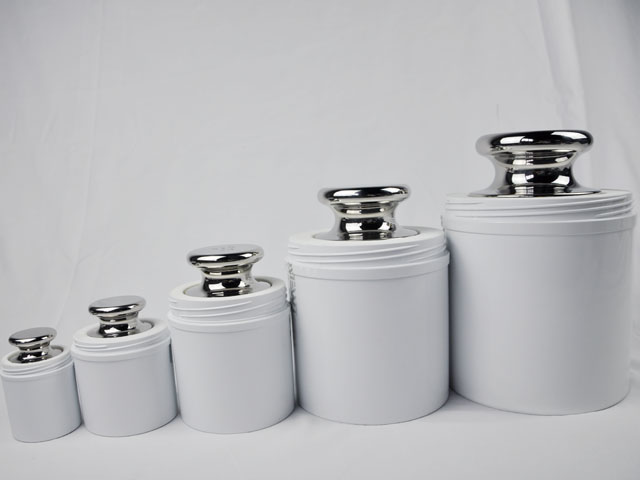
The inherent material advantages of stainless steel make it the optimal choice for manufacturing standard verification weights, distinguishing it from traditional materials like cast iron and ordinary alloy. Stainless steel possesses excellent anti-oxidation and anti-corrosion properties, effectively resisting erosion from moisture, dust, and mild chemical substances in conventional working environments. This characteristic prevents surface rust, peeling, and mass loss that commonly plague cast iron weights after long-term use, maintaining stable mass attributes throughout repeated verification operations. Additionally, the material features uniform internal density and low magnetic permeability, avoiding mass deviation caused by internal structural differences or magnetic interference during weighing detection. Its moderate hardness and wear resistance also reduce surface abrasion generated by frequent placement, handling, and stacking in daily verification work. Even in fluctuating temperature and humidity environments common in industrial workshops and conventional laboratories, stainless steel standard weights can maintain consistent physical properties, avoiding sudden mass changes that affect verification results and ensuring the basic reliability of weighing instrument detection.
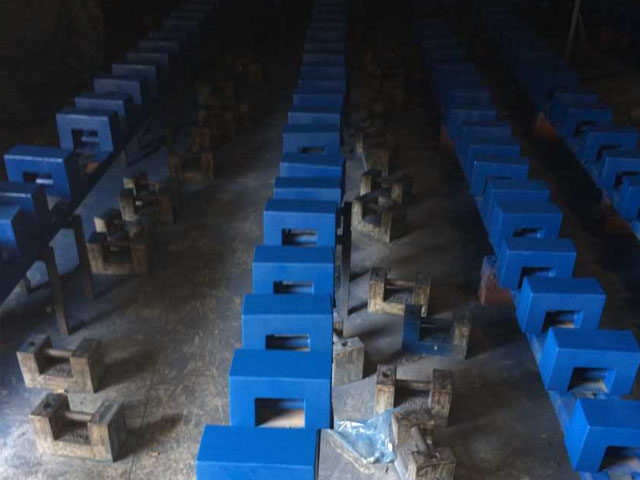
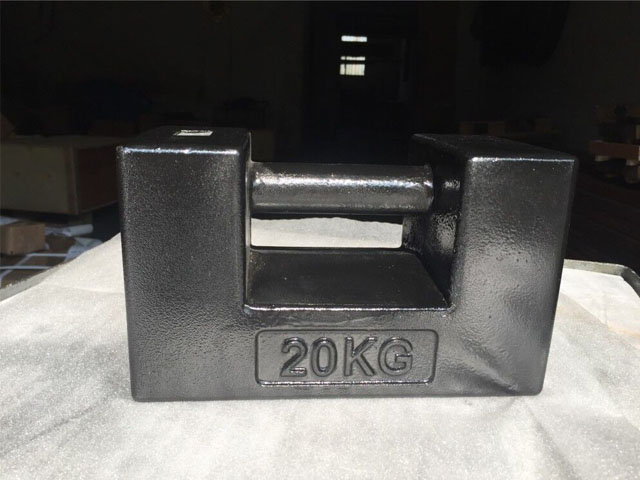
The structural design of stainless steel standard weights is scientifically optimized to adapt to diverse weighing instrument verification scenarios and operational needs. Most verification weights adopt integrated molding technology, eliminating loose structural gaps that may cause mass instability in assembled products. The overall smooth and seamless surface design not only prevents dust, dirt, and impurities from adhering and accumulating but also simplifies daily cleaning and maintenance, avoiding additional mass changes caused by foreign substance attachment. For medium and large-specification weights used in industrial scale verification, standardized edge treatment and anti-slip structures are adopted to ensure stable placement on weighing instrument platforms and prevent sliding or tilting that leads to inaccurate detection data. Small precision weights for laboratory balance verification feature compact and delicate structures with precise dimensional control, perfectly matching the detection range and placement requirements of high-precision weighing equipment. Meanwhile, the reasonable weight distribution design ensures uniform stress during use, avoiding local deformation caused by long-term pressure, and further improves the long-term service stability of the weights in continuous verification work.
Stainless steel standard weights follow rigorous production and finishing processes to meet the high-precision requirements of weighing instrument verification. The entire production process starts with strict raw material screening, selecting high-purity stainless steel materials with stable density and uniform texture to lay the foundation for consistent mass performance of finished products. After integral forging and molding, each weight undergoes fine grinding and polishing to eliminate surface burrs, uneven areas, and structural defects that may affect mass accuracy. Precision mass adjustment is carried out in a stable temperature and humidity environment, with subtle mass correction performed through professional processes to ensure each finished weight has an accurate and fixed reference mass value. Post-production surface passivation treatment further enhances the corrosion resistance and oxidation resistance of the stainless steel material, extending the service life of the weights. Every finished product is subjected to repeated precision testing and screening to eliminate individual products with mass deviation, structural instability, or surface defects, ensuring that each stainless steel standard weight put into verification work can provide accurate and stable reference data for weighing instrument detection.
The application scope of stainless steel standard weights covers almost all scenarios requiring weighing instrument verification, with strong industry adaptability and practical value. In scientific research and laboratory fields, they are used to calibrate high-precision analytical balances and precision weighing instruments, ensuring the accuracy of experimental data in chemical analysis, material testing, and pharmaceutical research. In food, chemical, and daily consumer goods manufacturing industries, these weights verify production line weighing equipment, guaranteeing consistent product packaging specifications and stable production quality. In logistics and commodity trading fields, they calibrate various commercial weighing scales to ensure fair transaction measurement and avoid measurement errors that affect market trading order. In industrial processing and machinery manufacturing, stainless steel standard weights detect large platform scales and load-bearing weighing equipment, providing accurate measurement benchmarks for industrial batching, quality inspection, and finished product testing. Their adaptable performance enables them to meet the precision verification needs of different types and accuracies of weighing instruments in various scenarios.
Standardized use and daily maintenance are key factors to maintain the long-term accuracy and service life of stainless steel standard weights in verification work. During the verification operation of weighing instruments, weights need to be handled gently to avoid violent collision, dropping, and extrusion, which may cause surface deformation and internal structural changes leading to mass deviation. Different specification weights should be used in strict accordance with the detection range of weighing instruments to avoid overload use that affects both the weight accuracy and instrument performance. After each use, the weights need to be cleaned with a dry soft tool to remove surface dust and stains, and placed in a dry, dust-proof, and constant-temperature storage environment to isolate humid and corrosive gases. Regular manual inspection and precision detection of the weights are required to check for surface wear, scratches, or subtle mass changes, with timely calibration and adjustment performed once abnormal conditions are found. Scientific use and maintenance can effectively delay the aging rate of stainless steel standard weights, maintain their stable verification performance, and reduce the cost of frequent replacement in long-term measurement work.
Stainless steel standard weights play an irreplaceable role in ensuring the traceability and consistency of weighing measurement data in verification work. All weighing instruments will produce subtle measurement errors after long-term operation due to mechanical wear, sensor aging, and environmental changes. As fixed reference mass carriers, stainless steel standard weights provide unified measurement benchmarks for error detection and correction of various weighing equipment. Through regular verification with standard weights, staff can accurately judge the deviation degree of weighing instruments, perform targeted calibration and debugging, and restore the instrument’s accurate measurement performance. This standardized verification mode unifies the measurement standards of different weighing equipment in the same production line, laboratory, or industry field, avoiding data inconsistency caused by equipment differences. Stable and reliable weight benchmarks also provide effective data support for quality supervision, technical debugging, and measurement standardization construction in various industries, ensuring the authority and credibility of weighing measurement results.
With the continuous improvement of industrial precision production and scientific research measurement requirements, the technical performance and application value of stainless steel standard weights are constantly upgraded and optimized. Modern manufacturing technology further improves the material uniformity and surface finish of stainless steel weights, effectively reducing the subtle mass error rate of finished products and improving verification precision. Optimized structural processes enhance the anti-drop, anti-wear, and anti-interference capabilities of the weights, enabling them to adapt to more complex working environments such as high dust and variable temperature industrial sites. Meanwhile, the lightweight and humanized design of new stainless steel standard weights improves the convenience of manual handling and stacking operation in large-scale instrument verification work, effectively improving detection efficiency. In the future, with the continuous development of precision measurement technology, stainless steel standard weights will continue to iterate in performance and structure, providing more accurate, stable, and efficient benchmark support for the verification and calibration of various high-precision weighing instruments, and promoting the standardized development of mass measurement work in all walks of life.
Stainless Steel Standard Weight For Weighing Instrument Verification
https://www.veidtweighing.com/ssweight/StainlessSteelWeight
Post Date: Aug 14, 2026

![Cast Iron Weight Vender In China]()
Cast Iron Weight Vender In China
The cast iron weight sector stands as a fundamental and indispensable segment within China’s broader casting and metal manufacturing landscape, serving as a core supporti…![Spoon Scales]()
Spoon Scales
In daily cooking, baking, and ingredient preparation, the accuracy of ingredient measurement often determines the final quality of food and beverage. Many people rely on t…![Cast Iron Weight With Handle]()
Cast Iron Weight With Handle
Cast iron weight with handle stands as a fundamental and reliable tool widely adopted across industrial production, commercial operation, daily maintenance work and variou…![Moisture Analyzers]()
Moisture Analyzers
Moisture content stands as one of the most critical physical attributes of solid, liquid, and granular materials across diverse industrial and research fields. Subtle vari…![Cast Iron Counterweight]()
Cast Iron Counterweight
Throughout the entire evolution of mechanical engineering and industrial manufacturing, maintaining stable force balance and reliable structural stability has always been …