Stainless Steel Weight For Precision Electronic Balance
Precision electronic balances serve as foundational measuring instruments in modern laboratory research, industrial quality control, pharmaceutical production, and material science testing, where consistent and reliable mass measurement results are indispensable for valid experimental data and standardized production processes. To maintain the long-term accuracy and stable performance of these high-sensitivity weighing devices, regular calibration with professional standard weights is a fundamental operational requirement, and stainless steel weights have emerged as the preferred calibration medium for precision electronic balances due to their unique physical properties, structural stability, and environmental adaptability. Unlike ordinary metal weights made of alloy or cast iron materials, stainless steel weights are engineered to minimize measurement deviation caused by environmental changes and material aging, perfectly matching the high-resolution detection capabilities of precision electronic balances that can capture subtle mass variations down to milligram or even microgram levels.
The material composition of stainless steel weights lays the core foundation for their excellent calibration performance for precision electronic balances. Most standard calibration weights for high-precision weighing scenarios adopt austenitic stainless steel formulations, which feature uniform internal molecular structure, low magnetic permeability, and stable physical density under conventional working environments. The density of qualified stainless steel weighing materials remains relatively constant within standard temperature ranges, effectively reducing volume and mass fluctuations triggered by thermal expansion and contraction, a key advantage for precision electronic balances that require strict consistency in measurement reference standards. Additionally, this stainless steel variant delivers outstanding resistance to oxidation and chemical corrosion, avoiding surface rust, oxidation peeling, or chemical erosion that commonly plague carbon steel and ordinary alloy weights during long-term use. In laboratory environments with trace humidity, volatile chemical vapors, or frequent cleaning operations, stainless steel weights can maintain intact surface integrity and stable mass attributes for extended periods, eliminating measurement errors arising from material surface deterioration.
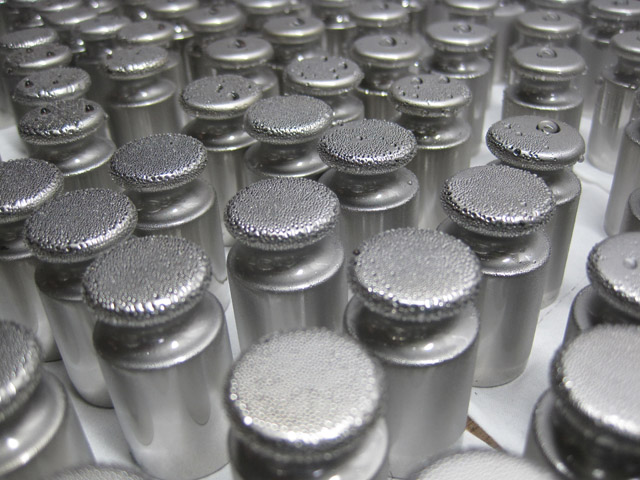
Surface processing technology further optimizes the applicability of stainless steel weights for precision electronic balance calibration. Professional stainless steel calibration weights undergo fine turning and multi-stage polishing treatments, resulting in smooth, flat, and burr-free surface textures. This refined surface condition greatly reduces dust adhesion, moisture adsorption, and residual contaminant accumulation, which are critical factors affecting micro-precision weighing. Precision electronic balances are extremely sensitive to tiny surface attachments on calibration weights; even a thin layer of dust or adsorbed moisture can generate detectable mass deviation and compromise calibration accuracy. The smooth surface of processed stainless steel weights simplifies daily cleaning and maintenance, allowing users to remove surface impurities with conventional cleaning methods without damaging the weight’s surface structure or altering its inherent mass. Meanwhile, standardized geometric processing ensures uniform flatness on the top and bottom surfaces of each weight, enabling stable placement on the balance’s weighing pan and preventing tilting or unstable contact that could cause inconsistent sensor pressure readings during calibration.
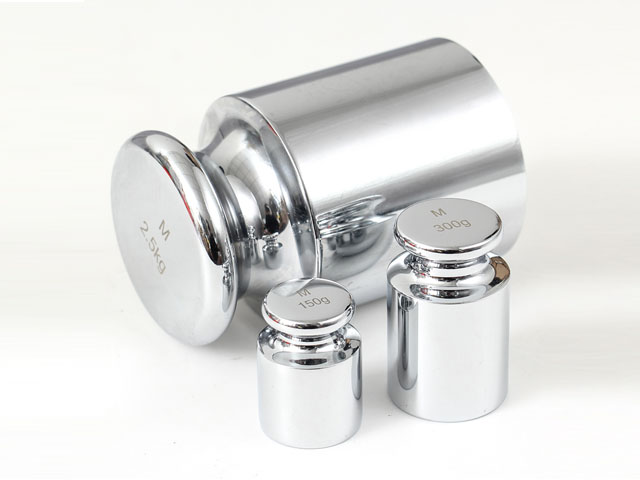
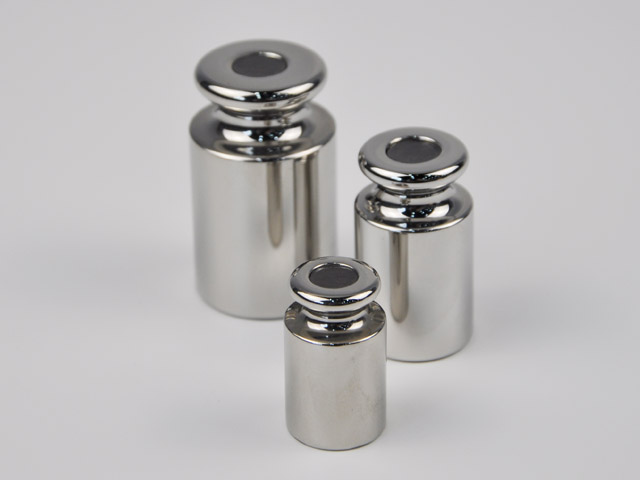
Structural design details of stainless steel weights are tailored to meet the rigorous calibration demands of precision electronic balances. Most precision stainless steel weights adopt compact cylindrical or block structures with symmetrical stress distribution, effectively avoiding mass imbalance caused by structural deformation under long-term stacking and placement. Some specifications incorporate reserved adjustment cavities with sealed designs, allowing fine mass modification during initial production and regular recalibration without altering the overall structural stability of the weight. This adjustable structure enables the weight to maintain stable reference mass values after long-term use, adapting to the subtle performance attenuation of precision electronic balances during continuous operation. Moreover, the size and proportion of stainless steel weights are scientifically optimized according to different mass ranges, ensuring matching contact area with the weighing pan of precision electronic balances. This design avoids excessive contact area that may induce static interference or insufficient contact area that leads to local pressure concentration, both of which affect the stability of balance sensor signal feedback.
Magnetic stability is another vital attribute that makes stainless steel weights irreplaceable for precision electronic balance calibration. High-precision electronic balance sensors rely on precise electromagnetic balance principles to calculate mass values, meaning external magnetic interference can directly distort sensor signal output and generate systematic measurement errors. Ordinary metal materials often carry residual magnetism or develop magnetic induction after long-term use in electromagnetic environments, which interferes with the balance’s internal magnetic field balance system. In contrast, the austenitic stainless steel used for precision weights features extremely low magnetic permeability, maintaining non-magnetic or weak magnetic states in conventional working environments. This characteristic effectively isolates magnetic interference during the calibration process, ensuring that the standard mass value of the weight is the sole variable acting on the balance sensor, thus guaranteeing the authenticity and accuracy of calibration data. This advantage is particularly prominent in high-sensitivity electronic balance calibration for analytical laboratories and fine chemical testing, where even faint magnetic interference can lead to invalid experimental data.
Environmental adaptability determines the long-term service value of stainless steel weights in daily calibration of precision electronic balances. Laboratory and industrial testing environments often involve fluctuating temperature and humidity, occasional contact with neutral cleaning solutions, and long-term indoor static placement. Stainless steel materials maintain stable physical and chemical properties under these variable conditions, with no obvious mass loss or structural deformation from temperature changes, humidity erosion, or mild chemical contact. Compared with coated weights that rely on surface protective layers, integrated stainless steel weights avoid coating peeling, fading, and aging failure, achieving more durable stable performance. In low-humidity environments prone to static electricity accumulation, the uniform material conductivity of stainless steel also helps reduce static adsorption on the weight surface, further lowering the risk of micro-mass interference during high-precision weighing. Whether used in constant-temperature and constant-humidity standard laboratories or conventional industrial testing rooms, stainless steel weights can provide consistent and reliable reference standards for electronic balance calibration.
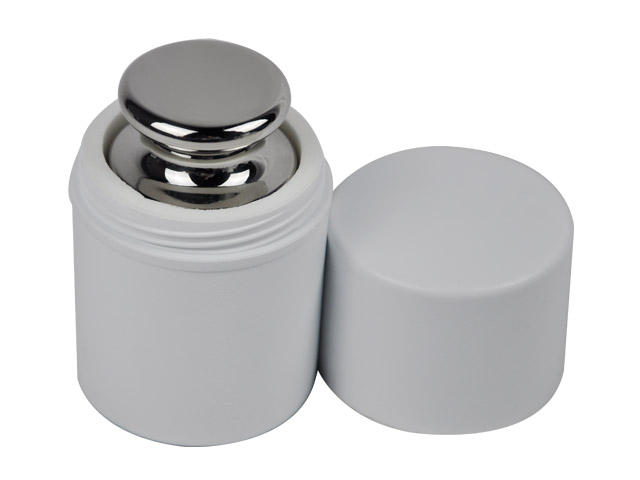
Standardized usage specifications of stainless steel weights are closely linked to the measurement accuracy of precision electronic balances. Before each calibration operation, users need to place stainless steel weights in the same working environment as the electronic balance for a period of temperature adaptation, eliminating mass deviation caused by temperature differences between the weight and the balance equipment. During placement, weights should be held with non-metallic tweezers or clean soft gloves to avoid direct hand contact, which can leave sweat, oil stains, and fingerprints on the weight surface. These tiny attachments are invisible to the naked eye but can produce measurable mass changes on high-precision electronic balances, affecting calibration results. After calibration, stainless steel weights need to be cleaned and stored in dry, dust-proof sealed containers to prevent long-term exposure to air from accumulating dust and moisture. Standardized operation habits can maximize the performance advantages of stainless steel weights and extend their effective service life.
The graded performance characteristics of stainless steel weights match the diverse precision requirements of different types of precision electronic balances. Low-range electronic balances used for conventional industrial detection and routine experimental verification can adapt to general-grade stainless steel weights with stable basic performance, while ultra-high-precision analytical balances and micro-weighing instruments used for pharmaceutical ingredient testing, trace material analysis, and metrology verification require high-grade stainless steel weights with stricter mass tolerance control. Different grades of stainless steel weights undergo precise mass screening and fine adjustment during production, with controlled tolerance ranges matching the resolution limits of corresponding electronic balances. This graded matching design ensures that each calibration operation can effectively correct the systematic error of the electronic balance, realizing targeted calibration from conventional precision to ultra-high precision measurement scenarios.
In practical application scenarios, stainless steel weights solve many pain points in the calibration process of precision electronic balances. Traditional cast iron weights are prone to rust and mass loss, requiring frequent replacement and repeated calibration, which increases equipment maintenance costs and affects work efficiency. Alloy weights with unstable material properties are susceptible to environmental changes, leading to inconsistent calibration reference standards. In contrast, stainless steel weights balance stability, durability, and accuracy, reducing the frequency of weight replacement and repeated equipment debugging. For scientific research institutions and production enterprises that require long-term, high-frequency precision weighing operations, the stable performance of stainless steel weights ensures the traceability and consistency of measurement data throughout different experimental batches and production cycles, providing reliable technical support for data comparison, quality inspection, and academic research.
With the continuous upgrading of precision electronic balance manufacturing technology, the accuracy resolution of weighing equipment is constantly improving, placing higher demands on the comprehensive performance of supporting calibration weights. Modern stainless steel weight manufacturing processes are also continuously optimized, with more precise material proportioning, finer surface processing, and more reasonable structural design, further reducing self-mass fluctuation and environmental sensitivity. The integration of subtle anti-contamination design and standardized dimensional control enables stainless steel weights to better adapt to the ultra-precision measurement needs of new-generation electronic balances. As a key auxiliary component of precision weighing systems, stainless steel weights will continue to underpin the stable operation of precision electronic balances in various high-precision measurement fields, ensuring the rigor and credibility of modern measurement work through stable and accurate reference mass standards.
Stainless Steel Weight For Precision Electronic Balance
https://www.veidtweighing.com/ssweight/StainlessSteelWeight
Post Date: May 23, 2026

![Standard Weight For Platform Scales]()
Standard Weight For Platform Scales
In industrial production, commercial trading, logistics warehousing, and quality inspection industries, platform scales serve as one of the most fundamental and indispensa…![Calibration Weight For Laboratory Instrument Factory Calibration Use]()
Calibration Weight For Laboratory Instrument Factory Calibration Use
In the rigorous operational system of modern laboratory instrument manufacturing and daily calibration practices, calibration weights stand as one of the most fundamental …![Calibration Weight For Mechanical Balance Scale]()
Calibration Weight For Mechanical Balance Scale
Mechanical balance scales remain a foundational tool in precision weighing operations across laboratories, industrial workshops, educational institutions, and quality insp…![200g F2 Precision Calibration Weight Quality Control Lab]()
200g F2 Precision Calibration Weight Quality Control Lab
In modern quality control laboratory operations, accurate and repeatable mass measurement serves as the foundational pillar of reliable experimental data, product testing,…![Laboratory Weight For Weighing Scale]()
Laboratory Weight For Weighing Scale
In every scientific laboratory, industrial testing facility, and research workspace where precise mass measurement serves as the foundation of reliable experimental data a…