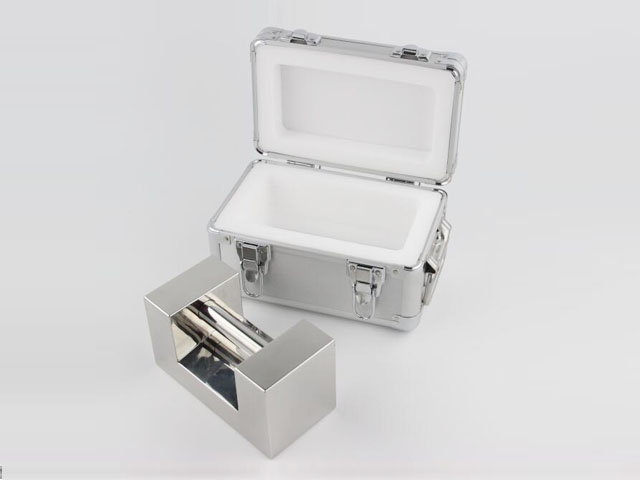
Stainless Steel Weight For Analytical Balance
Analytical balances represent foundational precision instruments in modern laboratory environments, designed to capture minute mass variations with high degrees of accuracy for scientific research, industrial quality control, chemical analysis, and academic experimentation. Unlike ordinary weighing tools, these instruments rely on standardized calibration references to maintain consistent measurement output, and stainless steel weights serve as the primary auxiliary components that underpin the stability and dependability of every weighing operation. The integration of stainless steel weights with analytical balance systems creates a standardized mass reference framework, eliminating systematic deviations caused by instrument drift, environmental interference, or long-term operational fatigue, and laying a solid foundation for credible experimental data and industrial detection results.
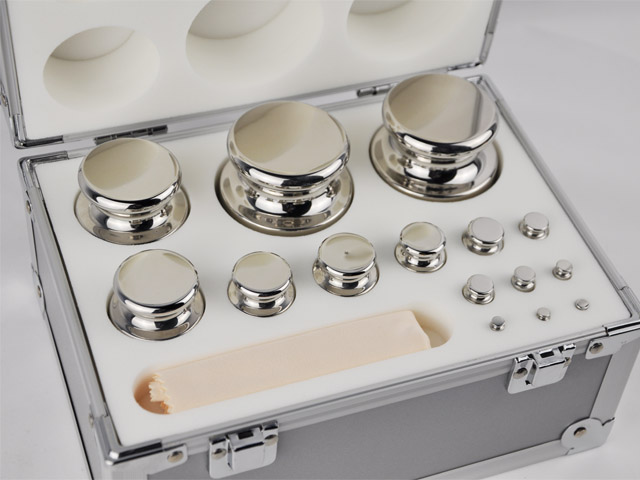
The widespread adoption of stainless steel as the core material for analytical balance weights stems from its unique physical and chemical properties that align perfectly with the rigorous demands of precision weighing scenarios. In laboratory environments, equipment and auxiliary tools are frequently exposed to fluctuating humidity, trace chemical vapors, temperature variations, and frequent physical contact, all of which can gradually alter the surface condition and actual mass of ordinary metal weights. Stainless steel materials feature stable chemical inertness, which effectively resists oxidation, rust formation, and corrosion induced by weak acid, weak alkali, and humid atmospheric conditions. This inherent stability prevents subtle mass changes caused by surface oxidation or chemical erosion, a critical attribute for weights tasked with calibrating high-sensitivity analytical balances that respond to microgram-level mass fluctuations.
Beyond chemical stability, stainless steel boasts uniform density and reliable physical consistency, with a standardized density range that ensures predictable volume-to-mass conversion ratios. This uniformity eliminates the internal structural inconsistencies found in cast iron or low-grade alloy weights, which often contain tiny pores, impurities, or uneven component distribution. Such structural flaws can lead to gradual mass loss due to internal oxidation or surface abrasion, compromising long-term calibration accuracy. Stainless steel’s refined manufacturing structure delivers consistent compactness across the entire weight body, maintaining stable mass parameters through thousands of calibration cycles and routine weighing verifications. Additionally, the material exhibits low magnetic susceptibility and minimal residual magnetization, avoiding magnetic interference that could disrupt the sensitive sensor components inside analytical balances, a common issue with ferrous metal alternatives that distorts micro-precision measurement data.
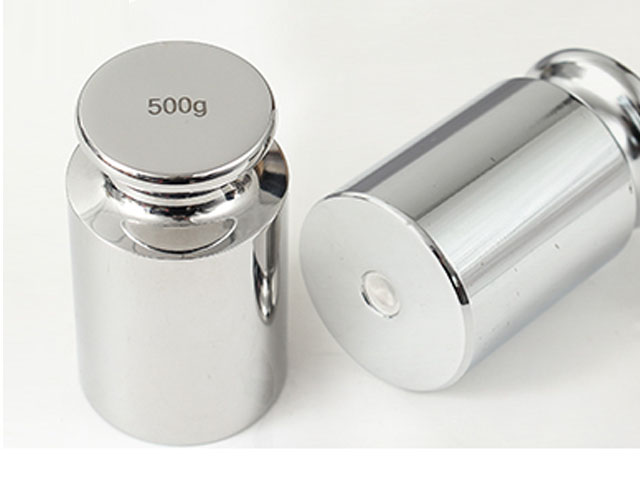
The structural design of stainless steel weights for analytical balance use is tailored exclusively to the operational characteristics of precision weighing equipment. These weights are crafted with smooth, seamless surface finishes through fine polishing and precision machining processes. The absence of surface grooves, cracks, or uneven textures reduces the accumulation of dust, experimental residues, and fine particulate matter, which are common sources of incremental mass gain in precision weights. Even tiny adhering particles can generate measurable errors in analytical balance readings, given the instruments’ ability to detect extremely small mass differences. The smooth surface of stainless steel weights allows for simple and thorough cleaning, enabling users to remove surface contaminants without causing surface wear or material loss, thus preserving the original mass accuracy over extended service periods.
Standardized dimensional design is another key feature of professional stainless steel analytical balance weights. Each weight is manufactured with precise geometric proportions and smooth edge treatments to minimize air resistance and airflow interference during weighing. Laboratory environments often feature subtle air turbulence generated by air conditioning systems, personnel movement, or experimental equipment operation, and irregularly shaped weights are more susceptible to buoyancy and airflow disturbance, leading to unstable reading fluctuations. The streamlined, regular shape of stainless steel weights optimizes aerodynamic performance, ensuring that the force exerted on the balance weighing pan remains stable and uniform, which helps the analytical balance achieve rapid reading stabilization and consistent measurement repeatability.
In practical laboratory applications, stainless steel weights fulfill two core functional roles: routine instrument calibration and experimental weighing verification. Analytical balances, as high-precision sensing devices, will inevitably produce slight zero drift and sensitivity deviation after prolonged use, frequent vibration, temperature changes, or repeated sample weighing. Regular calibration with standard stainless steel weights corrects these deviations, restoring the instrument’s initial working state and ensuring that subsequent sample weighing data remains accurate and traceable. For daily experimental work, these weights also serve as reference standards to verify the real-time working condition of analytical balances before formal testing, effectively avoiding experimental failure or data distortion caused by hidden instrument abnormalities.
The adaptability of stainless steel weights covers diverse precision weighing scenarios across multiple industries and research fields. In chemical laboratories, where quantitative analysis, solution preparation, and reagent ratio testing require ultra-precise mass data, calibrated analytical balances with stainless steel weight references ensure the accuracy of experimental formulas and reaction result analysis. In pharmaceutical research and production, precise weighing of raw materials, intermediates, and finished products relies on stable balance calibration to meet strict quality control requirements, with stainless steel weights maintaining consistent calibration standards throughout batch testing processes. In material science research, the micro-weighing of new material samples, thin film specimens, and nano-scale particles demands highly stable instrument performance, which is sustained by the reliable mass stability of stainless steel calibration weights.
Educational laboratory environments also benefit greatly from the application of stainless steel analytical balance weights. Physics and chemistry teaching experiments involving density calculation, mass comparison, and quantitative verification require accurate weighing data to help students establish correct cognitive models of physical and chemical laws. Stainless steel weights provide stable and intuitive standard mass references, enabling teaching instruments to maintain accurate measurement performance for long-term repeated teaching use. Their durable properties reduce equipment maintenance frequency and ensure the consistency of experimental teaching effects across different batches of student experiments.
Industrial quality inspection and precision manufacturing fields further expand the application scope of these weights. In precision parts processing, jewelry detection, and electronic component manufacturing, the tiny dimensional and mass tolerance requirements of products depend on high-precision analytical balance testing. Stainless steel weights calibrate detection equipment to ensure that product mass parameters meet standardized production requirements, controlling product quality stability and reducing unqualified product rates. Unlike temporary calibration tools, stainless steel weights maintain long-term performance stability, adapting to continuous high-intensity use in industrial detection workshops and frequent repeated calibration operations.
Scientific maintenance and standardized use are essential to maximize the service life and accuracy stability of stainless steel analytical balance weights. Although stainless steel features strong corrosion resistance and wear resistance, improper operation and storage can still affect its calibration performance. Weights should always be held with clean soft gloves during use, avoiding direct contact with bare hands. Sweat, grease, and skin secretions on human hands can form invisible thin films on the weight surface, causing subtle mass changes and affecting calibration precision. It is also necessary to prevent collision and friction between weights or with hard objects, as surface scratches and dents generated by impact will damage the standardized geometric structure and surface smoothness, interfering with weighing stability.
Storage conditions play a decisive role in maintaining the performance of stainless steel weights. These precision accessories should be placed in dry, clean, and constant-temperature storage spaces, avoiding long-term exposure to high humidity, high temperature, or dusty environments. Although stainless steel resists conventional corrosion, prolonged exposure to humid air containing chemical residues may still cause subtle surface changes. Professional storage boxes with shock-absorbing and dust-proof functions can effectively isolate external environmental interference, keeping each weight in an independent and stable storage state to prevent surface contamination and structural damage. Regular cleaning is also indispensable; soft non-woven fabrics or professional dust-free paper can be used to gently wipe the weight surface, removing floating dust and residual impurities, while avoiding the use of corrosive cleaning agents that may damage the surface finish.
Regular professional verification is another important link in the application management of stainless steel weights. With the increase of service time and use frequency, even high-stability stainless steel weights will produce extremely slight mass changes due to cumulative micro-wear and environmental effects. Regular professional verification can timely confirm the mass deviation of weights, determine their continuous applicability for precision calibration work, and eliminate measurement risks caused by weight parameter changes. This standardized management mode ensures that the matching use of stainless steel weights and analytical balances always maintains a high-precision measurement level, meeting the rigorous data requirements of scientific research and industrial detection.
Compared with weight products made of other materials, stainless steel weights show comprehensive advantages in long-term use cost and performance stability. Low-grade metal weights are prone to rust and deformation, requiring frequent replacement and repeated calibration, which increases the comprehensive use cost and affects the continuity of experimental data. Composite material weights often have poor temperature adaptability, prone to thermal expansion and contraction deformation in environments with large temperature differences, leading to unstable mass parameters. Stainless steel weights balance temperature adaptability, chemical stability, and mechanical durability, maintaining stable performance in most conventional laboratory and industrial working environments, and providing consistent calibration standards for analytical balances for a long time.
The subtle performance advantages of stainless steel weights are fully reflected in micro-precision weighing scenarios. For analytical balances with microgram-level resolution, even ultra-small mass changes can lead to obvious data errors. The ultra-stable physical and chemical properties of stainless steel ensure that the effective mass of the weight remains nearly unchanged under conventional working conditions, providing a fixed and reliable reference benchmark for instrument calibration. This stability ensures that the analytical balance can capture the tiny mass differences of samples accurately, which is particularly critical for trace analysis experiments, ultra-fine material detection, and high-precision quantitative research.
In the context of increasingly refined modern experimental and industrial detection standards, the matching use of high-performance stainless steel weights and analytical balances has become a basic guarantee for standardized measurement work. All precision measurement systems rely on stable standard references to transmit accurate measurement values, and stainless steel weights undertake the core task of mass value transmission in analytical balance measurement systems. Their excellent material characteristics, precise structural design, and stable working performance build a reliable bridge between instrument equipment and accurate measurement data, supporting the steady development of scientific research innovation, industrial quality upgrading, and academic teaching research.
In future precision measurement development, the application value of stainless steel analytical balance weights will continue to improve with the continuous upgrading of precision weighing technology. As experimental detection requirements become more stringent and industrial precision standards continue to rise, the demand for stable, durable, and high-consistency calibration reference weights will further increase. Stainless steel materials, with their unique comprehensive performance advantages, will remain the mainstream choice for analytical balance calibration weights, continuously providing stable and accurate basic support for various high-precision weighing and measurement work, and promoting the continuous improvement of overall precision measurement levels in various industries.
Stainless Steel Weight For Analytical Balance
https://www.veidtweighing.com/ssweight/StainlessSteelWeight
Post Date: May 23, 2026

![2000kg Test Weight]()
2000kg Test Weight
In the complex and interconnected ecosystem of modern industrial production, logistics transportation, engineering construction, and mechanical equipment operation, the st…![E2 Class Test Weight]()
E2 Class Test Weight
In the intricate and foundational field of modern metrology, the consistency and credibility of all mass measurement activities rely heavily on standardized reference carr…![Cast Iron Weight For Scales]()
Cast Iron Weight For Scales
In every sector that relies on consistent and dependable mass measurement, cast iron weight for scales stands as an irreplaceable foundational component that upholds the i…![Kilogram Test Weight]()
Kilogram Test Weight
In every corner of modern industrial production, scientific research experimentation, commercial transaction settlement, and daily life quality supervision, the accurate p…![M2 Calibration Weight]()
M2 Calibration Weight
Mass measurement stands as one of the most fundamental and indispensable links in all fields of modern industrial production, laboratory scientific research, commercial tr…