F2 Class Standard Weight
In the intricate and interconnected world of modern metrology, the consistency and reliability of mass measurement form the invisible foundation of countless professional activities, spanning scientific research, industrial production, commercial circulation, and quality inspection work across all sectors of society. Every precise weighing result that people rely on in daily work and professional operations cannot be separated from standardized mass reference tools that maintain stable performance and accurate metering status over long-term use, and F2 class standard weight stands out as a core intermediate metrology tool that bridges high-level precision mass benchmarks and conventional daily weighing calibration work. Unlike basic general-purpose weighing accessories that only meet rough mass comparison needs, this type of standard weight is designed and manufactured to meet unified and standardized metrological specifications, focusing on maintaining stable mass values, minimal environmental interference sensitivity, and reliable long-term service performance, undertaking the vital task of transferring accurate mass values layer by layer in the entire metrological measurement system. Its existence ensures that all kinds of high-precision weighing instruments used in laboratories, production workshops, and key commercial links can maintain consistent measurement accuracy, avoiding measurement deviations that may lead to experimental data distortion, product quality fluctuations, and inconsistent commercial transaction settlement standards, and providing solid and reliable mass measurement support for all links that require accurate numerical calibration and verification.
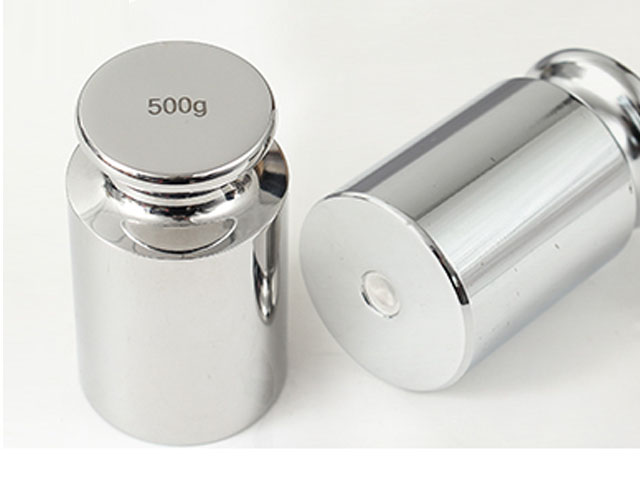
To understand the practical value and core positioning of F2 class standard weight, it is essential to clarify its specific tiered position in the complete mass metrology hierarchy, which is scientifically divided according to measurement accuracy grades and mass value transfer relationships, with each grade of standard weight having clear and defined application boundaries and calibration matching objects. At the top of the entire mass measurement system are the highest-level reference mass standards used for core metrological research and top-level value retention, which are responsible for maintaining the most fundamental mass benchmark data and providing calibration support for high-grade precision standard weights. Below these top-level benchmarks are high-precision standard weights dedicated to fine metrological calibration work, and F2 class standard weight belongs to the key intermediate connection link in this whole system, neither pursuing the extreme ultra-high precision of the topmost metrological benchmarks nor adapting to the low-precision use scenarios of ordinary weighing tools. Its core functional orientation is focused on two core metrological work directions: one is to carry out regular calibration and accuracy verification of common working standard weights used in daily industrial and commercial weighing work, ensuring that these widely used working weights do not have cumulative mass deviation after long-term repeated use; the other is to directly cooperate with high-accuracy weighing instruments deployed in key professional scenarios to complete accurate weighing work that requires strict mass reference standards. This unique intermediate positioning makes F2 class standard weight bear the important responsibility of converting high-level professional metrological accuracy into practical operable measurement standards for various industries, becoming an indispensable bridge connecting laboratory precision metrology and on-site practical weighing application.
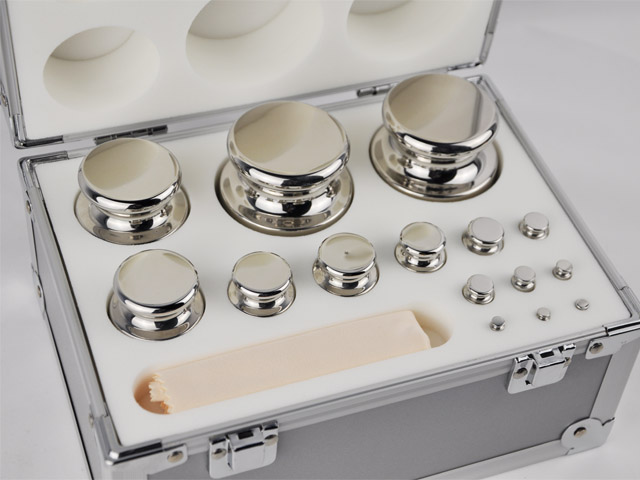
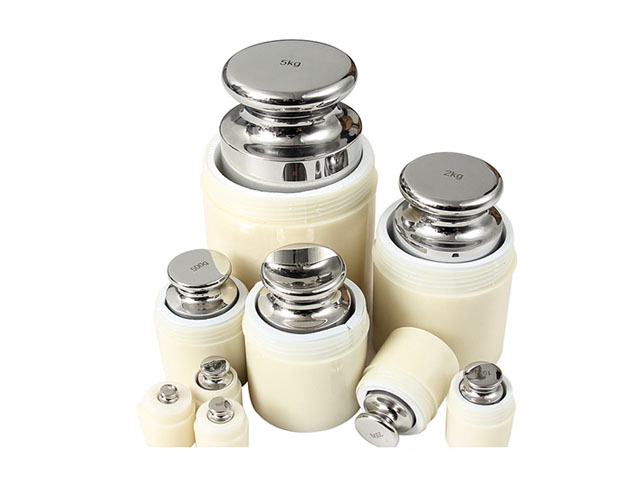
The overall structural design and material selection of F2 class standard weight are all formulated around the core goals of long-term mass stability, strong environmental adaptability, and convenient standardized operation, with every production and processing link following unified metrological production norms to ensure that each finished weight can maintain consistent performance indicators in different use and storage environments. Most of the qualified F2 class standard weight products are made of high-quality stainless steel materials with excellent comprehensive performance, which is selected for its outstanding natural advantages in anti-corrosion, anti-oxidation, surface wear resistance and density uniformity. In long-term contact with air, conventional laboratory chemical reagents, and general industrial working environments, this material will not undergo rapid chemical reactions or surface corrosion and oxidation, which effectively avoids the change of actual mass caused by surface rust, oxidation peeling, or external impurity adhesion. At the same time, the internal density of the selected material is uniform without obvious internal pores or structural gaps, which ensures that the weight will not have subtle mass changes due to internal structural shrinkage or material aging during long-term use. The surface of each F2 class standard weight will undergo fine polishing and smooth finishing treatment, removing all surface burrs, protrusions and uneven areas; on the one hand, this processing method reduces the contact area with external dust and pollutants, making daily cleaning and maintenance work simpler and more efficient, and not easy to leave stubborn dirt that affects mass accuracy; on the other hand, it effectively reduces the wear and collision loss caused by frequent handling, placement and stacking during calibration and use, further maintaining the long-term stability of the weight’s mass value.
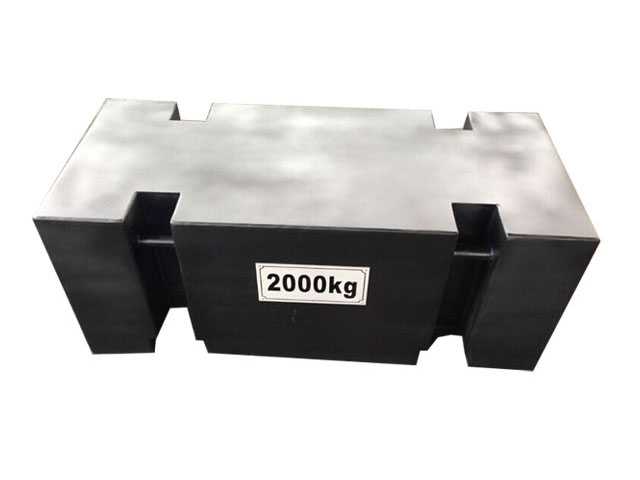
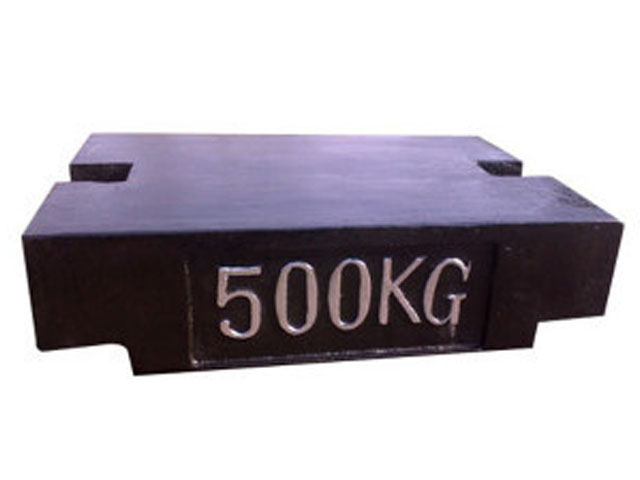
In terms of external shape and structural design, F2 class standard weight adopts conventional cylindrical or block standardized shapes that meet unified metrological usage habits, with the overall size and proportion designed to meet the dual needs of stable placement and convenient manual or mechanical handling. Each single weight with different fixed mass specifications has a regular and symmetrical structure, ensuring that it will not tilt or shift randomly when placed on the weighing pan of various balances and weighing instruments, avoiding measurement errors caused by unstable placement state. The surface of the weight does not have any redundant decorative structures or protruding accessories, and all design details focus on meeting the core needs of metrological work, ensuring that no external structural factors interfere with the accuracy of mass comparison and calibration work. In addition, each set of F2 class standard weight is usually equipped with a targeted special storage and protection container, which is made of shockproof, moisture-proof and dust-proof materials. When the weights are not in use for a long time or need to be transported between different working places, placing them in the supporting container can effectively isolate external moisture, dust, mechanical collision and vibration interference, prevent accidental damage and mass value fluctuation caused by external adverse factors, and ensure that the accuracy performance of the weights remains unchanged during storage and handover.
The application scope of F2 class standard weight covers multiple key fields that have high requirements for weighing accuracy and measurement consistency, and its practical role is reflected in every link that relies on accurate mass measurement for quality control and data calibration. In scientific research laboratory scenarios, many experimental projects in chemical analysis, material science research, pharmaceutical research and development, and environmental monitoring testing require highly accurate weighing data as the basic support for experimental research. The preparation of experimental raw materials, the configuration of precise chemical reagents, the weighing of experimental samples and the recording of experimental data all need to use high-accuracy electronic balances and precision weighing instruments, and these laboratory weighing equipment need regular and periodic calibration and verification to ensure that the measured data is true, effective and repeatable. F2 class standard weight becomes the ideal special calibration tool for this work, helping laboratory staff regularly check the accuracy of weighing instruments, correct subtle measurement deviations in time, and ensure that all experimental data obtained in the research process is accurate and reliable, providing solid data support for the smooth progress of scientific research experiments and the authenticity and validity of research results.
In the pharmaceutical and chemical production industry, the application value of F2 class standard weight is more prominent, because the production and processing of pharmaceutical preparations, fine chemical raw materials and related high-purity chemical products have extremely strict requirements on the proportion of raw materials and the accuracy of ingredient weighing. Slight deviations in the weighing ratio of raw materials may affect the purity and efficacy of finished pharmaceutical products, or lead to changes in the chemical properties of chemical products, resulting in unqualified product quality and even potential safety hazards in subsequent use. Production enterprises need to carry out daily calibration and regular accuracy inspection of all weighing instruments used in production batching and quality testing links, and F2 class standard weight can fully meet the calibration accuracy requirements of these production weighing equipment. Through regular calibration with F2 class standard weight, enterprises can ensure that every raw material weighing link in the production process is within the accurate measurement range, maintain the stability of product quality in mass production, reduce the proportion of unqualified products caused by weighing deviations, and effectively improve the overall production quality and qualified product rate of enterprises.
In important commercial transaction fields involving high-value goods, F2 class standard weight also plays an irreplaceable regulatory and guarantee role. The trading and circulation of precious metals, precious stones and other high-value special commodities rely entirely on high-precision weighing instruments to determine the transaction volume, and the accuracy of weighing results is directly related to the legitimate rights and interests of both parties to the transaction. To ensure the fairness and impartiality of commercial transactions and avoid transaction disputes caused by inaccurate weighing data, the weighing instruments used in such high-value commodity transactions need to be regularly verified and calibrated by metrological management departments and relevant institutions. F2 class standard weight is the special standard tool used for the verification and calibration of these transaction weighing instruments, which can ensure that the weighing data of transaction equipment is accurate and consistent, maintain the fair order of high-value commodity trading markets, and protect the economic rights and interests of every market participant. At the same time, in the quality inspection and commodity supervision work of the commercial circulation field, F2 class standard weight is also used to spot-check the accuracy of weighing equipment in various trading places, standardize the use of weighing measuring tools in the market, and maintain the standardized and orderly operation of the entire commercial weighing link.
In industrial manufacturing and material testing fields, many precision parts processing, new material performance testing and product quality inspection work also need the support of F2 class standard weight. In the processing and manufacturing of precision mechanical parts, aerospace accessories and electronic component products, the mass of parts and components is an important technical index affecting product assembly accuracy and overall service performance, and the weighing and detection of product parts mass need high-precision weighing equipment for data measurement. Regular calibration of this detection equipment with F2 class standard weight can ensure the accuracy of product mass detection data, help enterprises strictly control product quality in the production process, and ensure that the produced parts and products meet the design and production technical standards. In the material performance testing experiment, the mass change data of materials before and after different environmental tests is an important basis for judging material performance, and accurate weighing calibration is the premise of obtaining effective test data, and F2 class standard weight provides reliable mass reference standards for all these testing and detection work.
Daily scientific maintenance and standardized management are key factors to ensure that F2 class standard weight can maintain stable accuracy and long service life, and good maintenance habits can effectively extend the service cycle of the weight and avoid unnecessary mass value deviations caused by improper use and storage. In the daily use process, operators need to handle F2 class standard weight gently and standardly, avoiding violent collision, random throwing and mutual friction and extrusion between weights. Violent impact will not only cause subtle deformation on the surface and structure of the weight, but also lead to tiny changes in internal structure, resulting in inaccurate actual mass; long-term mutual friction will cause surface material wear, reducing the mass stability of the weight. During the use process, it is necessary to hold the weight by the specially reserved non-measurement contact part, and avoid directly touching the weighing surface of the weight with hands, because the sweat, oil and dust on the human hand will adhere to the surface of the weight, forming a thin impurity layer that is not easy to find, affecting the accurate mass of the weight and causing measurement calibration deviations.
After each use of F2 class standard weight, it is necessary to carry out simple and standardized cleaning work in time, using clean, soft and non-abrasive professional cleaning tools to gently wipe off the dust, debris and slight stains on the surface, ensuring that the surface of the weight is clean and dry without any residual impurities. After cleaning, the weights need to be placed back into the special protective storage container in order, and stored in a dry, constant temperature, dust-free and corrosion-free storage environment, avoiding long-term placement in humid, high temperature, corrosive gas and strong vibration environments. Humid environment will cause potential corrosion and oxidation on the surface of the weight, high temperature environment will cause subtle thermal expansion and contraction of the weight material and affect structural stability, and strong vibration will lead to loose internal structure and unstable mass value. In addition, F2 class standard weight also needs to be regularly sent to professional metrological institutions for periodic re-calibration and performance testing according to metrological management requirements, to check whether its mass value is kept within the standard allowable error range, and timely adjust and correct subtle deviations that occur after long-term use, ensuring that it can always meet the accuracy requirements of various calibration and weighing work in the long-term use process.
From the perspective of the overall operation of the entire metrological measurement system, the importance of F2 class standard weight is not only reflected in its own accurate mass performance and wide application scenarios, but also in its fundamental role in maintaining the unity and consistency of national mass measurement standards. All mass measurement work in various industries and fields is interrelated and mutually restricted, and only when all weighing instruments and working weights at all levels are calibrated based on unified and accurate standard tools can the weighing data of different regions, different institutions and different production links be comparable and consistent. Without the reliable support of F2 class standard weight as an intermediate metrological transfer tool, the high-precision benchmarks of top metrology cannot be effectively transmitted to the actual production, scientific research and commercial links, and various measurement data will be independent of each other and lack unified standards, leading to confusion in industrial production data, inaccurate scientific research experimental data, and disputes in commercial transactions. Therefore, F2 class standard weight is not only a simple metrological tool for calibration and weighing, but also an important basic guarantee for maintaining the standardized operation of the entire social measurement system, promoting the standardized development of all walks of life that rely on accurate mass measurement.
With the continuous progress of industrial technology, the continuous upgrading of scientific research level, and the continuous improvement of social requirements for measurement accuracy and quality supervision standards, the application demand and importance of F2 class standard weight in various professional fields are constantly increasing. More and more industries and enterprises realize that accurate measurement is the primary premise of product quality assurance, scientific research innovation and standardized commercial operation, and pay more and more attention to the regular calibration of weighing equipment and the standardized management of standard weights. As a key intermediate standard in the mass metrology system, F2 class standard weight will continue to undertake the important task of mass value transfer and weighing accuracy calibration, continuously provide stable and reliable metrological support for scientific research innovation, industrial upgrading, commercial fairness and quality supervision in various fields, and lay a solid and accurate mass measurement foundation for the long-term and high-quality development of all industries.
F2 Class Standard Weight
https://www.veidtweighing.com/standard-weights.html
Post Date: May 4, 2026
https://www.supplier-manufacturer.com/standard-weight/f2-class-standard-weight.html

![Stainless Steel Weight For Analytical Balance]()
Stainless Steel Weight For Analytical Balance
Analytical balances represent foundational precision instruments in modern laboratory environments, designed to capture minute mass variations with high degrees of accurac…![Material of Test Weight]()
Material of Test Weight
The core performance and long-term practical value of every test weight are fundamentally determined by the raw material selected for its production, as this foundational …![Stainless Steel Weight Vender In China]()
Stainless Steel Weight Vender In China
The stainless steel weight manufacturing sector in China has developed steadily alongside the growth of global industrial, commercial, and consumer product markets, formin…![Test Weight Wholesale]()
Test Weight Wholesale
In the modern industrial and commercial operation system, accurate weighing measurement stands as one of the most fundamental supporting links for stable production, stand…![Standard Weight Sets]()
Standard Weight Sets
For anyone embarking on a strength training journey, whether building a dedicated home workout space or refining a consistent gym routine, standard weight sets stand as on…