Material of Test Weight
The core performance and long-term practical value of every test weight are fundamentally determined by the raw material selected for its production, as this foundational element shapes every key attribute that matters for daily weighing verification, routine calibration work, and consistent mass reference delivery across diverse working scenarios. Test weights serve as fundamental physical carriers of standard mass values, acting as reliable benchmarks to check the stability and accuracy of various weighing equipment ranging from delicate laboratory analytical balances to heavy-duty industrial platform scales and large-scale industrial weighing systems. Unlike ordinary counterweights used for simple mechanical balancing or temporary load bearing, test weights require inherent material stability that can resist external environmental interference, maintain consistent physical properties over extended use, and avoid subtle mass deviations that could compromise the credibility of weighing data over time. The selection of suitable materials for test weight manufacturing is never a random choice based on basic usability alone; it involves comprehensive consideration of working environmental conditions, frequency of daily handling and repeated use, required long-term mass stability, surface durability against wear and tear, and the specific practical demands of different application fields. Each type of material used for crafting test weights carries unique physical traits, natural structural advantages, and inherent limitations, all of which directly influence the service life of the test weight, the stability of its mass value throughout regular use, and its adaptability to complex or harsh working surroundings encountered in industrial production, laboratory research, and daily commercial weighing inspection work.
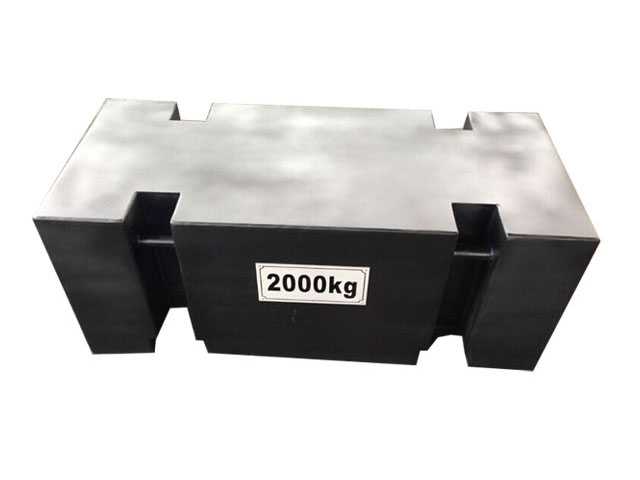
Cast iron stands as one of the most widely adopted and traditional materials for producing test weights, especially favored for manufacturing large-specification test weights applied in general industrial production environments, construction site weighing verification, agricultural material weighing checks, and routine on-site equipment debugging work. This material features excellent overall structural density and strong mechanical rigidity, enabling cast iron test weights to maintain stable overall shape and structural integrity even under conditions of frequent moving, stacking, and occasional minor collisions in rough working environments. The internal molecular structure of cast iron is compact and uniform after standardized casting and cooling processing, which endows the finished test weights with good overall mass uniformity and stable basic physical properties that do not easily change with conventional external temperature fluctuations. In practical application scenarios that do not require ultra-high precision mass reference standards but demand solid durability and reliable basic weighing calibration effects, cast iron fully meets daily use needs and maintains steady performance for many years of continuous service. To further enhance the environmental adaptability of cast iron test weights, surface protective treatment is usually carried out after casting and finishing processing, forming a protective outer layer that effectively isolates the internal metal structure from direct contact with outside air, moisture, and various dust impurities present in industrial working spaces. This simple and practical surface treatment slows down the natural oxidation and surface corrosion process of cast iron during long-term placement and repeated use, avoiding gradual surface deterioration that could otherwise lead to slow changes in surface quality and subtle deviations in overall mass value over time. Despite its many practical advantages in industrial basic application scenarios, cast iron still has inherent material limitations that restrict its use in high-precision working environments. The material is susceptible to surface rust formation when exposed to humid air for a long time without proper maintenance, and its natural magnetic properties may cause subtle interference effects in some professional working environments that require strict non-magnetic characteristics. In addition, long-term placement in environments with severe temperature and humidity changes may lead to slight surface aging of cast iron test weights, requiring regular surface maintenance and mass inspection to ensure their basic working performance remains consistent and reliable for daily calibration operations.
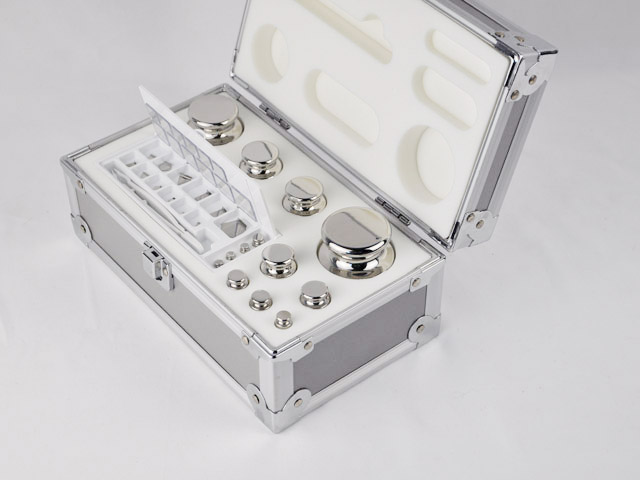
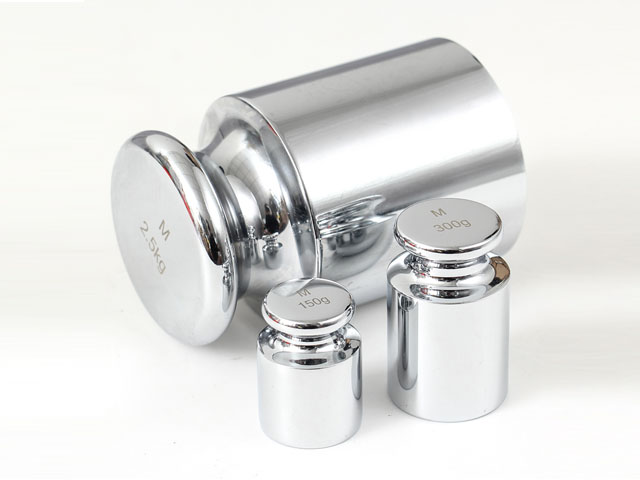
Stainless steel has gradually become the mainstream preferred material for manufacturing medium and small-specification high-precision test weights, widely used in laboratory precision instrument calibration, pharmaceutical production weighing detection, food processing hygiene-related weighing work, and fine chemical experimental mass comparison scenarios. The most prominent advantage of stainless steel as a test weight material lies in its excellent natural corrosion resistance and oxidation resistance, allowing finished test weights to maintain smooth and intact surface conditions for a long time even in humid laboratory environments, production workshops with slight chemical volatile substances, and working spaces with frequent air circulation and temperature changes. Unlike cast iron that relies on external protective coatings to resist corrosion, stainless steel itself has stable chemical properties, and its internal metal structure will not easily produce chemical reactions with oxygen, moisture, or trace volatile substances in the external environment, effectively avoiding mass changes caused by surface oxidation, rusting, or corrosion during long-term use. The surface of stainless steel test weights can be processed to achieve a high smoothness finish through fine polishing and precise finishing treatment, which not only makes daily cleaning and surface maintenance more convenient and efficient but also reduces surface dust adhesion and dirt accumulation in daily use. Smooth surface conditions prevent long-term dust deposition from affecting the accurate mass value of the test weight and avoid surface wear caused by frequent handling and repeated placement in daily calibration work. In terms of physical performance, stainless steel has stable density characteristics, good structural uniformity, and low susceptibility to subtle mass changes caused by conventional temperature differences, ensuring that the test weight can maintain highly consistent mass reference effects during long-term repeated calibration use. Stainless steel materials also have good non-magnetic properties after professional processing, which can effectively avoid magnetic interference in precision weighing work and meet the strict environmental requirements of high-precision weighing scenarios. Although stainless steel has outstanding performance advantages in precision application fields, its material cost and processing difficulty are higher than those of cast iron, making it more suitable for small and medium-sized test weights that require high precision and long-term stable use rather than large-scale industrial test weights with low precision requirements and large usage volume.
Brass is another classic traditional material often used for making medium-specification conventional precision test weights, widely applied in daily commercial weighing instrument verification, market trading weighing equipment debugging, and general factory internal daily weighing routine inspection work. Brass material has moderate density, good ductility, and easy processing characteristics, which can be processed into test weights with smooth surface and regular shape through simple cutting, polishing, and finishing procedures. The surface of brass test weights has natural luster and good texture, and after simple surface anti-oxidation treatment, it can effectively slow down the surface oxidation and discoloration speed in daily use, maintaining a neat and uniform appearance for a long time. In terms of mass stability, brass has stable internal structural properties, will not produce obvious mass fluctuations due to daily temperature and humidity changes, and can provide stable and reliable mass reference standards for conventional precision weighing work. Compared with cast iron, brass has better surface finish and anti-tarnish performance after treatment, is not easy to rust in conventional working environments, and is more convenient for daily manual handling and regular cleaning maintenance. Compared with stainless steel, brass has lower processing difficulty and better cost performance in conventional precision application scenarios, fully meeting the basic precision and long-term use needs of most daily commercial and industrial conventional weighing calibration work. The main limitation of brass as a test weight material is that it is prone to slight surface oxidation and discoloration after long-term placement in open air environments, and long-term accumulation of surface oxidation layers may cause tiny changes in surface mass. Therefore, brass test weights need regular surface wiping and maintenance during use to remove surface slight oxidation substances and ensure the stability of overall mass value. In addition, brass is not suitable for use in working environments with strong chemical corrosion and high humidity for a long time, as harsh environmental conditions will accelerate surface aging and affect the service life and calibration effect of test weights.
Aluminum materials are mainly used for manufacturing small-specification lightweight test weights, suitable for portable weighing detection work, small precision instrument auxiliary calibration, and temporary mass comparison scenarios that require easy carrying and frequent mobile use. The most notable feature of aluminum is its light overall weight and good portability, making aluminum test weights easy to carry, transport, and deploy in different working spaces without excessive handling labor. Aluminum has good surface oxidation resistance in conventional atmospheric environments, and a dense natural oxide layer will form on its surface after long-term use, which can protect the internal metal structure from further oxidation and corrosion and maintain the basic stability of the test weight. The processing of aluminum materials is simple and convenient, and test weights of various small specifications can be quickly processed according to actual use needs, with low overall production cost and flexible application range. Aluminum test weights have low overall density, so they are mostly made into small mass specifications and are not suitable for large-load weighing calibration work. The inherent shortcomings of aluminum materials are also obvious: the surface hardness is relatively low, and scratches and wear are easy to occur after frequent handling and collision, which may affect the surface finish and even cause tiny mass changes in severe cases. In addition, aluminum has relatively poor structural stability in extreme temperature environments, and it is prone to slight thermal expansion and contraction, which is not suitable for high-precision laboratory calibration work that requires extremely strict mass stability. It is more suitable for temporary mobile detection and low-precision conventional weighing auxiliary work scenarios.
Some test weights will also adopt surface electroplated metal materials on the basis of basic metal substrates, combining the structural stability of the internal substrate material and the corrosion resistance and wear resistance of the outer electroplated layer to meet the dual needs of structural durability and surface protection in complex working environments. The internal substrate of such test weights usually adopts metal materials with stable structure and low cost, and the outer surface is plated with a uniform and dense protective metal layer through professional electroplating technology. The electroplated outer layer can effectively isolate the internal substrate from external moisture, dust, and corrosive substances, greatly improving the overall environmental adaptability and wear resistance of the test weight. The surface of electroplated test weights is smooth and flat, with good anti-fouling performance, convenient daily cleaning and maintenance, and not easy to produce surface rust and oxidation marks during long-term use. This composite material processing method makes the test weight have both good structural stability and excellent surface protection performance, and can be applied to workshop production environments with frequent equipment use, large dust volume, and moderate humidity changes. The key to electroplated material test weights lies in the uniformity and firmness of the electroplated layer. If the electroplating process is not precise enough, the electroplated layer may peel off or fall off after long-term friction and collision, exposing the internal substrate and affecting the service life and mass stability of the test weight. Therefore, the production process requirements for electroplated composite test weights are relatively strict, and regular surface condition inspection is needed during use to ensure the integrity of the outer protective layer.
The rational selection of test weight materials must always be closely combined with actual application scenarios and long-term use planning, and no single material can meet all the use needs of all weighing calibration environments. When choosing test weight materials, it is necessary to comprehensively evaluate multiple factors such as the precision level of weighing equipment to be calibrated, the temperature and humidity changes of the working environment, the frequency of daily handling and use, the requirements for surface hygiene and corrosion resistance, and the long-term maintenance cost budget. Industrial production sites with harsh environments and low precision requirements can choose cast iron materials with strong durability and good pressure resistance; laboratory precision calibration and hygiene-sensitive production scenarios are more suitable for stainless steel materials with stable performance and strong corrosion resistance; daily commercial conventional weighing detection can choose brass materials with balanced performance and cost; portable mobile temporary weighing work can choose lightweight and easy-to-carry aluminum materials. Regardless of the type of material selected for the production of test weights, long-term stable mass maintenance and regular routine inspection and maintenance are essential links to ensure the lasting effectiveness of test weights. Different materials have different maintenance characteristics, and targeted maintenance measures should be formulated according to the inherent attributes of the material to avoid mass deviation caused by material aging, surface corrosion, and wear during long-term use. Only by matching the appropriate test weight material according to actual working needs and cooperating with scientific daily maintenance and regular mass inspection can test weights always maintain stable and reliable mass reference performance, ensure the accuracy and consistency of all weighing work data, and provide solid basic support for the stable operation of industrial production, experimental research, and commercial weighing transactions.
Material of Test Weight
https://www.veidtweighing.com/test-weight.html
Post Date: May 4, 2026
https://www.supplier-manufacturer.com/test-weight/material-of-test-weight.html

![Calibration Weight Kit]()
Calibration Weight Kit
In every sector that relies on reliable mass measurement to maintain operational stability, procedural consistency, and consistent output quality, the calibration weight k…![20 Kg Calibration Weight]()
20 Kg Calibration Weight
In every sector that relies on accurate mass measurement to maintain operational order, product quality, and operational consistency, the role of standardized mass referen…![Stainless Steel Flat Test Weight For Platform Scale Calibration]()
Stainless Steel Flat Test Weight For Platform Scale Calibration
Stainless steel flat test weights serve as essential precision tools for the routine calibration and accuracy verification of platform scales across diverse industrial and…![Standard Weight For Platform Scales]()
Standard Weight For Platform Scales
In industrial production, commercial trading, logistics warehousing, and quality inspection industries, platform scales serve as one of the most fundamental and indispensa…![Calibration Weight For Laboratory Instrument Factory Calibration Use]()
Calibration Weight For Laboratory Instrument Factory Calibration Use
In the rigorous operational system of modern laboratory instrument manufacturing and daily calibration practices, calibration weights stand as one of the most fundamental …