M3 Class Standard Weight
Within the entire framework of industrial weighing and daily commercial measurement operations, standard weights serve as the foundational cornerstone that maintains the uniformity and credibility of all weight-related data across every link of production, transaction, and quality inspection. Among the various graded standard weights designed to match different weighing scenarios and precision requirements, M3 class standard weight stands out as a practical and widely applicable measurement medium, perfectly bridging the gap between basic daily weighing needs and routine industrial calibration work. Unlike higher-grade standard weights that focus on ultra-fine measurement accuracy for professional laboratory research and high-precision instrument testing, this type of standard weight is engineered to adapt to conventional working environments, frequent operational use, and general-scale weighing equipment debugging, making it an indispensable basic tool in small and medium-sized manufacturing workshops, daily commodity trading markets, logistics and warehousing distribution centers, and various grassroots quality inspection stations. The design and manufacturing of M3 class standard weight follow unified basic measurement specifications for conventional weighing reference tools, focusing on balancing stable physical performance, reasonable tolerance range, and strong environmental adaptability, so that it can maintain reliable working performance in complex on-site conditions without requiring overly strict storage and use thresholds, meeting the daily calibration, verification, and debugging needs of most common mechanical and electronic weighing devices in social production and life.
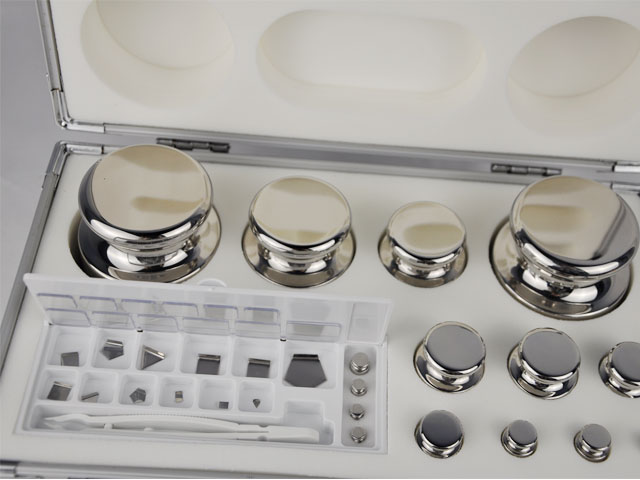
The physical characteristics and material selection of M3 class standard weight are carefully determined according to the actual demands of long-term repeated use and outdoor or on-site working scenarios. Most of these standard weights are crafted from high-quality cast iron materials, with some small-specification versions adopting brass materials to meet the fine adjustment needs of small-range weighing calibration. Cast iron as the core manufacturing material has natural advantages in overall structural stability and anti-deformation performance, with high overall density and uniform internal texture, which can effectively avoid the phenomenon of local mass deviation caused by internal material gaps or uneven mixing during the production process. In the production and molding process, the raw materials undergo strict smelting and impurity removal treatment to reduce internal impurities and heterogeneous components, ensuring that each finished standard weight has consistent mass distribution and stable physical properties. After initial casting and forming, each weight will go through multiple finishing processes, including surface smoothing, edge rounding, and overall shaping, to remove sharp corners and rough burrs on the surface. This not only makes the overall appearance of the standard weight neat and uniform but more importantly prevents surface damage and mass change caused by collision friction during daily handling and use. The surface of the M3 class standard weight will also be treated with anti-rust and anti-corrosion protection, forming a stable protective layer on the outer surface. This protective layer can effectively resist the erosion of moisture, dust, and mild chemical substances in the conventional working environment, slow down the oxidation and rust speed of the metal material, and avoid the problem of actual mass change caused by surface corrosion and falling off, ensuring that the weight can maintain stable mass data for a long time in daily use.
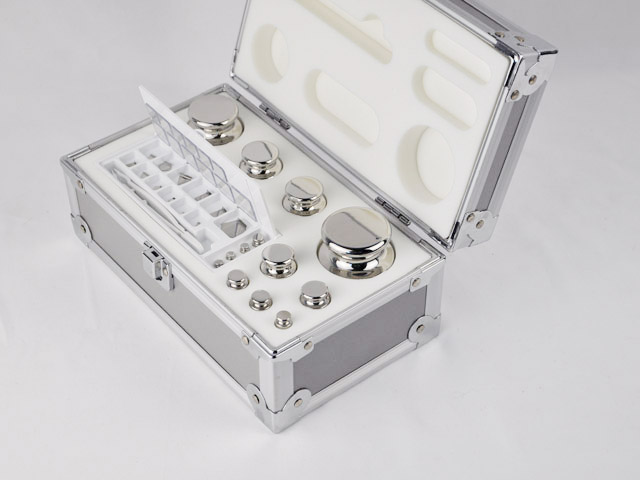
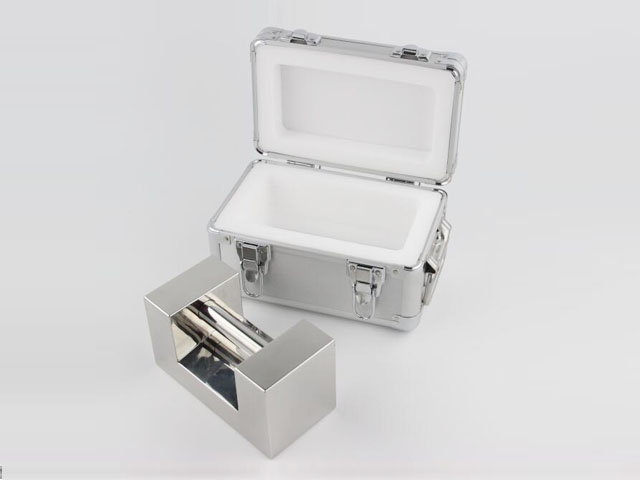
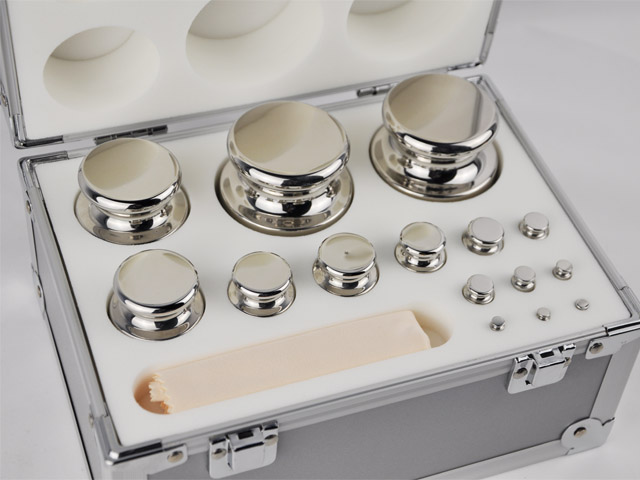
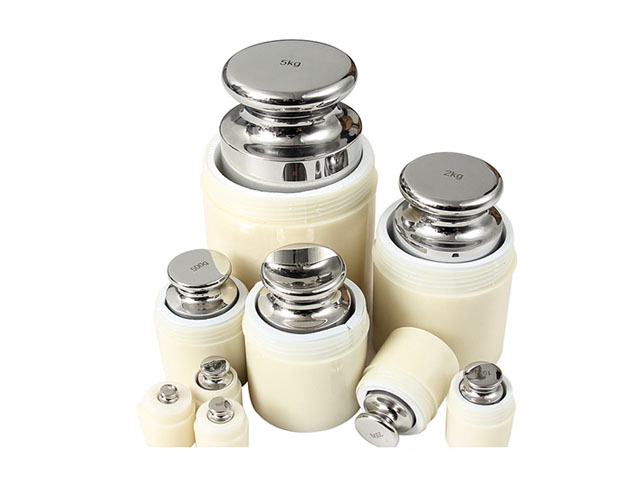
In terms of structural design, M3 class standard weight adopts classic and practical shapes suitable for stacking, handling, and placement, with cylindrical and rectangular block shapes being the most mainstream styles. The cylindrical structure is mostly used for small and medium-specification single weights, with a smooth and rounded overall body, which is convenient for single-handed handling and quick placement on the weighing platform of various scales. It is not easy to roll and shift after placement, and can maintain a stable placement state during the weighing and calibration process. The rectangular block structure is more commonly used for large-specification M3 class standard weights, equipped with integrated lifting structures on both sides or the top, which is convenient for operators to use simple handling tools for carrying and stacking operations. The bottom of all M3 class standard weights is designed with a flat and smooth plane, ensuring that it can be fully fitted with the weighing platform of various conventional scales during use, avoiding weighing errors caused by uneven placement and unstable support. The overall structural design does not pursue overly complex modeling, but focuses on practicality and durability, taking into account the convenience of daily use, storage, and stacking. Whether it is placed on a fixed weighing workbench for long-term calibration work or stored in a centralized storage area for regular standby use, this structural design can adapt to different placement and storage conditions, and will not cause structural deformation or mass change due to stacking and long-term placement pressure.
The tolerance setting of M3 class standard weight is scientifically formulated based on the positioning of conventional general measurement scenarios, forming a reasonable error range that meets daily weighing and calibration needs. Different from high-precision standard weights with extremely strict error limits used for laboratory precision measurement and high-end instrument calibration, M3 class standard weight has a relatively loose but fully standardized permissible error range, which is completely matched with the precision level of ordinary commercial scales and general industrial weighing equipment. Most of the conventional mechanical platform scales, electronic pricing scales, and workshop material weighing scales used in daily production and commercial transactions do not need ultra-high precision calibration references, and the error range of M3 class standard weight can fully cover the precision debugging needs of these weighing devices. In actual use, this reasonable tolerance setting not only ensures that the calibration and verification work of weighing equipment can reach the basic accuracy requirements required for normal use but also avoids the frequent mass deviation problems caused by overly strict tolerance standards and complex environmental interference. For users in general commercial and industrial scenarios, this tolerance design makes the daily use and regular maintenance of standard weights more convenient, without the need for frequent professional testing and correction, and can maintain effective working performance for a long time under conventional use conditions.
The application scope of M3 class standard weight covers almost all conventional weighing links that require basic calibration and daily verification, involving commercial transactions, industrial production, logistics warehousing, grassroots quality inspection, and many other fields. In daily commercial trading scenarios, various retail markets, grocery stores, and bulk commodity sales outlets need to regularly calibrate commonly used electronic scales and mechanical weighing instruments to ensure the accurate weighing of commodities and maintain the fairness and rationality of commodity trading. M3 class standard weight becomes the ideal calibration tool for these scenarios due to its convenient use and stable performance. Operators can regularly place standard weights of different specifications on the weighing equipment to check whether the weighing data is accurate, adjust the equipment in time if there is data deviation, and ensure that the weighing results of commodity transactions are consistent with the actual mass of goods. In small and medium-sized industrial production workshops, enterprises often need to weigh raw materials, semi-finished products, and finished products to control production batching and product quality. The conventional weighing equipment in these workshops needs regular daily debugging and periodic verification, and M3 class standard weight can meet the long-term repeated calibration needs of workshop weighing equipment, ensuring the stability of production batching data and the consistency of product quality.
In the logistics and warehousing industry, a large number of weighing operations are required for goods incoming inspection, outbound distribution, and inventory statistics. Various weighing devices in warehousing and logistics hubs work frequently all day long, and are prone to data drift and deviation after long-term use. Regular calibration with M3 class standard weight can effectively correct the weighing error of logistics weighing equipment, ensure the accurate recording of goods weight data, and avoid weight discrepancies in goods transportation, handover, and settlement. In grassroots quality inspection and market supervision work, inspection personnel need to conduct random inspections and regular inspections of weighing equipment used by various merchants and production enterprises. M3 class standard weight is easy to carry and operate on site, which can support on-site rapid verification of weighing tools, timely discover unqualified weighing equipment with excessive errors, and standardize the order of market weighing measurement. In addition, in some basic teaching and daily measurement popularization work, M3 class standard weight can also be used as a basic teaching tool to help learners understand the basic principles of weighing measurement and the correct use methods of standard weighing references, laying a foundation for the popularization of basic measurement knowledge.
Correct use methods and standardized operating procedures are key factors to maintain the long-term performance stability and service life of M3 class standard weight. Before each use, operators need to conduct a simple visual inspection of the standard weight to check whether there is obvious surface damage, serious corrosion, deformation, or foreign matter adhesion on the surface. If dust, oil stains, or other attachments are found on the surface, they need to be gently wiped clean with a soft dry cloth to ensure that the surface of the standard weight is clean and free of impurities, preventing the adhesion of foreign matter from affecting the actual mass and weighing calibration effect. During the handling and placement process, it is necessary to handle the standard weight gently, avoiding violent collision, throwing, and severe friction with hard objects. Violent impact will easily cause structural deformation of the standard weight, local damage to the surface protective layer, and even internal material changes, resulting in permanent mass deviation and affecting subsequent calibration accuracy. When placing the standard weight on the weighing platform, ensure that the placement position is centered and the contact is stable, avoiding tilting and suspension placement, so as to ensure the accuracy of the calibration data obtained by matching with the weighing equipment.
In the process of using M3 class standard weight for calibration work, it is necessary to carry out operation in a suitable working environment as much as possible, avoiding long-term use in extreme environments such as high temperature, high humidity, strong corrosive gas, and severe vibration. Extreme environmental conditions will accelerate the aging and corrosion of the standard weight material, damage the surface protective layer, and cause mass changes and structural damage over time. After each use, the standard weight should be cleaned again to remove dust and stains generated during use, and then placed in a dry, ventilated, and dust-proof special storage area for centralized storage. It is necessary to avoid random stacking with other heavy metal parts and sharp objects to prevent surface friction and collision damage. For M3 class standard weights of different specifications, they should be stored in categories and managed in a standardized manner, which is convenient for quick selection and use in subsequent work, and also avoids mutual extrusion and damage between weights.
Daily maintenance and regular routine maintenance work play a vital role in extending the service life and maintaining the stable performance of M3 class standard weight. In daily maintenance, the most important thing is to keep the standard weight dry and clean, avoid long-term exposure to humid air and rainy and humid environments, and prevent metal oxidation and rust. For standard weights that have been stored for a long time without use, regular surface inspection and wiping maintenance should be carried out every period of time to check whether there is rust, peeling of the protective layer, or slight deformation. If minor rust spots are found on the surface, they can be treated with professional mild rust removal tools and protective materials to repair the surface protection performance and prevent the rust area from expanding. It is not allowed to use strong corrosive chemical reagents to clean the surface of the standard weight, so as to avoid damaging the surface anti-corrosion layer and causing irreversible damage to the metal matrix.
Regular performance inspection is also an essential part of the maintenance work of M3 class standard weight. Although this type of standard weight does not need frequent professional precision testing like high-grade standard weights, regular regular mass verification and performance inspection are still required according to the frequency of use. For standard weights used frequently in industrial production and market supervision scenarios, regular inspection and checking should be arranged every certain cycle to confirm whether the actual mass is within the standard tolerance range and whether the structural performance is stable. For standard weights used less frequently in daily standby scenarios, the inspection cycle can be appropriately extended according to the actual situation. Once it is found that the mass deviation of the standard weight exceeds the allowable range or there is serious structural deformation and surface damage that cannot be repaired, it should be stopped in time and replaced with a new standard weight to avoid continued use affecting the accuracy of weighing calibration work and causing measurement errors in production and trading links.
In the entire modern social measurement system, every basic weighing work is inseparable from the support of reliable standard weighing tools, and M3 class standard weight has become an important basic guarantee for the normal operation of conventional weighing measurement links with its reliable performance, strong practicability, and wide applicability. Its simple and reasonable structural design, durable material configuration, and tolerance indicators adapted to general scenarios make it perfectly fit the actual needs of most commercial transactions and industrial production weighing calibration. Through correct daily use specifications, standardized storage management, and scientific regular maintenance work, M3 class standard weight can maintain long-term stable working condition, continuously provide accurate and reliable reference standards for various conventional weighing and calibration work, ensure the orderliness and accuracy of weight measurement data in all links of social production and life. Whether it is daily small-batch commodity weighing calibration in commercial terminals or regular equipment debugging in industrial production workshops, this type of standard weight always maintains stable and reliable working performance, silently supporting the smooth progress of various weighing-related work and laying a solid foundation for the standardized development of basic measurement work in all walks of life.
M3 Class Standard Weight
https://www.veidtweighing.com/standard-weights.html
Post Date: May 5, 2026
https://www.supplier-manufacturer.com/standard-weight/m3-class-standard-weight.html

![Class F Calibration Weight]()
Class F Calibration Weight
In the intricate and interconnected framework of modern industrial production, scientific research exploration, and daily commercial transaction operations, accurate mass …![Calibration Masses]()
Calibration Masses
In every corner of modern industrial production, scientific research experimentation, daily commodity circulation, and technological innovation research and development, t…![20kg Calibration Weight]()
20kg Calibration Weight
In every sector that relies on consistent and dependable mass measurement, the 20kg calibration weight stands as a foundational and indispensable tool that quietly underpi…![Heavy Duty Stainless Steel Large Industrial Test Weight]()
Heavy Duty Stainless Steel Large Industrial Test Weight
Heavy duty stainless steel large industrial test weights are essential precision components tailored for heavy-load industrial calibration and load testing scenarios, serv…![Standard Weight For Bench Scales]()
Standard Weight For Bench Scales
Bench scales serve as fundamental weighing instruments across industrial production, laboratory testing, commercial transactions, and quality inspection fields, delivering…