Precision Standard Weight
In every corner of modern production, scientific research, commercial circulation, and daily quality supervision, the consistency and credibility of numerical measurement data have always been an invisible cornerstone supporting the orderly operation of all social and economic activities. Among all kinds of measurement tools and auxiliary equipment involved in mass measurement scenarios, precision standard weight stands out as an essential medium for realizing mass value transfer and measurement traceability, undertaking the core task of unifying measurement benchmarks in different spaces, different time periods, and different application scenarios. Unlike ordinary weighing tools that are directly used to measure the weight of goods, materials, or experimental samples, precision standard weight does not focus on direct weighing work in daily production and life. Instead, it acts as a stable and reliable mass reference object, relying on its stable physical properties, accurate mass attribution, and strict production and processing standards to calibrate, verify, and adjust various weighing and measuring instruments, ensuring that all weighing equipment used in laboratories, industrial production lines, commodity trading markets, and quality inspection institutions can maintain consistent and accurate measurement performance for a long time. The importance of such standard measuring objects is often overlooked by most people, because they rarely appear in front of end consumers and are hidden in professional metrology laboratories, factory quality control workshops, and professional measurement verification stations. However, without the support and guarantee provided by precision standard weight, all mass measurement behaviors will lose unified judgment criteria, and the data obtained from various weighing operations will become random and unreliable, leading to chaos in industrial production proportions, inaccurate experimental research data, unfair commodity trading settlement, and hidden dangers in product quality safety in various fields.
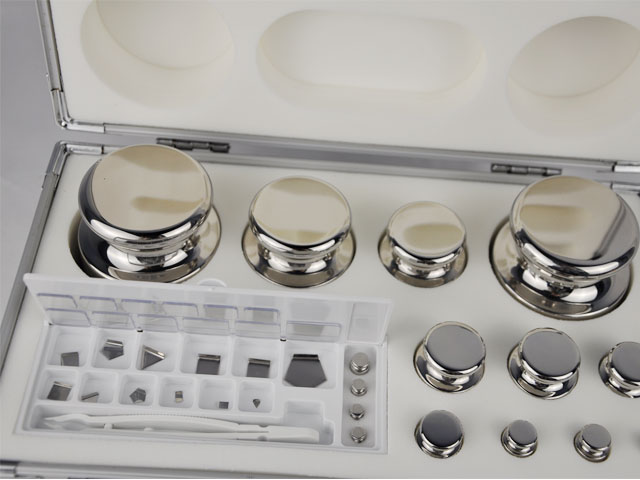
To understand the essential value of precision standard weight in depth, it is first necessary to clarify the core connotation of mass measurement traceability and value transfer, which is the basic logical premise for the existence and continuous iteration of all standard weight products. Mass measurement is one of the most basic and widely used measurement categories in the entire metrology system. All measurement results related to weight and mass must be able to trace back to unified and unified basic measurement benchmarks layer by layer, so as to ensure that the measurement data obtained in any region and any institution can be mutually recognized and compared. The entire mass measurement system forms a complete and hierarchical transmission chain, starting from the most basic national-level mass reference benchmarks maintained by professional metrology management institutions, and gradually passing down layer by layer through different levels of standard measuring objects, until it covers all kinds of weighing instruments and terminal measurement tools used in actual production and life. Precision standard weight occupies a crucial middle link in this entire transmission chain, serving as an important bridge connecting high-level basic measurement benchmarks and on-site practical weighing equipment. It undertakes the important responsibility of converting the ultra-high-precision mass values of national basic benchmarks into measurable and usable reference standards suitable for laboratory and industrial site use, ensuring that each link in the transmission chain does not have excessive measurement deviation or value distortion in the process of value inheritance. Each precision standard weight has a clear and definite mass value determined under fixed standard environmental conditions, and this value is determined through repeated comparison and testing with higher-level reference standards, with clear and controllable measurement deviation range and stable long-term value retention performance. It is precisely because of this accurate value attribute and stable physical state that precision standard weight can become a reliable reference basis for judging whether the measurement performance of various weighing instruments meets the use requirements, and lay a solid foundation for the standardization and normalization of all mass measurement work.
The production and manufacturing process of precision standard weight is extremely rigorous and meticulous, and every link from raw material selection to final finished product processing and preliminary debugging is formulated around the core goals of maintaining long-term mass stability, reducing surface wear and corrosion, and minimizing external environmental interference. The selection of manufacturing materials is the primary factor determining the comprehensive performance of precision standard weight, and different material characteristics directly affect the service life, mass retention ability, and environmental adaptability of the weight itself. Suitable manufacturing materials need to have high density, low thermal expansion coefficient, strong corrosion resistance, good oxidation resistance, and stable internal physical and chemical structure, so as to avoid mass changes caused by temperature fluctuations, air humidity changes, long-term air contact oxidation, and accidental surface friction and collision during long-term storage and use. In the actual production and processing process, common high-quality raw materials are carefully selected and proportioned according to different use accuracy levels and application environments, and the internal structure of the materials is optimized through special smelting and forging processes to ensure that there are no internal pores, cracks, or impurity inclusions that may affect the stability of mass and volume. After the raw materials are prepared, they are processed through precise mechanical cutting, grinding, polishing, and shaping processes, and the surface of each precision standard weight is treated with fine polishing and anti-corrosion protection. The smooth and flat surface not only effectively reduces the adhesion of dust, moisture, and other external impurities, avoiding the increase or decrease of mass caused by surface contamination, but also reduces the friction loss caused by frequent handling and placement, ensuring that the surface state of the weight remains stable for a long time. In the subsequent fine debugging and value correction stage, each finished weight will be placed in a constant temperature and humidity professional measurement environment, and compared and calibrated with higher-level reference standard weights many times through high-precision comparison and weighing equipment. Slight mass deviations generated during the processing process are corrected through fine adjustment operations, so that the actual mass value of each precision standard weight is kept within a reasonable and controllable deviation range, meeting the basic accuracy requirements for subsequent calibration and verification work. The entire production and manufacturing process does not pursue excessive decorative effects or additional functional designs, but always focuses on the core essence of maintaining mass stability and measurement accuracy, and every processing detail is closely linked to the final metrological performance of the product.
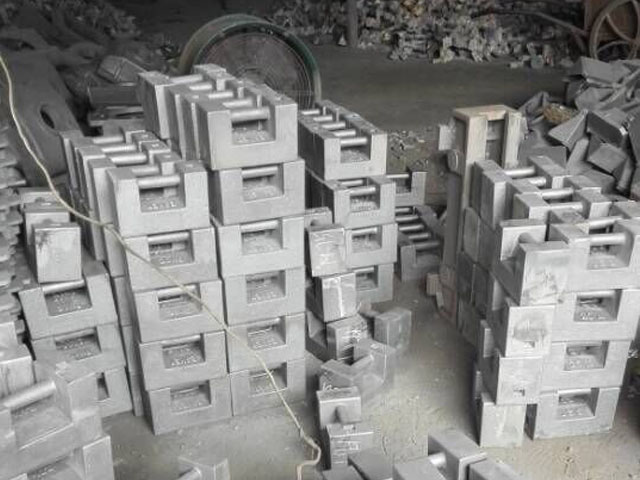
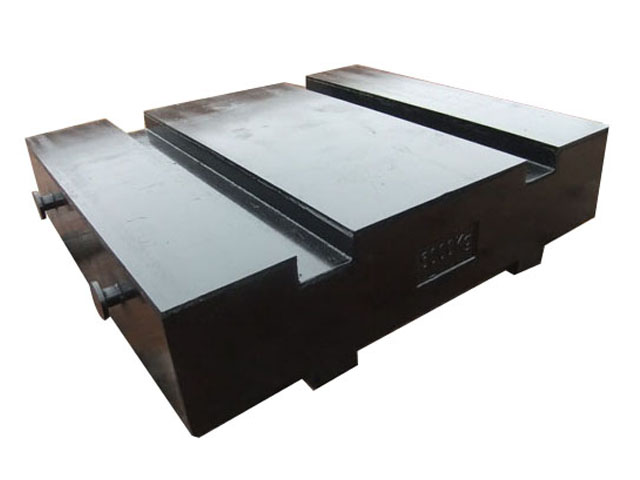
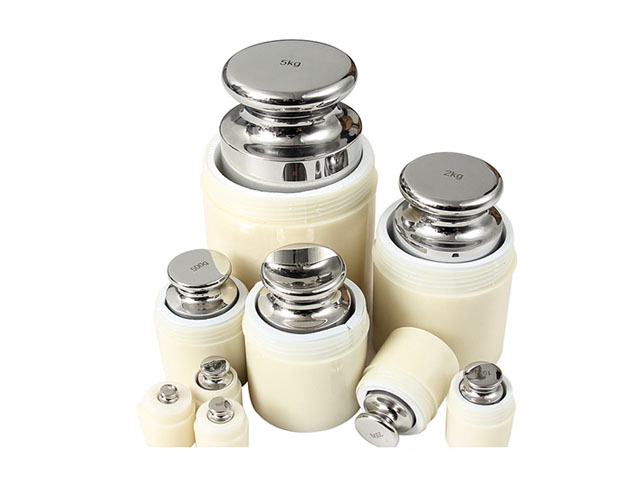
Different application scenarios and measurement accuracy requirements have given rise to diversified types and specifications of precision standard weight, and these differentiated designs enable standard weights to adapt to various complex measurement environments and calibration work needs, covering high-precision scientific research experiments, conventional industrial production calibration, large-scale mechanical equipment load testing, and daily commodity weighing instrument verification. In terms of nominal mass specifications, precision standard weight covers a wide range from small micro-mass specifications used in precision analytical instrument calibration to large-mass specifications required for the detection of large-tonnage industrial weighing equipment, forming a complete specification system to meet the matching use needs of different weighing instruments. In terms of structural design, some precision standard weights adopt integrated solid structure design, which has strong overall stability, not easy to deform under external pressure, and suitable for long-term fixed placement and repeated comparison and calibration work in laboratories; some adopt stacked combined structural design, which can flexibly combine different single weights according to actual calibration needs to form different total mass values, improving the flexibility and convenience of on-site calibration work; there are also special structural designs suitable for specific equipment calibration scenarios, which are optimized and adjusted in shape and bottom contact structure according to the structural characteristics of matching weighing equipment, ensuring stable placement and accurate stress bearing during calibration, avoiding measurement errors caused by unstable placement or uneven stress. In terms of accuracy matching, different grades of precision standard weight correspond to different measurement deviation allowable ranges and use scene positioning. Higher-grade products are mainly used for metrology laboratories and scientific research institutions, responsible for the value transmission and calibration of secondary standard weights, with extremely strict control of mass deviation and high requirements for use and storage environments; conventional-grade products are widely used in factory quality control departments, market supervision and inspection departments, and enterprise measurement rooms, for daily regular calibration and daily performance verification of various electronic balances, mechanical scales, platform scales, and other commonly used weighing equipment, balancing accuracy performance and on-site use convenience. This diversified differentiated design enables precision standard weight to accurately meet the measurement guarantee needs of different links in the entire metrology system, and each type of product has its own clear application positioning and use value, jointly maintaining the overall stability of mass measurement work in all walks of life.
The application of precision standard weight involves almost all fields that rely on mass measurement data for production, research, and management, and its practical value can be reflected in every key link requiring accurate and consistent weighing results. In the pharmaceutical research and production industry, the precise proportioning of various raw materials and active ingredients is directly related to the efficacy, safety, and stability of finished pharmaceutical products. Slight deviations in the weighing of trace raw materials may lead to changes in drug composition ratio, affecting the therapeutic effect of drugs, and even bringing potential safety risks to the user's physical health. Pharmaceutical production enterprises and drug research and development laboratories need to use precision standard weight to regularly calibrate various analytical balances and precision weighing instruments used in raw material batching and sample testing every day, ensuring that the weighing data of each raw material and intermediate sample is accurate and reliable, strictly controlling the production quality of drugs in accordance with standardized production processes, and ensuring that every batch of finished drugs meets the preset quality and efficacy standards. In the fine chemical and new material manufacturing industry, the performance of chemical products and new material products depends on the precise mixing ratio of various chemical raw materials and additives. Different raw materials have different chemical characteristics and reaction ratios, and only accurate mass measurement can ensure that the chemical reaction proceeds in accordance with the preset process route, so that the performance indicators of the final product such as hardness, toughness, corrosion resistance, and stability reach the design requirements. Precision standard weight provides a stable reference basis for the daily calibration of weighing equipment in chemical production workshops and material research laboratories, avoiding product performance fluctuations and quality batch differences caused by inaccurate weighing data, helping enterprises maintain stable product quality and good market application effects.
In the food processing and commodity packaging industry, the fairness of commodity trading and the standardized management of product net content are closely related to the rights and interests of consumers and the standardized operation of the market order. All pre-packaged food, daily chemical products, and daily necessities have clear net content labeling requirements, and relevant market supervision departments need to regularly spot-check and verify the net content of packaged commodities to prevent insufficient net content of commodities from damaging consumer rights and interests. Food processing enterprises and commodity production enterprises also need to ensure the accuracy of product filling and packaging weighing in the production process, to avoid excessive raw material waste caused by excessive packaging or market supervision penalties and consumer complaints caused by insufficient packaging. Precision standard weight is used to calibrate various automatic filling scales, packaging weighing instruments, and detection and verification scales used in production lines, ensuring that the weighing equipment maintains accurate measurement performance during long-term continuous production operations, the net content of each packaged product is consistent with the labeled data, the legitimate rights and interests of consumers are effectively protected, and the standardized and orderly development of the commodity market is maintained. In the mechanical manufacturing and engineering equipment testing industry, many mechanical parts and engineering equipment need to carry out load testing, pressure testing, and parts weight matching detection, and accurate weight load data is an important basis for judging the structural stability and service performance of equipment. Large-specification precision standard weight is used for calibration and load verification of large-tonnage weighing equipment and mechanical load testing equipment, ensuring that the test data of equipment performance is true and effective, helping enterprises screen qualified parts and equipment products, and avoiding potential safety hazards in engineering use caused by unqualified product performance.
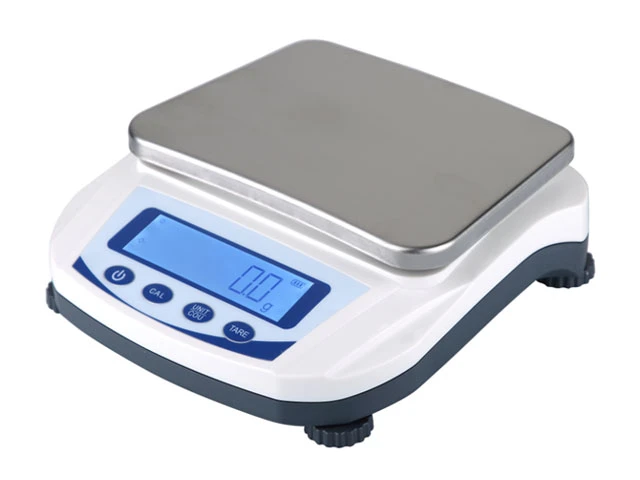
In scientific research laboratories and university research institutions around the world, precision mass measurement data is an important basic support for various basic scientific research and applied technology research. Whether it is chemical component analysis, biological sample preparation, physical material performance testing, or environmental monitoring sample detection, all experimental links require accurate and repeatable weighing data. The accuracy of experimental weighing data directly affects the authenticity and credibility of experimental research results, and determines whether the research conclusions and experimental data obtained can provide effective reference for subsequent technological innovation and academic research. Precision standard weight is regularly used by laboratory management personnel to calibrate all kinds of high-precision analytical balances and experimental special weighing equipment, eliminating measurement errors caused by long-term use, environmental changes, and equipment aging of weighing instruments, ensuring that the weighing data obtained in each experimental operation is accurate, the experimental process is repeatable, and the research results are true and reliable. Without the calibration guarantee of precision standard weight, the experimental data of scientific research will lack unified comparison standards, the experimental results of different laboratories and different research teams cannot be mutually verified and recognized, and the progress and development of the entire scientific research work will be seriously restricted.
The environmental conditions during the use and storage of precision standard weight have a crucial impact on maintaining its mass stability and long-term measurement accuracy, and good management and use environment is an important prerequisite to give full play to the metrological value of standard weight. Temperature, air humidity, air cleanliness, and placement stability are all key environmental factors that need to be strictly controlled. Too high or too low ambient temperature will cause the volume of the precision standard weight to expand or contract slightly, and the change of volume will affect the contact state between the weight and the weighing instrument during calibration, resulting in unnecessary measurement deviation; at the same time, extreme temperature changes will also affect the internal structural stability of the weight material, accelerating the aging and subtle deformation of the material. Excessively high air humidity will cause moisture to adhere to the surface of the standard weight, and even cause slight oxidation and corrosion on the metal surface, resulting in slow changes in the mass of the weight itself; too dry air environment will easily generate static electricity, adsorb fine dust and particulate matter in the air on the surface of the weight, affecting the accuracy of mass value. In addition, the placement environment of precision standard weight needs to be kept stable and vibration-free. Long-term vibration and bumping will cause subtle internal structural changes of the weight, and even slight surface wear and collision deformation, affecting the long-term stability of mass value. Therefore, professional metrology laboratories and measurement management departments will place high-grade precision standard weight in special constant temperature and humidity storage rooms and calibration working areas, equipped with special shockproof placement platforms and sealed storage containers. After each use, the standard weight needs to be cleaned and maintained in time, placed in a sealed and dry storage environment, avoiding long-term exposure to the external complex environment, reducing the impact of external environmental factors on the performance of the standard weight, and ensuring that each standard weight can maintain stable and accurate mass value for a long time.
Daily maintenance, standardized operation, and regular re-calibration work are indispensable key links to extend the service life of precision standard weight and maintain its measurement accuracy for a long time. Although precision standard weight is made of high-strength and corrosion-resistant materials and has good structural stability, it still needs scientific and standardized daily management and maintenance, and random placement, rough handling, and irregular use will still cause irreversible damage to its performance and structure. In the daily operation and use process, operators need to receive professional metrology operation training, master the correct handling, placement, and use methods of precision standard weight, avoid direct hand contact with the surface of the weight, because the sweat, grease, and stains on the hand will adhere to the surface of the weight, causing surface contamination and subtle mass changes; when handling, special non-slip and shockproof handling tools should be used to avoid direct collision and friction between weights and hard objects, preventing surface scratches, deformation, and wear. After each use, the surface of the precision standard weight needs to be gently wiped with a special clean and soft cleaning tool to remove surface dust, stains, and adsorbed moisture, and then placed in a special sealed storage box for storage, avoiding long-term exposure to humid, dusty, or corrosive gas environments. In addition to daily cleaning and maintenance, precision standard weight also needs to be sent to professional metrology institutions for regular re-calibration and performance testing according to a fixed cycle. After long-term use, even if the standard weight has no obvious surface damage, subtle mass deviation may still occur due to long-term environmental influence and slight surface wear. Regular re-calibration can timely detect the subtle mass changes of the standard weight, carry out fine correction and adjustment, eliminate potential measurement hidden dangers, and ensure that the mass value of the standard weight is always within the allowable accuracy range, and the calibration and verification work of various weighing instruments can be carried out normally and effectively.
With the continuous progress of industrial modernization, scientific and technological innovation, and metrology technology upgrading, the application requirements for mass measurement accuracy in all walks of life are constantly improving, and the technological research and development, production and manufacturing, and management and application of precision standard weight are also constantly developing and optimizing in the direction of higher stability, stronger environmental adaptability, and more convenient use. In recent years, with the rapid development of emerging industries such as intelligent manufacturing, biomedical precision manufacturing, new energy material research and development, and precision electronic component production, the demand for ultra-high-precision mass measurement in various production and research links has continued to increase, which puts forward higher requirements for the accuracy level, structural stability, and long-term reliability of precision standard weight. The production and manufacturing technology of precision standard weight is constantly innovating, new high-performance composite materials are continuously applied to the production of standard weights, the processing technology is more refined and precise, and the environmental adaptability and mass stability of products are continuously improved, which can meet the ultra-high-precision measurement guarantee needs of emerging high-end manufacturing and scientific research fields. At the same time, the management mode of precision standard weight is also constantly standardized and intelligent. Many professional metrology management departments and large enterprises have established special standard weight management ledgers and digital management systems, recording the use time, calibration cycle, maintenance records, and performance changes of each precision standard weight in detail, realizing the whole-process tracking and standardized management of the use and performance of standard weights, further ensuring the stability and reliability of mass value transmission.
Looking at the entire development process of metrology measurement and all social production and operation activities, precision standard weight has always been an inconspicuous but indispensable basic metrological tool. It does not have gorgeous appearance design and direct commodity use value, nor will it be widely concerned and recognized by the public, but it silently undertakes the important task of maintaining the unity, accuracy and credibility of mass measurement values in the whole society. From the basic scientific research in the laboratory to the industrial production on the production line, from the fair transaction of commodities in the market to the quality safety supervision of various products, every link involving mass measurement is inseparable from the basic guarantee provided by precision standard weight. All accurate weighing data and reliable measurement results are based on the stable and accurate reference value of precision standard weight layer by layer. With the continuous development of social economy and the continuous improvement of measurement accuracy requirements in various fields, the importance of precision standard weight will become more prominent. Continuous optimization of production and manufacturing technology, standardized daily management and use, and strict regular calibration and maintenance will enable precision standard weight to always maintain good metrological performance, continuously provide solid and reliable basic support for the stable operation of industrial production, the progress of scientific research, the standardized development of market transactions, and the protection of public quality safety, and become an eternal and reliable fundamental backbone in the field of mass metrological measurement.
Precision Standard Weight
https://www.veidtweighing.com/standard-weights.html
Post Date: Apr 28, 2026
https://www.supplier-manufacturer.com/standard-weight/precision-standard-weight.html

![Kitchen Scales]()
Kitchen Scales
Cooking is often described as a blend of art and science, where creative intuition meets precise measurement to craft meals that delight the senses and nourish the body. M…![Gray Cast Iron Weight]()
Gray Cast Iron Weight
Gray cast iron weight stands as one of the most essential and widely applied weighted components across modern industrial production, mechanical operation and daily engine…![Precision Balances]()
Precision Balances
Precision balance stands as a fundamental measuring instrument in modern metrology, serving as a core tool for obtaining accurate mass data across scientific research, ind…![Cast Iron Weight Exporter]()
Cast Iron Weight Exporter
In the global industrial operation and engineering construction ecosystem, auxiliary components that maintain mechanical balance, stabilize equipment operation and ensure …![Portable Laboratory Calibration Weight Kit With Case]()
Portable Laboratory Calibration Weight Kit With Case
Accurate weighing serves as the foundational pillar of reliable experimental data, industrial detection, and daily precision measurement work. In laboratory operations, in…