Standard Weight For Crane Scales
In modern industrial production, logistics transportation, engineering construction and material detection fields, crane scales have become indispensable core weighing equipment, undertaking the important task of real-time weight measurement of suspended loads. As the core benchmark to ensure the accuracy, stability and consistency of crane scale measurement data, standard weights for crane scales run through the entire life cycle of equipment production, calibration, daily use and regular maintenance. The scientific selection, standardized use and strict management of standard weights directly determine the credibility of crane scale weighing results, and further affect the operational safety, production efficiency and compliance of industrial production activities. Unlike ordinary weighing standard weights, crane scale standard weights are specially designed for suspended weighing scenarios, featuring high structural stability, strong load-bearing capacity, good anti-interference performance and strict dimensional accuracy, which can adapt to complex working environments such as high-altitude suspension, dynamic hoisting and on-site vibration of industrial cranes. Understanding the professional attributes, technical specifications, classification standards and application norms of crane scale standard weights is the key to realizing precise weighing and safe operation of crane scale equipment.
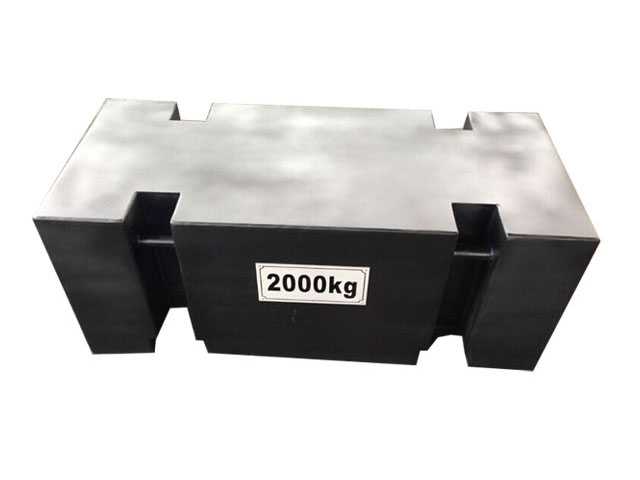
The essential connotation of standard weight for crane scales is a kind of metrological standard substance with fixed mass value, traceable accuracy and unified specification, which is specially used for calibrating, verifying and detecting the measurement performance of crane scales. All crane scales, whether mechanical pointer type or intelligent digital type, will produce certain measurement errors after long-term use, frequent hoisting, environmental erosion and structural wear. These errors will gradually accumulate with the extension of service time, leading to inaccurate weighing data, which may cause serious problems such as unqualified material proportioning, inaccurate cargo settlement and even overload hoisting safety accidents. Standard weights for crane scales are designed to eliminate such hidden dangers. By comparing the measured value of the crane scale with the standard mass value of the weights, staff can accurately judge the error range of the equipment, complete parameter correction and performance verification, and ensure that the crane scale always maintains qualified measurement accuracy in daily operation. Different from laboratory standard weights that pursue ultra-high precision and delicate structure, crane scale standard weights focus more on the combination of precision and practicability, and can adapt to harsh industrial working conditions including dust, humidity, temperature difference and mechanical impact.
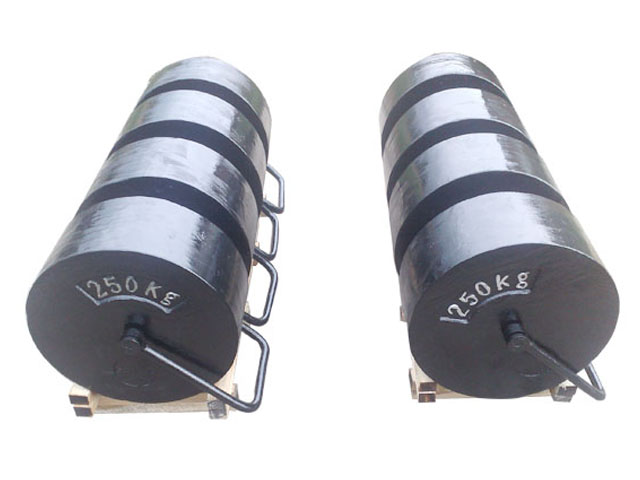
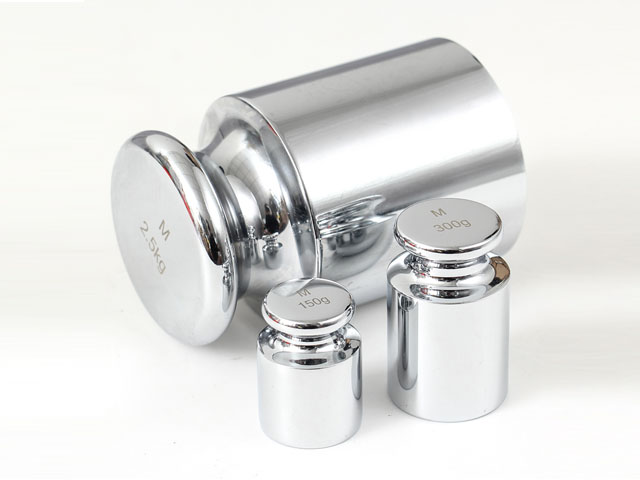
In terms of professional classification, crane scale standard weights can be divided into multiple grades according to international metrological standards and industrial specifications, and each grade corresponds to specific accuracy ranges and application scenarios. The mainstream international classification standards include OIML international recommendation standards and national metrological grade standards, which divide crane scale standard weights into M1, M2, F1, F2 and other grades. Among them, M1 and M2 grade standard weights are the most widely used in industrial fields, suitable for daily calibration and regular verification of ordinary industrial crane scales. These weights have moderate accuracy, strong environmental adaptability and high cost performance, and can meet the weighing accuracy requirements of most manufacturing, warehousing and logistics hoisting scenarios. F1 and F2 grade high-precision standard weights are mainly used for precision detection and periodic calibration of high-precision crane scales, such as crane scales used in precision machinery manufacturing, aerospace material handling and high-standard commodity trade settlement. Such high-grade standard weights have extremely strict mass error control, tiny dimensional deviation and excellent surface anti-corrosion performance, and need to be stored and used in a relatively stable environment to avoid precision loss caused by external interference. In addition, according to structural forms, crane scale standard weights can be divided into solid integral weights, combined assembled weights and hanging special weights. Integral standard weights are mostly used for small and medium-tonnage crane scale calibration, with integrated casting and molding, stable structure and not easy to deform; combined weights can be freely combined according to different tonnage detection requirements, with strong flexibility and suitable for multi-range equipment verification; hanging standard weights are designed with special hanging holes and connecting structures, which are perfectly matched with crane hoisting hooks and weighing suspension structures, avoiding measurement deviation caused by unbalanced suspension during calibration.
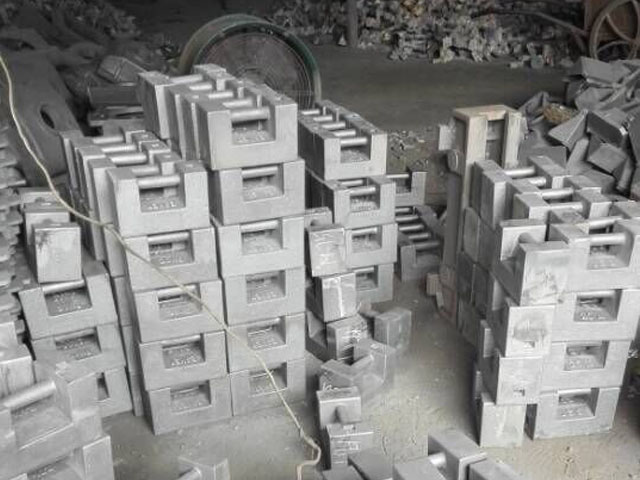
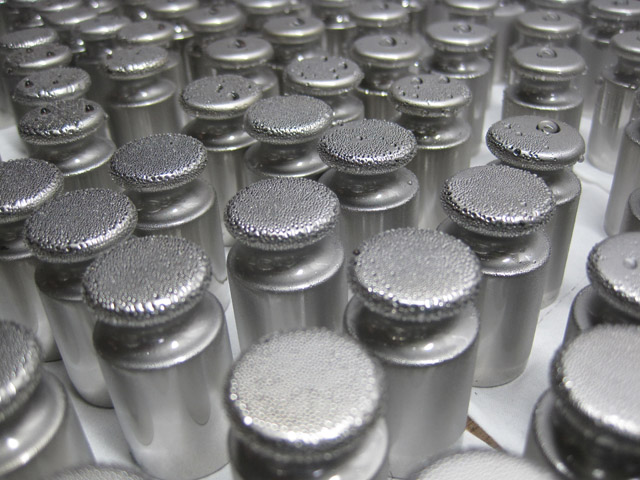
The technical specification requirements of crane scale standard weights cover mass accuracy, structural size, material performance, surface treatment and environmental adaptability, forming a complete set of standardized systems. In terms of mass accuracy, each grade of standard weight has a clear maximum allowable error range. For medium-tonnage standard weights commonly used in industry, the mass error is strictly controlled within the per thousand range to ensure that the calibration benchmark will not bring additional deviation to the crane scale measurement. In terms of materials, most qualified crane scale standard weights are made of high-density cast iron, alloy steel or stainless steel. High-density cast iron has the advantages of low cost, high hardness and good structural stability, and is the mainstream material for industrial conventional standard weights; alloy steel and stainless steel materials are mostly used for high-precision and high-grade standard weights, with excellent anti-rust, anti-corrosion and anti-oxidation performance, which can maintain stable mass accuracy for a long time in humid, dusty and corrosive industrial environments. In terms of structural design, the standard weights are required to have regular geometric shapes, uniform internal density and no internal pores or defects, so as to avoid mass deviation caused by structural problems. At the same time, the hanging part of the weight needs to undergo special reinforcement treatment to ensure that it will not deform, crack or change in mass due to tension during long-term suspended hoisting calibration. The surface of the standard weight is usually treated with anti-corrosion paint, polishing and rust prevention to prevent mass change caused by surface oxidation, wear and dirt adhesion, and ensure the long-term stability of the standard value.
The matching selection of standard weights for crane scales needs to follow scientific principles, and the core is to match the weight tonnage, accuracy grade and structural form of the standard weights with the range and application scenario of the crane scales. In actual industrial operation, the calibration standard weight tonnage should be selected according to the maximum weighing range of the crane scale. For small crane scales with a weighing range below 1 ton, standard weights of 200kg, 500kg and 1 ton are usually selected for segmented calibration; for medium-tonnage crane scales of 1 ton to 10 tons, matching standard weight combinations of 1 ton, 3 tons, 5 tons and 10 tons are required; for large heavy-duty crane scales used in ports, mines and large engineering construction with a range of more than 10 tons, large-scale combined standard weight groups are needed to complete full-range detection and calibration. In addition to tonnage matching, accuracy grade matching is also crucial. Ordinary industrial crane scales used for internal production weighing and material counting can be calibrated with M1 grade standard weights; crane scales used for commercial trade settlement, customs weighing and quality inspection certification must use F2 or above high-precision standard weights for calibration to meet the metrological certification requirements of legal measurement scenarios. It is also necessary to consider the working environment during selection. For outdoor open-air operation scenarios with large temperature difference and severe dust, standard weights with thick anti-corrosion coating and high structural rigidity should be preferred; for indoor precision workshop scenarios, high-polish high-precision standard weights can be selected to ensure calibration fineness.
Standard weights for crane scales play an irreplaceable role in the calibration and verification process of crane scale equipment, and their standardized application is the fundamental guarantee for the reliable operation of weighing systems. The daily calibration work of crane scales is divided into routine inspection calibration and periodic metrological verification. Routine calibration is a daily maintenance work carried out by enterprise equipment management personnel, using matched standard weights to conduct spot check and calibration of key range points of crane scales every day or every week, timely finding small measurement errors and correcting them to avoid error accumulation. Periodic metrological verification is a mandatory detection work carried out by professional metrological institutions in accordance with national metrological regulations, using high-grade traceable standard weights to conduct comprehensive accuracy detection, structural performance inspection and error evaluation of crane scales, and issue qualified verification reports to ensure that the equipment meets national industrial measurement standards. In the calibration process, the use specifications of standard weights must be strictly followed. Before use, the surface of the standard weight should be cleaned to remove dust, oil stains and sundries, so as to prevent the attached substances from affecting the actual mass of the weight. During hoisting and placement, violent collision and vibration should be avoided to prevent structural deformation and mass change of the standard weight. At the same time, the calibration environment should be kept stable, avoiding strong wind, severe vibration and extreme temperature changes, so as to eliminate environmental interference on calibration results.
Scientific maintenance and standardized management of crane scale standard weights are important links to maintain their long-term accuracy and service life. As a metrological standard device, standard weights cannot be used as ordinary hoisting counterweights or handling tools in industrial production, and long-term overload use and irregular collision friction are strictly prohibited. In terms of daily storage, standard weights should be placed in a dry, ventilated, dust-proof and shock-proof special storage area, with special brackets and placement tools to avoid long-term direct contact with the ground, prevent moisture corrosion and surface wear. For high-precision standard weights, constant temperature and humidity storage conditions are also required to avoid mass deviation caused by thermal expansion and contraction of materials. Regular maintenance and inspection are essential. Enterprises need to arrange special personnel to regularly check the surface integrity, structural stability and mass traceability of standard weights, regularly clean and maintain the anti-corrosion layer, and send them to professional metrological institutions for periodic value verification every year to ensure that the mass value of the standard weights is always within the qualified error range. Once the standard weight is found to have surface damage, structural deformation, obvious wear or unqualified verification error, it should be immediately withdrawn from use, repaired or replaced, and it is strictly forbidden to use unqualified standard weights for crane scale calibration, so as to avoid large-scale measurement errors of production equipment.
With the continuous upgrading of industrial intelligent manufacturing and metrological standardization, the technical requirements and application scenarios of crane scale standard weights are also constantly optimized and improved. Traditional crane scale standard weights are mainly single solid weights with fixed specifications, which have limitations such as single calibration range and inconvenient carrying and handling. At present, the new generation of crane scale standard weights is developing towards modular combination, lightweight high precision and intelligent traceability. Modular combined standard weights can realize arbitrary combination of multiple tonnages through standardized unit weights, which greatly improves the flexibility and coverage of calibration work and can meet the calibration needs of crane scales of different ranges and different precision levels. Lightweight high-precision standard weights adopt new high-density alloy materials, which reduce the overall weight on the premise of ensuring mass accuracy and structural stability, making handling and hoisting calibration more convenient and labor-saving. In addition, with the popularization of digital metrological management technology, more standard weights are equipped with unique identification codes and traceability chips, which can record the use time, calibration records, maintenance status and other information of the weights in real time, realize the whole-life cycle digital management of standard weights, and further improve the standardization and accuracy level of crane scale measurement work.
The standardized application of crane scale standard weights is of great significance to industrial production safety, economic benefit improvement and industrial standardization construction. In terms of production safety, accurate crane scale calibration relying on standard weights can effectively avoid safety accidents such as equipment damage, structural collapse and cargo falling caused by inaccurate weighing and overload hoisting, and build a solid safety barrier for industrial hoisting operations. In terms of economic benefits, stable and accurate weighing data can avoid economic losses caused by excessive or insufficient material distribution and inaccurate cargo weighing in production and trade links, improve the refined management level of enterprise production and logistics, and reduce resource waste and operational risks. In terms of industrial development, unified standard weight specifications and standardized calibration procedures promote the unification of crane scale measurement standards in various industries, realize the consistency and comparability of weighing data in different production links and different enterprise scenarios, and lay a solid foundation for the standardized and intelligent development of the industrial weighing field. At the same time, the standardized management of standard weights also helps enterprises meet national metrological supervision requirements, improve the overall standardized operation level of enterprises, and enhance market competitiveness.
In conclusion, standard weights for crane scales are the basic metrological guarantee for the normal and accurate operation of crane scale equipment, and their standardization, scientization and normalization of use and management are crucial to industrial hoisting weighing work. From grade classification, material specification, model selection matching to calibration application and daily maintenance, every link needs to strictly abide by industrial metrological standards and operational norms. In the future, with the continuous progress of metrological technology and industrial manufacturing level, crane scale standard weights will be further optimized in precision performance, structural design and intelligent management, and will play a more important role in promoting the high-quality development of industrial weighing, ensuring production safety and standardizing market trade. Enterprises and practitioners in related industries should attach full importance to the management and application of crane scale standard weights, continuously standardize operational processes, improve professional management level, and give full play to the basic supporting role of standard weights in industrial precise measurement and safe production.
Standard Weight For Crane Scales
https://www.veidtweighing.com/standard-weights.html
Post Date: Jul 25, 2026
https://www.supplier-manufacturer.com/standard-weight/standard-weight-for-crane-scales.html

![250kg Test Weight]()
250kg Test Weight
In the vast and intricate landscape of industrial production, mechanical operation, and metrological verification, the 250kg test weight stands as an indispensable foundat…![E1 Class Test Weight]()
E1 Class Test Weight
In the intricate and interconnected world of modern metrology, the pursuit of reliable and consistent mass measurement forms the foundational backbone of countless profess…![M1 Class Cast Iron Weight]()
M1 Class Cast Iron Weight
In the intricate and interconnected ecosystem of industrial measurement and metrological calibration, M1 class cast iron weight stands as an indispensable foundational com…![Gram Test Weight]()
Gram Test Weight
In the intricate and interconnected world of mass measurement, few tools hold as much quiet significance and foundational importance as the gram test weight. Often overloo…![M1 Calibration Weight]()
M1 Calibration Weight
In every sector that relies on consistent and dependable mass measurement, the role of standardized calibration hardware remains irreplaceable, and M1 calibration weight s…