Standard Weight For Hanging Scales
Standard weights for hanging scales are fundamental metrological reference tools that underpin the accuracy, consistency, and reliability of suspended weighing operations across countless industrial, commercial, and daily application scenarios. Unlike conventional standard weights designed for bench scales, floor scales, and other bottom-supported weighing equipment, standard weights dedicated to hanging scales are uniquely engineered to adapt to vertical suspension weighing principles, featuring specialized structural design, stable physical properties, and standardized metrological performance to match the working characteristics of hanging scales. As hanging scales operate by sensing vertical gravitational tension generated by suspended loads, their calibration and accuracy verification rely entirely on qualified standard hanging weights, making these weights an indispensable core component of standardized weighing management and metrological traceability systems.
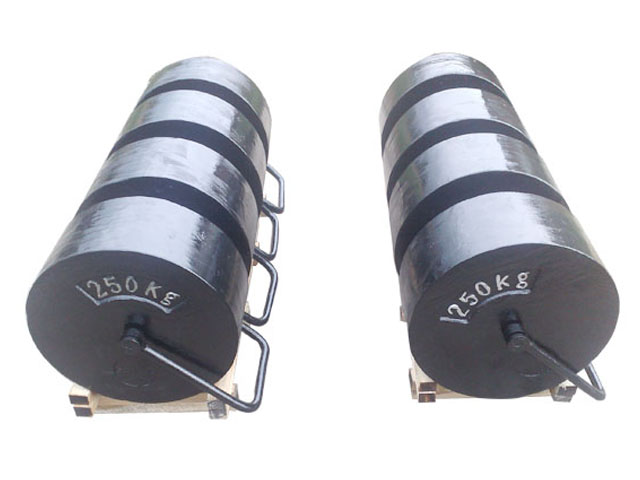
The core value of standard weights for hanging scales lies in their ability to provide traceable, uniform, and accurate mass references. All weighing activities essentially depend on the comparison between the measured object’s mass and a fixed standard mass. In the field of suspended weighing, the long-term operation of hanging scales will inevitably lead to subtle changes in internal components, including spring fatigue in mechanical hanging scales, slight drift of load cell parameters in electronic hanging scales, and wear of hook and connection structures. These minor changes will gradually cause weighing deviation, which may start as negligible errors but will accumulate over time and evolve into obvious measurement inaccuracies. Without regular calibration and verification with standard weights, unqualified weighing data will affect the fairness of commercial transactions, the precision of industrial production, and the safety of special operation scenarios, highlighting the irreplaceable role of standard hanging weights in maintaining weighing accuracy.
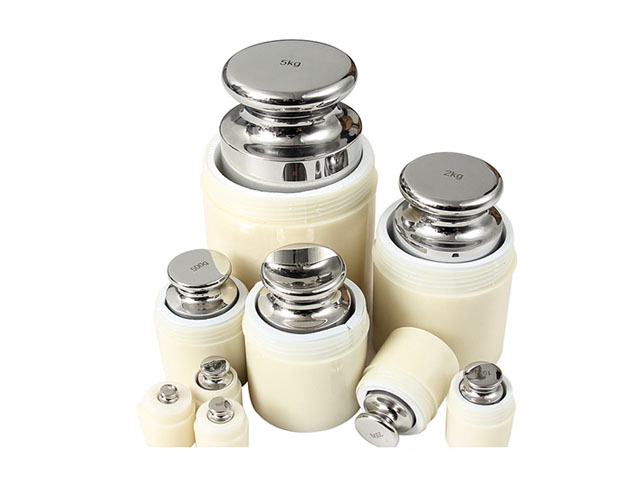
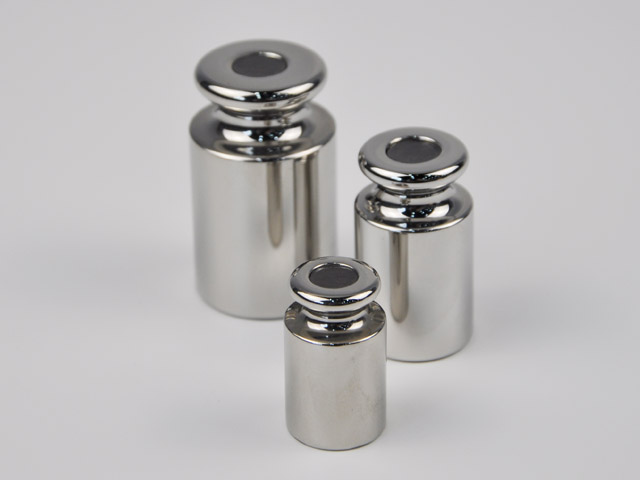
In terms of structural design, standard weights for hanging scales differ significantly from ordinary flat-plate or block standard weights. Ordinary standard weights are mostly designed for flat placement, focusing on bottom flatness and overall stability during static placement. In contrast, hanging scale standard weights prioritize suspension stability and connection safety. Most qualified hanging standard weights are equipped with integrated suspension structures, such as precision-machined hanging rings, hooks, or through-hole suspension parts, which can be stably and firmly connected to the hook, shackle, or load bar of hanging scales. This integrated structural design avoids unbalanced force and weight deviation caused by external connection accessories during calibration. At the same time, the overall shape of the weights is streamlined and compact, with a low center of gravity, which effectively prevents swinging, tilting, or shaking during vertical suspension weighing. Any slight swing or tilt during calibration will produce additional tension interference and lead to inaccurate calibration results, so the structural optimization of standard hanging weights is a key prerequisite for ensuring calibration precision.
Material selection is another critical factor determining the performance of standard weights for hanging scales. High-quality standard hanging weights are mostly made of high-density, low-expansion, and corrosion-resistant metal materials, which can maintain stable mass and physical properties in complex working environments. In actual use, hanging scales are often applied in open-air workshops, logistics yards, agricultural markets, and even humid or slightly corrosive industrial environments. Ordinary metal materials are prone to oxidation, rust, and wear, which will directly change the original standard mass of the weights and invalidate the calibration effect. Professional standard hanging weight materials have excellent anti-oxidation and anti-corrosion capabilities, with stable density and volume, ensuring that the mass error is always controlled within the national and international metrological standard range under long-term use. In addition, the material has good hardness and impact resistance, avoiding mass loss or structural deformation caused by accidental collision and friction during handling and use, thus realizing long-term reusable and stable metrological performance.
Metrological grade classification is an important basis for the application of standard weights for hanging scales, and different grades correspond to different precision requirements and application scenarios. The international metrological standard system divides standard weights into multiple precision grades, ranging from high-precision laboratory reference grades to general industrial verification grades. High-grade standard hanging weights feature extremely low mass tolerance, fine surface finish, and strict environmental adaptability requirements, and are mainly used for laboratory precision calibration, metrological institution verification, and precision instrument detection. They need to be used and stored in constant temperature and humidity environments to avoid mass fluctuation caused by environmental changes. Medium and low-grade standard hanging weights are more suitable for on-site daily calibration and regular detection of commercial and industrial hanging scales, with moderate precision, stronger environmental adaptability, and higher cost-performance, meeting the accuracy requirements of conventional weighing scenarios.
The working principle of using standard weights for hanging scale calibration follows the basic law of gravitational weighing and metrological comparison. When calibrating a hanging scale, the standard weight with known accurate mass is stably suspended on the scale’s load-bearing structure, and the scale’s internal sensing system converts the vertical tension generated by the standard weight into a readable weighing value. By comparing the displayed value of the hanging scale with the standard mass value of the weight, operators can intuitively judge whether the scale has deviation. If there is a difference between the measured value and the standard value, the scale can be adjusted and corrected according to professional operating specifications until the displayed value is consistent with the standard mass, completing the calibration work. This comparison and correction method is simple, efficient, and highly accurate, and is the universal standard operation method for hanging scale accuracy verification in various industries.
Different types of hanging scales have matching requirements for standard weights, forming a targeted calibration system for diverse equipment. Mechanical spring hanging scales, which rely on spring elastic deformation for weighing, are prone to elastic fatigue and pointer deviation after long-term use, requiring regular calibration with standard hanging weights to correct spring deformation errors. Electronic hanging scales, which use load cells for pressure sensing, are susceptible to battery voltage changes, temperature differences, and component aging, leading to sensing drift, and standard weights can effectively detect and eliminate such systematic errors. In addition, heavy-duty crane hanging scales used for industrial heavy-load weighing and portable small hanging scales used for household and light commercial purposes also need standard weights of corresponding ranges and grades for matching calibration. The matching of weight range and scale capacity is crucial in the calibration process; excessive or insufficient weight range will affect the calibration accuracy and cannot achieve the ideal error correction effect.
The application scenarios of standard weights for hanging scales cover almost all fields where hanging weighing equipment is used. In the commercial field, hanging scales are widely used in market trading, fruit and vegetable weighing, and logistics parcel weighing. Accurate weighing is related to the fairness of market transactions and the legitimate rights and interests of consumers and merchants. Regular calibration with standard weights ensures that the weighing data of commercial hanging scales is accurate and credible, maintaining the standardized and orderly operation of the commercial trading market. In the industrial field, hanging scales are used for raw material weighing, finished product detection, and heavy cargo handling weighing in manufacturing, logistics, and warehousing industries. Accurate weighing data is the basis for production proportioning, inventory statistics, and cargo settlement, and standard weight calibration effectively avoids production errors and economic losses caused by inaccurate weighing.
In the agricultural field, hanging scales are commonly used for grain weighing, livestock product weighing, and agricultural material counting and weighing. The use of standard weights to verify scale accuracy ensures the fairness of agricultural product transactions and the accuracy of agricultural material distribution data, providing basic data support for agricultural production and market circulation. In the field of metrological supervision and detection, professional metrological institutions use high-grade standard hanging weights to conduct regular mandatory verification of various hanging scales in the market, eliminating unqualified weighing equipment and standardizing the use of measuring instruments in various industries. In addition, in special fields such as construction and hoisting operations, hanging scales are used for load detection and safety monitoring of hoisting equipment, and regular calibration with standard weights ensures the accuracy of load monitoring data, effectively avoiding safety accidents caused by overload or inaccurate load judgment.
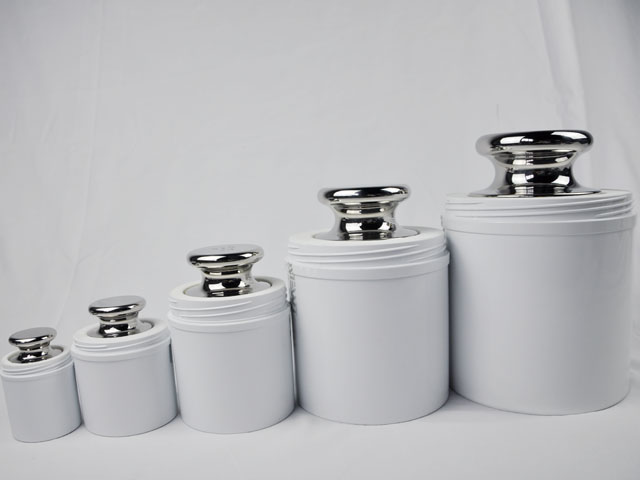
Standardized use and scientific maintenance are key to maintaining the long-term precision of standard weights for hanging scales. Although high-quality standard weights have stable physical properties, improper use and storage will still cause mass deviation and performance degradation. In the use process, it is necessary to ensure that the weights are stably suspended without swinging, collision, or friction, and avoid placing the weights in high-temperature, humid, dusty, and corrosive environments for a long time. High temperature will cause thermal expansion of the weight material and affect mass stability; humidity and corrosive gases will cause surface oxidation and rust, resulting in mass loss. After each use, the surface of the standard weight should be cleaned to remove dust, stains, and attachments, and then placed in a dry, ventilated, and constant-temperature storage environment with special storage containers to prevent extrusion and collision.
Regular professional verification is also an essential link in the maintenance of standard hanging weights. As a metrological standard device, standard weights themselves need to be regularly detected and calibrated by professional metrological institutions to ensure that their mass error is always within the standard allowable range. With the extension of service time, even high-precision standard weights will have tiny mass changes due to subtle material aging and surface wear. Regular metrological verification can timely detect tiny deviations, carry out professional correction or eliminate unqualified weights, and ensure that they can always provide accurate mass references for hanging scale calibration. The standardized maintenance and verification mechanism forms a complete closed-loop management system from standard weight use, maintenance to performance confirmation, ensuring the sustainability and credibility of weighing calibration work.
With the continuous development of metrological technology and the improvement of industry standard specifications, the manufacturing process and performance standards of standard weights for hanging scales are also constantly upgraded. Modern manufacturing technology realizes more precise dimensional processing and mass control of standard weights, further reducing manufacturing errors and improving calibration precision. At the same time, new high-performance anti-corrosion and wear-resistant materials are gradually applied to the production of standard hanging weights, enhancing their environmental adaptability and service life, and enabling them to maintain stable performance in more complex industrial and outdoor scenarios. In addition, the industry’s standard specifications for hanging scale calibration are becoming more refined, putting forward clearer requirements for the grade matching, range selection, use environment, and calibration cycle of standard weights, which further standardizes the application of standard hanging weights in various industries.
The importance of standard weights for hanging scales is also reflected in the construction of metrological traceability systems. All weighing measurement data must have traceability, that is, the measurement results can be traced back to national or international standard mass benchmarks. As a direct working standard for hanging scale calibration, standard hanging weights connect terminal weighing equipment with higher-level metrological standard benchmarks, realizing the transmission of mass values from high-level benchmarks to on-site weighing equipment. This complete value transmission chain ensures the uniformity and accuracy of hanging weighing data in different regions, different industries, and different equipment, providing a unified measurement basis for market transactions, industrial production, and scientific research detection. Without qualified standard hanging weights, the metrological traceability of suspended weighing will be broken, and all weighing data will lose credibility and uniformity.
In daily practical application, many weighing errors of hanging scales are not caused by equipment failure but by irregular calibration operations and mismatched standard weights. For example, using low-precision standard weights to calibrate high-precision hanging scales cannot eliminate subtle errors; using standard weights with unqualified grades or inaccurate mass will lead to calibration deviation, making the calibrated scale still have large weighing errors. Therefore, in addition to selecting qualified standard hanging weights, users also need to formulate a scientific calibration cycle according to the use frequency and working environment of hanging scales. Hanging scales used in high-frequency trading and harsh environments have faster component aging and error accumulation, requiring shorter calibration cycles; equipment used in low-frequency and stable environments can adopt a reasonable extended calibration cycle to ensure weighing accuracy while improving work efficiency.
In conclusion, standard weights for hanging scales are the core guarantee for the accurate operation of all suspended weighing equipment, bearing the important functions of mass value transmission, weighing error correction, and measurement standardization. Their unique structural design, stable material performance, and hierarchical precision system adapt to the diverse calibration needs of various hanging scales, covering all walks of life related to suspended weighing. With the continuous improvement of social industrialization, commercialization, and metrological standardization, the application value of standard hanging weights will become more prominent. Scientific selection, standardized use, and standardized maintenance of standard weights are not only the basic requirements for ensuring the accuracy of weighing work but also an important foundation for maintaining market order, ensuring production safety, and realizing standardized metrological management. In the future, with the continuous progress of metrological manufacturing technology and industry specifications, standard weights for hanging scales will develop towards higher precision, stronger stability, and wider adaptability, providing more reliable technical support for the standardized development of the weighing industry.
Standard Weight For Hanging Scales
https://www.veidtweighing.com/standard-weights.html
Post Date: Jul 25, 2026
https://www.supplier-manufacturer.com/standard-weight/standard-weight-for-hanging-scales.html

![100kg Stainless Steel Calibration Weight Logistics Scale]()
100kg Stainless Steel Calibration Weight Logistics Scale
In modern logistics and industrial operation systems, accurate weight measurement serves as a fundamental foundation for standardized operation, cost accounting, inventory…![Standard Weight For Sale]()
Standard Weight For Sale
In every sector that relies on accurate mass measurement to maintain operational consistency and reliable operational outcomes, standard weights stand as foundational tool…![Heavy Duty Standard Weight]()
Heavy Duty Standard Weight
In industrial production, daily operational work, and various professional application scenarios, the definition and application of heavy duty standard weight have always …![2kg Standard Weight]()
2kg Standard Weight
In the intricate and interconnected world of modern measurement science and industrial production, the consistency and reliability of every numerical data point form the i…![Precision Balance Test Weight]()
Precision Balance Test Weight
Precision balance test weights serve as fundamental reference tools in the field of mass measurement, forming the cornerstone of accurate and consistent weighing operation…