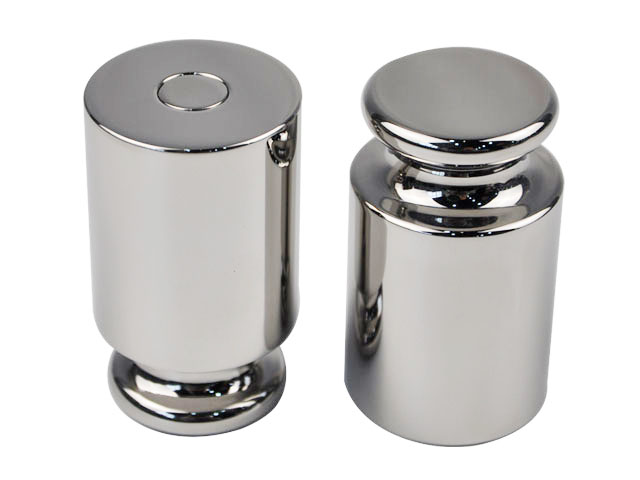
Types of Standard Weight
Standard weights serve as the foundational physical reference tools for all mass measurement activities across industrial production, laboratory research, commercial trade, and scientific experimentation, forming the core guarantee for the accuracy, consistency, and traceability of all weighing work. Every weighing instrument, no matter the size or application scenario, relies on corresponding standard weights to complete regular calibration, performance testing, and accuracy verification, ensuring that every mass data obtained from weighing meets unified measurement specifications and practical usage requirements. Without standardized and properly classified standard weights, all weighing results would lack reliable reference benchmarks, leading to inconsistent measurement data in different links of production and transactions, and hindering the normal operation of industrial processes, scientific research progress, and fair commercial circulation. The classification of standard weights is not random, but formulated strictly according to practical application needs, manufacturing material characteristics, precision manufacturing processes, and specific usage environments, with each type of standard weight designed to adapt to unique working scenarios, measurement accuracy requirements, and long-term use conditions. Understanding the different types of standard weights and their respective characteristics, application scopes, and performance advantages is essential for every practitioner engaged in measurement work, laboratory management, and industrial quality control, helping to select suitable reference weights for different weighing tasks and maintain the long-term stability and effectiveness of measurement systems.
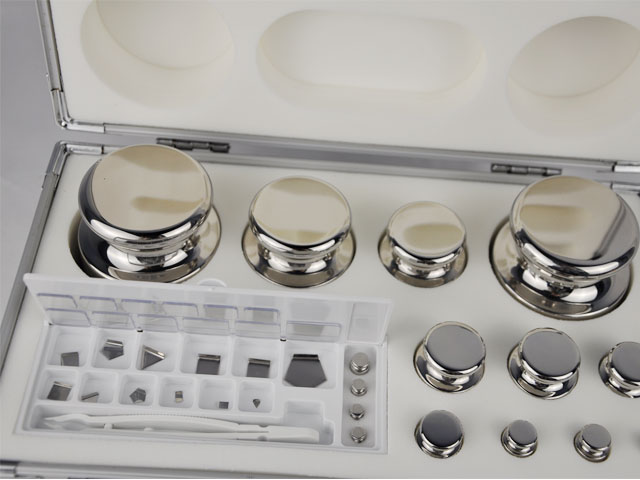
One of the most fundamental and widely adopted classification methods for standard weights is based on manufacturing materials, as the material properties directly determine the weight’s resistance to external environmental interference, surface stability, wear resistance, and long-term mass retention performance. Metal alloy standard weights are the most common type used in most conventional measurement and industrial calibration scenarios, crafted from refined composite metal materials that balance hardness, density uniformity, and anti-corrosion properties. These metal alloy weights undergo precise casting, cutting, and surface polishing processes, with their overall structure compact and surface smooth to reduce the impact of surface adhesion, oxidation, and mechanical wear on mass accuracy during long-term use. They are well-suited for general factory workshop calibration, daily commercial weighing equipment verification, and conventional teaching laboratory weighing experiments, capable of maintaining stable performance under normal indoor environmental conditions with ordinary temperature and humidity fluctuations. The production process of these metal alloy weights focuses on structural firmness and basic surface protection, avoiding excessive complex processing to meet the cost control and frequent use needs of conventional measurement work, making them highly adaptable and widely used in basic mass measurement links across various industries.
Stainless steel standard weights represent a higher-performance category among material-based classifications, optimized and upgraded on the basis of ordinary metal alloys with enhanced anti-rust, anti-corrosion, and oxidation resistance properties. Unlike ordinary metal alloys, stainless steel materials used for standard weights have strong tolerance to humid environments, chemical gas erosion, and occasional slight contact with common chemical reagents, effectively preventing mass deviation caused by surface rust, corrosion, or chemical reaction during long-term placement and use. The surface of stainless steel standard weights is fine polished and passivated, with a dense surface protective layer that reduces dust adhesion and facilitates daily cleaning and maintenance, ensuring that the weight’s nominal mass remains unchanged for a longer service cycle. This type of standard weight is commonly used in pharmaceutical production, food processing, chemical laboratories, and electronic manufacturing industries, where the working environment may have high humidity, trace chemical volatiles, or strict hygiene requirements. In these scenarios, ordinary metal weights are prone to surface damage and mass change, while stainless steel standard weights can maintain stable measurement accuracy for a long time, adapting to the strict environmental and hygiene standards of precision processing and production workshops.
Non-metallic standard weights form a special material classification, mainly made of high-density composite non-metallic materials with stable chemical properties and low thermal expansion coefficients. These non-metallic standard weights have unique advantages that metal weights do not possess, such as non-magnetism, low conductivity, and resistance to strong chemical corrosion, making them irreplaceable in some special precision measurement and extreme environment scenarios. Non-metallic standard weights will not be affected by external magnetic fields to produce magnetic adsorption or mass deviation, and their volume change caused by temperature difference fluctuation is extremely small, ensuring ultra-high mass stability in precise laboratory measurement requiring strict magnetic field and temperature control. They are often used in high-precision scientific research laboratories, metrology research institutions, and professional calibration centers engaged in mass traceability work, providing accurate mass reference for top-level precision balance calibration and high-precision scientific experiment data measurement. Although the production cost and processing difficulty of non-metallic standard weights are higher than those of metal weights, their unique material properties make them essential core reference tools in professional high-precision measurement fields.
Another core classification dimension of standard weights is based on precision grade, which divides standard weights into different levels according to allowable mass deviation, manufacturing tolerance, and calibration traceability requirements, matching different precision levels of weighing instruments and measurement work. Primary reference standard weights belong to the highest precision grade in the entire standard weight system, serving as the top-level mass reference benchmark in professional metrology systems. These weights are mainly used for the value transfer and traceability of lower-level standard weights, only used in professional metrology institutions and calibration centers with constant temperature, constant humidity, and anti-interference professional laboratory environments, and rarely used in on-site industrial production or conventional laboratory daily work. The manufacturing tolerance of primary reference standard weights is controlled within an extremely tiny range, with every production link processed and tested with ultra-high precision, and each use process strictly standardized and recorded to ensure the absolute accuracy and stability of the overall mass measurement value transfer system.
Secondary calibration standard weights are positioned in the middle of the precision grade system, undertaking the important link of value transfer between primary reference weights and working standard weights. This type of standard weight has moderate precision, higher than daily working weights and slightly lower than top primary reference weights, mainly used for regular calibration and performance detection of various working standard weights and high-precision analytical balances in laboratories. Secondary calibration standard weights are used in professional laboratory environments with basic environmental control, not requiring the extreme anti-interference conditions of primary weight laboratories, but still needing regular maintenance and periodic re-calibration to ensure the accuracy of their own mass values. They are widely used in enterprise internal measurement management, third-party calibration institutions, and university professional laboratories, acting as an important bridge to connect top-level metrology benchmarks and on-site practical measurement work.
Working standard weights are the most widely used precision grade in actual production and daily measurement work, with precision tolerance adapted to conventional industrial weighing, commercial transaction weighing, and general laboratory routine weighing tasks. This type of standard weight has reasonable precision meeting daily use needs, strong environmental adaptability, and low maintenance requirements, able to work normally in conventional workshops, markets, and ordinary teaching laboratories without strict constant temperature and humidity control. Working standard weights are mainly used for daily calibration of various electronic scales, mechanical balances, platform scales, and other common weighing equipment, ensuring that the weighing accuracy of daily production and transaction links meets basic specification requirements. Although their precision grade is relatively low compared with reference and calibration weights, their practicality and convenience make them the most frequently used type of standard weight in all mass measurement scenarios, supporting the normal operation of most basic weighing work in society.
Standard weights can also be classified according to structural form, with different structural designs adapting to different weighing equipment structures, use operation habits, and storage and carrying needs. Solid integral standard weights are the most traditional and common structural type, made of integral material processing without any detachable parts, with simple and firm overall structure, strong impact resistance, and not easy to loose or damage during use and handling. The mass of solid integral standard weights is fixed and cannot be adjusted at will, suitable for conventional fixed calibration work and long-term stable placement use. Their structural simplicity brings good stability, avoiding mass deviation caused by loose parts or internal component wear, and they are easy to store and manage, not requiring complex maintenance during daily placement.
Adjustable standard weights are designed with adjustable structural parts, allowing fine adjustment of the overall mass within a certain small range according to actual calibration needs. This type of standard weight is internally equipped with tiny adjustable counterweight components, and professionals can fine-tune the mass to the required standard value through professional tools according to the calibration deviation of weighing instruments. Adjustable standard weights are mostly used in precision laboratory calibration and professional instrument debugging work, suitable for scenarios requiring fine correction of weighing instrument tiny errors. Their structural design is relatively sophisticated, needing careful operation during use to avoid damage to internal adjustable parts, and regular inspection is required to ensure the stability of the adjustable structure and prevent mass deviation caused by part displacement.
Stackable standard weights adopt a layered and combined structural design, with each single weight of uniform specification and size, able to be stacked and combined freely according to different mass measurement needs to form different total mass references. This structural design has strong flexibility, able to meet various mass calibration requirements without preparing standard weights of each specification separately, saving storage space and use cost. Stackable standard weights are commonly used in industrial production workshops and bulk goods weighing calibration scenarios, convenient for on-site carrying and combined use, and suitable for rapid calibration of different range weighing equipment. The stacking structure is designed with stable clamping parts to ensure no sliding or displacement between stacked weights during use, maintaining the accuracy of combined mass.
Special-shaped standard weights constitute a special structural category, designed and manufactured according to the special structural characteristics and calibration needs of some special weighing equipment. Unlike conventional regular square and cylindrical standard weights, special-shaped standard weights have irregular shapes or special structural sizes, adapting to the limited placement space and special stress structure of special weighing instruments such as hook scales, crane scales, and special industrial testing weighing equipment. The structural design of special-shaped standard weights focuses on matching the use characteristics of special weighing equipment, ensuring stable placement and accurate stress during calibration work, and meeting the mass calibration needs of non-conventional weighing scenarios. Although their application scope is relatively narrow and only targeted at special equipment, they are indispensable in professional industrial testing and special weighing work.
In addition to the above main classification methods, standard weights can also be divided according to usage environment and functional purpose, including laboratory dedicated standard weights, industrial on-site standard weights, commercial trade standard weights, and teaching experiment standard weights. Laboratory dedicated standard weights focus on high precision and environmental adaptability, suitable for various scientific research and analytical detection work; industrial on-site standard weights focus on durability and anti-interference, adapting to complex and changeable workshop production environments; commercial trade standard weights focus on measurement fairness and stability, ensuring the accuracy and credibility of commodity transaction weighing data; teaching experiment standard weights focus on safety and intuition, suitable for student experiment operation and basic measurement principle teaching. No matter what type of standard weight, its core design and manufacturing goal is to provide accurate and reliable mass reference for corresponding measurement work, and different types of standard weights form a complete mass measurement guarantee system together. Choosing the right type of standard weight according to actual use needs, doing a good job in daily use maintenance and regular calibration management, can effectively ensure the long-term accurate operation of all weighing work, and lay a solid foundation for the stable development of industrial production, scientific research innovation and commercial circulation.
Types of Standard Weight
https://www.veidtweighing.com/standard-weights.html
Post Date: May 5, 2026
https://www.supplier-manufacturer.com/standard-weight/types-of-standard-weight.html

![Jewelry Scales]()
Jewelry Scales
In the intricate world of precious metal and gemstone craftsmanship and trading, subtle numerical differences carry profound practical meaning, and accurate weight measure…![Cast Iron Weight With Fork Slot]()
Cast Iron Weight With Fork Slot
Cast iron weight with fork slot stands as a fundamental and reliable component widely utilized across diverse industrial, construction, logistics, and mechanical operation…![Density Balances]()
Density Balances
Density stands as one of the most fundamental and informative physical properties of all materials, serving as a critical reference for identifying material characteristic…![Cast Iron Weight For Testing]()
Cast Iron Weight For Testing
Cast iron weight for testing stands as a foundational and essential component in the entire field of weighing measurement and industrial calibration work, serving as a rel…![Chrome Steel Weights]()
Chrome Steel Weights
In the field of precision measurement and industrial calibration, the stability and accuracy of standard weights serve as the fundamental guarantee for reliable data acqui…