100kg Test Weight
In the complex and interconnected world of industrial production, scientific experimentation, and daily operational measurement management, reliable mass reference tools form the invisible backbone of all accurate data recording and equipment normal operation. A 100kg test weight stands out as one of the most essential and widely utilized standard mass objects, designed to provide a stable, consistent, and dependable mass reference for a vast range of weighing equipment calibration, mechanical performance testing, and experimental data verification work. Unlike ordinary heavy objects that only possess simple mass attributes, this kind of test weight is crafted with meticulous attention to material selection, structural design, surface processing, and internal quality control, ensuring that its mass value remains steady under various working environments and long-term repeated use conditions. Every link from initial raw material processing to final forming and fine finishing is carried out with rigorous precision, aiming to eliminate external interference factors that may affect mass stability and guarantee that it can deliver consistent reference effects whenever and wherever it is put into use. Such basic but vital tools are rarely noticed in daily production and operation scenarios, yet they are indispensable for maintaining the accuracy and stability of all links related to weight measurement and load testing across multiple industries.
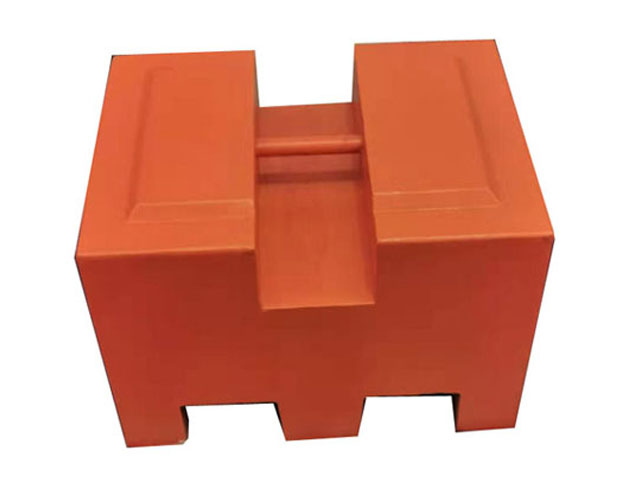
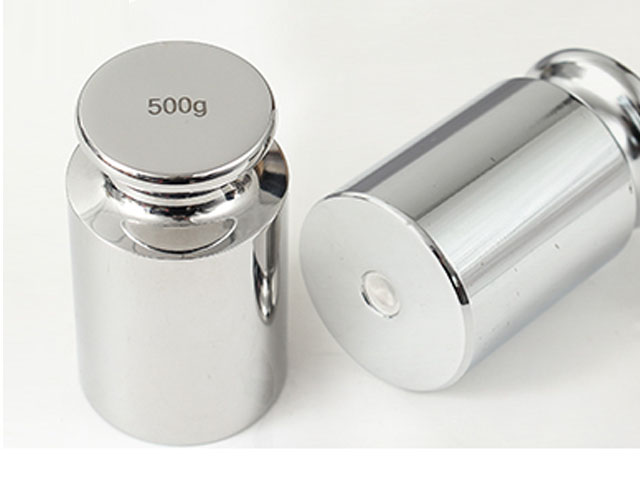
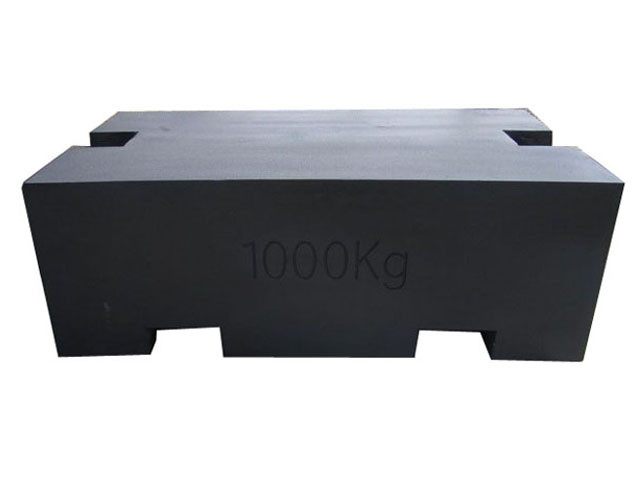
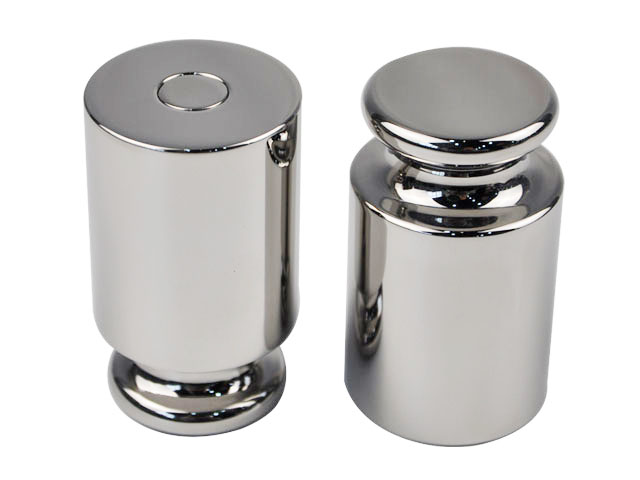
The raw material selection and overall structural design of a 100kg test weight are core foundations that determine its service performance and long-term usability. Most qualified test weights of this specification adopt high-density cast iron or refined steel as the main raw materials, materials selected for their excellent physical stability, strong resistance to external environmental erosion, and low natural deformation rate over time. These materials do not undergo obvious mass changes due to ordinary temperature fluctuations, minor humidity variations, or short-term external contact friction, maintaining a stable mass base for long-term repeated use. During the production and manufacturing process, strict smelting and casting processes are implemented to reduce internal impurities and structural pores inside the weight, avoiding uneven internal density that could cause mass deviation or partial structural wear during handling and use. The overall structure is usually designed with a regular and symmetrical shape, with smooth and rounded edge treatments to prevent accidental damage to operators and surrounding equipment during movement, stacking, and placement. Some structural versions are equipped with integrated handling parts that match the weight specification, making it convenient for common handling tools such as small forklifts and manual lifting equipment to complete loading, unloading, and carrying work without causing tilting or collision during transportation. The surface of the test weight undergoes special anti-rust and anti-corrosion treatment, effectively resisting oxidation rust, moisture corrosion, and surface wear that may occur in industrial workshops, outdoor temporary operation sites, and storage warehouses, extending the service cycle and ensuring that the surface state does not affect the accuracy of mass reference for a long time.
The core functional value of a 100kg test weight is reflected in the calibration and regular debugging of various large and medium-sized weighing equipment, which is the key link to ensure the authenticity and effectiveness of all weighing data in industrial production and logistics transportation. In modern industrial production workshops, many production links rely on various mechanical and electronic weighing devices to complete material batching, finished product weighing, and semi-finished product quality inspection. Over time, affected by mechanical vibration, long-term load bearing, and frequent use, the sensing accuracy and data display stability of these weighing devices will gradually change, leading to subtle deviations in weighing results. If these deviations are not corrected in a timely manner, they will gradually accumulate in continuous production, resulting in unqualified product batching proportions, inconsistent product specifications, and even unnecessary material waste and production cost losses. By placing the 100kg test weight on the weighing platform of various large weighing scales, floor scales, and production line weighing sensors, staff can compare the actual displayed data of the equipment with the standard mass value of the test weight, accurately judge the deviation range of the weighing equipment, and carry out targeted debugging and parameter adjustment work. This regular calibration work can effectively ensure that the weighing equipment always maintains a good working state, makes the weighing data of each production link true and reliable, and provides accurate mass basis for standardized production and product quality control.
In the field of logistics and transportation management, 100kg test weights play an important role in detecting and verifying the load bearing capacity and weighing accuracy of vehicle weighing equipment and cargo handling equipment. Various trucks, trailers, and logistics transport vehicles need to carry out regular weighing detection to confirm their actual load bearing status, avoid overloading operations that affect driving safety and vehicle service life, and ensure that the actual weight of transported goods matches the recorded weight information. Relevant detection and management departments and logistics enterprises need to use standard test weights to calibrate vehicle weighing platforms and on-board weighing sensing equipment regularly. By gradually adding standard mass brought by 100kg test weights, staff can test the sensing sensitivity and data feedback accuracy of the weighing equipment under different load conditions, ensuring that the weight data of vehicles and goods measured before transportation is accurate and effective. At the same time, for some container handling and cargo stacking equipment in logistics warehouses, test weights are also used to test the stability and load bearing performance of mechanical equipment during lifting and handling, ensuring that the equipment can operate safely and stably within the rated load range, reducing the risk of equipment failure and cargo damage caused by long-term overload or unstable operation.
Scientific research laboratories and engineering experimental testing scenarios are also important application fields for 100kg test weights, providing accurate mass reference for various physical experiments and mechanical performance research work. In basic physics experiments related to force balance, gravity measurement, and mechanical equilibrium verification, a stable standard mass is needed to assist in calculating force changes and motion state changes. The 100kg test weight, with its stable and fixed mass value, can be used as a reliable experimental reference object to help researchers complete experimental data measurement and result verification, ensuring that experimental results have good repeatability and comparability. In engineering mechanical performance testing, such as tension resistance, compression resistance, and structural stability tests of mechanical parts and building materials, test weights are used to apply stable and constant load pressure to the tested objects. By maintaining continuous and stable mass load, staff can observe the structural changes and performance limits of materials and equipment under fixed load conditions, providing accurate experimental data for product structure optimization and material performance improvement. All scientific research and experimental work require high-precision and high-stability mass reference conditions, and the stable performance of 100kg test weights can fully meet the basic experimental needs and lay a solid foundation for the smooth progress of scientific research and experimental innovation.
Elevator and mechanical lifting equipment safety testing is another key scenario where 100kg test weights are widely used, closely related to public safety and equipment standardized operation. Various passenger elevators, freight elevators, and fixed lifting mechanical equipment need to undergo regular safety performance testing and load bearing capacity verification to ensure that they can operate safely within the rated load range and avoid safety accidents such as equipment jamming, structural deformation, and equipment failure caused by overload operation. During the testing process, staff use multiple 100kg test weights to simulate the actual passenger or cargo load state of the elevator and lifting equipment, conduct static load bearing tests and dynamic operation tests respectively. Through observing the operating stability, structural deformation degree, and safety protection device response effect of the equipment under standard load conditions, the safety performance and operational reliability of the equipment can be comprehensively evaluated. Any potential safety hazards and performance deficiencies found during the testing process can be repaired and adjusted in a timely manner, ensuring that all lifting equipment meets normal safety operation standards and protecting the personal safety of users and the normal transportation of goods.
Daily maintenance, proper storage, and standardized handling of 100kg test weights are crucial to maintaining their long-term mass stability and extending their overall service life. Although these test weights are made of high-strength and corrosion-resistant materials, improper use and storage over a long period will still cause unnecessary mass changes and structural damage. In daily handling work, it is necessary to avoid violent throwing, strong collision, and long-term friction with hard sharp objects, so as to prevent surface damage, local material loss, and structural deformation of the test weight, which would affect the accuracy of the standard mass value. When not in use for a long time, the test weights need to be placed in a dry, ventilated, and stable indoor storage environment, avoiding long-term exposure to outdoor humid, high temperature, or corrosive gas environments, to prevent surface oxidation, corrosion, and internal structural changes. Regular surface cleaning and appearance inspection work should be carried out regularly to remove surface dust and stains, check for obvious deformation, damage, and corrosion, and ensure that the appearance and structural state of the test weight remain good. In addition, regular mass recheck and calibration work should be arranged according to the frequency of use. Even if there is no obvious surface damage, long-term use and environmental changes may cause subtle mass changes, and recheck calibration can correct subtle deviations in a timely manner and ensure that the test weight always maintains accurate reference performance.
In the entire modern industrial system and social operation system, all work related to measurement, testing, and calibration is based on stable and reliable standard reference tools, and 100kg test weights bear such basic and important responsibilities silently. It does not have complex structural functions and gorgeous appearance design, but it is an indispensable basic guarantee for industrial production standardization, logistics transportation safety, scientific research experiment accuracy, and public facility safety operation. Every accurate weighing data, every qualified equipment test result, and every standardized production link is inseparable from the stable support provided by such standard test weights. With the continuous development of industrial automation and intelligent measurement technology, the demand for high-stability and high-precision standard mass reference tools in various industries is constantly increasing, and the application scope and use value of 100kg test weights will continue to expand. Adhering to standardized production and manufacturing, standardized use and maintenance, and regular calibration and management of test weights can always maintain their good working performance, provide solid and reliable mass reference support for the stable operation and high-quality development of various industries, and lay a solid foundation for the standardized and orderly progress of all measurement and testing work.
100kg Test Weight
https://www.veidtweighing.com/test-weight.html
Post Date: May 4, 2026
https://www.supplier-manufacturer.com/test-weight/100kg-test-weight.html

![Cast Iron Weight For Scales]()
Cast Iron Weight For Scales
In every sector that relies on consistent and dependable mass measurement, cast iron weight for scales stands as an irreplaceable foundational component that upholds the i…![Kilogram Test Weight]()
Kilogram Test Weight
In every corner of modern industrial production, scientific research experimentation, commercial transaction settlement, and daily life quality supervision, the accurate p…![M2 Calibration Weight]()
M2 Calibration Weight
Mass measurement stands as one of the most fundamental and indispensable links in all fields of modern industrial production, laboratory scientific research, commercial tr…![Calibration Weight For Balances]()
Calibration Weight For Balances
In every sector that relies on consistent and dependable mass measurement, the role of calibration weight for balances stands as an irreplaceable foundational element that…![Astm Class 1 Calibration Weight]()
Astm Class 1 Calibration Weight
In the intricate and interconnected world of modern precision metrology, the consistency and dependability of mass measurement form the foundational backbone of countless …