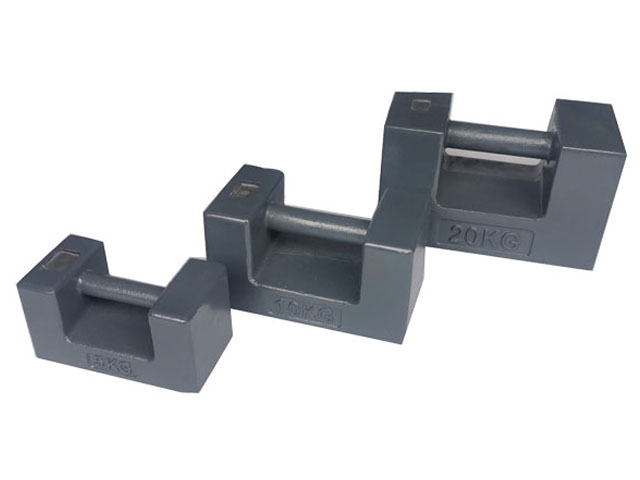
Forklift Scale Test Weight
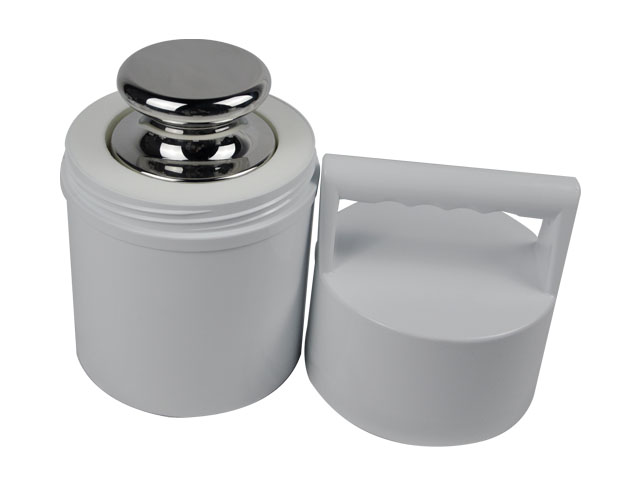
Forklift scale test weight serves as a fundamental auxiliary medium for verifying the operational stability and measurement precision of onboard forklift weighing systems in industrial material handling scenarios. In modern warehousing, logistics distribution, factory material turnover, and port cargo handling processes, forklift-mounted weighing devices have become essential functional equipment that integrates cargo transportation and weight measurement. Unlike traditional fixed floor scales that require independent weighing stations and separate material handling procedures, forklift scales complete weight data collection synchronously during cargo lifting and moving, effectively simplifying operational workflows and improving overall handling efficiency. To ensure the consistency and dependability of weighing data in long-term cyclic operation, regular calibration and performance verification with standardized test weights become indispensable daily management work for industrial weighing systems.
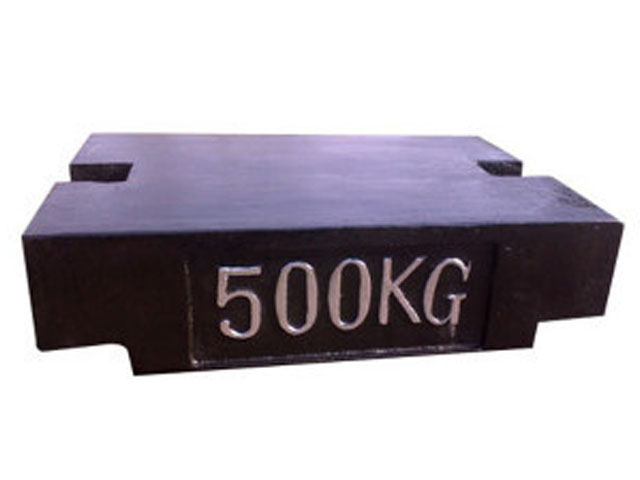
The core function of forklift scale test weight lies in providing stable, known, and repeatable load conditions for the detection of forklift weighing systems. Forklift scales mainly rely on two mainstream working mechanisms in practical application: hydraulic pressure sensing and load cell induction. The hydraulic type captures pressure changes inside the forklift’s lifting oil circuit during load bearing, converts mechanical pressure signals into electronic data, and calculates the corresponding load weight through internal algorithm conversion. The load cell type installs high-sensitivity sensing components on the forklift carriage or fork arms, and realizes weight measurement by detecting the tiny mechanical deformation generated when bearing loads. Regardless of the structural design and induction principle of the weighing system, long-term mechanical vibration, frequent load changes, mast tilting, and uneven ground operation in daily work will cause subtle deviations in sensing parameters. These cumulative deviations will gradually affect the accuracy of weighing results, making regular testing with professional test weights a necessary measure to maintain system stability.
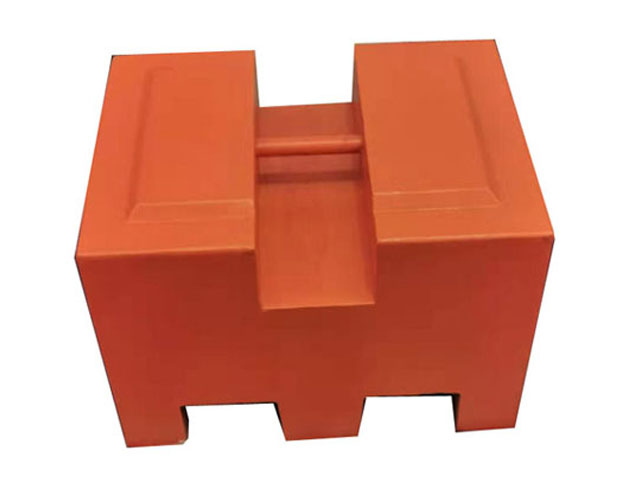
Standard forklift scale test weights are manufactured with uniform material density and stable structural design, featuring low deformation rate and strong environmental adaptability, which can simulate the actual load state of industrial cargoes truly. In the production and processing process, these test weights undergo precise shaping and density balancing treatment, ensuring that the overall mass is uniform and the center of gravity is stable, avoiding measurement interference caused by unbalanced load force points during testing. Compared with ordinary cargoes, test weights have fixed mass attributes and stable physical properties, and will not produce quality changes due to temperature, humidity, or long-term stacking extrusion in conventional working environments. This stable quality characteristic provides a unified reference standard for forklift scale testing, enabling operators to accurately judge the error range of the weighing system through comparison between displayed values and standard weight values.
The standardized testing process of forklift scales based on test weights follows scientific and rigorous operational logic, which can be divided into pre-test preparation, static load testing, dynamic load testing, and post-test data verification links. Before formal testing, it is necessary to complete the inspection of the forklift and weighing system first. Operators need to check whether the forklift’s lifting mechanism operates flexibly, whether the mast has jitter or stuck conditions, and whether the in-cab display instrument of the weighing system works normally and clears zero accurately. Meanwhile, the test site should be selected on flat and solid ground to prevent ground inclination or foundation settlement from causing offset load stress on the forklift fork arms, which would affect the authenticity of test data. After completing equipment and site preparation, place the test weight stably in the center of the fork arm to ensure uniform force on the left and right fork bodies, avoiding lateral offset of the load center that may cause systematic errors.
Static load testing is the most basic link in forklift scale verification, mainly used to detect the static measurement accuracy of the weighing system under fixed load conditions. During operation, the operator lifts the test weight to a fixed height, keeps the forklift body stationary, and maintains the load in a stable suspended state for a certain period of time. This operation can effectively eliminate the instantaneous pressure fluctuation error generated during the rapid lifting of the load and observe the stability of the weighing system’s data display. In the static holding state, the weighing system’s reading should remain relatively stable without continuous floating or sudden jump changes. By recording the displayed weight data and comparing it with the standard mass of the test weight, the static error range of the forklift scale can be calculated. Multiple repeated tests with test weights of different masses can further verify the measurement stability of the weighing system under light load, medium load, and near-rated load states, covering the conventional load range of daily operation.
Dynamic load testing is closer to the actual working conditions of forklifts and is an important part of evaluating the comprehensive performance of weighing systems. Different from static testing, dynamic testing requires the operator to lift the test weight and complete low-speed forward movement, slight turning, and slow mast tilting actions according to daily operation norms. In the process of simulated dynamic operation, the forklift will produce slight vibration and body inclination, which is consistent with the complex working states such as uneven ground and frequent operation switching in actual material handling. By observing the real-time change of weighing data during dynamic operation, it can judge whether the weighing system has anti-interference ability against external vibration and attitude changes. Excellent weighing systems can maintain data fluctuation within a reasonable range during dynamic operation, while aging or uncalibrated equipment will produce large data deviations due to vibration interference, which needs timely adjustment and correction with test weights.
In practical industrial applications, the selection of forklift scale test weights needs to match the rated load range of the forklift and the conventional weighing interval of the system. A single specification of test weight cannot cover all working condition detection requirements, so it is usually necessary to configure test weights of multiple mass gradients for combined testing. Small-mass test weights are used for low-load precision detection, which is suitable for the scenario of weighing small-batch lightweight materials in daily warehousing. Medium-mass test weights are applied to conventional cargo weighing verification, covering most daily material handling scenarios. Large-mass test weights close to the forklift’s rated load are used for limit load detection, verifying the stability and accuracy of the weighing system under high-load operation, and also checking whether the forklift’s lifting mechanism and weighing sensing components can work normally under heavy load pressure.
The application of test weights also plays an important role in the daily maintenance and fault diagnosis of forklift weighing systems. When the weighing system has inconsistent data, obvious reading deviation, or unstable display during daily use, professional test weights can be used for fault troubleshooting. First, eliminate external interference factors such as unbalanced cargo placement and abnormal forklift operation, and then verify the system accuracy through standard test load data. If the static test data is accurate but the dynamic test data fluctuates abnormally, it indicates that the sensing component has insufficient anti-vibration performance or loose installation structure. If the deviation of high-load test data is significantly larger than that of low-load data, it means that the sensing element has fatigue deformation after long-term heavy load operation, which needs component inspection and parameter recalibration. This targeted detection mode based on test weights can quickly locate fault causes and improve the efficiency of equipment maintenance.
Environmental factors have a certain impact on the test results of forklift scales, and test weight verification work needs to fully consider the adaptability of the working environment. In low-temperature environments, the hydraulic oil viscosity of hydraulic weighing systems will change, and the physical sensitivity of electronic sensing components will also fluctuate slightly. In high-temperature and humid environments, the circuit parts of the weighing system are prone to damp interference, and the surface of test weights may produce slight oxidation, though this oxidation does not cause obvious quality changes in conventional environments. Therefore, in extreme environmental tests, it is necessary to stabilize the test weight and forklift equipment in the working environment for a period of time in advance, so that the equipment and test medium can adapt to the ambient temperature and humidity, ensuring the authenticity and effectiveness of test data. In addition, wind interference should be avoided during outdoor testing, to prevent wind force from affecting the suspended stability of test weights and causing accidental data deviation.
Standardized test weight detection work helps enterprises form standardized weighing management procedures and improve the overall standardization level of material data statistics. In factory incoming material inspection, outgoing cargo counting, and inventory reconciliation work, accurate forklift weighing data is the basis for material quantity statistics and cost accounting. Uncalibrated weighing systems are prone to data deviation, which will lead to errors in material inventory statistics, cargo delivery volume inconsistency, and even affect the normal progress of enterprise supply chain settlement. Regular use of test weights to verify and calibrate forklift scales can maintain the long-term stability of weighing data, ensure the consistency of material data in each link of enterprise operation, and reduce operational risks caused by data errors.
It is worth noting that the use of forklift scale test weights needs to follow standardized operational norms to avoid incorrect operation affecting the test effect. During the test, the test weight must be placed stably without stacking deflection or single-side tilting, and the lifting speed should be uniform and stable to avoid sudden start or stop operations that cause load jitter. The test height should be consistent each time, and the static holding time should be unified, so as to ensure the comparability of test data before and after equipment maintenance and calibration. After each test, the test weight should be placed in a fixed storage area, kept flat and dry, avoid long-term collision and extrusion, and prevent structural deformation or surface damage caused by external force, so as to maintain the long-term quality stability of the test weight itself.
With the continuous improvement of industrial material handling efficiency requirements, the functional design of forklift weighing systems is constantly optimized, and the corresponding test and verification standards are also gradually standardized. Modern forklift weighing systems have realized intelligent functions such as automatic zero calibration, tilt compensation, and uneven ground adaptation, which put forward higher requirements for test work. The traditional single static test mode can no longer fully verify the comprehensive performance of intelligent weighing systems. The combined test mode of multi-gradient test weights and multi-working condition simulation has become the mainstream of current forklift scale detection. Through the combination of static stability test, dynamic anti-interference test, and full-load limit test, the overall performance of the weighing system can be comprehensively evaluated, ensuring that the equipment can maintain stable and accurate working effects in complex and changeable industrial scenarios.
In conclusion, forklift scale test weight is a core standard medium for ensuring the accurate and stable operation of forklift onboard weighing systems. It runs through the whole life cycle of equipment installation and commissioning, daily operation, regular maintenance, and fault detection. Standardized test weight detection work can effectively eliminate systematic errors caused by equipment aging, mechanical vibration, and environmental changes, maintain the accuracy consistency of weighing data, and provide reliable data support for enterprise material management, cargo settlement, and operational efficiency optimization. In the daily operation and management of industrial forklift weighing equipment, attaching importance to the standardized application of test weights and forming a regular testing and calibration mechanism is an important guarantee for improving the standardization and refinement level of industrial material handling work.
Forklift Scale Test Weight
https://www.veidtweighing.com/test-weight.html
Post Date: Jun 7, 2026
https://www.supplier-manufacturer.com/test-weight/forklift-scale-test-weight.html

![Working Principle of Stainless Steel Weight]()
Working Principle of Stainless Steel Weight
Stainless steel weights are essential standard measuring objects widely applied in industrial detection, laboratory measurement, instrument calibration, and daily weighing…![Test Weight For Sale]()
Test Weight For Sale
In every sector that relies on precise mass measurement to maintain operational stability, consistent production standards, and reliable daily workflows, test weights stan…![E2 Class Standard Weight]()
E2 Class Standard Weight
In the intricate and foundational field of modern mass metrology, the maintenance of accurate and consistent weight measurement forms the bedrock of countless industrial p…![Calibration Weight Manufacturer]()
Calibration Weight Manufacturer
In the modern industrial and scientific measurement ecosystem, accurate mass measurement stands as the most fundamental and indispensable foundation for all production, re…![10kg Test Weight]()
10kg Test Weight
In the intricate and interconnected framework of modern industrial production, commercial trade, scientific laboratory research, and daily public service operations, the c…