Precision Balance Test Weight
Precision balance test weights serve as fundamental reference tools in the field of mass measurement, forming the cornerstone of accurate and consistent weighing operations across diverse industrial, laboratory, and research scenarios. These standardized mass artifacts are designed to deliver stable and known mass values, enabling operators to verify, adjust, and maintain the measurement performance of precision balances, analytical scales, and other high-sensitivity weighing devices. In all quantitative measurement work that relies on mass data, the reliability of final results hinges heavily on the consistency and accuracy of these test weights, making them an indispensable part of daily measurement quality control and instrument maintenance. Unlike ordinary weighing accessories, precision balance test weights are manufactured with rigorous dimensional and mass tolerance control, with uniform density distribution and smooth surface finishes that minimize external interference during use. Their core function lies in providing a fixed, traceable mass reference, bridging the gap between instrument mechanical performance and accurate data output, and effectively reducing systematic errors in weighing processes.
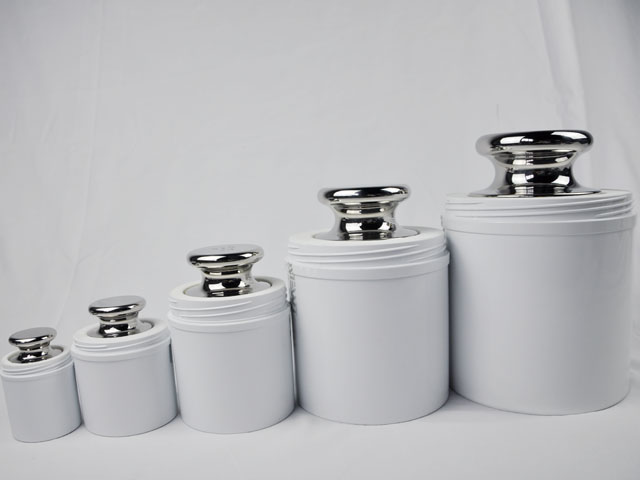
The working logic of precision balance test weights is built on the basic physical principle of mass equilibrium and force comparison. Modern precision balances mostly operate based on electromagnetic force compensation or mechanical beam balance mechanisms, both of which require standardized mass references to correct operational deviations. When a precision balance is in operation, various internal and external factors can cause subtle shifts in measurement status, including slight wear of internal mechanical components, changes in electromagnetic sensor sensitivity, and minor deformation of weighing pans after long-term use. By placing precision test weights with confirmed mass values on the weighing platform, operators can compare the real-time reading of the balance with the standard mass value of the test weight. Any deviation between the two values reflects the measurement error of the balance, providing an accurate basis for subsequent parameter adjustment and performance correction. This comparison and correction process ensures that the weighing instrument can maintain consistent output data during long-term continuous use, avoiding data distortion caused by gradual equipment aging or environmental changes.
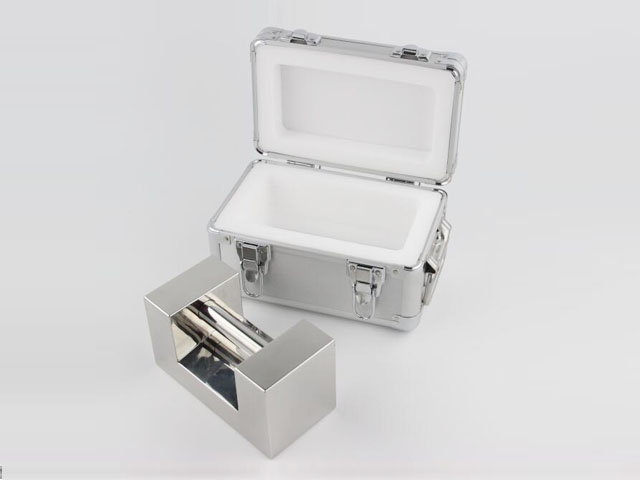
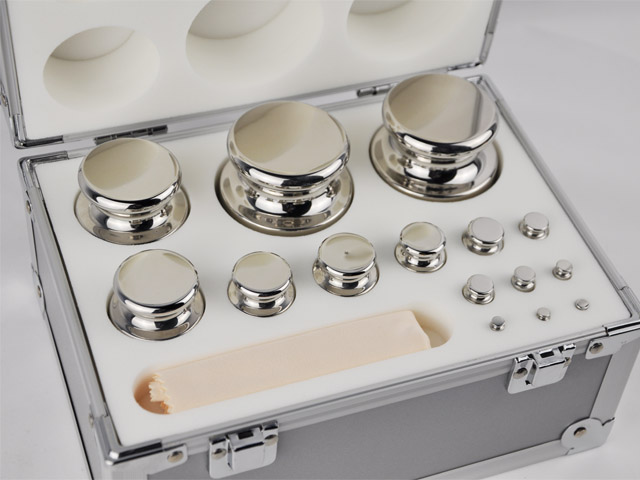
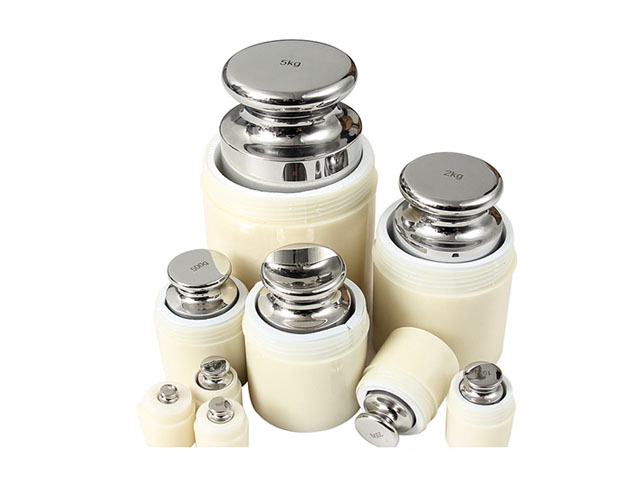
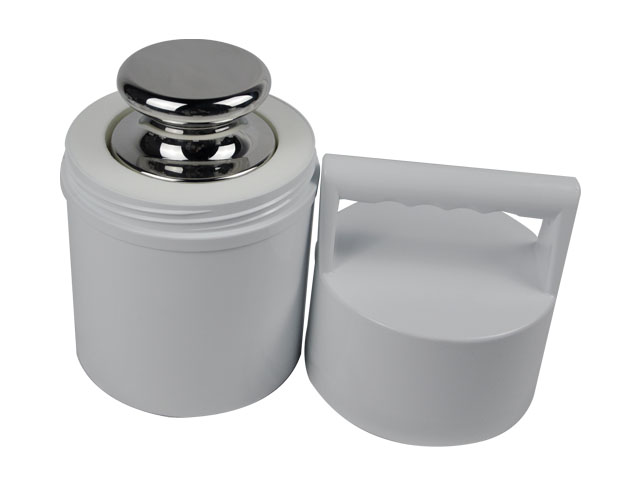
The structural design and material selection of precision balance test weights are tailored to meet the demands of high-precision measurement environments. Most qualified test weights adopt high-density, low-thermal-expansion metal materials, which can effectively resist the impact of temperature fluctuations on mass stability. Materials with stable chemical properties are chosen to prevent surface oxidation, corrosion, or qualitative changes caused by long-term exposure to air, moisture, or trace chemical substances. The surface of the test weight undergoes fine polishing and sealing treatment to reduce surface roughness, which not only avoids dust and moisture adhesion that may affect mass accuracy but also reduces air buoyancy interference during the weighing process. The overall structure is compact and uniform, with regular geometric shapes that ensure consistent stress distribution when placed on the weighing pan, preventing measurement errors caused by unbalanced force contact. Every production link from material cutting, fine grinding to surface treatment follows strict dimensional and mass control standards to ensure that each finished test weight has stable physical properties and accurate mass representation.
In laboratory environments, precision balance test weights undertake core calibration and verification tasks for daily experimental measurement. Laboratory weighing operations involve a wide range of samples, including fine chemical reagents, biological samples, pharmaceutical raw materials, and experimental standard substances, all of which require ultra-precise mass data to support experimental conclusions and data analysis. Even tiny measurement errors may lead to deviations in experimental data, affect the repeatability of experimental results, and even mislead research conclusions. Regular verification of precision balances with test weights can effectively eliminate accumulated measurement errors of instruments. In daily laboratory management, operators usually conduct routine spot checks with matching test weights before formal experiments to confirm that the instrument is in a normal working state. For long-term experimental projects requiring continuous data monitoring, periodic calibration with test weights is essential to ensure the consistency of data collected at different time nodes and guarantee the scientific validity of experimental research.
Industrial manufacturing and quality inspection fields also rely heavily on precision balance test weights to standardize production and testing processes. In precision parts processing, electronic component manufacturing, food processing, and pharmaceutical production industries, mass consistency of products is a key indicator of product quality. Many tiny parts and raw materials need accurate weighing and proportioning to ensure product performance stability and batch consistency. Production line weighing equipment and laboratory precision balances used for sampling inspection will gradually produce measurement deviations with the extension of service time and the impact of continuous operational vibration. Using precision test weights for regular calibration can correct these deviations in a timely manner, ensuring that product proportioning, sampling testing, and quality screening work are carried out within accurate measurement ranges. This standardized measurement control mode helps reduce product quality fluctuations, improve overall production consistency, and provide reliable data support for enterprise quality management.
The correct use and standardized operation of precision balance test weights are crucial to maintain their measurement accuracy and service life. Before each use, it is necessary to ensure that the working environment is clean, dry, and stable, avoiding strong air flow, intense temperature changes, and surface vibration interference. The surface of the test weight should be checked for dust, stains, or foreign attachments, and any impurities need to be gently removed with professional cleaning tools to prevent external attachments from changing the actual mass of the test weight. During operation, direct hand contact with the test weight surface should be avoided, as sweat, grease, and fine debris on human hands will adhere to the surface, causing slow mass changes and affecting long-term measurement accuracy. It is advisable to use special tweezers or gloves to take and place test weights, ensuring stable placement without collision, friction, or drop impact, which may cause surface wear or structural deformation.
The matching use of test weights and precision balances follows standardized operational procedures to ensure the effectiveness of calibration and verification. First, the precision balance needs to be preheated and leveled according to operational requirements, with the weighing pan kept clean and empty, and the instrument zeroed to eliminate initial measurement errors. After the instrument enters a stable working state, select test weights of appropriate mass specifications according to the measuring range of the balance. In the verification process, place the test weight stably in the center of the weighing pan to avoid eccentric placement causing mechanical stress deviation and inaccurate readings. After the instrument reading stabilizes, record the displayed value and compare it with the standard mass value of the test weight to calculate the measurement deviation. If the deviation exceeds the allowable range, fine-tune the balance parameters according to professional operational methods until the instrument reading is consistent with the standard value of the test weight. Multiple repeated measurements can be carried out during the operation to eliminate accidental errors and ensure the stability and reliability of calibration results.
Daily maintenance and proper storage of precision balance test weights directly determine their long-term measurement stability and service cycle. After each use, the test weights should be cleaned gently and placed in a dedicated sealed storage box to isolate air dust, moisture, and corrosive gases in the environment. The storage environment needs to maintain constant temperature and low humidity, avoiding long-term exposure to high temperature, low temperature, or humid environments that may cause material aging, oxidation, or mass drift. Test weights of different specifications should be stored separately to avoid mutual friction and collision during stacking and handling. Regular manual inspection is required in daily management to check for surface scratches, deformation, oxidation discoloration, or structural damage. Once abnormal conditions are found, the test weights should be suspended from use in time to avoid inaccurate reference data affecting subsequent weighing work. Long-term unused test weights need regular re-inspection and calibration to ensure that their mass values remain stable and accurate.
In addition to basic calibration and verification functions, precision balance test weights also play an important role in instrument performance testing and error analysis. In the process of equipment maintenance and performance evaluation, technicians can use test weights of different mass specifications to test the linearity, repeatability, and stability of precision balances. By testing multiple points in the instrument’s measuring range, they can judge whether the instrument has systematic errors in different weighing intervals and accurately locate potential problems such as sensor sensitivity attenuation and mechanical structural unbalance. This targeted testing method helps technicians comprehensively grasp the working state of the weighing instrument, realize early detection and maintenance of potential faults, and extend the service life of precision weighing equipment. At the same time, complete test records formed during the use of test weights can form continuous measurement data files, providing effective support for equipment life cycle management and measurement quality traceability.
The value of precision balance test weights lies in providing stable and unified mass reference standards for the entire weighing measurement system. All quantitative work based on mass data requires unified reference benchmarks to ensure the comparability and consistency of measurement results in different time periods, different environments, and different operational scenarios. Without standardized test weights as support, the measurement data of precision balances will lack unified judgment criteria, and tiny deviations will continue to accumulate and expand, eventually leading to distorted experimental data, unqualified product quality control, and inconsistent industrial production standards. In scientific research, industrial production, quality supervision, and other fields with high requirements for data accuracy, the standardized application of precision test weights has become an essential link to maintain measurement order and ensure data credibility. It provides basic guarantee for the standardized development of various precision measurement work and promotes the consistency and accuracy of mass measurement results in the whole industry.
With the continuous improvement of precision measurement technology, the manufacturing process and application management of precision balance test weights are also constantly optimized. Modern production processes further improve the uniformity of material density and the precision of dimensional processing, reducing the inherent errors of test weights themselves. Meanwhile, standardized use and management systems make the application of test weights more scientific and standardized, effectively reducing human operational errors and environmental interference errors. In future high-precision measurement scenarios, the role of precision balance test weights will become more prominent. As the accuracy requirements of scientific research experiments, high-end manufacturing, and quality detection continue to improve, the demand for stable, high-precision, and long-life test weights will keep increasing. Adhering to standardized use, scientific maintenance, and regular performance verification can maximize the working efficiency of precision balance test weights, maintain the long-term stability of weighing instrument performance, and provide solid basic support for all links relying on precise mass measurement data.
Precision Balance Test Weight
https://www.veidtweighing.com/test-weight.html
Post Date: Jun 7, 2026
https://www.supplier-manufacturer.com/test-weight/precision-balance-test-weight.html

![Small Gram Size Laboratory Standard Test Weight]()
Small Gram Size Laboratory Standard Test Weight
Small gram size laboratory standard test weights are essential precision tools designed to deliver accurate mass reference values for microscopic and fine-scale weighing o…![Laboratory Traceable Calibration Weight For Analytical Lab]()
Laboratory Traceable Calibration Weight For Analytical Lab
In modern analytical laboratories, the accuracy and reliability of quantitative experimental data serve as the fundamental foundation for all scientific research, material…![Standard Weight For Precision Scales]()
Standard Weight For Precision Scales
In the realm of precision measurement, standard weights stand as the foundational benchmark that upholds the accuracy, reliability, and traceability of all precision scale…![Precision Calibration Weight For Weighing Scale]()
Precision Calibration Weight For Weighing Scale
In every industry and laboratory setting that relies on accurate mass measurement, precision calibration weights serve as foundational tools to sustain the functional reli…![Calibration Weight For Electric Forklift Weighing Calibration Use]()
Calibration Weight For Electric Forklift Weighing Calibration Use
In modern industrial material handling scenarios, electric forklifts have become indispensable equipment for warehouse storage, cargo handling, and logistics distribution …