Laboratory Weighing Scale
In modern scientific research, industrial testing, and academic experimental environments, laboratory weighing scales stand as indispensable measuring instruments dedicated to determining the mass of various substances with dependable precision. Unlike ordinary weighing tools designed for daily use, these specialized devices are engineered to adapt to rigorous laboratory conditions, focusing on stable data output, subtle mass detection, and consistent measurement repeatability. The evolution of laboratory weighing equipment has spanned centuries, progressing from simple mechanical balance structures to sophisticated electromagnetic sensing systems, and each technological iteration has further optimized the accuracy and stability of mass measurement. As a fundamental carrier of quantitative analysis in laboratories, weighing scales lay a solid data foundation for chemical component analysis, physical property testing, biological sample research, and material performance verification, making them an essential part of scientific exploration and experimental verification.
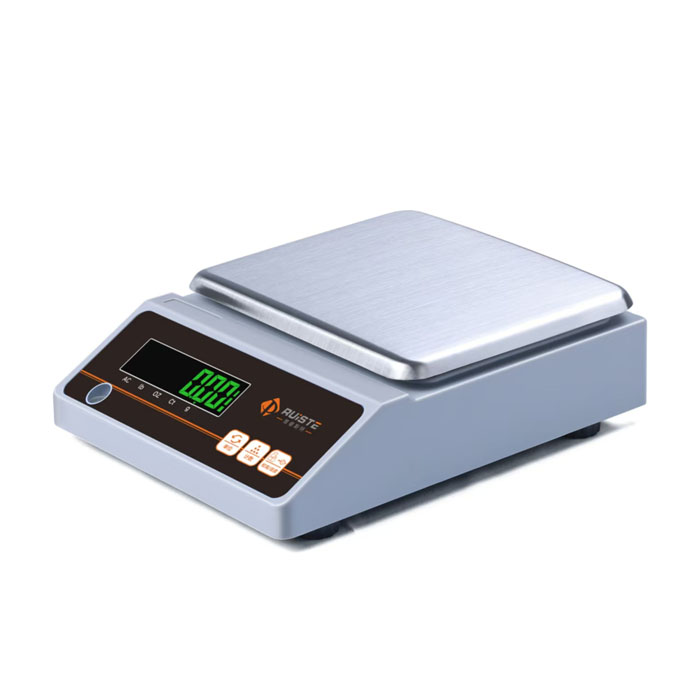
The working mechanisms of laboratory weighing scales can be categorized into two mainstream systems, namely mechanical balance structure and electronic sensing structure, each with distinct operational logic and application scenarios. Traditional mechanical weighing scales rely on the basic lever equilibrium principle, where a rigid beam rotates around a fixed fulcrum to balance the gravitational force generated by measured samples and standard counterweights. This structural design features straightforward mechanical logic, requiring no auxiliary power supply during operation. The core components include a smooth weighing pan, a calibrated graduated beam, adjustable balance accessories, and a stable base. Users complete mass measurement by adjusting the position of sliding gauges and matching counterweights, with measurement accuracy dependent on the processing precision of mechanical components and the flatness of the placement surface. Such mechanical weighing devices remain widely used in basic teaching laboratories and routine low-precision testing procedures due to their simple maintenance requirements and stable mechanical performance.
Contemporary electronic laboratory weighing scales adopt an electromagnetic force balance principle, representing an advanced upgrading direction of weighing technology. When a sample is placed on the weighing pan, the pressure generated by the sample’s gravity triggers tiny displacement of the internal sensing structure. A high-sensitivity position detector captures this subtle mechanical change and converts it into a weak electrical signal. The internal circuit system dynamically adjusts the current intensity of the electromagnetic coil, generating an electromagnetic force that counteracts the sample’s gravity to restore the sensing structure to its initial balanced state. There exists a stable positive correlation between the current intensity required for balance restoration and the mass of the measured sample. The internal data processing module converts current variation into intuitive digital readings, realizing rapid and convenient mass detection. Compared with mechanical structures, electronic weighing units deliver smoother data readout, shorter response time, and higher sensitivity to subtle mass changes, effectively meeting the stringent measurement demands of refined experimental research.
Diverse types of laboratory weighing scales have been developed to accommodate varying measurement ranges and precision requirements in experimental activities. Coarse mechanical weighing structures are suitable for preliminary sample weighing with low precision standards, capable of bearing relatively large loads and adapting to common bulk material detection. Medium-precision electronic weighing devices serve conventional chemical and physical experiments, balancing measurement accuracy and service applicability to fulfill daily laboratory testing needs. High-precision analytical weighing units are applied in trace component detection and micro-sample research, equipped with highly sensitive sensing components to identify minimal mass fluctuations of tiny samples. In addition, specialized weighing structures optimized for liquid and solid density testing integrate auxiliary measuring brackets and constant-volume measuring components. Based on Archimedes’ buoyancy principle, these devices calculate sample density by measuring mass changes of fixed-volume components in different media, expanding the functional boundary of laboratory weighing equipment beyond basic mass detection.
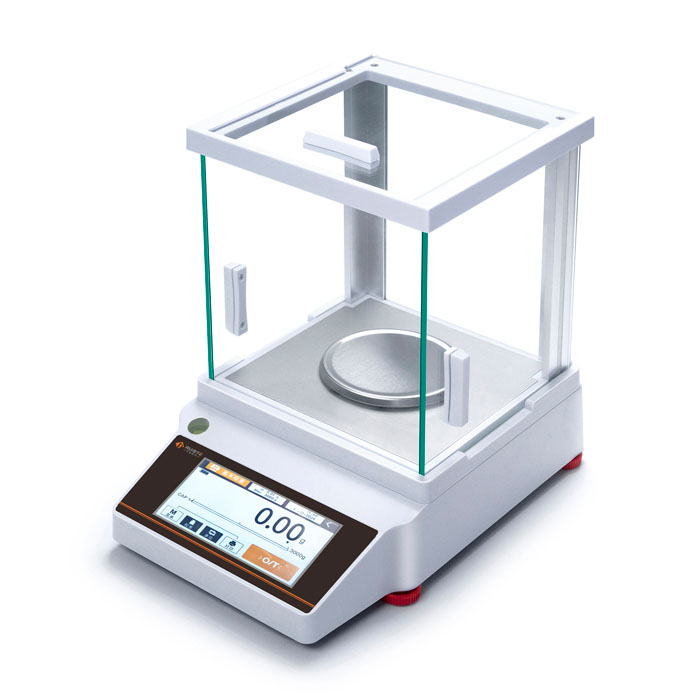
The external and internal structural design of laboratory weighing scales fully considers the complexity of laboratory application environments. The outer shell is usually made of corrosion-resistant and anti-static materials to isolate dust, chemical vapors, and fine particulate pollutants in the air, preventing external substances from eroding internal precision components. High-precision weighing units are equipped with transparent enclosed shielding structures, which weaken the interference of ambient airflow on the weighing pan and avoid data deviation caused by instantaneous air flow fluctuation. The internal sensing and circuit modules are installed on shock-absorbing bases to buffer tiny vibrations transmitted by the external tabletop or ground, ensuring the stability of the sensing structure during measurement. The weighing pan adopts smooth, non-stick inert materials that resist corrosion from common chemical reagents, facilitating the cleaning of residual samples and reducing cross-contamination between different experimental samples. Every detailed structural design aims to minimize external interference and maintain the consistency of measurement conditions.
Standardized operational procedures are critical to maintaining the long-term stable performance of laboratory weighing scales and ensuring the authenticity of experimental data. Before conducting weighing operations, operators need to place the equipment on a horizontally stable tabletop and adjust the horizontal calibration parts to eliminate measurement errors caused by tilting placement. It is essential to preheat electronic weighing devices for an appropriate duration to stabilize the operating state of internal circuits and sensing components, reducing data drift resulting from temperature changes of electronic parts. Cleaning the surface of the weighing pan and the enclosed shielding space to remove residual dust and sample impurities is also a necessary pre-measurement step. For samples with irregular shapes or unstable placement, clean auxiliary containers with stable textures should be used for holding, and the tare function can be activated to deduct the container’s mass, simplifying the acquisition of pure sample mass data.
During the weighing process, operators need to follow gentle and standardized operating habits to avoid unnecessary equipment damage and data fluctuation. Samples should be placed gently at the center of the weighing pan to prevent eccentric pressure from causing local stress on internal sensing components, which could affect structural sensitivity. Overloading the weighing scale beyond its rated bearing range must be strictly prohibited, as long-term overload pressure can lead to permanent deformation of internal mechanical parts and irreversible attenuation of sensing component sensitivity. High-temperature samples directly taken from heating equipment should be cooled to room temperature before weighing, because excessive sample temperature will generate thermal convection airflow around the weighing pan and interfere with electromagnetic sensing signals. Volatile, corrosive, and toxic samples need to be placed in sealed containers to prevent reagent evaporation from polluting internal components and endangering operator health. Additionally, frequent opening and closing of the enclosed shielding door should be avoided during high-precision measurement to reduce airflow disturbance.
Multiple environmental factors exert subtle yet significant influences on the measurement results of laboratory weighing scales. Ambient temperature acts as a key interference factor: drastic temperature fluctuations will cause thermal expansion and contraction of internal metal structures and electronic components, altering the electromagnetic balance state and resulting in slight data deviation. A stable room temperature environment helps maintain consistent structural performance of the equipment. Humidity also affects operating status; excessive air humidity may cause slight moisture condensation on circuit contacts, weakening signal transmission efficiency, while an overly dry environment tends to generate static adsorption, making fine samples adhere to the weighing pan and affecting measurement accuracy. Vibration and airflow are common interference sources in shared laboratories. Equipment placed near circulating air outlets or mechanical vibration devices is prone to unstable data jumping, so weighing areas should be arranged away from vibration sources and flowing air. Moreover, dust accumulation in the internal gap of the equipment will change the stress balance state of the structure, and regular dust removal is required to keep the internal environment clean.
Laboratory weighing scales cover extensive application scenarios across multiple scientific fields. In chemical laboratories, they are used for the accurate weighing of experimental reagents, auxiliary raw materials, and reaction products, providing reliable mass data for chemical proportion configuration, reaction yield calculation, and substance purity analysis. In biological research laboratories, these devices measure the mass of microbial samples, tissue sections, and biological preparations, supporting experimental work such as biological culture ratio adjustment and physiological index detection. In material engineering laboratories, researchers rely on weighing data to analyze the density, porosity, and component proportion of new materials, verifying whether material performance meets experimental design standards. In environmental monitoring laboratories, weighing scales detect the mass of suspended particles in air and water samples, assisting in judging environmental pollution levels. Even in agricultural research laboratories, they are applied to test crop sample quality and fertilizer component proportion, providing data support for agricultural optimization research.
Scientific daily maintenance and regular inspection are essential to extend the service life of laboratory weighing scales and sustain long-term measurement stability. After each use, operators should clean the weighing pan and enclosed shielding structure with soft cleaning tools to remove residual sample particles and reagent stains, avoiding long-term adhesion of corrosive substances that damage the surface structure. The equipment should be placed in a dry, ventilated storage area when not in use for a long time, with dust-proof covers installed to prevent accumulated dust from entering internal gaps. Electronic weighing devices need regular zero-point calibration and linearity debugging to eliminate cumulative errors caused by long-term operation. Mechanical weighing structures require periodic lubrication of movable fulcrums to reduce friction resistance during beam movement and ensure flexible mechanical operation. Professional inspection and maintenance should be conducted at fixed cycles to check the aging degree of circuit lines, the sensitivity of sensing components, and the deformation status of mechanical parts, with worn components replaced in a timely manner to maintain stable equipment performance.
With the continuous progress of laboratory technology, the functional design of weighing scales is constantly optimized and upgraded to adapt to increasingly complex experimental requirements. Modern laboratory weighing equipment is endowed with diversified auxiliary functions, including data storage, real-time data transmission, and automatic recording of weighing curves. These functions reduce manual recording errors and facilitate data sorting and traceability in experimental research. Some improved weighing structures are compatible with constant-temperature and constant-humidity operating environments, maintaining stable measurement performance in extreme experimental conditions. While pursuing functional optimization, equipment design also emphasizes humanized operation logic, with simplified operating interfaces and intuitive data display modes lowering the usage threshold for laboratory personnel.
As a basic measuring instrument in laboratory systems, the laboratory weighing scale carries the fundamental requirement of scientific experiments for data quantization. Every technological improvement, structural optimization, and standardized operation norm aims to obtain true, effective, and repeatable mass measurement data. In future scientific research and laboratory development, weighing equipment will continue to evolve toward higher sensitivity, stronger anti-interference ability, and more intelligent data processing functions. Regardless of technological changes, the core value of laboratory weighing scales remains unchanged: to provide accurate mass measurement support for scientific exploration, industrial detection, and academic research, and to lay a solid foundation for the steady progress of various laboratory research activities.
Laboratory Weighing Scale
https://www.pruiste.com/weighing-scale.html
Post Date: May 13, 2026
https://www.supplier-manufacturer.com/weighing-scale/laboratory-weighing-scale.html

![Digital Viscometer NDJ SERIES]()
Digital Viscometer NDJ SERIES
NDJ series viscometer has 2 optional keys and touch screen. The whole series balance adopts high precision sensor, microcomputer control and one key fast measurement. The …![Electronic Balance JA SERIES]()
Electronic Balance JA SERIES
The JA series uses high-definition buttons, and the entire series of balances uses Nuosheng sensors and brand sensors to ensure high accuracy and stability of weighing res…![Online Digital Viscometer]()
Online Digital Viscometer
Viscosity stands as one of the most fundamental physical properties of fluid substances, reflecting the internal frictional resistance that occurs when a fluid flows and d…![Digital Viscometer Supplier]()
Digital Viscometer Supplier
Viscosity stands as one of the most fundamental physical properties of fluid materials, reflecting the internal frictional resistance that occurs when a fluid flows or und…![Portable Digital Viscometer]()
Portable Digital Viscometer
Viscosity stands as one of the most fundamental physical properties of fluid substances, reflecting the internal friction and flow resistance that occurs when liquids move…