Compact Moisture Analyzer
Moisture content detection stands as a fundamental analytical procedure across industrial production, laboratory research, and quality inspection workflows, as the proportion of moisture in solid, powder, and granular materials directly affects material stability, processing performance, and final product consistency. Traditional moisture detection methods often rely on large-scale drying equipment and manual weighing processes, which require prolonged testing cycles and occupy substantial laboratory space, failing to adapt to the growing demand for rapid, on-site, and space-efficient detection in modern production and research scenarios. Compact moisture analyzers have emerged as a practical solution to these pain points, integrating streamlined structural design, mature detection principles, and intelligent data processing functions to deliver stable and repeatable moisture measurement results while minimizing equipment footprint and operational complexity. This type of analytical instrument has gradually become a standard tool for routine moisture testing in multiple industries, balancing detection efficiency, operational convenience, and result dependability for daily analytical work.
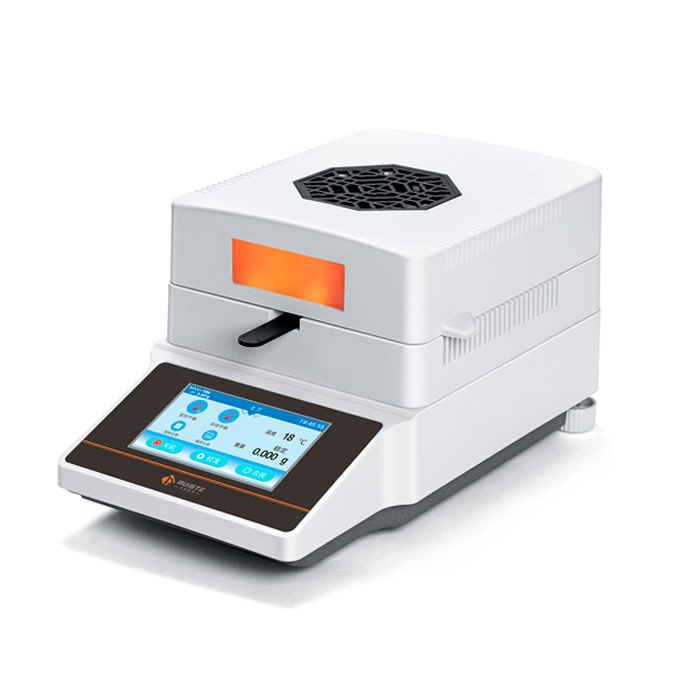
The core working mechanism of compact moisture analyzers follows the thermogravimetric loss-on-drying principle, a classic and universally recognized detection method for moisture content analysis. The entire testing process relies on two core functional modules: a high-precision weighing unit and a uniform heating unit, which work in tandem to complete automated moisture detection without excessive manual intervention. Before the test begins, the internal weighing system accurately records the initial mass of the prepared sample, with sensor sensitivity optimized to capture subtle mass changes throughout the drying process. The heating unit then generates stable and uniform thermal radiation, raising the sample temperature to a preset constant level to facilitate the gradual evaporation of free moisture contained in the sample structure. Unlike bulky traditional drying devices that suffer from uneven temperature distribution and prolonged heating cycles, the compact heating structure of these analyzers ensures consistent heat coverage on the sample surface, enabling efficient and thorough moisture evaporation within a short timeframe.
During the drying process, the instrument’s built-in sensing system continuously monitors and records real-time sample mass changes, automatically tracking the weight loss caused by moisture volatilization. The system is programmed with stable judgment logic to identify the endpoint of the drying process: when the sample mass remains steady within a set threshold for a continuous period, indicating no further moisture evaporation, the heating process automatically stops, and the data collection phase concludes. The instrument’s internal algorithm then calculates the sample moisture content by comparing the total mass loss during drying with the initial sample mass, generating intuitive and readable data results. This fully automated testing flow eliminates manual timing, repeated weighing, and post-test data calculation steps, effectively reducing human-induced operational errors and improving the uniformity of test result acquisition.
The structural design of compact moisture analyzers focuses on miniaturization and integration without compromising core detection performance, which constitutes their primary competitive advantage in practical application scenarios. Traditional laboratory moisture detection systems require independent drying ovens, analytical balances, and data recording tools, requiring large laboratory countertop space and complex equipment debugging before use. In contrast, compact moisture analyzers integrate all core functional components, including the weighing sensor, heating module, temperature control unit, and data processing chip, into a compact and integrated body. The streamlined structural layout reduces redundant mechanical parts, lowering the overall equipment volume and weight to support flexible placement in limited spaces such as production line workshops, compact laboratory workbenches, and on-site inspection stations.
In terms of structural details, the equipment adopts a closed heating chamber design, which reduces heat loss during operation and improves heating efficiency while preventing external ambient air from interfering with the drying environment. The sample bearing platform is designed with stable support and uniform force-bearing structure, ensuring that samples of different shapes, including powder, granular, flake, and small block materials, can be placed evenly for consistent heating. The external operation interface is simplified and user-friendly, with intuitive parameter setting functions for temperature, drying duration, and test termination conditions, allowing operators to complete parameter configuration quickly through simple operations. The integrated structural design also simplifies equipment installation and debugging procedures, as the instrument can be put into normal use after simple horizontal calibration and power connection, without complex assembly or professional debugging support.
In terms of functional performance, compact moisture analyzers deliver stable and reliable detection results suitable for daily quality control and conventional analytical testing work. The built-in high-precision weighing unit can capture tiny mass fluctuations, ensuring accurate recording of sample mass changes during drying, while the intelligent temperature control system maintains precise and constant heating temperatures, avoiding excessive temperature fluctuations that may cause sample decomposition or incomplete moisture evaporation. This precise temperature and weight control capability ensures that test results maintain good repeatability, with consistent data obtained from multiple tests on the same batch of samples, providing credible data support for material performance evaluation and production parameter adjustment.
Another notable functional feature is the efficient testing cycle of compact moisture analyzers. Traditional oven-based moisture detection methods often require several hours of constant-temperature drying and cooling weighing processes, resulting in low testing efficiency and inability to feed back data in a timely manner for production adjustment. Compact moisture analyzers shorten the entire testing cycle significantly through efficient heating and real-time data monitoring, completing a full moisture detection process in a short time frame. The rapid testing capability enables production personnel to quickly obtain material moisture data, adjust production processes in a timely manner, avoid batch product quality deviations caused by excessive or insufficient material moisture, and effectively improve the overall efficiency of production quality control.
Compact moisture analyzers support diverse sample types and adapt to complex detection demands across multiple industries, making them highly versatile analytical tools. In agricultural and grain processing fields, the instrument is widely used to detect moisture in grains, seeds, flour, and feed materials. Moisture content is a key indicator affecting grain storage stability and processing quality: excessive moisture can easily lead to grain mildew and insect infestation during storage, while insufficient moisture may affect the taste and processing performance of grain products. Regular moisture detection with compact analyzers helps agricultural processing enterprises and grain storage institutions formulate scientific storage and processing plans to ensure material quality stability.
In the chemical and new material industry, moisture detection of raw materials and finished products is crucial to maintaining chemical product stability and production safety. Many chemical raw materials, including powder additives, resin materials, and inorganic chemical reagents, have strict moisture content standards, as excess moisture may trigger chemical reactions, reduce product purity, or affect the compounding effect of finished products. Compact moisture analyzers can efficiently detect moisture in various solid chemical materials, helping enterprises strictly control raw material incoming quality and finished product indicators, ensuring that products meet industry production specifications and usage requirements.
The food processing industry also relies heavily on compact moisture analysis technology for quality management. A wide range of food products, including baked goods, dried fruits, nuts, and puffed foods, have fixed moisture content ranges that correspond to product taste, shelf life, and preservation performance. Appropriate moisture content can maintain the crispness and flavor of food products, while unqualified moisture content may lead to product softening, deterioration, or shortened shelf life. By using compact moisture analyzers for batch sampling and testing during food production and finished product inspection, food enterprises can effectively control product quality consistency, reduce product deterioration risks, and stabilize product market quality performance.
In addition, the instrument is applied in textile, paper, pharmaceutical, and building material industries. In textile processing, fiber moisture content affects the flexibility and processing efficiency of textile materials; in paper production, pulp moisture determines the density and flatness of finished paper; in pharmaceutical production, the moisture content of pharmaceutical raw materials and tablets is closely related to drug stability and efficacy; in building material processing, moisture detection of powder building materials such as cement and gypsum helps ensure the bonding performance and structural stability of building materials. The wide industry adaptability stems from the instrument’s adjustable temperature parameters and flexible test modes, which can be adjusted according to the heat resistance characteristics and detection standards of different samples to meet personalized testing demands.
In terms of operational experience and maintenance costs, compact moisture analyzers have obvious practical advantages compared with large-scale professional analytical equipment. The instrument’s automated operation logic lowers the threshold for user operation, requiring no professional analytical knowledge or complex operational skills. New operators can master basic testing procedures through simple training, completing sample preparation, parameter setting, test execution, and data reading independently. The intelligent system also supports automatic data storage and query, which can record test time, sample parameters, and detection results for each test, facilitating subsequent data sorting, statistical analysis, and quality traceability management.
Equipment maintenance is simple and low-cost, adapting to long-term continuous industrial and laboratory use. The internal structural components of compact moisture analyzers are highly integrated with stable performance, reducing component wear and failure probability in daily operation. The detachable sample tray and heating chamber shell facilitate daily cleaning, avoiding residual sample debris from affecting subsequent test accuracy. Regular daily maintenance only includes horizontal calibration, surface cleaning, and regular inspection of heating and weighing components, without complex professional maintenance procedures or high replacement costs of vulnerable parts, reducing the overall operating cost of enterprise quality inspection work.
In practical application scenarios, compact moisture analyzers also show good environmental adaptability. The instrument can maintain stable working performance in conventional laboratory and production workshop environments, with anti-interference design to reduce the impact of slight ambient temperature changes and air flow on test results. Its small size and light weight support flexible mobility, enabling not only fixed-point detection in laboratories but also on-site sampling and detection in production workshops, warehouses, and field inspection sites. This flexible application mode breaks the spatial limitation of traditional fixed laboratory detection, realizing real-time and rapid detection of material moisture in the production and storage links, and improving the timeliness and comprehensiveness of quality monitoring.
With the continuous upgrading of industrial production standards and laboratory analytical requirements, the demand for refined and efficient moisture detection continues to grow, driving the iterative optimization of compact moisture analyzer technology. Modern compact moisture analyzers are gradually upgrading in intelligent functions, supporting more precise parameter adjustment, richer data output modes, and more convenient data transmission functions, which can be connected with enterprise quality management systems to realize automated data uploading and unified management. At the same time, further optimization of heating uniformity and weighing accuracy enables the instrument to adapt to more high-precision detection scenarios, gradually meeting the refined quality control demands of high-end manufacturing and precision laboratory research.
Overall, compact moisture analyzers fill the market gap between large high-precision analytical equipment and simple portable detection tools, providing a balanced solution for conventional moisture detection work. Its compact structure, efficient detection speed, stable test performance, low operational cost, and wide industry adaptability make it an essential basic analytical instrument in modern industrial production and scientific research. In the future, with the continuous development of detection technology and the improvement of industry quality standards, compact moisture analyzers will continue to optimize functional performance, expand application scenarios, and provide more reliable and convenient technical support for material quality control and process optimization in various industries.
Compact Moisture Analyzer
https://www.pruiste.com/moisture-analyzer.html
Post Date: May 23, 2026
https://www.supplier-manufacturer.com/moisture-analyzer/compact-moisture-analyzer.html

![Analytical Balance FA Series]()
Analytical Balance FA Series
FA series electromagnetic force balance adopts key structure. The whole series balance adopts high-performance single-chip microprocessor to control high-speed CPU and spe…![Digital Viscometer Vender In China]()
Digital Viscometer Vender In China
The manufacturing and supply of digital viscometers in China have witnessed steady and progressive development over the past decades, forming a complete and mature industr…![High-shear Digital Viscometer]()
High-shear Digital Viscometer
Viscosity serves as one of the most fundamental physical properties of fluid materials, reflecting the internal friction and flow resistance generated during fluid deforma…![Rotational Digital Viscometer]()
Rotational Digital Viscometer
Viscosity stands as one of the most fundamental physical properties of fluid materials, reflecting the internal frictional resistance that occurs when a fluid undergoes de…![Specifications of Moisture Analyzer]()
Specifications of Moisture Analyzer
A moisture analyzer is a fundamental analytical device designed to quantify the moisture content present in solid, powdered, granular, and viscous materials across diverse…