Baby Scales
Welcoming a new life into the family brings endless joy, along with a host of careful responsibilities that shape the daily lives of caregivers. Among the many subtle yet vital tasks of infant care, monitoring a baby’s physical growth stands out as a core part of safeguarding early childhood health, and a baby scale serves as an indispensable tool in this gentle and precise process. Unlike ordinary weighing tools made for adults, this specialized device is tailored entirely to the physical characteristics and behavioral traits of infants, filling the gap between casual daily observation and professional growth tracking, and bringing scientific and standardized care to every stage of a baby’s early growth.
The early months of an infant’s life are the fastest period of physical development, where tiny changes in weight can reflect the quality of nutrition, physical adaptation, and overall health status. Newborns often experience slight physiological weight loss in the first few days after birth, a normal adaptive response to leaving the maternal environment, adjusting to independent breathing, and starting external feeding. For most caregivers, it is difficult to accurately judge whether the weight recovery speed and subsequent growth trend are within a healthy range through visual observation alone. Rough estimates can only provide vague references, while a baby scale captures subtle weight fluctuations that human eyes cannot perceive, laying a solid foundation for grasping the baby’s growth rhythm.
One of the most practical functions of a baby scale is assisting scientific feeding management, especially for families who choose breastfeeding. Many new caregivers face persistent uncertainty about whether their infant is obtaining sufficient milk during each feeding session, a common concern that brings unnecessary anxiety to novice parents in the early parenting stage. By adopting the simple method of weighing before and after feeding, caregivers can clearly understand the actual milk intake of the baby each time. This intuitive data helps adjust feeding frequency and duration reasonably, avoiding problems such as insufficient feeding that affects growth or overfeeding that causes digestive burden. For babies with fragile digestive systems, stable and quantitative feeding guidance based on accurate weight data effectively maintains digestive health and develops regular eating habits from an early age.
In daily infant health monitoring, continuous weight tracking also helps detect potential physical discomfort and abnormal conditions at an early stage. Infant bodies are delicate, and many mild health problems do not show obvious external symptoms in the early stages. Sustained slow weight growth or unexpected weight fluctuations can serve as early warning signals of physical issues, including insufficient nutritional intake, mild dehydration, poor absorption function, or subtle physical discomfort. Timely capture of these changes through regular weighing allows caregivers to observe the baby’s state more carefully and communicate with professional medical staff in a timely manner when abnormal trends appear, creating favorable conditions for early intervention and conditioning. In routine pediatric health assessments, medical workers also rely on continuous weight change data to evaluate the overall development level of infants, formulate targeted health guidance plans, and provide more professional and personalized care suggestions for families.
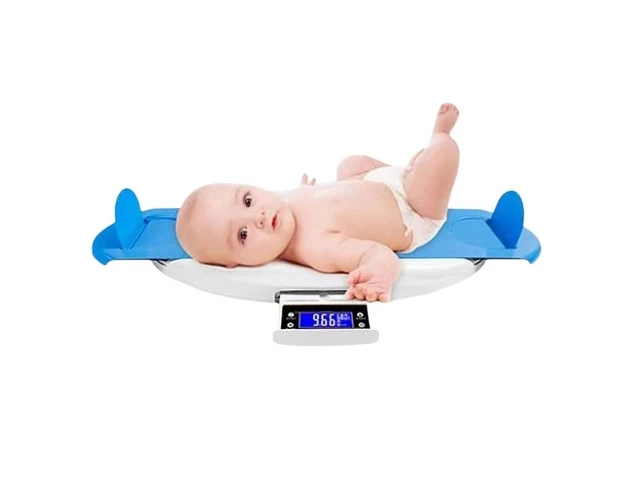
The humanized design of modern baby scales fully considers the safety and comfort of infants as well as the convenience of caregiver operation. The carrying area of the scale adopts a smooth, curved integrated structure, which fits the lying posture of infants perfectly. This structural design avoids the edge pressure caused by hard and sharp structures, creates a safe and comfortable lying space for babies, and effectively prevents slipping and rolling during the weighing process. Infants tend to have unstable body control and are prone to slight body movements and limb swings during static measurement, which may affect the accuracy of data collection. Optimized sensing and data processing functions of baby scales can adapt to this characteristic, effectively stabilizing measurement data and locking accurate readings even with minor body movements, avoiding the trouble of repeated weighing and improving the efficiency of daily monitoring.
Practical auxiliary functions further enhance the practicality of baby scales in home care scenarios. The zeroing and peeling function is one of the most commonly used and practical designs, which can eliminate the weight interference of external items such as baby blankets, thin quilts, and clean diapers. In daily use, caregivers do not need to repeatedly dress and undress the baby for bare weighing, reducing the risk of colds caused by prolonged exposure, and making the weighing process more gentle and efficient. The clear and intuitive display interface is adapted to the daily use habits of family members, with moderate font size and brightness, enabling people of all ages to quickly read data clearly, which is very friendly for family members who assist in infant care.
The portability and durable structure of baby scales also make it suitable for diverse use scenarios. The overall lightweight design and compact structure allow the scale to be placed flexibly in nurseries, bedrooms, or living rooms without occupying excessive household space. For families who need to travel short distances or move residences, the easy-to-carry feature enables continuous growth monitoring without interruption, ensuring the continuity of baby growth data records. The stable structural material can resist slight collisions and daily wear in family environments, maintaining long-term stable working performance and providing reliable measurement services for the entire infant and toddler growth stage.
Accumulated long-term weight data recorded by baby scales forms a complete growth curve for infants, which has far-reaching guiding significance for understanding individual growth rules. Every baby has unique physical development characteristics, and the growth rate of different infants varies within a reasonable range. Daily recorded weight data can help caregivers clearly grasp the individual growth rhythm of their baby, distinguish between normal individual differences and abnormal developmental deviations, and avoid blind comparison with other children. This data record is also an important reference for regular physical examinations. When communicating with pediatricians, complete continuous growth data can help medical staff more accurately judge the baby’s physical development status, nutritional balance, and physical adaptability, and provide more targeted guidance on feeding, complementary food addition, and daily care.
In the stage of complementary food addition, baby scales also play an important auxiliary role. With the gradual addition of complementary foods, the baby’s nutritional source changes from single milk powder or breast milk to a diversified diet, and the body’s growth rate will also change accordingly. By tracking weight changes during this period, caregivers can reasonably adjust the types, dosage, and adding rhythm of complementary foods. If the weight growth rate slows down slightly, it can be judged whether it is necessary to adjust the nutritional collocation to ensure balanced intake of various nutrients; if the weight grows too fast, it can remind caregivers to control high-calorie food intake properly to maintain healthy growth. This data-based feeding adjustment method is more scientific and reasonable than empirical judgment, helping infants develop healthy physical conditions and good eating habits during the critical growth period.
For premature infants or infants with weak physical foundation, the precise monitoring function of baby scales is more prominent. Such infants have weaker physical adaptability and more sensitive growth status, and their weight changes need more careful and precise tracking. Slight weight increase or decrease can reflect the adaptation of the body to feeding and the recovery of physical functions. Regular and accurate weighing helps medical staff and family members jointly optimize care and feeding plans, promote the gradual and stable physical development of weak infants, and lay a good foundation for subsequent physical growth and immune system development.
From the perspective of family care, the use of baby scales also helps cultivate more scientific parenting concepts. Modern parenting pays more attention to refined and data-based care, abandoning the traditional vague judgment mode of "looking at the state and feeling the weight". Regular recording and observation of weight data enable caregivers to pay more attention to the subtle changes of the baby’s body, form a more careful and standardized care habit, and reduce parenting anxiety caused by uncertain growth status. The intuitive growth data can also let family members clearly perceive the baby’s growth and progress, making every subtle growth visible and recordable, and adding more sense of ritual and accomplishment to the process of accompanying the baby’s growth.
In terms of use experience, the simple operation logic of baby scales is suitable for all parenting groups. The whole weighing process does not require complex steps and professional operation skills. After simple placement and static waiting, accurate data can be obtained quickly. The low operation threshold enables the elderly and novice parents who lack parenting experience to easily master the use method, realizing convenient daily family monitoring. At the same time, the easy-to-clean surface structure adapts to the hygienic needs of infant care. The smooth surface is not easy to hide dirt and bacteria, and can be quickly wiped and cleaned after each use, maintaining a clean and hygienic measuring environment and protecting the baby’s delicate skin health.
Throughout the entire infant growth cycle, a baby scale is not merely a simple measuring tool, but a reliable companion for scientific parenting and health guarding. It transforms invisible growth changes into intuitive and accurate data, provides objective basis for daily feeding adjustment, health judgment, and care plan optimization, and helps every family carry out refined infant care. In the trivial and warm daily parenting life, this small and practical device undertakes the important task of recording growth, monitoring health, and guiding care, letting every step of the baby’s growth be accompanied by precision and care, and helping every infant grow up healthily and steadily in scientific and gentle care.
https://www.veidtweighing.com/HouseholdScale/BabyScale
Post Date: Jun 7, 2026
https://www.supplier-manufacturer.com/weight-balance-scale/baby-scales.html

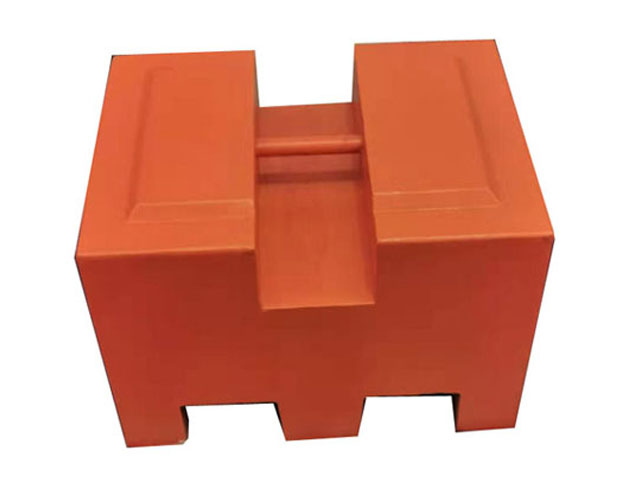
![Cast Iron Counterweight]()
Cast Iron Counterweight
Throughout the entire evolution of mechanical engineering and industrial manufacturing, maintaining stable force balance and reliable structural stability has always been …![Standard Weights]()
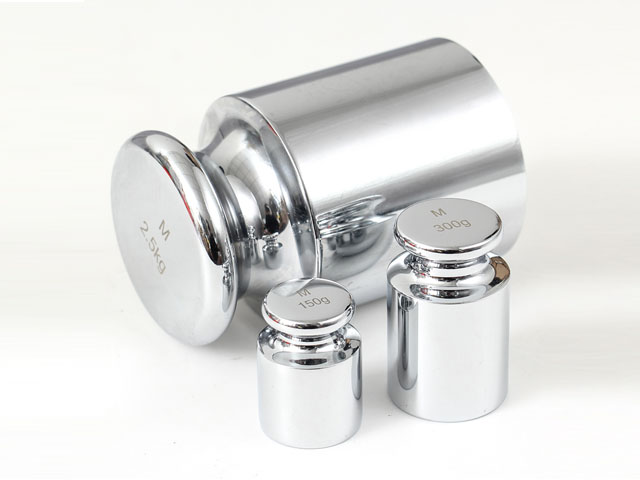
Standard Weights
Body weight is one of the most intuitive and fundamental indicators that reflect the physical condition of the human body, and the concept of standard weight has long been…![Cast Iron Weight For Industrial Use]()
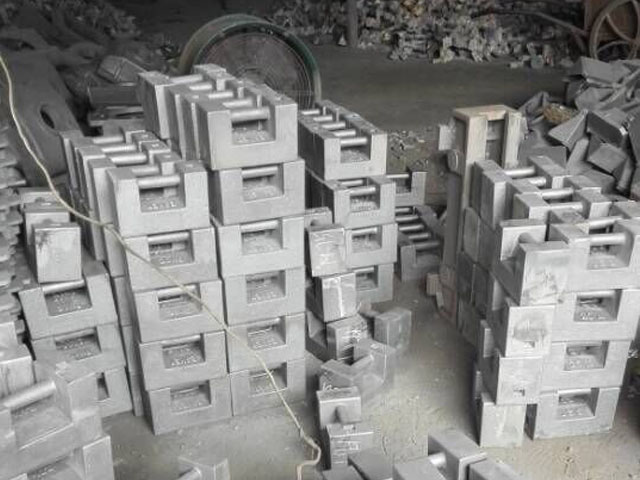
Cast Iron Weight For Industrial Use
Within the extensive framework of modern industrial production and mechanical operation, auxiliary functional components that maintain equipment stability, balance mechani…![F Class Laboratory Calibration Standard Weight]()
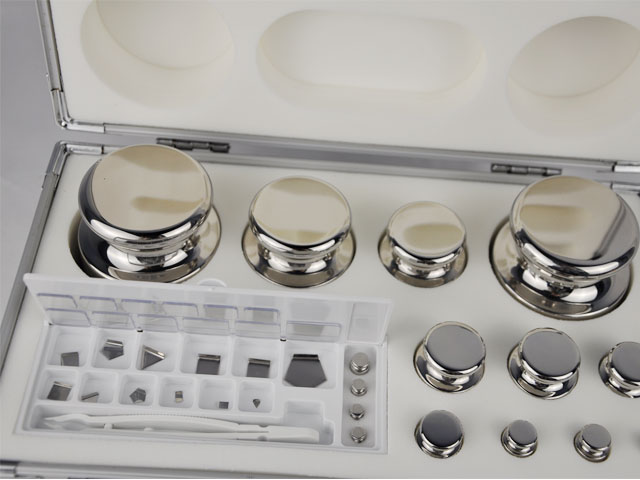
F Class Laboratory Calibration Standard Weight
Precision measurement forms the foundational backbone of modern laboratory research, industrial production, and quality control operations, where even minor deviations in …![Cast Iron Weight For Floor Scales]()
Cast Iron Weight For Floor Scales
Floor scales serve as foundational weighing equipment across a vast range of industrial, commercial, and logistics operations, tasked with measuring heavy loads reliably a…