F Class Laboratory Calibration Standard Weight
Precision measurement forms the foundational backbone of modern laboratory research, industrial production, and quality control operations, where even minor deviations in mass readings can lead to inconsistent experimental outcomes, flawed product batches, and unreliable data analysis. F class laboratory calibration standard weights serve as essential reference tools designed to maintain the accuracy and stability of various weighing instruments, bridging the gap between theoretical measurement standards and practical on-site weighing operations. These standard masses are engineered to deliver consistent mass reference values, supporting routine calibration, verification, and performance adjustment of electronic balances, mechanical scales, and other precision weighing equipment used across scientific research, chemical analysis, pharmaceutical development, and industrial manufacturing fields. Their core value lies in providing stable, repeatable mass references that ensure all weighing data generated in laboratory and industrial environments maintains uniform and credible metrological attributes.
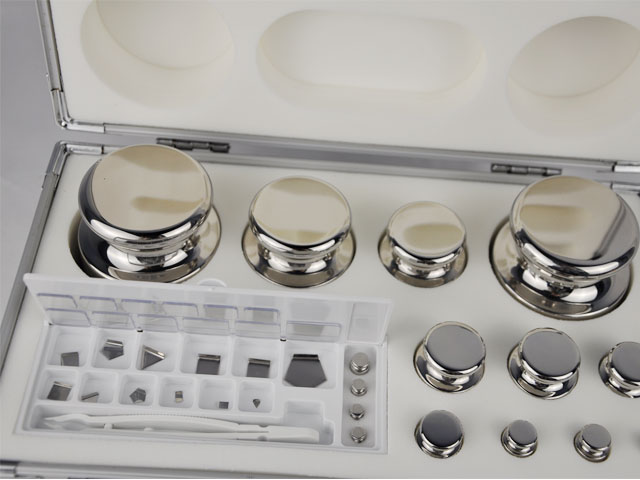
The material selection of F class calibration standard weights is strictly optimized to adapt to long-term laboratory use and frequent calibration operations, focusing on structural stability, environmental adaptability, and resistance to external interference. Most of these standard weights adopt high-density metal materials with refined surface processing, which effectively reduces the impact of surface oxidation, dust adhesion, and subtle physical wear on mass accuracy during daily use. The dense and uniform internal structure of the selected materials avoids internal porosity and structural gaps that may cause gradual mass changes, ensuring the long-term consistency of mass values. In practical application environments, laboratory spaces often have subtle fluctuations in temperature, humidity, and air flow; the materials used for F class weights are processed to minimize volume expansion and contraction caused by temperature changes, while maintaining low magnetic susceptibility to prevent mass reading deviations induced by stray magnetic fields in laboratory equipment. Such material characteristics enable the weights to maintain stable performance in conventional laboratory ambient conditions, avoiding frequent value drift that would require repeated correction.
The structural design of F class laboratory calibration standard weights follows ergonomic and metrological optimization principles, balancing operational convenience and measurement stability. Conventional specifications cover a complete range of mass values from ultra-small milligram units to large kilogram units, meeting the calibration demands of micro-analytical balances for trace sample weighing and high-capacity industrial weighing equipment for bulk material detection. Each standard weight is manufactured with smooth, burr-free surfaces and regular geometric shapes, which reduces the contact area with external pollutants and simplifies daily cleaning and maintenance work. Smaller mass units are designed with integrated compact structures to avoid structural deformation caused by frequent handling, while larger mass units adopt reinforced internal structures to enhance overall rigidity and prevent subtle shape changes under gravity and handling pressure. The overall structural uniformity ensures that the weights do not produce unbalanced force-bearing conditions during placement on weighing equipment, eliminating additional measurement errors caused by irregular contact states.
In terms of metrological performance, F class calibration standard weights occupy a key intermediate position in the mass value transfer system, undertaking the important task of value dissemination between higher-level reference standards and daily working weighing equipment. They feature moderate tolerance ranges that balance practical usability and precision requirements, making them suitable for medium and high-precision calibration scenarios that are common in laboratory work. Compared with higher-level standard weights that are mostly used for top-level value preservation and periodic verification, F class weights are more adaptable for daily repeated use, with stronger resistance to routine operational wear and environmental interference. Compared with ordinary working weights, they maintain far stricter mass consistency and surface stability, effectively correcting the systematic errors of conventional weighing instruments. This unique performance positioning makes them the most widely used reference mass tools in routine laboratory calibration work, capable of meeting the precision demands of most analytical experiments, ingredient proportioning, and product quality testing processes.
The application scenarios of F class laboratory calibration standard weights cover multiple links of laboratory scientific research and industrial quality management. In chemical laboratories, these standard weights are used to calibrate analytical balances for precise weighing of chemical reagents, ensuring the accurate proportioning of experimental formulas and improving the repeatability of chemical reaction experiments. In biological and pharmaceutical research environments, they support the calibration of precision weighing equipment used for sample preparation, drug ingredient testing, and microbial culture medium configuration, providing reliable data support for pharmaceutical research and biological experiment verification. In material testing laboratories, the weights assist in calibrating high-precision scales used for detecting material density, tensile test sample quality, and product component content, ensuring the accuracy of material performance test data. In industrial quality control departments, they are applied to the daily verification of production line weighing equipment, avoiding product quality fluctuations caused by inaccurate weighing data during batch production of raw material proportioning, finished product inspection, and packaging measurement.
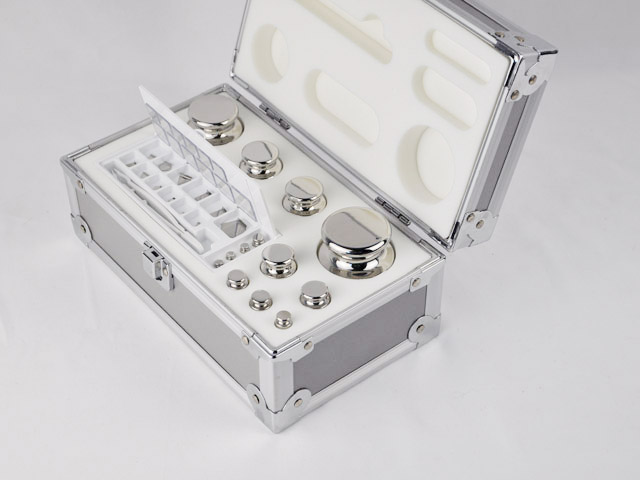
Standardized operation methods are essential to maintain the long-term performance stability of F class calibration standard weights. Before each calibration operation, it is necessary to place the weights in the laboratory working environment for a period of time to achieve temperature balance with the ambient air, avoiding temporary mass deviation caused by temperature differences between the weights and the environment. During use, operators need to handle the weights with professional tools such as tweezers and gloves, preventing direct contact with hands to avoid sweat, oil stains, and fine impurities from adhering to the surface, which would affect mass accuracy. When placing the weights on the weighing platform, gentle and vertical placement is required to prevent collision and friction with the equipment surface, which may cause surface wear or structural displacement. After completing the calibration work, the weights need to be cleaned with professional dust-free cleaning tools to remove surface dust and tiny pollutants, then placed in a dry, dust-proof, and shock-proof storage container for sealed preservation, isolating external humid air and corrosive gases to prevent surface oxidation and material aging.
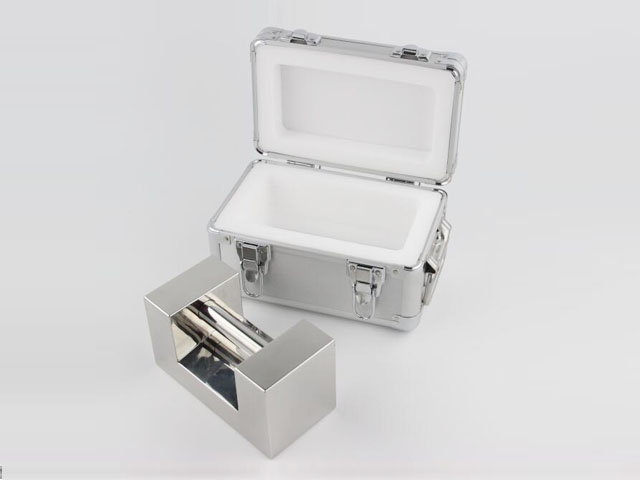
Daily maintenance and scientific storage directly determine the service life and performance stability of F class laboratory calibration standard weights. The storage environment needs to maintain stable temperature and humidity, avoiding extreme temperature fluctuations and high humidity conditions that may accelerate material surface aging and oxidation. The storage container is designed with shock-absorbing and anti-collision structures to prevent subtle structural deformation of the weights caused by vibration and extrusion during storage and handling. Regular routine inspection is required during daily storage, including checking the surface integrity of the weights for scratches, depressions, or peeling, and verifying the stability of mass values through regular comparison tests. For weights of different mass specifications, classified storage is adopted to avoid mutual collision and friction between large and small weights during access. Long-term exposure to corrosive gases, dust accumulation, and mechanical impact should be strictly avoided, as these adverse factors will gradually reduce the metrological performance of the weights and affect the accuracy of subsequent calibration work.
In the entire metrological value transfer chain, F class calibration standard weights play an irreplaceable role in maintaining the unity and consistency of mass measurement data. All laboratory weighing activities rely on accurate instrument performance, and the calibration of weighing instruments is completely dependent on stable reference mass standards. The stable performance of F class weights ensures that the weighing data generated by different instruments, different laboratories, and different time periods maintain comparability, which is the basic premise for scientific research data verification, industrial product quality consistency evaluation, and cross-regional measurement data exchange. In basic scientific research, consistent measurement standards ensure that experimental results can be repeated and verified by peer researchers, promoting the steady progress of disciplinary research. In industrial production, standardized calibration based on F class weights helps enterprises unify measurement benchmarks, reduce product quality differences caused by measurement errors, and improve the overall stability of production quality.
With the continuous improvement of laboratory precision requirements and the upgrading of industrial measurement standards, the application value of F class laboratory calibration standard weights is constantly expanding. Modern laboratory research involves more refined trace measurement and high-precision component analysis, which puts forward higher requirements for the stability and accuracy of reference calibration tools. The mature material technology and structural design of F class weights enable them to adapt to the iterative upgrading of current weighing equipment, meeting the calibration needs of new high-precision electronic balances and intelligent weighing instruments. At the same time, in the context of increasingly standardized industrial quality management systems, regular calibration of weighing equipment has become a necessary link in production quality control, making F class standard weights an essential basic tool for standardized production and quality supervision in various industries.
It is worth noting that the performance of F class calibration standard weights is maintained through standardized production, scientific use, and standardized maintenance rather than relying on special processing or extreme parameter settings. Each batch of weights is manufactured in strict accordance with unified metrological design specifications, with consistent material proportioning and structural processing standards, ensuring stable and reliable basic performance of each weight product. In actual use, the effective service cycle of the weights is closely related to the use frequency and maintenance conditions. Weights used in low-frequency, high-standard laboratory environments can maintain stable metrological performance for a long time, while those used in high-frequency industrial scenarios need more frequent inspection and maintenance to ensure continuous and effective calibration performance.
In conclusion, F class laboratory calibration standard weights are fundamental and core reference tools in the field of modern mass measurement and calibration. With stable material performance, reasonable structural design, and accurate metrological characteristics, they support the normal operation of various laboratory and industrial weighing links, provide reliable reference benchmarks for precision measurement work, and lay a solid foundation for the accuracy, consistency, and repeatability of scientific research data and industrial measurement results. In the continuous development of laboratory technology and industrial precision production, these standard weights will continue to undertake the important task of mass value transmission and instrument calibration, providing basic guarantee for the standardized development of measurement work in various fields.
F Class Laboratory Calibration Standard Weight
https://www.veidtweighing.com/laboratory-weights.html
Post Date: Jun 7, 2026

![Cast Iron Test Weight]()
Cast Iron Test Weight
Cast iron test weights stand as foundational physical measuring artifacts that underpin the entire operational logic of modern weighing and metrological systems across all…![Hanging Calibration Weight]()
Hanging Calibration Weight
In the intricate and interconnected world of industrial measurement, laboratory experimentation, and mechanical performance verification, the consistency and reliability o…![Stainless Steel Test Weight]()
Stainless Steel Test Weight
In the vast and intricate landscape of modern industrial production, laboratory scientific research, commercial weighing operations, and quality inspection management, the…![5kg Calibration Weight]()
5kg Calibration Weight
Within the comprehensive framework of modern measurement operations across all industrial, laboratory, commercial, and daily operational fields, the stability and reliabil…![10 Kg Calibration Weight]()
10 Kg Calibration Weight
In every field that relies on accurate mass measurement to maintain operational stability, product consistency, and data reliability, the 10 kg calibration weight stands a…